
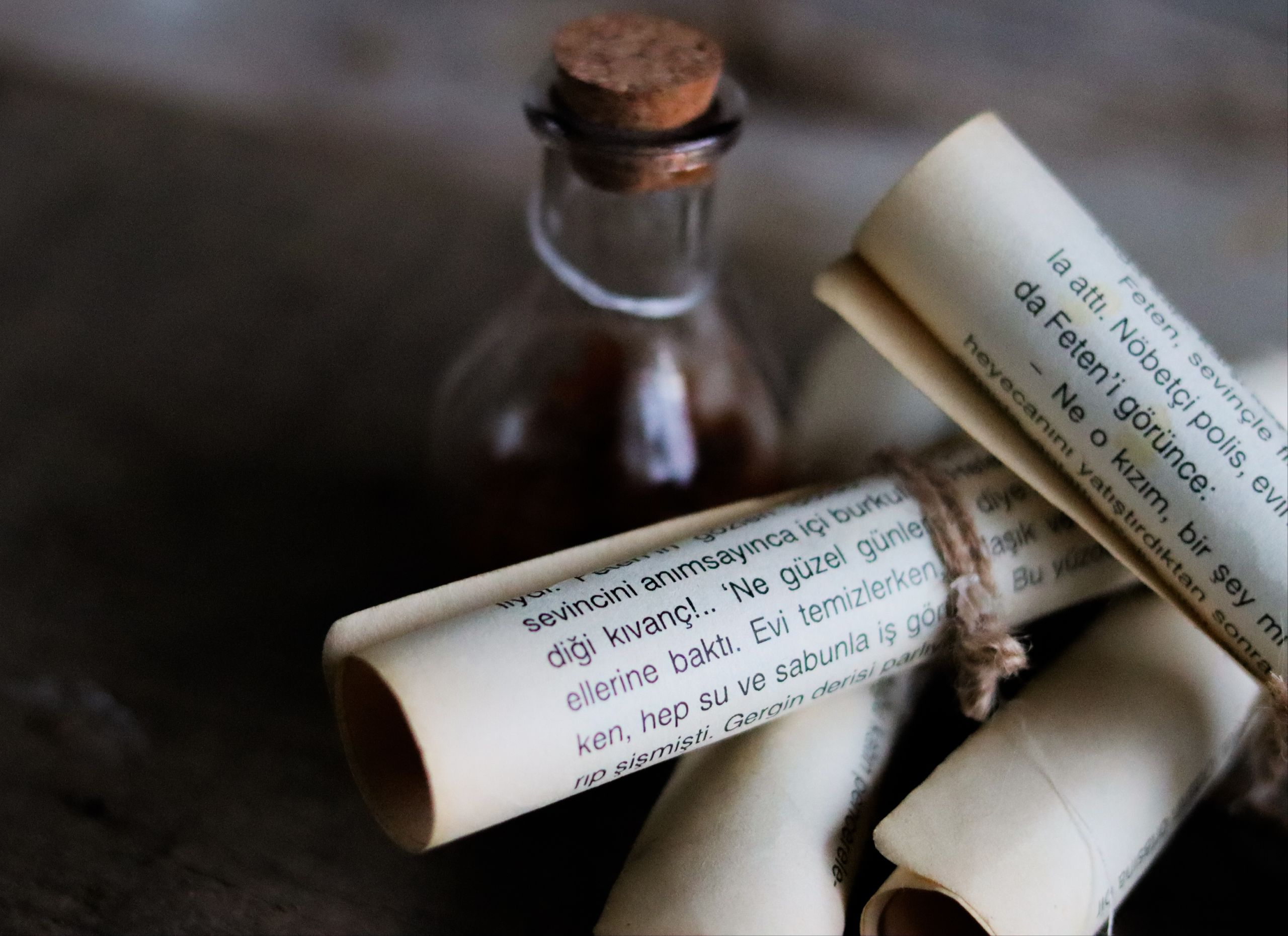
A woman scuba diving beneath a Michigan river made an unusual discovery that would eventually connect her with a family she had never met. Resting on the riverbed was a small green glass bottle containing a handwritten message, and the date on the paper revealed that it had been there since November 1926.
What happened after she pulled the bottle from the water was even more surprising. Within hours of sharing photographs online, thousands of strangers were helping solve a mystery that had remained unanswered for almost a century. The search eventually led to the daughter of the man who had written the message, bringing an unexpected piece of her father’s past back into her life.
Diver Spots Something Unusual Beneath Her Boat
Jennifer Dowker was cleaning the windows of her glass-bottom boat in the Cheboygan River in Michigan when she decided to go scuba diving. She regularly explored the river and enjoyed searching for old objects and historical artifacts beneath the water.
During one of her dives, something small and green caught her attention. Sitting on the riverbed was a glass bottle that appeared to have been there for quite some time, but what made it particularly interesting was the piece of paper visible inside.
Dowker initially thought it was simply an interesting old bottle. However, when she picked it up and examined it underwater, she managed to make out a word on the paper.
She quickly realized that she might have found something much more interesting than an ordinary discarded container.
“I thought, ‘A message in a bottle? Cool!’” Dowker, who was 45 at the time, told The Washington Post.
The discovery happened beneath the boat she operated through Nautical North Family Adventures, a company offering cruises and shipwreck tours around Cheboygan. Dowker had been working around the water for years, but this particular dive would become one of her most memorable experiences.
She returned to the boat with the bottle and showed it to her part-time employee, Rob Hemmer. Hemmer also worked at a nearby local history museum, making him particularly interested in the unusual object.
The two decided to investigate the contents carefully because the bottle was partially filled with water and the paper appeared fragile. Hemmer used his jackknife to remove the broken cork before emptying the water and carefully retrieving the message.
Despite spending decades inside a submerged bottle, the paper had survived well enough for them to read it.
A Handwritten Note Reveals A Mystery Dating Back To 1926
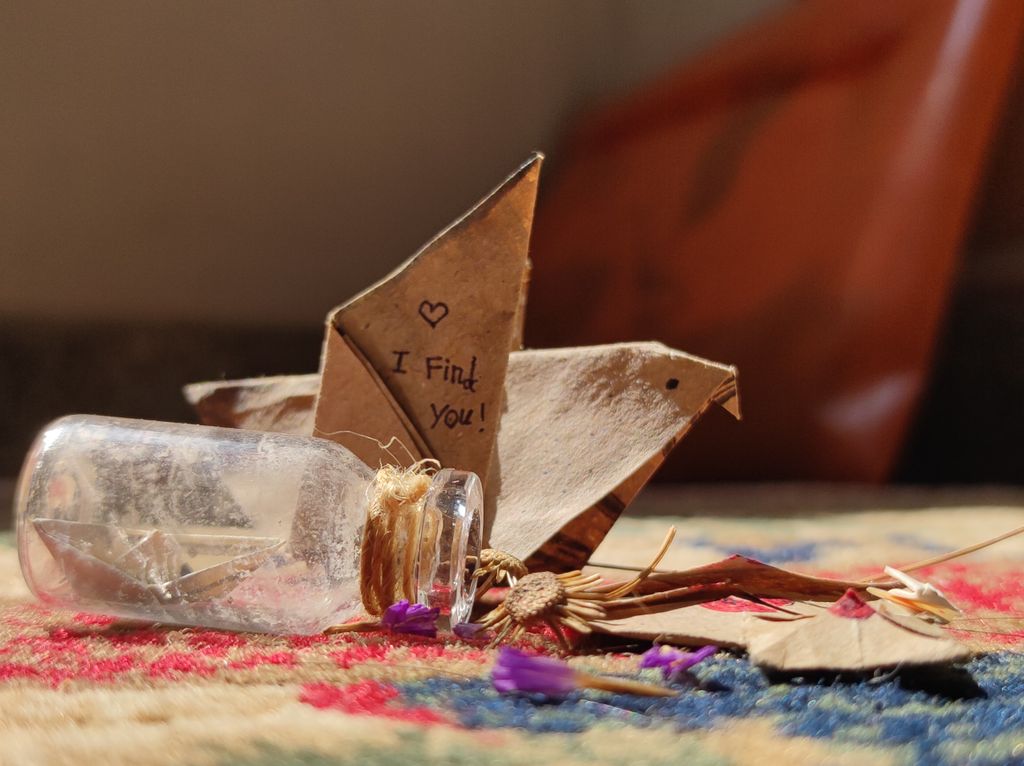
When Dowker and Hemmer finally unrolled the paper, they discovered a short handwritten request addressed to a man named George Morrow. The message asked whoever found the bottle to return the paper to Morrow in Cheboygan, Michigan, and report where it had been discovered.
The note read: “Will the person who finds this bottle return this paper to George Morrow, Cheboygan, Michigan, and tell where it was found?”
At the bottom was a date that immediately made the discovery more remarkable: November 1926.
The message had therefore survived for approximately 95 years before Dowker discovered it in 2021. Nobody knew exactly how long the bottle had remained on that particular section of the riverbed, but the date established that its journey had begun almost a century earlier.
There was also something unusual about the wording. Rather than simply writing a personal message or leaving a greeting for an unknown stranger, the original author had specifically asked for the paper to be returned.
That meant the person who discovered it was being invited to complete a task that had remained unfinished for decades.
Dowker decided that the best way to find George or someone connected to him was to share the discovery online. She photographed the bottle and its contents before posting them on the Facebook page belonging to her boat tour business.
Her caption explained that she had found the bottle while cleaning the windows and exploring the water around her boat. She also asked whether anyone knew a George Morrow who might have written the message around 1926.
The post included an enthusiastic description of the experience, with Dowker adding that it had been the coolest night dive ever.
She probably expected a few local residents to recognize the name. Instead, the photographs quickly attracted attention from people far beyond the Michigan community.
The Internet Turns Into An Unexpected Detective Agency
By the following morning, Dowker was looking at a Facebook post that had taken on a life of its own. Thousands of people were sharing the discovery, commenting on the mysterious message, and suggesting ways to identify the original writer.
Reports at the time recorded more than 100,000 shares, with thousands of comments and likes. The story had become a viral mystery, and people who had never visited Cheboygan were suddenly interested in finding out what happened to George Morrow.
The search was helped by people who were willing to investigate the name rather than simply react to the photographs. Among them was René Szatkowski, an internet stranger who decided to see whether she could locate any surviving members of George’s family.
She eventually found George’s online obituary, which provided a route to his daughter, Michele Primeau.
Szatkowski decided to contact Primeau because she understood how meaningful such a discovery could be for someone who had lost a parent. She later explained her motivation by saying, “I know that I would cherish something like that from my own family’s past.”
Her decision to investigate turned out to be the breakthrough the search needed.
Primeau received a phone call from someone she had never met. The caller explained that people online were looking for her because a woman had discovered an old bottle carrying her father’s name.
According to the account reported by The Washington Post, Szatkowski began by saying, “You don’t know me and this may be really strange, but there are people looking for you on the internet.”
It was certainly an unusual way to receive family news. However, when Primeau was shown the photograph of the handwritten note, she quickly recognized something familiar.
The handwriting belonged to her father.
After decades without seeing that particular piece of writing, she suddenly had a connection to a moment from his youth that had remained hidden underwater for almost a century.
George Morrow’s Daughter Recognizes His Handwriting
George Morrow had died in 1995, meaning he was no longer alive to explain why he had placed the bottle in the river. However, his daughter immediately began thinking about what might have motivated him to write the message.
Primeau remembered her father as a sentimental person who enjoyed leaving notes and creating little surprises. The discovery seemed consistent with the man she had known throughout her childhood.
There was also an interesting detail in the date. George was born in November, and the message was dated November 1926, suggesting that he might have written it around his 18th birthday.
Primeau believed her father could have gone down to the river and thrown the bottle into the water as a birthday gesture. Although she could not confirm exactly what happened, she could easily imagine him doing something like that.
“My dad was born in November, and I can just picture him going down to the river on his 18th birthday and tossing the bottle in,” she told The Washington Post.
The idea became even more convincing when she recalled other occasions when George had left messages in unexpected places.
His Habit Of Leaving Hidden Messages Was Already Familiar

Primeau remembered that her father had once placed a note inside a wall during home renovations. It was the kind of small gesture that could remain undiscovered until someone eventually opened up the wall.
She also recalled another occasion when the family went camping near Lake Huron. During that trip, George placed a note inside a bottle and threw it into the lake.
That memory was particularly interesting because it showed that the Michigan River discovery might not have been an isolated incident. Leaving messages in bottles appeared to be something George enjoyed doing.
His daughter also remembered him as someone who valued sentimental objects and experiences. The old note therefore fitted naturally into the memories she had carried of him.
George had served as a World War II veteran and later lived a life that included family camping trips and small personal traditions. His daughter had lost him in 1995, but the discovery gave her an unexpected opportunity to revisit those memories.
She was also able to recognize his handwriting without needing someone to explain its significance.
For Primeau, the bottle had become something deeply personal. A stranger had found a physical connection to her father, and the internet had somehow managed to bring that discovery directly to her.
The Daughter Makes A Surprising Decision About The Bottle

After finding George’s daughter, Dowker faced an obvious question: what should happen to the bottle and its message?
She had originally shared the discovery because she wanted to return the note to its intended recipient or his surviving relatives. Now that Primeau had been located, the message had effectively reached the family it was meant for.
However, Primeau made a suggestion that Dowker had not necessarily expected.
Rather than insisting that the bottle be sent to her, she encouraged the diver to keep it and display it somewhere visitors could see the discovery for themselves.
Primeau believed the message could have a longer life if it remained with the person who had found it. She suggested that Dowker could place it in her office so customers and visitors could learn about the story.
“Wouldn’t it be nice if Jenn could keep it in her office so everyone who came in could see it?” she told The Washington Post.
Her decision was especially meaningful because she had every reason to want the original note for herself. It was written by her father when he was a teenager, and the handwriting connected her to a period of his life she could never have witnessed.
Nevertheless, Primeau liked the idea of allowing other people to see it. She believed the discovery could help keep her father’s name alive long after his death.
Dowker planned to frame the bottle and the message for display at her boat, office, or gift shop. Primeau also offered to send a photograph of her father at approximately the age he would have been when he wrote the note.
The planned display would allow visitors to see both the original message and the young man believed to have written it.
It also meant that the bottle would remain close to the place where its story had unfolded.
Father’s Day Weekend Added Another Emotional Connection

There was one more detail that made the discovery particularly memorable for Primeau. The Facebook post and the search for her father happened around Father’s Day weekend.
The timing brought back memories of George and made the unexpected discovery feel even more personal. Primeau told CNN that she was surprised by the entire experience, especially considering that her father had been gone since 1995.
Seeing his handwriting again after so many years was a powerful connection to the past. The note was something he had written when he was around 18, long before his daughter was born.
It offered a glimpse of the young man her father had once been, rather than simply bringing back memories of the parent she remembered.
Primeau also recalled the bottle he had thrown into Lake Huron during a family camping trip. That small childhood memory suddenly seemed connected to the message discovered beneath Dowker’s boat.
The discovery also created an opportunity for Primeau to visit Cheboygan. She was planning a trip to see the original message displayed after Dowker arranged its preservation.
For Dowker, the experience had become much bigger than finding an interesting object underwater. Her decision to share the photographs had helped reconnect a daughter with a handwritten piece of her father’s youth.
Messages In Bottles Have A Much Longer History
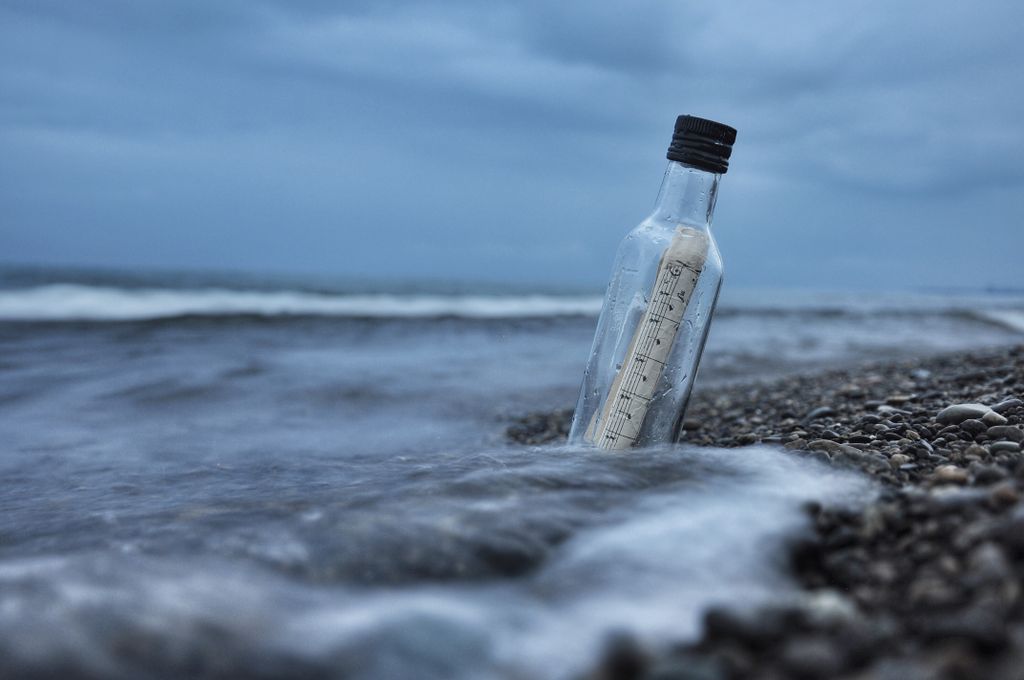
The discovery of George Morrow’s note also connects with a tradition that has existed for centuries. People have placed messages inside containers and released them into water for many different reasons, including scientific research, personal communication, and attempts to reach someone beyond their immediate surroundings.
According to historical accounts, one of the earliest recorded examples dates back to around 310 BC. The Greek philosopher Theophrastus reportedly used sealed containers in an experiment intended to investigate the relationship between the Atlantic Ocean and the Mediterranean Sea.
Centuries later, messages in bottles also became part of maritime research. Scientists discovered that releasing bottles into the water and recording where they eventually appeared could provide information about ocean currents.
The British Met Office explains that bottle papers were used by the Admiralty and meteorological researchers to understand the direction and speed of ocean currents. Captains recorded details about their ships and the locations where bottles were released, allowing researchers to compare those details with the places where they were recovered.
Other discoveries have demonstrated just how long such messages can survive. In 2018, a family found a bottle on a beach in Western Australia containing a note dated June 12, 1886.
The Western Australian Museum helped authenticate the discovery, which had been released from a German sailing ship as part of a scientific experiment. The bottle had spent nearly 132 years away from the people who originally sent it into the water.
These historical discoveries show that messages in bottles can sometimes survive far beyond the expectations of the people who release them. However, George Morrow’s note had a particularly personal purpose because it included his name and a direct request to whoever found it.
Unlike scientific drift bottles, which were designed to collect information about water movement, his message was connected to an individual and a place.
That distinction made the discovery in Michigan especially interesting. The bottle had not simply survived. It had eventually reached someone who could help identify the person behind the handwriting.
A Young Man’s Message Found Its Way Home
There were several people involved in bringing George Morrow’s message back into the story of his family. Dowker spotted the bottle, Hemmer helped retrieve the fragile paper, and Szatkowski took the time to investigate the name and locate George’s daughter.
Without those separate decisions, the note might have remained an unidentified curiosity. Instead, a simple Facebook post turned an underwater discovery into a reunion between a family and a small piece of its history.
Primeau’s decision to let Dowker keep the bottle also gave the discovery a future beyond the initial excitement. Visitors could see the original message, learn about George, and understand how a teenager’s unusual gesture had survived almost a century.
There is no way to know precisely what George was thinking when he wrote those few lines in November 1926. His daughter believed it might have been a birthday adventure, especially given his habit of leaving notes in unexpected places.
But the result was something neither he nor anyone else could have predicted. The message outlasted its writer and eventually reached someone who remembered him.
A small green bottle had spent decades beneath the waters of Michigan. When Jennifer Dowker finally brought it to the surface, it carried a piece of a family’s history that had been waiting nearly 95 years to be found.