

Minnesota homeowners are facing a fresh financial blow, with preliminary figures pointing to nearly $950 million in additional property taxes next year. The projected increase comes as Democrats strengthen their position in the state, raising questions about the direction of Minnesota’s tax policies and the growing cost of living for ordinary residents.
One homeowner has already received notice of a 31.3% property tax increase and is considering selling his house. His situation reflects a wider debate unfolding across America, where Republican-led states are pursuing tax cuts while Democratic-led states increasingly look toward higher taxes on wealthy households to finance public services and close budget gaps.
Minnesota Homeowners Face A Massive Property Tax Increase
Preliminary property tax levies released by the Minnesota Department of Revenue indicate that residents could collectively pay nearly $950 million more in property taxes in 2027. According to figures reviewed by local outlet KSTP, that represents a 6.5% increase compared with the previous year.
The projected increase has triggered concern among homeowners already dealing with rising household expenses. For many families, property taxes represent a substantial part of their annual housing costs, and another significant increase could make staying in their homes increasingly difficult.
The numbers become even more concerning when individual taxing authorities are examined. Counties are projected to collect more than $4.88 billion in property taxes, an increase of 8.1% from 2026. City property tax levies are also expected to rise by 8.1%, reaching more than $4.3 billion.
Other projected increases include:
- Townships: Approximately $367 million in collections, representing a 4.9% increase.
- School districts: Nearly $4.6 billion in levies, up 5.0%.
- Special taxing districts: Around $564 million, marking a 3.7% increase.
- Counties: More than $4.88 billion, an 8.1% increase.
- Cities: More than $4.3 billion, also representing an 8.1% increase.
These figures remain preliminary, and the final amounts could change before the levies are officially established. Minnesota experienced a similar situation the previous year, when preliminary estimates also projected approximately $950 million in additional property taxes. The final increase ultimately came in $74 million below the original projection.
Even with that adjustment, the latest figures have left residents questioning how much more they can reasonably be expected to pay.
One Homeowner Is Already Considering Selling His House
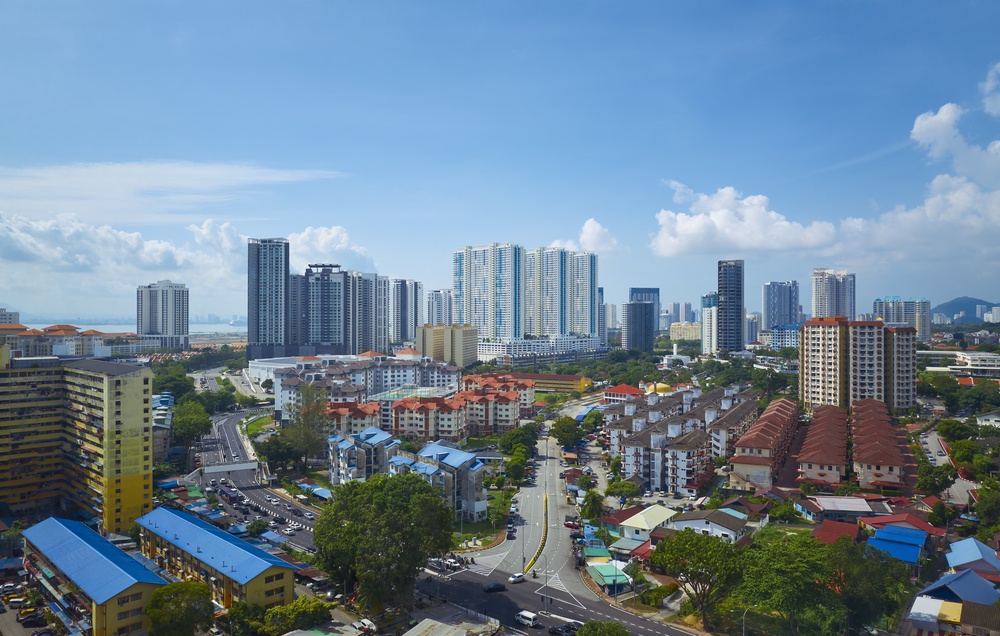
For Meyer Belkin, the projected tax increase has become a personal financial concern rather than an abstract political debate. After living in his home for four years, he received notice of a 31.3% property tax increase.
Speaking to KSTP, Belkin expressed his frustration about the additional financial burden. “When I look at that number, it makes me sick, it’s not fair, what’s coming next year, right?” he said.
The increase has made him reconsider whether he can afford to remain in his property. Belkin revealed that he had already arranged a meeting with a real estate agent to determine how much he might receive if he decided to sell.
“I literally have an appointment with a realtor this week, who’s coming to walk through the house, and look at it, and tell me what they think I can sell it for,” he told the outlet.
His comments illustrate the difficult decisions that sudden housing-cost increases can create for homeowners. People who have spent years building financial stability around a particular property may find themselves reconsidering their plans when annual expenses rise sharply.
Property taxes can also influence decisions about retirement, household budgets, and whether families remain in the communities where they have established their lives. For homeowners on fixed incomes, even a moderate increase can create pressure, particularly when insurance, utilities, and maintenance costs are also rising.
Belkin’s situation has therefore become part of a much wider discussion about affordability and the financial consequences of local government spending.
Local Government Spending Is Drawing Scrutiny

Minnesota’s projected tax increases have also attracted criticism from Mark Haveman, executive director of the Minnesota Center for Fiscal Excellence. He warned that several underlying financial pressures could create further difficulties for property owners.
Among the concerns he identified were declining commercial property values, unfunded state mandates, and the expansion of local governments. These factors can affect how much revenue municipalities need to collect from homeowners and other property owners.
Haveman also questioned the extent to which local governments rely on property tax increases to finance their operations. Speaking to KSTP, he said, “Local governments can do a lot more, in my opinion, the levy is called the tax of last resort for a good reason.”
His comments raise an important question about the relationship between government spending and household affordability. When local authorities face rising expenses or receive additional responsibilities without sufficient funding, property owners can end up carrying a greater share of the financial burden.
However, property taxes also support services that residents depend on, including schools, public safety, infrastructure, and municipal operations. Local governments must balance those responsibilities against the financial capacity of the people who fund them.
Minnesota residents will have an opportunity to raise their concerns at upcoming Truth and Taxation meetings before the levies are finalized next month. These meetings provide homeowners with a chance to question proposed increases and express their views about local government budgets.
Red And Blue States Are Moving In Opposite Directions

Minnesota’s property tax controversy is unfolding against a much larger political divide over taxation across the United States. Republican-led states have increasingly pursued lower individual income taxes, with some seeking to eliminate them entirely.
Democratic-led states, meanwhile, have increasingly considered higher taxes on top earners as a way to strengthen public finances and maintain social services.
According to figures cited in a report examining state tax policies, 23 states have lowered their top individual income tax rates since 2021. Mississippi and Oklahoma have also established paths toward eliminating personal income taxes.
South Carolina is moving toward reducing its top income tax rate to 1.99%. Missouri residents are also considering a proposal that could eventually eliminate state income taxes while allowing lawmakers to expand sales taxes.
The contrast with Democratic-led states is becoming increasingly apparent. Washington state lawmakers have advanced legislation proposing a 9.9% income tax on annual earnings exceeding $1 million. New York City Mayor Zohran Mamdani has also pushed for higher income taxes on wealthy households.
Democratic leaders argue that higher earners can contribute more toward public services, particularly as states prepare for financial pressures associated with federal spending reductions.
Republicans counter that lower taxes can make their states more attractive to businesses, investors, and individuals looking for places with a smaller tax burden.
The growing divide suggests that taxation is becoming a defining feature of competition between state governments, with residents increasingly weighing financial considerations when deciding where to live.
Republicans See Lower Taxes As An Economic Advantage

Republican tax-cut advocates argue that states can attract new residents and investment by reducing the amount of income residents must surrender to government.
Antitax activist Grover Norquist has been particularly vocal in encouraging Republican-led states to compete with one another on tax policy. He travels across the country using a color-coded map to illustrate which states have reduced their income tax rates.
Norquist has pointed to North Carolina as an example of a state that could provide a model for others. His preferred approach includes simplifying tax brackets, connecting future reductions to revenue targets, and controlling government spending.
He argues that states can operate without individual income taxes by relying on other sources of revenue, including sales taxes and corporate taxes, while benefiting from economic growth.
Speaking about the increasing number of states reducing their rates, Norquist said, “Look to your left, look to your right. It gets easier because you have more examples to give people.”
The strategy is also appearing in individual state campaigns. In Georgia, Republican Lieutenant Governor Burt Jones has pledged to phase out state income taxes by 2032 as he campaigns to replace term-limited Governor Brian Kemp.
Jones has argued that Georgia needs to remain competitive with neighboring states that do not impose individual income taxes, including Florida and Tennessee.
Missouri House Speaker Jon Patterson has similarly supported eliminating the state’s income tax. He said lawmakers should act to “avoid the risk of being left behind.”
These proposals reflect a growing Republican belief that tax competition can influence where Americans choose to establish businesses, purchase homes, and build their careers.
Democrats Defend Higher Taxes On Wealthy Americans

Democratic lawmakers have a different argument. They contend that increasing taxes on the highest earners can provide additional funding for essential services without placing the same burden on lower-income households.
Washington state offers a prominent example of this approach. Its Democratic-controlled legislature passed a bill proposing a 9.9% income tax on earnings exceeding $1 million. At the time covered by the reference report, the measure was awaiting Governor Bob Ferguson’s signature, and he had pledged to sign it.
The additional revenue would support the state’s general fund, childcare, free school meals, and tax credits for lower-income residents.
Supporters argue that wealthy households have a greater capacity to contribute financially, particularly when public programs face pressure from reductions in federal funding.
Washington House Democratic Majority Leader Joe Fitzgibbon acknowledged the importance of wealthy residents and the businesses they support. However, he argued that high-income earners could contribute more toward maintaining the state’s services.
“We value having millionaires and billionaires here. We value the jobs that the tech sector and biotech and aerospace and agriculture bring,” Fitzgibbon said. He added that the highest earners could do more to support the state.
Governor Ferguson has argued that the proposed tax would affect fewer than 0.5% of residents and make “life more affordable for Washington families.”
Republicans strongly disagree with that assessment. Washington House Minority Leader Drew Stokesbary warned that the proposal could discourage entrepreneurship and encourage wealthy residents to move elsewhere.
He also questioned whether a tax introduced specifically for millionaires could eventually expand to cover additional households.
The disagreement captures the central conflict between the two parties. Democrats emphasize revenue and public investment, while Republicans warn that higher taxes could undermine the economic activity needed to generate that revenue.
Missouri’s Tax Proposal Raises Concerns About Ordinary Families

Missouri’s proposed income tax changes demonstrate why eliminating one tax does not necessarily mean residents will pay less overall.
Republicans supporting the proposal want to phase out individual income taxes while giving lawmakers greater authority to expand sales taxes. The changes could extend sales taxes to services such as television streaming, haircuts, and automobile repairs.
Supporters see the proposal as an opportunity to make Missouri more competitive with states that have lower income taxes.
However, critics argue that replacing income taxes with broader sales taxes could shift a significant portion of the financial burden toward ordinary households.
According to estimates from the Missouri Budget Project, as many as 80% of Missouri residents could end up paying more under the proposal. The organization also estimated that the changes could create a $5 billion budget shortfall, potentially threatening funding for education, healthcare, and other public services.
State Representative Steve Butz, a Democrat from St. Louis, strongly opposed the plan. He described it as “not good for the vast majority of Missourians.”
The proposal therefore presents a complicated question for voters. Eliminating income taxes might benefit some higher-income households, but expanding sales taxes could increase everyday expenses for people across different income levels.
The outcome will depend on the final structure of the proposal and how lawmakers implement any changes approved by voters.
Population Migration Is Adding Political Pressure
Tax policy is also becoming increasingly connected to population migration. States that offer lower living costs and lighter tax burdens have attracted attention from Americans considering relocation.
A Wall Street Journal editorial cited in the third reference highlighted population losses in several large Democratic-led states between 2020 and 2024. California recorded a decline of 1,465,116 residents, while New York lost 966,209 and Illinois lost 418,056.
By comparison, Texas gained 747,730 residents, while Florida gained 872,722 over the same period. Utah, Idaho, Arizona, and North Carolina also experienced population growth.
These figures have become part of the political argument over whether tax policies influence where Americans choose to live.
Conservative critics argue that higher taxes, expensive housing, and other financial pressures can encourage residents and businesses to relocate to states with lower costs.
However, migration decisions involve several factors beyond taxation. Employment opportunities, housing availability, family connections, climate, and lifestyle preferences can all influence relocation decisions.
The political consequences could nevertheless be significant. Population changes affect congressional representation through the census and subsequent reapportionment process.
The House of Representatives currently has 435 voting seats, and states gaining or losing population can gain or surrender congressional representation accordingly. The next census in 2030 will provide the population figures used for the following reapportionment.
A continued shift toward faster-growing states could therefore influence the balance of political power in Washington for years.
Maryland And Rhode Island Face Their Own Tax Battles

Minnesota is far from the only state experiencing political disputes over taxation. Maryland and Rhode Island provide further examples of Democratic-led governments pursuing higher taxes on wealthy residents.
Maryland Governor Wes Moore signed legislation increasing income taxes on residents earning more than $500,000 annually. The move followed the administration of former Republican Governor Larry Hogan, who had emphasized tax reductions during his eight years in office.
A conservative editorial cited in the third reference claimed Hogan’s administration reduced state taxes by $4.7 billion and left behind a $5.5 billion surplus alongside a $3 billion rainy-day fund.
The same editorial criticized Maryland’s subsequent financial direction and connected its tax increases to population losses. Those claims reflect the editorial’s political interpretation rather than proof that tax policy alone caused residents to leave.
Rhode Island is experiencing a similar disagreement. Democratic Governor Dan McKee has proposed an additional 3% surcharge on annual income exceeding $1 million, which would raise the applicable rate to 8.99%.
McKee argues that the additional revenue would help protect safety-net programs following reductions in federal funding.
Republican House Minority Leader Mike Chippendale has warned that the measure could encourage more wealthy residents to leave Rhode Island for states with lower taxes.
“We want people to be prosperous,” Chippendale said. He argued that wealthy residents often reinvest their resources into the economy and help support business activity.
Colorado is also considering changes, with progressive groups collecting signatures for a possible ballot measure that would replace its flat income tax with a graduated system. Under the proposed approach, residents earning more than $500,000 would face higher taxes, while those earning less would receive reductions.
These disputes demonstrate how taxation has become a central issue for state governments preparing for elections and attempting to balance their budgets.
Minnesota’s Tax Debate Could Become A Political Flashpoint
Minnesota’s latest property tax projections arrive during a significant political moment for the state. In the 2026 midterm elections described in the first reference, Democrat Peggy Flanagan defeated Republican Michele Tafoya by 10 points in the contest for the open Senate seat.
Democrat Amy Klobuchar also defeated Republican Lisa Demuth by approximately 13 points in the gubernatorial race.
Those results give Democrats a strong position in Minnesota’s political leadership as homeowners confront the projected 2027 tax increases.
The timing could create an uncomfortable political challenge for elected officials. Residents facing higher housing costs may demand explanations about government spending, local budgets, and the services funded through property taxes.
Democrats will likely emphasize the need to maintain public services and provide adequate funding for local institutions. Republicans can use the projected increases to question whether government spending has grown beyond what residents can reasonably afford.
Neither argument automatically explains every dollar of Minnesota’s proposed increase. The final levies will depend on decisions made by individual taxing authorities, and the preliminary figures remain subject to revision.
However, the concerns raised by homeowners are already clear. Belkin is considering selling his property, while fiscal policy experts have warned that several pressures could keep local government costs elevated.
For Minnesota residents, the upcoming Truth and Taxation meetings will offer an opportunity to challenge proposed increases before the figures become final.
For politicians, the test will be whether they can explain rising costs to the people expected to pay them. A homeowner deciding whether to sell a house because of a tax increase is a difficult political reality for any government to ignore.