
Your cart is currently empty!
House Approves Temporary Funding Deal Ahead of Midterm Elections

Washington has bought itself more time, but Congress has not solved the spending fight behind the latest funding crisis. The House of Representatives has passed a short-term bill to keep the federal government operating beyond October 1, pushing the next major showdown into December and removing the immediate threat of a shutdown before the midterm elections.
Contents
show
The legislation passed the House by a decisive 370-48 vote after previously clearing the Senate. It now heads to President Donald Trump for his signature, giving lawmakers temporary relief while leaving some of Washington’s most difficult political and fiscal disputes unresolved.
House Approves Temporary Funding Extension
The legislation extends current government spending levels through December 11. The temporary measure, commonly known as a continuing resolution, was needed because Congress has not completed any of the 12 appropriations bills required to fund the federal government for the full fiscal year.
Those spending bills cover a wide range of government functions, including homeland security, federal law enforcement, energy, housing and national defense. The fiscal year begins on October 1 and runs through September 30, 2027, making the failure to complete the appropriations process a major problem for lawmakers.
By passing the temporary extension, Congress has avoided an immediate lapse in funding for federal agencies. However, the measure does not settle the arguments over how much the government should spend or where that money should go.
The broad margin in the House reflected a shared desire to prevent another politically damaging shutdown. With the November 3 congressional elections approaching, neither Republicans nor Democrats appeared eager to face voters after allowing federal operations to grind to a halt again.
Lawmakers Wanted to Avoid Another Shutdown
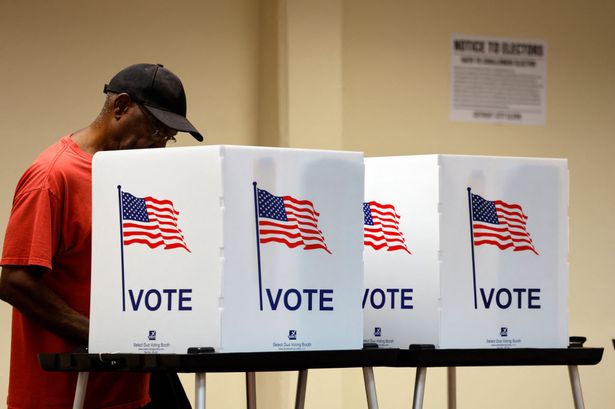
The vote came after an unusually contentious period in Washington. According to the reference reports, Congress has experienced three partial government shutdowns since the beginning of Trump’s second term, with those shutdowns totaling an unprecedented 161 days.
Republicans, who control Congress, and Democrats in the minority have clashed over issues ranging from health insurance subsidies to limits on federal immigration officers’ enforcement powers. Those disputes have repeatedly complicated the government’s annual funding process and made bipartisan agreements difficult.
This time, however, the political risks of another shutdown appeared too high for many lawmakers. Voters are already concerned about the rising cost of food and housing, while other issues, including the U.S. war against Iran and tariffs affecting farmers, have added to the pressure facing elected officials.
House Appropriations Committee Chairman Tom Cole, a Republican from Oklahoma, openly acknowledged the role of the election calendar in the decision. “This will give Congress time to get past the November elections,” Cole said during debate over the legislation.
The temporary bill therefore serves two political purposes. It keeps the government open while also allowing members of Congress to campaign without an active shutdown crisis dominating the final stretch before Election Day.
The Midterm Results Could Reshape Negotiations

The decision to postpone the larger spending fight means that the November election will take place before Congress settles on full-year funding. That creates a complicated political situation because the results could change the balance of power and influence the demands each party makes when lawmakers return to Washington.
Cole said the election would have a major effect on the negotiations that follow. “Everybody’s calculations will change. Everybody’s point of view will change. It’ll have an enormous impact about what happens for the balance of the year,” he said.
Lawmakers who win re-election may return with a stronger sense of political leverage, while members of a party that gains seats could push harder for its spending priorities. The results may also shape expectations about which party will control Congress in 2027.
The immediate goal, according to Cole, remains completing the full appropriations process before the end of the year. “I do want to finish all the bills before the end of the year. Now, whether we can do that or not is another matter,” he said.
That uncertainty explains why the continuing resolution attracted significant bipartisan support. The alternative would have forced Congress into an intense funding battle immediately before an election, when both parties are focused on protecting vulnerable seats and responding to voter frustration.
Rosa DeLauro Pushes Congress to Reclaim Control

Democratic Rep. Rosa DeLauro of Connecticut, the senior Democrat on the House Appropriations Committee, used the vote to make a broader argument about Congress’s constitutional role in controlling federal spending.
“The power of the purse resides within the Congress. It is our exclusive responsibility,” DeLauro said. “The first step in exercising that authority is passing this bill today.”
Her comments reflected continuing tension between congressional appropriators and the Trump administration. According to the reference reports, DeLauro has criticized unilateral actions taken by the administration since early 2025, including severe cuts to federal agencies and the elimination of the U.S. Agency for International Development.
DeLauro also acknowledged that the midterm election could affect the political environment surrounding future negotiations. She said she hopes to become chair of the Appropriations Committee again if Democrats win control of the House.
However, she said lawmakers should focus on completing the government’s full-year funding bills before 2027 begins. “The midterm election will have an effect, but the goal is that we need to pass appropriations bills before the end of the year,” DeLauro said. “Let’s get to the finish line.”
Her comments captured the central challenge facing Congress. The temporary bill has removed the immediate deadline, but lawmakers still need to agree on the much larger set of decisions they have delayed.
Senate Additions Sparked Opposition

Despite the overwhelming final vote, the continuing resolution faced opposition from members of both parties. According to the reference reports, 19 Republicans and 29 Democrats voted against the measure.
Several House Republicans objected to provisions that the Senate added to the bill. The House had originally passed a different temporary funding measure in July, but that version did not gain enough support in the Senate.
Senate appropriators Susan Collins, a Republican from Maine, and Patty Murray, a Democrat from Washington, drafted the version that eventually passed. The Senate approved it by a bipartisan 90-6 vote before sending it back to the House.
House Republican leadership brought the Senate version to the floor through a fast-track process known as a suspension of the rules. The procedure prevented amendments and required a two-thirds majority for the legislation to pass.
Rep. Chip Roy of Texas argued that House members should have been allowed to amend the measure. “The Senate added a whole bunch of stuff,” Roy said. “All of this could have been handled either by putting it in the rule and allowing some amendments, or just doing a clean CR. They didn’t do that, so I’ve got major problems with that.”
The dispute showed how difficult it can be to keep temporary funding bills limited to government spending. Once a shutdown deadline approaches, lawmakers often face pressure to accept additional provisions in exchange for quickly securing enough votes.
Hemp and Grant Rules Caused Further Disputes
One of the disputed provisions temporarily blocks the White House from implementing an Office of Management and Budget rule that would give political appointees more power over discretionary grants. Opponents of the proposed rule have argued that it could weaken the role of independent peer reviewers and threaten funding for programs such as scientific research.
DeLauro praised the inclusion of the temporary block, viewing it as an important check on the administration’s authority over the federal grant process. The disagreement reflects a wider argument over how much influence political appointees should have over decisions that have traditionally involved independent experts.
Another point of conflict involved the treatment of certain hemp products. The continuing resolution delays the implementation of a new rule that would classify some hemp products as marijuana.
Rep. Andy Harris of Maryland strongly objected to the delay, arguing that intoxicating hemp products pose serious risks to children. “We have to stop poisoning our children with intoxicating hemp products,” Harris said. “We can’t let it go another 30 days, and I feel strongly.”
House Majority Leader Steve Scalise of Louisiana acknowledged that some Republicans opposed provisions added by the Senate. However, he argued that preventing another government shutdown was the more urgent priority.
“The Senate made some changes, some that we don’t support,” Scalise said. “But when you weigh the whole thing, it’s much more important for the country to avoid a government shutdown.”
The $40 Trillion Debt Still Looms

The short-term bill does little to address the broader fiscal problems facing the United States. The reference reports note that the national debt crossed the $40 trillion threshold last month, while affordability remains one of the biggest concerns for voters.
The continuing resolution keeps spending at existing levels, but it does not establish a long-term agreement about future priorities. Congress still must decide how much to spend on defense, domestic programs and other federal responsibilities.
One major dispute involves Trump’s call for a $1.5 trillion military budget. Democrats have rejected the proposed increase, which would represent a major jump from the already record-breaking $1 trillion Congress provided for the military this year, according to the reference material.
The Senate’s rules also mean that bipartisan cooperation remains essential. Funding legislation generally requires 60 votes to overcome a filibuster, giving Democrats influence over the process even though Republicans control the White House and both chambers of Congress.
Those divisions will still be waiting when lawmakers return to the spending debate after the election. The political environment may be different, but the disagreements over military spending, domestic programs and congressional control of federal funds will remain.
December Could Bring Another Showdown
Congress must eventually complete the 12 full-year appropriations bills that it has so far failed to pass. The continuing resolution delays that task until December 11, when lawmakers could once again face the threat of a government shutdown if they cannot reach an agreement.
The November election results could make those negotiations even more complicated. A party that gains seats may return to Washington feeling empowered to demand greater concessions, while lawmakers facing a changing balance of power could attempt to secure policy victories before the next Congress takes office.
For now, both parties can claim some benefit from avoiding an immediate shutdown. Republicans can point to keeping the government open while controlling Congress and the White House, while Democrats can emphasize the bipartisan nature of the measure and provisions they supported.
The more difficult test comes after the ballots are counted. Congress has temporarily stopped the shutdown clock, but the unresolved spending fight will return with a December deadline and a political landscape shaped by the midterm results.