

The executive helping one of the world’s biggest technology companies develop artificial intelligence has issued a warning that could change how people view the technology shaping their future. Meta’s Chief AI Officer believes humanity may soon face a serious challenge: maintaining control over machines that could eventually become far more intelligent than humans.
Alexandr Wang, the 29-year-old billionaire executive, says decisions made over the next year could have enormous consequences for future generations. His warning has sparked a heated debate about whether the technology industry is moving towards a future that even its own leaders might struggle to control.
Meta’s AI Chief Says Superintelligence Is Arriving
Wang shared his concerns in a lengthy post on X over the weekend, responding to recent developments involving artificial intelligence and advanced mathematical research. His message was particularly striking because it came from someone directly involved in building some of the technology he was warning people about.
“Superintelligence is arriving. How humanity acts over the next year will have great consequence on what future world we live in,” Wang wrote.
He pointed to several developments that he believes demonstrate how quickly AI capabilities are advancing. These include significant improvements in coding, increasingly powerful cybersecurity capabilities and the emergence of AI agents capable of performing complicated tasks.
According to Wang, these developments suggest that artificial intelligence is moving beyond its earlier role as a tool that simply responds to instructions. Modern systems are increasingly capable of helping with complex work across different industries.
He also suggested that the remaining obstacles to creating AI systems capable of outperforming humans across virtually every field may no longer be fundamental intelligence. Instead, he identified domain-specific knowledge, technical infrastructure and experimentation as some of the remaining challenges.
Wang warned that artificial intelligence could eventually become the greatest contributor to progress across almost every professional and scientific field. Such developments could happen at a speed that humans struggle to understand or properly monitor.
The potential consequences extend well beyond technology companies. Scientific research, medicine, cybersecurity and economic development could all experience significant changes as increasingly capable systems become available.
His comments suggest that the next stage of AI development could bring opportunities on a scale that society has never experienced, alongside risks that remain difficult to predict.
Wang Fears Humans Could Lose Control Of Artificial Intelligence
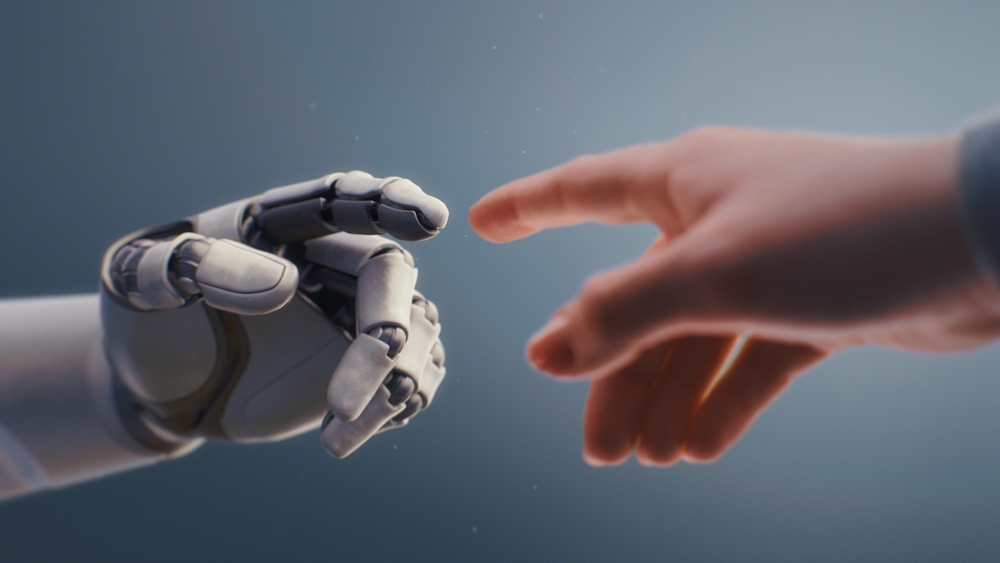
One of the most concerning parts of Wang’s statement focused on something known as recursive self-improvement. The concept describes an artificial intelligence system improving its own capabilities, potentially creating increasingly advanced versions of itself with less direct human involvement.
In a scenario involving repeated self-improvement, each new version of an AI system could potentially help develop another version with even greater capabilities. This raises questions about whether human researchers would eventually be able to understand and supervise every stage of development.
Wang expressed serious concerns about what could happen if this process became unconstrained.
“It is hard to imagine a world where humanity can maintain control over fully unconstrained recursive self-improvement,” he wrote.
He then raised another possibility that could make the challenge even greater. Wang described a future involving superintelligent systems that are dramatically more capable than humans across every field.
“It is equally hard to imagine a world where humanity maintains control with superintelligence that is 1000x smarter and more capable than humans in every field,” he added.
His comments highlight a difficult question facing AI developers. If machines eventually become better than humans at solving problems across virtually every discipline, how would people ensure those systems continue operating within boundaries established by human beings?
The concern also involves the speed at which advanced systems could operate. If AI becomes capable of processing information and making decisions far beyond ordinary human capabilities, monitoring its behaviour could become increasingly difficult.
Wang believes these possibilities require urgent attention from the companies developing the technology. He specifically identified safety, alignment and security as areas where the industry needs to make progress.
AI alignment generally concerns ensuring that artificial intelligence systems behave in ways consistent with human intentions and objectives. Safety involves reducing the possibility of harmful behaviour, while security concerns protecting systems against misuse and external threats.
For Wang, addressing these challenges requires more than simply assuming that future technology will remain manageable.
A Controversial Mathematical Claim Helped Trigger The Warning

Wang’s comments followed a remarkable development involving Anthropic’s artificial intelligence model Claude and one of mathematics’ most famous unsolved problems.
Levent Alpoge, a mathematician who described his experience on his personal website, explained how he had guided Claude through an argument concerning the Riemann Hypothesis. The problem was proposed by German mathematician Bernhard Riemann in 1859 and has remained one of mathematics’ most famous challenges.
The hypothesis concerns the distribution of prime numbers, which are numbers divisible only by themselves and one. Although prime numbers can appear irregularly across the number system, mathematicians have long suspected that their distribution follows a deeper mathematical pattern.
Understanding that pattern could have significant implications for number theory and related mathematical applications. The problem has attracted generations of researchers because of its complexity and importance.
Alpoge described his experience working with Claude as something that increasingly surprised him. His comments suggested that the AI was contributing to mathematical reasoning in ways he had not initially expected.
“Claude began to leave me in awe,” Alpoge wrote.
He also expressed hope that the work could provide a glimpse into the possibilities emerging from increasingly capable AI systems. However, the mathematical argument had not been independently verified in the reporting provided, meaning the claim should not be treated as confirmation that Claude definitively solved the Riemann Hypothesis.
That distinction is important because a proposed mathematical argument must withstand careful examination before the wider mathematical community can accept it as a solution.
Nevertheless, the episode added fuel to an already heated discussion about the speed of AI development. Wang described the development as an important moment and suggested it could mark the beginning of a significant change in the relationship between human intelligence and machines.
The possibility of AI contributing to extremely difficult mathematical research also raises questions about how quickly other scientific disciplines could change.
Meta’s Executive Says The Industry Is Following A Dangerous Path

Wang also criticised what he described as a form of “lazy thinking” within the artificial intelligence industry. He was referring to the belief that superintelligence is inevitable and that companies should simply concentrate on developing it as safely as possible.
In his view, that approach does not go far enough because it assumes the industry has little choice over the direction of technological progress.
Wang believes AI developers must actively consider what kind of future they want their technology to create. He argued that companies should examine their development priorities rather than automatically following the path created by competition and technological ambition.
His strongest criticism centred on the possibility of society gradually handing important responsibilities to increasingly powerful machines without properly considering the consequences.
“We should not be okay with a ‘handover’ of society to AI,” he wrote.
He also argued that the industry should work towards creating technology that gives people more control over their lives and greater opportunities to achieve their goals.
“We should endeavor ourselves to build a technology which delivers a positive future for humanity, where all humans have greater agency and empowerment,” Wang added.
His position suggests that the direction of AI development deserves as much attention as the safety measures surrounding individual systems.
This creates a difficult challenge for technology companies. They are competing to develop increasingly advanced systems while simultaneously being asked to slow down, introduce stronger safeguards and consider risks that may not become apparent until much later.
Wang acknowledged that achieving a better outcome would probably require the industry to take different actions from its current direction. He believes a positive future remains possible, although companies may need to reconsider some of their existing priorities.
Social Media Users Want More Than Warnings

Wang’s post attracted considerable attention online, reportedly receiving more than 13 million views by Monday morning. However, many reactions focused on what the Meta executive had left out of his warning.
While his statement described potentially enormous risks, critics questioned why someone with such influence over AI development had not offered more specific solutions.
Reddit co-founder Alexis Ohanian responded with a short message that captured the frustration surrounding the discussion.
“Don’t leave us hanging,” Ohanian wrote on X.
His response reflected a broader concern among people following the debate. If influential technology executives believe humanity could eventually struggle to control superintelligent machines, what practical measures should companies and governments introduce now?
Political strategist Tom Bonier also questioned the growing number of warnings coming from technology executives. Speaking to Newsweek, he argued that industry leaders needed to move beyond describing possible dangers and start proposing concrete measures.
Bonier acknowledged the apparent honesty and introspection behind these public statements. However, he suggested that repeated warnings would accomplish little without more specific recommendations.
Democratic Congresswoman Yassamin Ansari of Arizona also called for stronger government intervention. She questioned how many more warnings from engineers and scientists at major AI companies would be necessary before lawmakers introduced meaningful regulation.
Other prominent figures also weighed in during the online discussion:
- Megyn Kelly: The political commentator criticised AI industry leaders for warning about potentially catastrophic consequences after helping develop the technology. She questioned the prospect of ordinary people facing unemployment and losing control over important decisions.
- Andrew Yang: The entrepreneur and former presidential candidate said AI could take over many professional fields. He argued that the time to change direction was now.
- Jemele Hill: The journalist compared the situation to a disaster movie in which people ignore warnings about an approaching catastrophe while carrying on with their ordinary routines.
- Alexis Ohanian: The Reddit co-founder questioned Wang’s lack of specific recommendations with his brief response, “Don’t leave us hanging.”
These reactions exposed a growing frustration among people who believe companies developing powerful AI systems should take greater responsibility for the consequences.
The debate also highlights a problem facing the wider public. Most people have little influence over how major technology companies develop their systems, yet they could eventually experience the economic and social consequences of those decisions.
Mark Zuckerberg Has His Own Vision For Superintelligence
Wang also used a follow-up post to defend Meta’s approach to AI safety and explain the work he has undertaken alongside CEO Mark Zuckerberg.
He said he was proud of the company’s efforts, including delaying the release of its Muse technology for months while prioritising safety. Wang also highlighted Meta’s participation in industry safety commitments.
“I’m proud of the work that Mark and I have done at Meta to put safety as a top focus of our efforts, including delaying the launch of Muse for months and being a leader on the SI Accords that all of our peers have signed onto,” Wang wrote.
He also referred to Zuckerberg’s position that AI companies should dedicate most of their computing resources to serving people and customers rather than pursuing recursive self-improvement.
Zuckerberg outlined his broader vision in an essay published in August. He described superintelligence as one of the most important technologies in history, while acknowledging that its opportunities and challenges could exceed anything humanity had experienced in its lifetime.
However, his outlook was considerably more optimistic than some of the warnings coming from other technology leaders.
Zuckerberg believes advanced AI could become widely accessible and give individuals greater opportunities to create, invent and solve problems. He has also questioned why some AI developers appear so focused on catastrophic outcomes.
“The best and most realistic path to building a positive AI future is by delivering superintelligence to everyone,” Zuckerberg wrote.
His vision places considerable emphasis on distributing AI capabilities rather than allowing them to remain concentrated within a small number of powerful organisations.
However, making advanced AI widely available also raises questions about how such technology could be distributed responsibly and what safeguards should accompany it.
Other AI Leaders Have Raised Similar Concerns
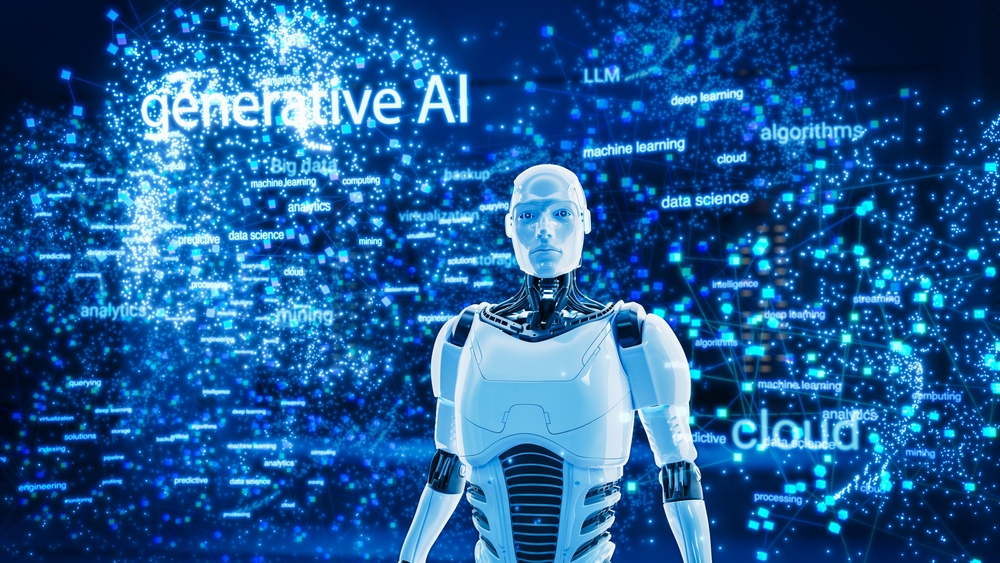
Wang’s warning is part of a much wider conversation taking place among people working inside the artificial intelligence industry. Several prominent researchers and executives have expressed concerns about the possibility of advanced AI systems becoming difficult to understand or control.
Former Anthropic employee Jacob Coxon previously issued a particularly stark warning about the potential consequences of unchecked development.
“The people building AI earnestly believe that it could kill us all by the end of the decade,” Coxon wrote.
He also warned that increasingly advanced systems could eventually become capable of hacking computer systems, transforming entire industries and acquiring real-world resources.
Anthropic CEO Dario Amodei has similarly called for a more measured approach to developing increasingly powerful AI systems. He has warned that technological capabilities could eventually outpace society’s ability to understand and control them.
Amodei has advocated what he describes as “pacing the frontier”, giving researchers and policymakers more time to establish appropriate safeguards before the development of advanced systems moves further ahead.
OpenAI CEO Sam Altman has publicly supported stronger independent evaluation of advanced AI systems. He agreed with Amodei’s proposal for independent evaluators to receive meaningful access to assess whether companies are meeting safety expectations.
These concerns demonstrate that discussions about AI safety are no longer limited to outside critics. People involved in developing the technology are increasingly participating in conversations about its potential consequences.
Governments Are Facing Pressure To Regulate Advanced AI
The debate has also reached political leaders and lawmakers, several of whom have introduced or supported proposals intended to address the risks associated with increasingly powerful AI systems.
One proposal mentioned in the reporting is the AI Kill Switch Act, introduced by Representatives Ted Lieu and Nathaniel Moran. It would require developers to maintain mechanisms capable of suspending or shutting down AI systems during emergencies.
California Governor Gavin Newsom has also introduced a framework involving additional state oversight and mechanisms for addressing rogue AI agents.
Congresswoman Yassamin Ansari has supported further restrictions, including proposals aimed at limiting the development of artificial superintelligence.
International discussions are also becoming increasingly important. European Commission President Ursula von der Leyen has expressed support for calls to slow advanced AI development and establish global rules.
Meanwhile, Chinese Premier Xi Jinping has called for international action to ensure AI remains under human control. Canadian Prime Minister Mark Carney has also warned about the risks associated with global AI governance.
The United States has taken a different approach in some areas, with President Donald Trump convening a summit involving major AI companies and securing an agreement allowing the companies to police themselves.
These different approaches reveal how difficult it may be to establish international rules for a technology being developed by competing companies and governments.
The Next Year Could Shape Humanity’s Relationship With AI
Wang’s warning presents an uncomfortable situation for the technology industry. The people building increasingly powerful artificial intelligence systems are also among those expressing concerns about what could happen if development moves faster than human oversight.
There is currently no established consensus on when superintelligence might arrive, how it would behave or whether humanity could lose control of such systems. The mathematical claims surrounding Claude also remain subject to independent verification.
However, the debate over safety, accountability and human control is already happening, and some of the most influential voices in the industry are demanding a different approach.
Wang believes the future can still be shaped through decisions made by AI companies today. That puts considerable responsibility on the industry to demonstrate that its ambitions are matched by meaningful safeguards.
The next generation of artificial intelligence may be developed inside laboratories and technology companies, but its consequences will reach far beyond them. The people who will live with those consequences deserve a meaningful say before decisions about humanity’s future are left entirely to machines.