
Your cart is currently empty!
A 47-Million-Year-Old Owl Fossil Has Revealed A Secret About The Evolution Of Nighttime Hunters

Owls are famous for hunting under the cover of darkness, using extraordinary hearing and nearly silent flight to catch unsuspecting prey. Yet scientists have struggled to establish exactly when these birds developed their familiar nocturnal lifestyle. Now, an exceptionally preserved fossil discovered in Germany could help narrow down the timeline, and one detail inside the ancient bird has made the discovery even more fascinating.
Contents
show
Dating back approximately 47 million years, the fossil preserves much more than bones and the outline of an ancient bird. Researchers have been able to examine its feathers and even identify the remains of its last meal. Their findings suggest this particular owl was probably a daytime hunter, meaning its ancestors may have been living very differently from the silent nighttime predators we recognize today.

Scientists Discover An Ancient Owl With An Unexpected Lifestyle
The remarkable fossil was discovered at the Messel Pit, a world-famous fossil site near Frankfurt am Main in southern Germany. Dating back to the Eocene epoch, the specimen has been identified as a previously unknown owl species named Masillastrix blattophaga. Unlike many ancient bird fossils, which consist of scattered bones or incomplete skeletal remains, this specimen preserves an extraordinary amount of detail. Although its head is missing, researchers were able to examine its bones, body outline, and remarkably preserved feathers. Even the remains of its final meal survived inside the fossil.
That preservation gave scientists an unusual opportunity to investigate something that has remained difficult to establish throughout owl evolutionary history: when did these birds begin hunting at night? Their examination suggests that Masillastrix blattophaga was probably still active during daylight. The researchers reached this interpretation after studying the structure of its feathers and examining the insect remains preserved inside its body. Both findings provide clues about how the ancient predator may have hunted millions of years ago.
Dr. Gerald Mayr of the Senckenberg Research Institute and Natural History Museum in Frankfurt explained that the timing of this evolutionary transition remains uncertain. “It is still unknown when, in the evolutionary history of owls, the transition from a diurnal to a nocturnal lifestyle took place,” he said. Mayr also explained that many previously discovered owl fossils consist of only a few isolated bones, making it difficult to investigate their behavior. This German specimen offers considerably more information, allowing researchers to examine physical features that would normally disappear long before a fossil is discovered.

The Missing Feather Feature Could Explain Its Hunting Habits
One of the most significant evolutionary adaptations of modern owls is their ability to fly almost silently. When most birds flap their wings, the movement of air around their feathers produces audible noise. For predators attempting to approach unsuspecting prey, that sound can become a serious disadvantage. Owls have developed specialized feather structures that help reduce the noise created during flight, allowing them to approach animals with very little warning. Their wings contain a soft, velvety covering that absorbs sound, alongside tiny structures that disrupt airflow and reduce the noise produced by wingbeats.
Researchers examining the ancient German fossil discovered that its feathers lacked an important feature associated with modern owls. In particular, the leading edge of its feathers did not show the velvety fringe linked to the specialized silent-flight adaptations seen in living species. This suggests that the ancient bird had not yet developed at least some of the structures that make modern owls such effective nighttime hunters. The researchers therefore believe it was less likely to have relied on the same hunting strategy as its modern relatives, although they acknowledge that feather structure cannot establish an animal’s activity patterns with absolute certainty.
Modern owls benefit from several adaptations that work together to make nighttime hunting possible. Their specialized feathers reduce flight noise, while their excellent hearing and vision help them detect prey in low-light conditions. The ancient fossil provides a glimpse into an earlier stage of this evolutionary process, when some of those features were apparently still developing. Its missing feather fringe is particularly valuable because it gives scientists physical evidence to compare with modern owl anatomy, helping them investigate how specialized hunting abilities emerged over millions of years.
The Owl’s Last Meal Revealed Another Important Clue
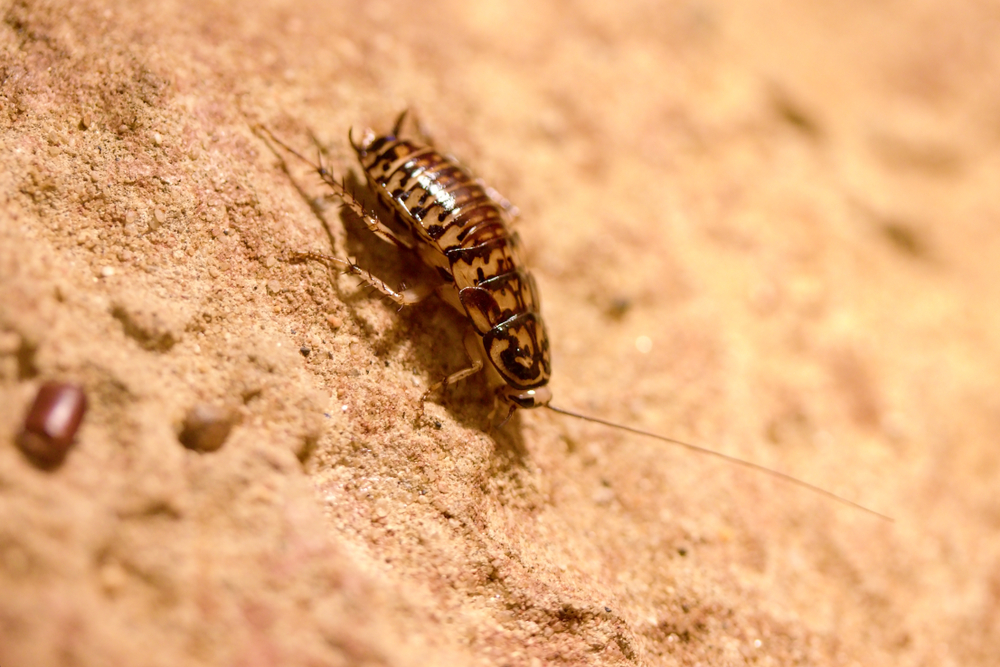
The feathers were not the only interesting feature preserved in the fossil. Researchers also discovered remnants of an insect inside the ancient owl’s stomach, which they identified as a cockroach. Even more remarkably, the remains retained evidence of a greenish-blue iridescent appearance. Scientists examined the surviving wing fragments and compared them with another fossil cockroach discovered just a few meters away. That second specimen was much better preserved and provided additional evidence about the identity of the insect found inside the owl.
Dr. Sonja Wedmann, head of the Messel excavation at the Senckenberg Research Institute and Natural History Museum in Frankfurt, explained how the researchers identified the remains. “The shape and structure of the wing remnants—including their strong longitudinal veins and numerous transverse veins—indicate that the insect is a fossil cockroach,” she said. Wedmann also explained that the nearby specimen helped confirm that the greenish-blue remains inside the owl’s stomach belonged to a cockroach wing. The discovery offers an unusually detailed record of what the ancient predator had eaten shortly before it died.
The insect’s appearance provides another possible clue about the owl’s lifestyle. According to the researchers, iridescent insects such as this are typically active during daylight. That observation supports their theory that Masillastrix blattophaga was probably a daytime hunter. Combined with the unusual feather structure, the preserved meal gives scientists two separate pieces of evidence pointing toward the same interpretation. However, the researchers cannot establish the bird’s complete daily routine from a single meal, and the discovery should be understood as supporting evidence rather than definitive proof of daytime activity.
Germany’s Messel Pit Preserves Secrets From 48 Million Years Ago
The location where the owl was discovered is almost as fascinating as the fossil itself. Around 48 million years ago, the Messel Pit was a lake surrounded by a tropical forest. Conditions at the bottom of the lake helped preserve dead organisms before decomposition could destroy their remains. The water was oxygen-poor, limiting the activity of organisms responsible for breaking down organic material. Fine sediment also helped protect delicate structures, allowing some specimens to survive with extraordinary detail across millions of years.
The site contains fossils from an astonishing range of prehistoric organisms, providing scientists with a detailed picture of the ecosystem that once existed there. Discoveries include early primates, ancient bats, primitive horses, fish, turtles, and numerous insects. Plant remains and fossilized fruits have also helped researchers understand the vegetation that surrounded the lake. Some specimens preserve feathers, fur, and skin, while certain insects retain evidence of their original coloration. These details make the Messel Pit particularly valuable because they reveal aspects of prehistoric life that ordinary skeletal fossils rarely preserve.
Some of the most fascinating discoveries involve insects with metallic and iridescent coloration. Scientists have identified fossils showing dramatic eye spots on ancient butterflies, alongside cockroaches with glittering wing cases resembling those of some modern green cockroach species. The cockroach preserved inside the ancient owl therefore connects two remarkable discoveries from the same prehistoric environment. It reveals what the bird may have eaten while also showing how much information can survive when fossilization conditions are unusually favorable.
A French Fossil Could Help Narrow Down The Evolutionary Timeline
The German owl provides an important point of comparison for another fossil discovered in France. Researchers identify that specimen, which dates to approximately 34 million years ago, as a probable candidate for an early nocturnal owl. The difference between the two discoveries creates an interesting evolutionary window. The German bird lived around 47 million years ago and appears to have retained characteristics associated with daytime hunting, while the French specimen may represent a much later stage in the development of nocturnal behavior.
This does not mean scientists have established the exact moment when owls became nighttime hunters. Evolutionary changes happen over extended periods, and different species can develop specialized characteristics at different times. Fossils also provide incomplete snapshots of ancient ecosystems, leaving gaps that researchers must gradually fill with new discoveries. Nevertheless, the two specimens help narrow the period scientists need to investigate when studying the emergence of nocturnal behavior among owls.
The German discovery is especially valuable because it preserves feathers that researchers can examine in detail. Many ancient owl fossils offer little information beyond skeletal anatomy, leaving scientists with limited evidence about how these animals actually lived. In this case, the missing feather fringe and preserved cockroach remains provide clues about both physical adaptations and possible feeding behavior. Further discoveries could help establish whether these features appeared gradually across different owl lineages or developed at different times among separate species.
What Modern Owls Owe To Millions Of Years Of Evolution
Modern owls possess a combination of physical adaptations that make them highly effective predators. Their large forward-facing eyes help them see in low-light conditions, while their exceptional hearing allows them to detect movements that might otherwise go unnoticed. Powerful talons help them capture prey, and specialized feathers reduce the noise produced during flight. Together, these characteristics give modern owls a remarkable advantage when hunting after sunset. The ancient German fossil suggests that at least some of their ancestors had not yet developed the same combination of specialized features.
The discovery also demonstrates why exceptionally preserved fossils can transform scientific understanding. A collection of isolated bones might reveal the approximate size and structure of an extinct animal, but feathers and stomach contents offer additional information about its biology. In the case of Masillastrix blattophaga, researchers can investigate possible hunting