
Your cart is currently empty!
A Breakthrough That Could Let Cats Live to 30: Inside the Race to Cure Feline Kidney Disease
For years, whispers across the veterinary world have hinted at a discovery that could redefine what it means for a cat to grow old. Not a minor treatment or a modest extension of comfort, but something far more transformative, which is an intervention that might alter the very trajectory of feline aging. The kind of scientific shift that begins quietly, almost invisibly, and then suddenly reshapes an entire field.
Contents
show
Now, that whisper has grown louder. With clinical trials on the horizon and decades of research converging into a single potential breakthrough, a question that once sounded impossible is now being asked in earnest: could cats one day live not just longer, but healthier and deeper into their senior years than we ever imagined?
A New Dawn for Feline Health
Kidney decline is one of the most common health concerns aging cats face, but the scientific approach to it is changing. Researchers are beginning to focus not only on managing damage but on understanding the biological roots of kidney dysfunction. Professor Toru Miyazaki of the University of Tokyo is central to this shift through his study of the AIM protein and its role in cellular waste clearance.
His research, described in detail by the University of Tokyo, is driving interest in earlier and more precise intervention strategies. As new findings emerge, the field is turning its attention to how chronic conditions develop and how biological mechanisms might be targeted before severe damage occurs.
This scientific momentum is translating into clinical anticipation. AIM therapy, as noted by Greycoat Research, is advancing beyond theoretical discussions and into the realm of applied veterinary medicine. With clinical trials approaching, the focus is now on how this therapy could be integrated into long-term health planning for cats, grounded in biology and tailored to the realities of feline care.
The Global Toll of Feline Kidney Disease
Chronic kidney disease is a central concern in feline medicine due to its high prevalence and subtle onset. It gradually impairs a cat’s ability to maintain fluid balance, filter waste, and regulate blood chemistry. In Japan alone, where there are nearly 10 million domestic cats, many die from kidney disease, which is a fact underscored by Professor Toru Miyazaki, who noted, “Most cats get kidney damage by the time they are five years old, and die around 15 due to kidney failure.”
The disease’s slow development often means that it is well advanced by the time symptoms like excessive thirst, decreased appetite, or lethargy appear. These signs are frequently mistaken for normal aging, delaying intervention. Blood tests and urinalysis can detect kidney dysfunction, but they are not always part of routine care until clinical symptoms prompt concern.
For pet owners, this means confronting a condition that becomes more complex and expensive over time. Long-term management often includes prescription diets, hydration support, medications, and frequent veterinary visits. While these can slow progression, they do not reverse the damage already done, and treatment success depends heavily on early and sustained intervention.
As veterinary science shifts toward molecular-level understanding, interest is growing in how specific mechanisms like protein regulation contribute to kidney degeneration. AIM’s emergence as a research focus reflects this broader movement. It signals a turn from generalized care strategies to more precise, biologically targeted approaches for chronic feline conditions.
How AIM Therapy Works: A Simple Mechanism With Major Implications
AIM or Apoptosis Inhibitor of Macrophage plays a fundamental role in waste clearance by tagging cellular debris for removal. In species like humans and mice, it detaches from IgM antibodies during kidney stress travels to damaged tubules and marks necrotic cells for elimination. In cats, however, AIM binds abnormally tightly to IgM and fails to dissociate even under stress, meaning it cannot reach and clean blocked renal tubules. This results in the accumulation of waste material that contributes to progressive kidney damage.
The experimental AIM injection bypasses this limitation by delivering functional AIM protein directly into the bloodstream. Once present, it performs the cleanup function that feline AIM cannot initiate on its own. In mouse models of acute kidney injury recombinant AIM administration enhanced debris clearance and improved tubular regeneration, offering compelling evidence for its therapeutic potential.
This mechanism suggests a paradigm shift treating the underlying dysfunction in waste clearance rather than simply managing symptoms. If successful AIM therapy could provide cats with a restored pathway to maintain kidney integrity an outcome that current interventions have not been able to achieve.
From Lab Discovery to Real-World Treatment
Turning AIM science into a practical therapy required infrastructure, funding, and global collaboration. In 2022, Miyazaki founded the Institute for AIM Medicine (IAM), supported by widespread donations from cat owners who believed in his vision.
The following year, he launched IAM Cat, a platform dedicated specifically to feline applications of AIM therapy. Greycoat Research, which has worked with Dr. Miyazaki and experts including Dr. Kim Jae-young and Dr. Koyabashi Motoo, has already consulted on more than 1,000 feline kidney cases.

Public enthusiasm has only grown. A preclinical blood test campaign seeking feline participants has already received more than 550 applicants, with sample collection continuing through mid-April.
On the University of Tokyo side, Miyazaki also founded the start-up L’Aimia in 2017 to support mass production and refinement of cultivated AIM. Initial plans had aimed for clinical trials as early as 2020, demonstrating just how long and complex the process from discovery to deployment can be.
Despite delays, the goal remains remarkably consistent: create a treatment that can prevent kidney decline in healthy cats and help those already affected.
From Research Vision to Lifespan Potential
Moving AIM therapy from theory to practice required coordinated scientific and logistical efforts. In 2017, Miyazaki established the startup L’Aimia to begin refining cultivated AIM for therapeutic use. He later founded the Institute for AIM Medicine in 2022 to expand clinical readiness, supported by donations from cat owners committed to advancing the research. The following year, IAM Cat was launched to accelerate feline-specific development, and Greycoat Research began applying AIM-based protocols in over 1,000 kidney cases. A preclinical blood test campaign has drawn over 550 applicants, signaling strong interest from the cat-owning public.
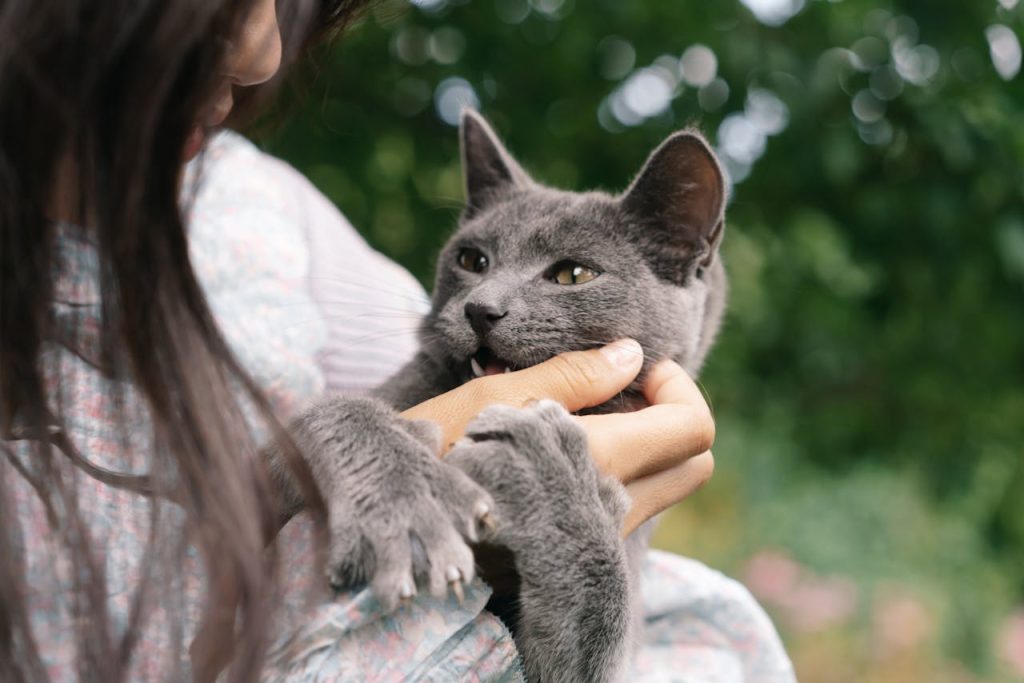
Underlying this mobilization is a larger question about longevity. As noted in the University of Tokyo interview, AIM’s ability to restore kidney function might “potentially increasing life expectancy from 15 years to 30 years according to Miyazaki.” This claim reflects a possibility, not a certainty, but it is grounded in known relationships between renal function and feline mortality. Early studies show no observed side effects, though long-term trials are needed to confirm efficacy and durability.
While caution remains warranted until further clinical data is available, the aspiration behind the therapy remains consistent: to offer cats not just longer lives, but healthier ones less defined by chronic illness. For many owners, even the chance of this shift is reason enough to hope.
The Human Story Behind the Science
Beyond the lab and the clinical frameworks lies a personal motivation that threads through Miyazaki’s career. He explains in the University of Tokyo interview, “I believe that perhaps my friend is one of the reasons why I was destined to save cats – I wouldn’t have ever imagined myself focusing on cats otherwise.”
The friend he speaks of, a cat lover, passed away during his early medical internship from a terminal illness. Miyazaki also notes that his broader aspiration extends beyond feline health, “I feel strongly about eventually using AIM to treat people. That is the greatest motivation that is supporting my research right now.”
His work is driven not just by scientific curiosity, but by a sense of responsibility to the hopes of cat owners and the potential to alleviate suffering for both feline and human.
What This Means for Cat Owners Today
While AIM therapy may be years away from market release, the anticipation already offers actionable insights for cat owners seeking to protect their pets’ kidney health.
1. Early detection remains essential.
The earlier kidney stress is identified, the better the outcomes. Routine bloodwork for cats, especially after age five offers one of the most effective tools for early intervention.
2. Nutrition still plays a central role.
Kidney supportive diets, hydration strategies and monitoring remain foundational parts of feline care. Greycoat Research emphasizes that even as innovation progresses, “the present remains a critical window for monitoring nutritional support and early intervention.”
3. New treatments expand the future landscape not replace current care.
Should AIM therapy reach approval it will likely integrate with not replace comprehensive veterinary approaches.
The Future Cats Deserve
If AIM therapy fulfills its potential, it will not only extend feline lifespan but transform the emotional framework of caring for a cat. The heartbreak of watching a beloved animal decline in midlife could become far less common. Cats could experience a level of health and vitality deep into old age that once seemed out of reach and the people who care for them could share many more years of connection and companionship.

Yet this story is not only about science. It is about resilience and the quiet power of long term inquiry. It is about a researcher who followed a question for decades and a global community of pet lovers who believed in something better. Whether or not AIM eventually allows cats to live to 30, it has already shifted the conversation toward what longevity and quality of life might one day mean for animals and perhaps for people too.
In the face of uncertainty possibility itself can be a powerful source of hope.