
Your cart is currently empty!
A Mom of Four Dialed 911 to Report Herself. The Reason Left Responders Speechless

For most people, calling 911 is something they hope they never have to do. The number is reserved for house fires, violent crimes, serious accidents, or life-threatening medical emergencies. But on the evening of July 31, one Utah mother reached for her phone because she had run out of options. She wasn’t witnessing an emergency unfolding around her. She believed she had become the emergency herself. Exhausted, overwhelmed, and emotionally drained after months of caring for her family, she called dispatchers with a plea that would leave them momentarily stunned. When asked what the emergency was, her answer was painfully simple: “Me.”
Contents
show
Behind that heartbreaking phone call was a story that had been building for months. Kylie Grimes and her husband, Kyle, had been navigating every parent’s nightmare after two of their four children were diagnosed with Type 1 diabetes within just a few weeks of each other. Between sleepless nights, constant blood sugar monitoring, hospital visits, and the everyday demands of raising four young children, the pressure had slowly become unbearable. What happened that night has since resonated with parents around the world, shining a light on a kind of crisis that often goes unnoticed until someone reaches their breaking point.
Two Unexpected Diagnoses Turned the Family’s Life Upside Down
The Grimes family had no history of Type 1 diabetes, making what happened even more shocking. Earlier in the year, their youngest son, Noble, became seriously ill after developing parainfluenza and walking pneumonia. He spent three nights in the hospital receiving treatment before eventually returning home. Kylie believed the frightening experience was finally behind them and hoped life would gradually return to normal.
Only a few weeks later, however, Noble began vomiting again while his older siblings were at school. At first, Kylie assumed he had picked up another stomach virus, something that isn’t unusual for young children. Still, something about the situation made both parents uneasy. Rather than waiting to see if his condition improved, they decided to return to the hospital as a precaution. That decision would completely change their lives.
Doctors soon confirmed that Noble had Type 1 diabetes, an autoimmune disease that requires lifelong management through insulin therapy and constant blood sugar monitoring. Suddenly, Kylie found herself learning how to count carbohydrates, administer insulin, respond to dangerous glucose fluctuations, and monitor her infant around the clock. Every meal, every nap, and every bedtime routine now revolved around making sure Noble’s blood sugar stayed within a safe range.
Just as the family was beginning to understand their new normal, another devastating surprise arrived. Sixty-three days after Noble’s diagnosis, the children were curiously testing their own blood sugar levels using his glucose monitor. When six-year-old Goldie checked hers, the device displayed a reading of 416, far above the normal range for a child her age. Medical professionals instructed Kylie to bring Goldie to the hospital immediately, where doctors confirmed that she too had Type 1 diabetes. Within barely two months, two of the Grimes children had received life-changing diagnoses that no one in the family had seen coming.
Caring for Two Children With Diabetes Became a Full-Time Responsibility
As a stay-at-home mother, Kylie naturally became the person responsible for managing most of the children’s day-to-day care while her husband spent long hours operating his cleaning business. Raising four children was already a demanding job, but adding two chronic medical conditions into the mix transformed every part of her daily routine. Simple tasks that other families might take for granted suddenly required careful planning, constant monitoring, and split-second decision-making.
Every morning began with checking blood sugar levels before breakfast. Meals had to be measured carefully, snacks timed correctly, and insulin doses calculated with precision. Even after the children went to bed, Kylie often couldn’t relax because glucose levels could change dramatically overnight. It wasn’t unusual for alarms from glucose monitors to interrupt her sleep, forcing her to get up several times to make sure Noble or Goldie remained safe.
At the same time, there were still two older children who needed attention, homework help, school preparations, meals, and emotional support. Kylie rarely had an opportunity to simply sit down and catch her breath because another responsibility always demanded her attention. Although she had always been willing to shoulder whatever her family needed, the constant stress and sleep deprivation gradually began taking a heavy emotional toll.
Looking back, Kylie admitted that she had always been the kind of mother who tried to handle everything herself. Asking for help wasn’t something that came naturally to her. Like many parents, she believed she simply had to keep pushing forward no matter how exhausted she felt. But after months of carrying that weight almost entirely on her own during the day, the emotional cracks slowly began to appear, even if nobody else could see them.
One Ordinary Evening Quickly Spiraled Into Chaos
The evening of July 31 began much like countless others since Noble’s diagnosis. Kylie spent much of the day trying to keep his blood sugar levels stable, something that often required constant adjustments and close monitoring. As the hours slipped away, her attention remained focused almost entirely on managing his condition. Before she realized it, the clock had reached around 9 p.m. Dinner still hadn’t been prepared, bedtime had long passed, and everyone in the house was becoming tired, hungry, and restless.
Determined to finally get food on the table, Kylie asked her older children to keep an eye on Noble for just a few minutes while she began making dinner. She expected the brief break would give her enough time to start cooking before returning to the baby. Instead, another crisis emerged almost immediately.
A few moments later, Noble crawled toward her feet. When Kylie turned around, she was horrified to discover his face covered in dark potting soil. While the older children had wandered away, the toddler had managed to get into one of her houseplants and had begun eating the soil. After everything the family had already been through, another potential medical emergency was the last thing she felt capable of handling.
Panicked, Kylie immediately called Poison Control. The specialists calmly assessed the situation and reassured her that Noble most likely hadn’t swallowed enough potting soil to cause serious harm. Although their advice eased her fears about his immediate safety, the emotional pressure she had been carrying for months finally became too much to contain. As soon as she ended the call, she sat down on the kitchen floor and burst into tears while her children gathered around asking when dinner would be ready.
“Me. I’m the Emergency.”
Sitting on the kitchen floor, Kylie reached a point where she no longer felt capable of handling another problem. Between trying to stabilize Noble’s blood sugar, dealing with the scare involving the potting soil, and listening to her hungry children ask when dinner would be ready, the emotional weight she had carried for months finally caught up with her. She began hyperventilating as tears streamed down her face, feeling completely alone despite being surrounded by the people she loved most.
Her first instinct was to call her husband. Fighting back tears, she told Kyle she needed him to come home immediately because she couldn’t do it anymore. He explained that he was about 30 minutes away while finishing work. Under normal circumstances, that wait might not have seemed long, but in that moment it felt impossible. “He’s like, ‘I’m 30 minutes away.’ I said, ‘That’s not long enough,’ and I hung up the phone,” Kylie later recalled.
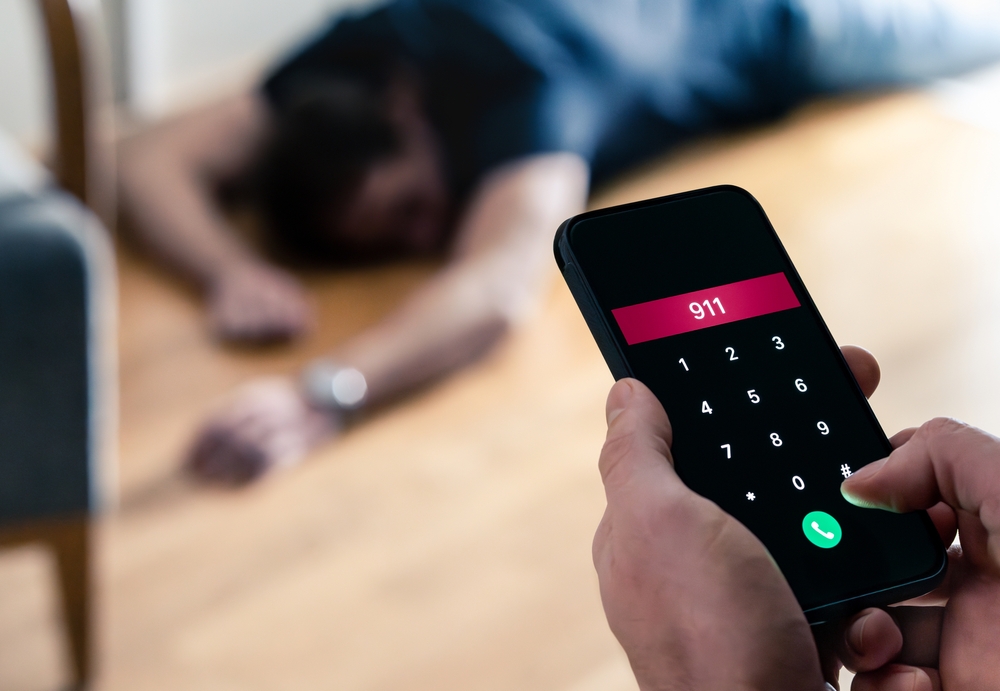
With nowhere else to turn, she dialed 911. When the dispatcher answered and asked what the emergency was, Kylie struggled to find the words. “I just can’t do this anymore. I’m overwhelmed. I just need help,” she said. The dispatcher, trying to understand the situation, asked what the emergency actually was. Kylie’s heartbreaking response has since touched thousands of parents across the country. “Me,” she replied. “I’m the emergency.”
The dispatcher remained calm and continued asking questions to assess the situation. Kylie assured her she had no intention of hurting herself or her children. She simply felt completely overwhelmed and wanted to make sure her children were safe while she tried to regain control of her emotions. Following the dispatcher’s instructions, Kylie told her three older children to stay inside the house while she sat on the porch holding Noble until help arrived.

First Responders Didn’t See a Criminal. They Saw a Mom Who Needed Help
Within minutes, police officers and other first responders arrived at the Grimes family home. By the time they reached the porch, Kylie was still sobbing uncontrollably, embarrassed that she had called emergency services because she simply couldn’t cope with the pressure any longer. She later admitted she didn’t even know how to explain herself when officers began asking questions.
“I can’t even answer the officer, because I’m like, ‘What do I say? I’m overwhelmed as a mom.’ That sounds like the stupidest thing in the world,” she said. For many parents, admitting they can’t keep everything together often feels like a personal failure. Kylie feared that was exactly how the responders would see her.

Instead, they responded with compassion. After speaking with Kylie and determining that she wasn’t a danger to herself or her family, the officers shifted their focus from crisis intervention to support. Rather than treating her call as a misuse of emergency services, they recognized that she was experiencing an emotional crisis brought on by months of relentless caregiving and exhaustion.
By the time Kyle arrived home, he found several first responders gathered around his wife. Instead of judgment, Kylie was connected with a social worker who spent time speaking with her, listening to everything she had been carrying alone, and providing information about available mental health resources. After the conversation ended, Kylie quietly went upstairs, tucked each of her children into bed, and finally allowed herself to rest.
Why Her Story Has Struck a Chord With So Many Parents
Although Kylie’s story is unique, the feelings she described are familiar to countless parents and caregivers. Looking after children with chronic illnesses often means living in a constant state of vigilance. Blood sugar levels can change unexpectedly, medical emergencies can happen at any time, and restful sleep becomes increasingly rare. When those responsibilities continue for months without relief, emotional exhaustion can quietly build until even ordinary tasks begin to feel impossible.
Mental health professionals often describe this as caregiver burnout, a condition that affects millions of people caring for children, spouses, or elderly family members. Because caregivers are so focused on meeting everyone else’s needs, they frequently ignore their own physical and emotional wellbeing until they reach a breaking point. Many continue believing they simply need to try harder, even as stress and exhaustion continue piling up.
Some of the most common warning signs of caregiver burnout include:
- Constant physical and emotional exhaustion, even after resting.
- Feeling overwhelmed by everyday responsibilities that once felt manageable.
- Frequent anxiety, panic attacks, or emotional breakdowns.
- Difficulty sleeping because of stress or caregiving responsibilities.
- Feeling isolated or believing no one understands what you’re experiencing.
- Losing interest in activities that once brought joy or relief.
Experts encourage caregivers to seek support before reaching a crisis point. Whether that means asking family members for help, connecting with support groups, speaking with a mental health professional, or simply allowing others to share responsibilities, early intervention can make an enormous difference before burnout becomes overwhelming.
One Difficult Phone Call Started an Important Conversation
Kylie never expected her 911 call to attract national attention. In many ways, she simply did what she felt she needed to do to protect both herself and her children during one of the hardest moments of her life. Instead of trying to hide her struggle, she admitted she needed help, even if that admission felt embarrassing at the time.
Her honesty has since sparked conversations about parental mental health, caregiver burnout, and the unrealistic expectation that mothers should always be able to manage everything without support. Behind countless front doors, parents are quietly carrying responsibilities that few people ever see, often believing they have to face those challenges alone.
Kylie’s story offers a powerful reminder that mental health emergencies don’t always look the way people expect. Sometimes the person asking for help isn’t in physical danger. They’re simply carrying more than any one person should have to bear. Recognizing that reality, and reaching out before the weight becomes unbearable, may be one of the strongest decisions a parent can make.