
Your cart is currently empty!
A Rare Brain-Infecting Fungus Is Becoming More Common in the US, and Scientists Are Searching for Answers

A rare black mold capable of causing a devastating brain infection is appearing more frequently in the United States, and researchers are struggling to explain why. The fungus, known as Cladophialophora bantiana, can cause abscesses in the brain and has been associated with death rates as high as 70% among infected patients. Recent laboratory data show a sharp increase in detected cases, raising questions about whether the infection is becoming more common or has been going undetected for years.
Contents
show
Researchers identified 48 confirmed cases and one probable case in the United States between January 2009 and July 2026. Annual detections remained relatively low for years before rising to eight in 2024 and 14 in 2025. The Centers for Disease Control and Prevention (CDC) has highlighted the need for greater awareness, noting that there is no federal surveillance system specifically tracking these infections. Scientists still do not fully understand how people acquire the fungus, why it frequently targets the brain, or what is driving the recent increase.

Detected Cases of the Deadly Fungus Have Climbed Sharply
The latest findings reveal a worrying change in the number of infections identified by a clinical reference laboratory at the University of Washington. From 2009 through 2023, the laboratory generally detected between one and five cases annually. That pattern changed in 2024, when eight cases were identified, followed by 14 in 2025. The figures represent a substantial increase in detections, although researchers caution that they do not necessarily reflect the complete number of infections occurring across the country.
The laboratory also found that the fungus was appearing more frequently among the central nervous system samples submitted for testing. Between 2017 and 2023, an average of 8.4 cases were detected per 1,000 central nervous system specimens examined for fungal infections. By 2025, that figure had risen to 26 cases per 1,000 specimens, an increase of approximately 210%. This suggests that the rise cannot be understood simply by looking at annual case totals, although changes in testing practices and the number of submitted specimens may influence the results.
Joshua Lieberman, a researcher at the University of Washington School of Medicine, cautioned that the available numbers may underestimate the true burden of infection. He explained that at least one other specialized fungal laboratory had also observed an increase in detected cases. Because these infections are rare and can be difficult to identify, some cases may never receive a definitive diagnosis. Researchers are therefore investigating whether the increase reflects a genuine change in infection rates, improvements in detection, or a combination of several factors.
What Is Cladophialophora Bantiana?
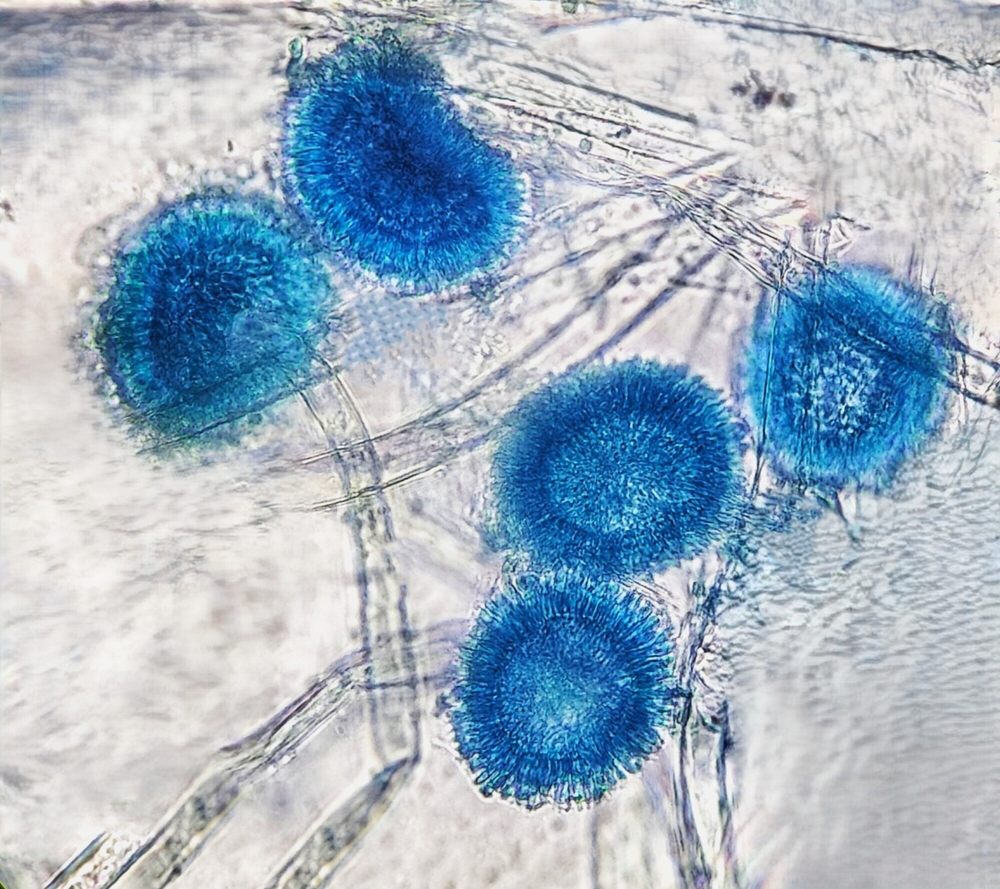
Cladophialophora bantiana is a darkly pigmented mold found in soil and decaying organic matter in different parts of the world. Unlike many familiar fungal infections that primarily affect the skin or lungs, this organism is particularly associated with infections of the brain. It can cause cerebral abscesses, which are pockets of infected tissue and pus that develop inside the brain and may lead to swelling and neurological complications.
Scientists do not yet have a complete explanation for why this particular fungus has such a strong association with the brain. Its presence in the environment does not mean that ordinary contact with soil will lead to infection, and the available evidence does not establish how often people encounter it without becoming ill. The CDC has emphasized that relatively little is known about the process through which the fungus infects humans. Its environmental distribution and the rarity of confirmed cases make it difficult to identify precisely where infections originate.
The fungus can cause serious disease in people with weakened immune systems, who are generally more vulnerable to certain invasive fungal infections. However, the reported cases show that people without recognized immune deficiencies can also become severely ill. This complicates efforts to identify who is most at risk and means clinicians cannot automatically rule out the infection because a patient appears otherwise healthy.

How the Fungus May Enter the Body
Researchers believe the fungus may enter the body when someone inhales fungal material or when it enters through an injury to the skin. The detection of the organism in lung specimens supports the possibility of respiratory exposure, while infections involving the brain suggest that the organism can reach tissues far beyond its initial point of entry. However, the precise route by which it travels to the brain remains uncertain, and scientists have not established a single pathway that explains every case.
Once the fungus causes an infection in the central nervous system, it can produce abscesses that damage surrounding tissue. Depending on their location and severity, these lesions may cause neurological symptoms, including changes in vision, memory difficulties, or other problems involving brain function. Swelling and the pressure created by an abscess can further complicate the condition. Because symptoms may resemble those of other serious illnesses, identifying the underlying cause can be challenging.
The available findings also leave important questions about transmission unanswered. There is no evidence in the supplied research establishing that the fungus commonly spreads from person to person, and the presumed environmental routes should not be confused with confirmed explanations for every infection. Researchers need more detailed information about exposure histories, environmental conditions, and the biological behavior of the organism to understand how it reaches the brain and why some people develop severe disease.

Why the Infection Can Be Difficult to Diagnose
One of the major challenges is that the infection is rare and may initially resemble other conditions affecting the brain. A cerebral abscess can have several possible causes, including bacterial infections and other fungal organisms. Depending on the symptoms and imaging results, clinicians may also need to investigate whether a brain lesion is related to a tumor or another neurological condition. Without specific testing, the underlying infection may not be immediately apparent.
The fungus can also be difficult to identify through routine laboratory methods. Researchers have noted that specialized testing may be needed to detect unusual fungal infections, particularly when standard investigations fail to establish a cause. This creates a potential gap between the number of people who develop the infection and the number of cases that are eventually confirmed. Better recognition and diagnostic testing could therefore increase reported case numbers even if the underlying rate of infection remains unchanged.
The consequences of a missed diagnosis can be severe because the disease may progress while clinicians investigate other explanations. The reported case series included patients who died despite receiving intensive treatment. One documented example involved a 44-year-old patient who underwent surgery and received antifungal medication but died within three months. That case illustrates the seriousness of the infection, although individual outcomes cannot predict what will happen to every patient.
Who Is at Risk of Developing the Infection?
People with weakened immune systems are often considered more vulnerable to invasive fungal diseases. Certain medical conditions and treatments can reduce the body’s ability to control organisms that would otherwise pose a smaller threat. However, the reported C. bantiana cases reveal a more complicated picture because approximately half of the affected patients were not classified as immunocompromised. Researchers are concerned that the infection can cause severe disease in people who do not fit the usual profile for serious fungal infections.
Lieberman described this feature as particularly concerning, explaining: “People who have apparently healthy immune systems get the infection and are also at high risk of death.” The observation challenges the assumption that otherwise healthy people are protected from this particular disease. It also highlights the difficulty of identifying patients who may need specialized fungal testing when their initial symptoms do not clearly point toward an unusual infection.
The reported cases were distributed across 21 states and Washington, D.C., indicating that detections were not confined to one small geographic area. California recorded six cases, while Florida and Texas each recorded five, and Pennsylvania recorded four. The median age among the 49 confirmed and probable cases was 68. These figures describe the patients identified through the reported data and should not be interpreted as a complete map of infection risk across the US.
Could Climate Change Be Contributing to the Rise?
Researchers have not established why detected cases increased, but changing environmental conditions are among the possibilities being investigated. Fungi live in a wide range of environments, and some species can adapt to warmer conditions. Scientists have raised concerns that rising temperatures could allow certain fungal organisms to survive in places where environmental conditions previously limited their growth. If a fungus becomes better adapted to conditions inside the human body, that could also affect its ability to cause disease, although this has not been established as the explanation for the recent C. bantiana increase.
The fungus was historically associated with warmer, humid environments, but it is now recognized as occurring worldwide. Researchers have also noted an increase in reported cases in France, including a rise in 2022, a year that was exceptionally warm in that country. These observations provide reasons to investigate environmental influences, but they do not prove that climate change caused the US increase. Establishing a connection would require evidence linking environmental changes to fungal exposure, infection rates, or changes in the organism’s ability to cause disease.
Other explanations remain possible. Greater use of molecular diagnostic methods may allow laboratories to identify infections that previously went undetected, while changes in the number and type of specimens submitted for testing could affect the totals. Human activity that brings people into closer contact with environmental reservoirs may also influence exposure. Researchers need more systematic surveillance and environmental studies before they can determine how much each factor contributes.
What Needs to Happen Next
The absence of comprehensive federal surveillance makes it difficult to determine the true number of infections occurring in the United States. Laboratory reports provide valuable evidence, but they cannot establish the full national incidence when testing practices and reporting are not consistent. A more systematic approach to identifying and recording cases could help researchers establish whether the increase is continuing and determine which populations or regions may face greater exposure.
Greater clinical awareness could also help shorten the time needed to diagnose unusual fungal infections. Researchers have suggested that clinicians consider rare causes such as C. bantiana when investigating a brain abscess that remains unexplained after routine testing, including in patients who do not have an obvious immune deficiency. Diagnosis requires specialized medical assessment, and treatment decisions must be made by qualified clinicians based on the individual case.
The rising detections do not yet establish an outbreak, nor do they prove that the fungus is becoming more dangerous. They do, however, reveal a significant gap in understanding a rare infection with potentially devastating consequences. Until researchers can explain the increase and establish how many infections are going undetected, improved diagnosis and more reliable surveillance will be essential to determining the actual scale of the problem.
Sources:
- Lieberman, J. (n.d.). Rare brain-infecting fungus cases rise in the US. MedPage Today. https://www.medpagetoday.com/infectiousdisease/generalinfectiousdisease/123281