
Your cart is currently empty!
A Rare Mineral Has Just Rewritten What Scientists Thought About Superconductors

For most of modern scientific history, superconductivity has been treated as something that exists almost entirely within the walls of advanced laboratories. It is a phenomenon associated with extreme cold, carefully engineered materials, and environments so tightly controlled that they feel far removed from the natural world. Superconductors are celebrated for their ability to conduct electricity with zero resistance and for their strange magnetic behavior, yet they are also known for being fragile, rare, and dependent on temperatures only a fraction above absolute zero. Because of this, scientists have long assumed that the most exotic forms of superconductivity could never arise naturally and would always require deliberate human design.
Contents
show
That assumption has now been shaken by the discovery of a mineral that appears to break many of the rules researchers thought were fixed. Scientists have identified the first unconventional superconductor whose chemical composition is also found in nature. The mineral, called miassite, was not created through years of targeted experimentation or sophisticated industrial processes. Instead, it formed naturally, imperfectly, and in extreme rarity, hidden within the Earth until researchers realized what they were looking at. The discovery does more than add a new mineral to scientific records. It challenges long held beliefs about what nature can and cannot produce on its own and forces researchers to reconsider the origins of unconventional superconductivity itself.
We report the first synthesis of a slightly-above-room-temperature superconductor: SK-431
— The Journal of Immaterial Science (@JImmatSci) August 2, 2023
PDF: https://t.co/TYRlbTHU2Z pic.twitter.com/yIMsYXZtp2
What Superconductivity Means and Why Scientists Care So Much
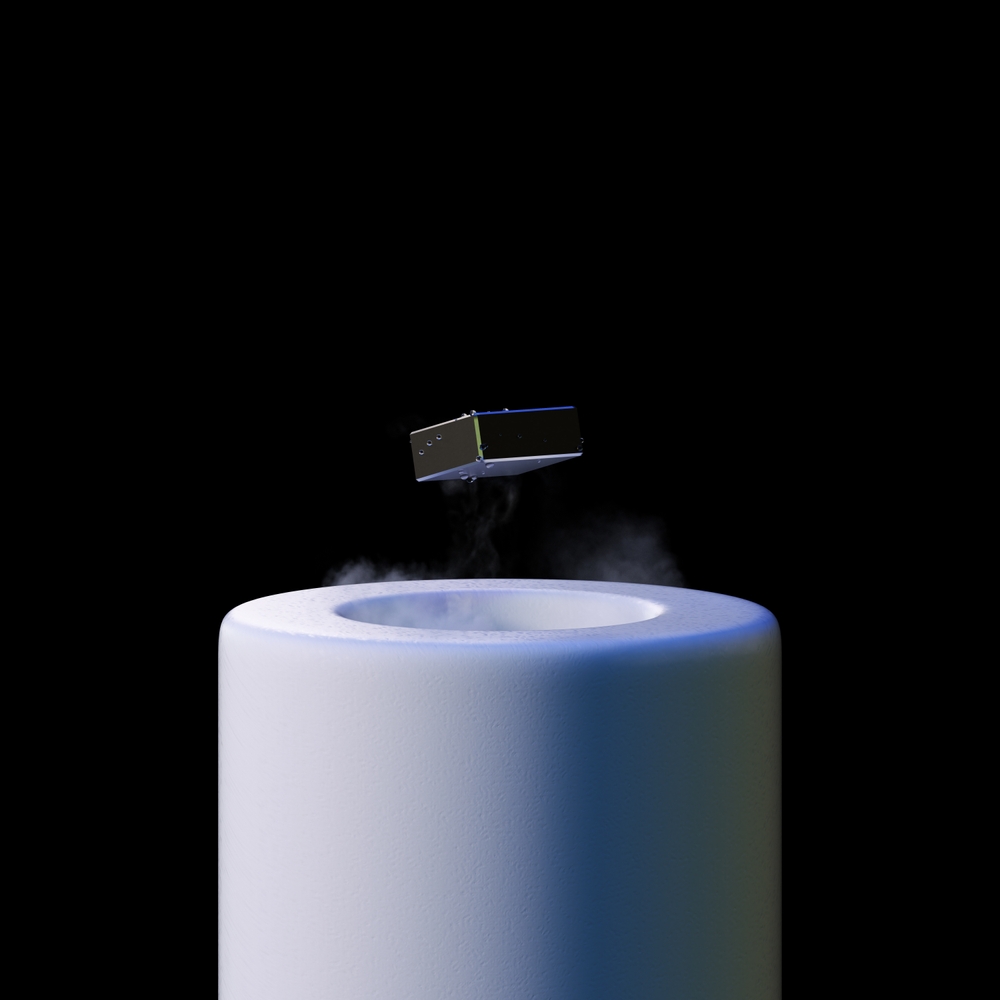
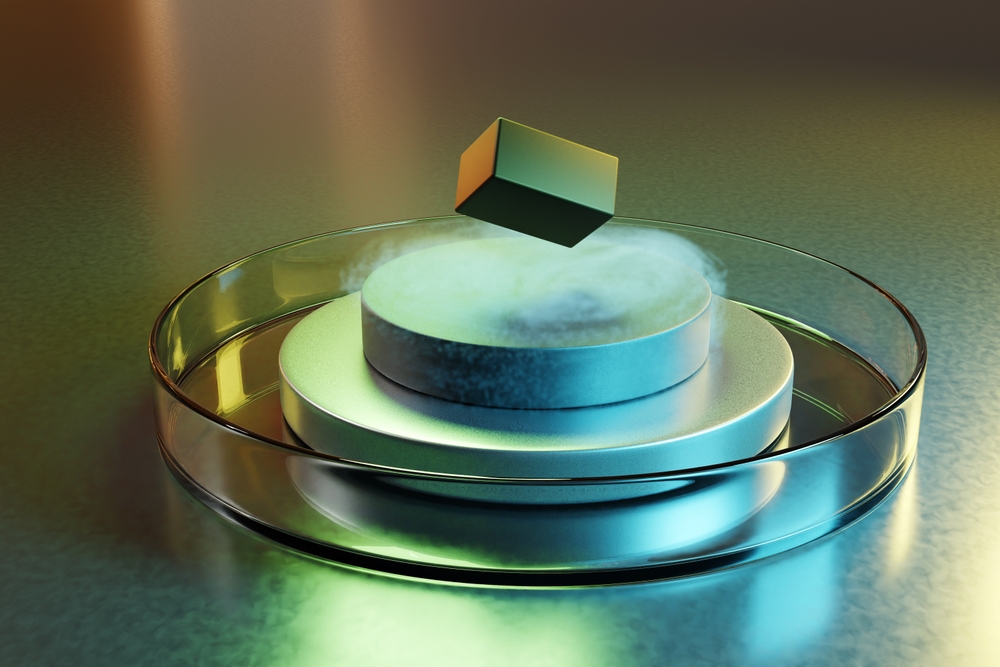
Superconductivity describes a physical state in which a material can carry electrical current without losing any energy to resistance. Under normal conditions, electricity moving through wires encounters resistance, which converts some of that energy into heat and results in inefficiency. In a superconducting state, that resistance disappears entirely, allowing current to flow perfectly. At the same time, superconductors expel magnetic fields from their interior, creating an effect that allows magnets to levitate and fields to behave in ways that seem to defy intuition.
These properties make superconductors enormously valuable for advanced technology. They are already used in MRI machines, particle accelerators, and experimental fusion reactors, and they play a crucial role in the development of quantum computers. However, the benefits come with a major limitation. Most superconductors only function at extremely low temperatures, often requiring complex and expensive cooling systems. This makes them difficult to deploy on a large scale, particularly in everyday infrastructure like power grids or transportation systems.
As a result, scientists have spent decades searching for materials that can become superconducting at higher temperatures. Even modest improvements can dramatically reduce costs and expand practical applications. Understanding how superconductivity works at a fundamental level is therefore not just an academic pursuit, but a key step toward more efficient and sustainable technologies.
Conventional and Unconventional Superconductors Explained
Scientists classify superconductors into two broad categories based on how they behave at the microscopic level. Conventional superconductors follow the well established Bardeen–Cooper–Schrieffer theory, commonly known as BCS theory. In these materials, electrons form pairs known as Cooper pairs, which move through the atomic lattice without resistance. This mechanism is well understood and has been successfully used to explain many superconducting materials.
Unconventional superconductors also exhibit zero resistance and magnetic field expulsion, but the mechanism behind their behavior does not fit neatly into the BCS framework. The way electrons interact in these materials appears to be fundamentally different, and in many cases, scientists still do not fully understand what drives the superconducting state. These materials are often far more sensitive to defects and disruptions in their structure, which makes them challenging to study and even harder to manufacture reliably.
What makes unconventional superconductors especially interesting is their potential for higher critical temperatures. Some operate at temperatures significantly higher than those of conventional superconductors, sometimes above 77 Kelvin, a key threshold that allows for more practical cooling methods. Until now, every known unconventional superconductor had one thing in common. They were all grown in laboratories, reinforcing the belief that unconventional superconductivity was not something nature could produce on its own.
Miassite and Why Its Existence Defies Expectations
Miassite is a mineral with an unusually complex chemical formula, Rh17S15, meaning it contains 17 atoms of rhodium and 15 atoms of sulfur arranged in a highly intricate structure. It was originally discovered near the Miass River in Chelyabinsk Oblast, Russia, but it is extremely rare. One reason for this rarity is that both rhodium and sulfur are highly reactive elements, particularly with oxygen, making stable natural formation difficult.
Another challenge is that miassite does not typically form well shaped crystals in nature. Instead, it appears in irregular, poorly developed forms that make it almost impossible to study its physical properties directly. To overcome this limitation, researchers synthesized high quality miassite crystals in the laboratory, allowing them to carefully measure how the material behaves under extreme conditions.
What they discovered was surprising. Despite having a very low critical temperature of around minus 267.75 degrees Celsius, miassite displayed characteristics associated with unconventional superconductors. As senior author Ruslan Prozorov explained, “Intuitively, you think that this is something which is produced deliberately during a focused search, and it cannot possibly exist in nature,” before adding, “But it turns out it does.”
How Scientists Proved Miassite Was Unconventional
To determine whether miassite truly belonged in the unconventional category, researchers subjected it to a series of detailed and demanding tests. One of the most important involved measuring the London penetration depth, which describes how far a weak magnetic field can penetrate into a superconducting material. This measurement provides insight into the internal structure of the superconducting state.
In conventional superconductors, the London penetration depth remains essentially constant at very low temperatures. In unconventional superconductors, however, it changes in a distinctive way as the temperature varies. When scientists measured this property in miassite, they found that it followed the temperature dependent behavior expected of unconventional superconductors, rather than the stable pattern seen in conventional ones.
Researchers also examined how miassite responded to damage by bombarding it with high energy electrons. This process introduces defects into the crystal structure. Conventional superconductors are largely unaffected by this type of nonmagnetic disorder. Unconventional superconductors, on the other hand, are highly sensitive to it. In miassite, both the critical temperature and the critical magnetic field changed exactly as predicted for an unconventional superconductor, further confirming its unusual nature.

A Broader Pattern Hidden in the Rhodium Sulfur System
The discovery of miassite did not happen by accident. Scientists were already investigating combinations of rhodium and sulfur as part of a broader effort to identify new superconducting materials. This systematic exploration revealed that the rhodium sulfur system contained several previously unknown superconductors, suggesting that it is a particularly fertile area for discovery.
Professor Paul Canfield, who synthesized the miassite crystals used in the study, described the process with a vivid analogy. “It’s like finding a hidden fishing hole that is full of big fat fish. In the Rh-S system we discovered three new superconductors. And, through Ruslan’s detailed measurements, we discovered that the miassite is an unconventional superconductor,” he said.
This finding raises the possibility that nature may host entire families of materials with exotic superconducting properties, even if they are rare or difficult to identify. Miassite may be only the first naturally occurring unconventional superconductor to be recognized, rather than the last.

Why This Discovery Could Matter Far Beyond Physics
On its own, miassite is unlikely to be used directly in real world applications. Its extremely low critical temperature makes it impractical for everyday technology. However, its true importance lies in what it can teach scientists about how unconventional superconductivity works at a fundamental level.
Understanding these mechanisms is considered one of the biggest unsolved problems in condensed matter physics. According to Prozorov, “Uncovering the mechanisms behind unconventional superconductivity is key to economically sound applications of superconductors.” Each new material that can be studied adds another piece to a puzzle that could eventually lead to superconductors that are cheaper, more robust, and capable of operating at higher temperatures.
By studying a naturally occurring example, researchers gain a valuable reference point that is not shaped entirely by human design. Miassite offers a way to test theories against something that nature produced on its own, potentially revealing insights that engineered materials alone cannot provide.
A Reminder That Nature Often Gets There First
Beyond its scientific implications, the discovery of miassite carries a broader message about the limits of human assumptions. Scientists often believe that the most complex and exotic materials must be created intentionally through advanced engineering. Miassite demonstrates that nature can sometimes arrive at similar outcomes through processes that are still not fully understood.
Hidden in rare minerals and obscure geological environments may be clues to future breakthroughs that remain unnoticed. The fact that an unconventional superconductor existed in nature long before scientists recognized its significance serves as a powerful reminder that discovery is often about learning how to see what is already there.
The research detailing miassite’s properties was published in the journal Communications Materials. While many questions remain unanswered, the finding expands the boundaries of what researchers believe is possible and opens new paths for understanding one of the most fascinating phenomena in modern physics.
Ames Laboratory, condensed matter physics, energy efficient technology, materials science, miassite, natural superconductor, Physics research, quantum materials, rare minerals, Rh17S15, scientific discovery, superconductivity discovery, superconductivity explained, superconductivity research, unconventional superconductor