
Your cart is currently empty!
A Rock From Space Just Crashed Through a Woman’s Kitchen in Texas
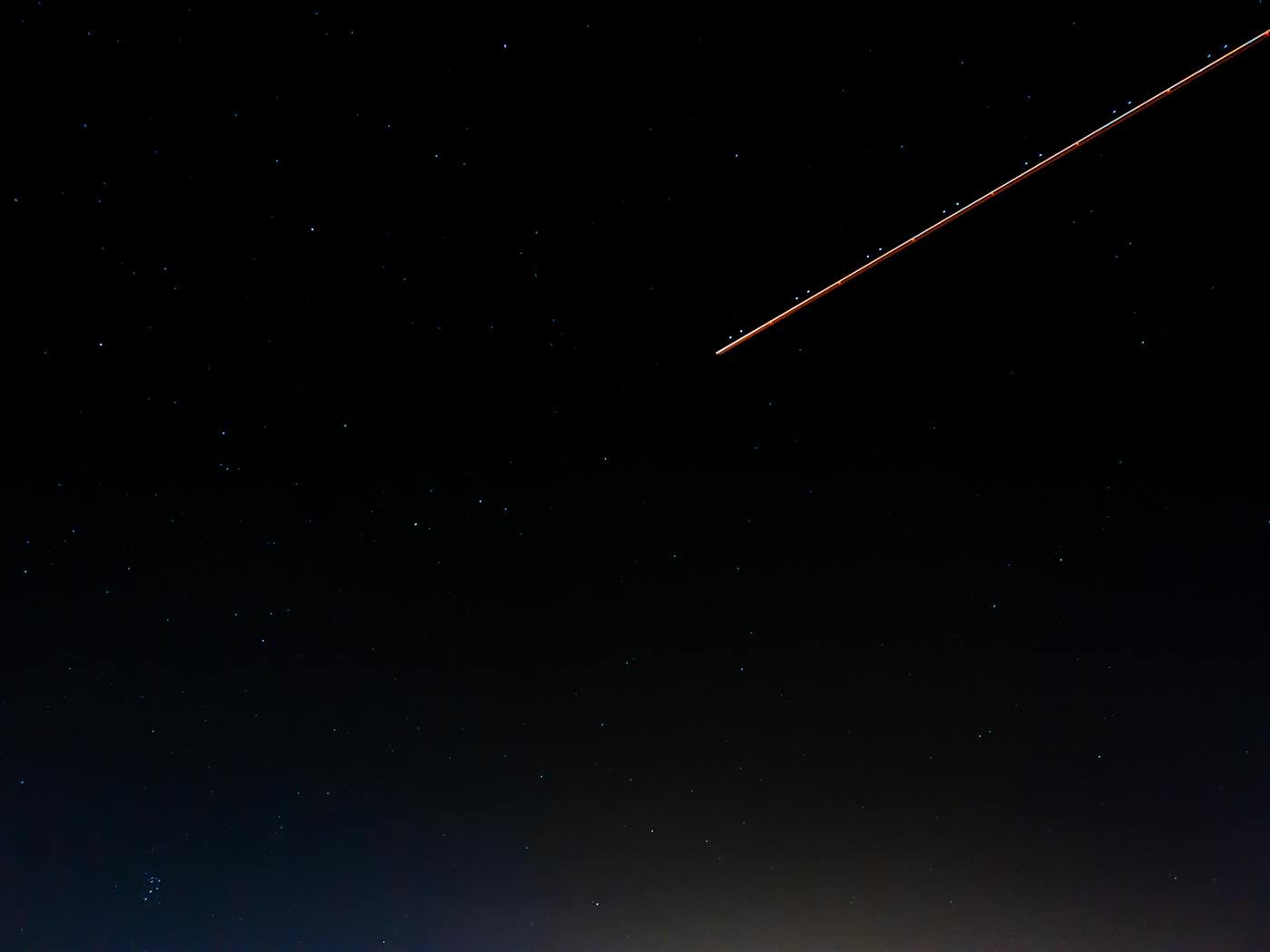
Something fell from the sky over Houston on Saturday afternoon. Nobody on the ground knew what it was. Drivers on Highway 50 near Wiedeville Road slammed their brakes and grabbed their phones. A brilliant green streak had ripped across the afternoon sky, followed by a trail of black smoke and a deep, rattling boom that shook car windows. Residents across the Houston metro area flooded emergency lines, convinced a nearby explosion had just gone off. Brenham Fire Department dispatched crews to the highway and surrounding areas. They searched the scene and found nothing. No wreckage, no fire, no obvious source for the sound that had startled an entire region.
Contents
show
At that point, fire officials could only label the culprit a “possible meteor.” But 20 miles away, inside a home in Ponderosa Forest, a woman had just found the answer sitting in her kitchen.
What Witnesses Saw at 4:40 p.m.
Multiple people driving through Southeast Texas at the time reported the same sequence of events. Several witnesses told the Brenham Fire Department they “saw a green flash fall from the sky, black smoke, and heard a loud ‘boom.’” Dashcam footage aired by KHOU captured the moment from a driver’s perspective, showing an object plunging from the sky and bursting into a brilliant flash of light before vanishing.
Frazzled Houstonians mistook the pressure wave for an industrial accident or a gas line rupture. Emergency dispatchers fielded call after call. Yet no physical evidence of an explosion appeared anywhere along Highway 50. Whatever had caused the boom had done so from a place no fire truck could reach.
NASA Mapped the Fireball’s Entire Flight Path

Confirmation came later that evening. NASA posted on X that a bright fireball had entered the atmosphere over Texas at 4:40 p.m. CDT on Saturday, March 21. According to the agency, the meteor first became visible 49 miles above Stagecoach, Texas, and moved southeast at a staggering 35,000 mph.
A 3-foot fragment weighing roughly one ton then broke away from the main body 29 miles above Bammel, just west of Cypress Station. The breakup at that altitude generated a pressure wave responsible for the booms residents heard across the region. NASA confirmed that additional meteorite fragments were scattered between Willowbrook and Northgate Crossing, two neighbourhoods separated by about 20 miles. American Meteor Society records show more than 100 individual eyewitness reports of the fireball event.
Speed and altitude made the meteor invisible to most people until its final seconds. By the time witnesses registered the green flash, the object had already been tearing through the atmosphere for mere moments. Its fragments, however, were just beginning their descent toward the city below.
A Football-Sized Rock Punched Through Sherrie James’ Home
In Ponderosa Forest, a residential community in northwest Harris County roughly 20 miles outside Houston, homeowner Sherrie James heard the same boom everyone else did. What she discovered next set her experience apart from every other witness that afternoon.
A heavy, dark rock had smashed through her roof, torn through two full stories of her home, and come to rest in her kitchen. A gaping hole in the ceiling and cracked flooring traced the object’s violent path downward. James called the Ponderosa Fire Department, whose initial theory was that something had fallen off a passing aircraft. No construction projects or tall trees near her home could explain the damage.
“I saw a hole in the ceiling, the impact on the floor, and so it had to be coming down with force to come through the roof,” James told Fox 26 Houston.
Fire Chief Fred Windisch arrived and examined the rock. He confirmed it appeared to be a meteorite. Ponderosa Fire Department later told media outlets that the explosion sound heard across the area was most likely a sound-barrier shock wave created by the meteor’s high-speed entry. Once NASA released its confirmation, the department revised its aircraft theory and connected the rock in James’ kitchen to the fireball that had blazed over northern Houston.
James, examining the fragment up close, knew almost immediately that it was no ordinary stone. “[When] I saw the rock … the first thing that came to my mind was, it’s a meteor,” she told Fox 26 Houston. “It’s very heavy and it doesn’t look like cement or like a normal rock, but it’s just the weight of it — you can tell it’s something different.”
Roughly football-sized, the rock that landed in her home represented just one piece of the debris field NASA mapped between Willowbrook and Northgate Crossing. Other fragments, likely smaller, are scattered across the metro area. How many landed on rooftops, backyards, or open fields without anyone noticing remains unknown.
What Meteorites Are and Where They Come From
A meteorite is, in its simplest definition, a rock that survives the fiery passage through Earth’s atmosphere and reaches the ground. Most originate as fragments of asteroids that shattered long ago in the belt between Mars and Jupiter. After orbiting the Sun for millions of years, gravitational forces, often from Jupiter itself, nudge these fragments toward the inner solar system, where they can collide with Earth.
Not all meteorites come from asteroids. A small number are pieces of Mars, blasted off the planet’s surface by ancient impacts. Others originated on the Moon. Some may even be remnants of comets, the icy bodies that drift through the outer reaches of our solar system beyond Neptune. Size varies wildly. Recovered meteorites range from grains of sand to the largest specimen ever found, a 60-ton behemoth.
What makes each fragment scientifically valuable is its age. Many meteorites contain material that formed 4.568 billion years ago, when our solar system was condensing from a cloud of gas and dust. Some carry tiny particles that predate even the Sun, forged inside stars that burned out long before our own ignited. Every recovered meteorite, whether it lands in a desert, an ocean, or a kitchen in northwest Harris County, offers a physical sample of the solar system’s deep past.
Why Scientists Want Every Fragment They Can Find
Researchers have spent careers studying meteorites because no other material on Earth provides the same window into planetary formation. Primitive meteorites, those that have remained largely unchanged since they solidified billions of years ago, reveal the chemical conditions present when the solar system was young. Scientists used the age of that earliest solid material to date the solar system itself.
Meteorites from asteroids and other planets have also confirmed what lies beneath Earth’s surface. Analysis of iron-nickel meteorites helped establish that our planet, and every other rocky world in the solar system, has a metal core surrounded by a rocky mantle and crust. Without meteorites, much of what we understand about planetary interiors would remain theoretical.
A fragment like the one recovered from Sherrie James’ home may look like a curiosity, a strange rock that ruined a kitchen ceiling. But to a planetary scientist, it is a messenger carrying data about the composition, age, and origin of whatever body it once belonged to.
Earth Has Been Here Before
Saturday’s fireball over Houston was dramatic, but it was not unusual on a cosmic scale. Just one week earlier, another meteor exploded over Ohio, sending a sonic boom that reached as far as New York. Events like these happen more often than most people realize.
Look at the Moon through a telescope, and millions of craters tell the story of a solar system where high-speed collisions are routine. Earth’s surface would carry the same scars if not for wind, water, and tectonic activity that erode and bury impact sites over geological time. Scientists know from the crater record that large meteorite strikes have altered life on this planet before and will happen again.
Most incoming debris burns up in the atmosphere or lands in oceans and unpopulated areas without anyone noticing. Occasionally, though, a fragment survives the full journey and arrives with enough force to punch through a residential roof in suburban Texas.
Sherrie James’ kitchen now contains a rock older than the planet it just crashed into, a small, heavy piece of the solar system’s ancient machinery that traveled millions of years and millions of miles before ending its journey two stories below a hole in her ceiling. For scientists, it is a data point. For James, it is the afternoon a piece of space landed in her house and changed an ordinary Saturday into something no one in Ponderosa Forest will soon forget.