
Your cart is currently empty!
A Supercomputer Picked The Favorite For The World Cup, But Football Rarely Follows The Script
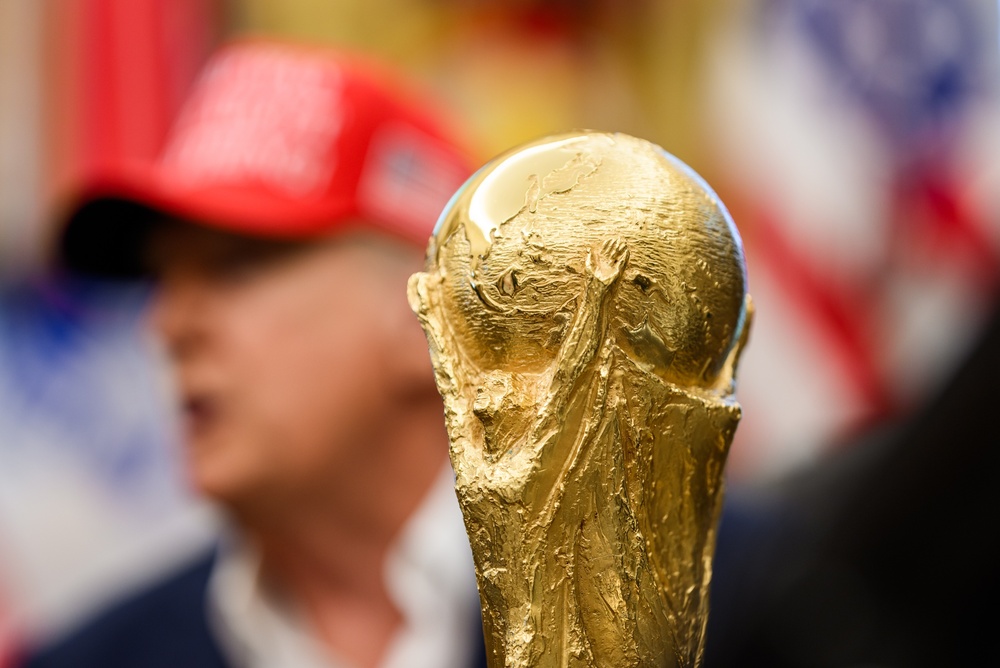
Every World Cup begins with the same ritual. Fans gather around predictions, debates fill social media feeds, and millions of people become convinced that this will finally be their team’s year. Hope often matters more than statistics in the weeks before the first match kicks off. Yet every four years, researchers attempt to answer a question that football supporters have argued about for generations: can science predict who will lift the trophy before a single ball is kicked?
Contents
show
As the 2026 FIFA World Cup approaches, a team of researchers has taken on that challenge using data, mathematics, and machine learning. Their findings point to a handful of familiar football powerhouses as the strongest contenders. At the same time, the study highlights something that makes sport so compelling in the first place. Even the most advanced models can only estimate probabilities. They cannot account for the unexpected moments, emotional surges, and unlikely stories that transform a tournament into something people remember for decades.

Spain Emerges As The Statistical Favorite
Researchers from the University of Innsbruck analyzed all 48 participating nations and calculated each team’s chances of winning the tournament. After processing a wide range of data points, Spain emerged as the favorite with a 14.5 percent chance of lifting the World Cup trophy.
England followed closely behind at 12.4 percent, sharing nearly identical odds with France, which also received a 12.4 percent chance of winning. Germany rounded out the top four with an 11.2 percent probability. The numbers suggest that the gap between the leading contenders is surprisingly small.
That narrow margin is one of the study’s most notable findings. Rather than identifying a runaway favorite, the researchers found a tightly packed group of elite teams capable of going all the way. Football supporters looking for certainty may be disappointed, but competitive balance often creates the most memorable tournaments.
Co-lead author Achim Zeileis summed up the situation clearly, saying, “Compared to previous tournaments, this year’s title race is very tight.”

How Researchers Calculated The Odds
The rankings were not based on intuition or recent headlines. The researchers assembled an extensive collection of football data designed to capture both current form and long-term performance.
Among the factors considered were previous international results, bookmaker odds, player ratings from both club and international competitions, and the average market value of each national squad. Each variable offered a different perspective on team strength.
All of that information was then fed into a machine learning model. The goal was not simply to rank teams but to simulate how they might perform against every possible opponent throughout the tournament.
The researchers explained the process in straightforward terms: “More specifically, the algorithm estimates the predicted number of goals for all possible matches between all 48 teams in the tournament.”
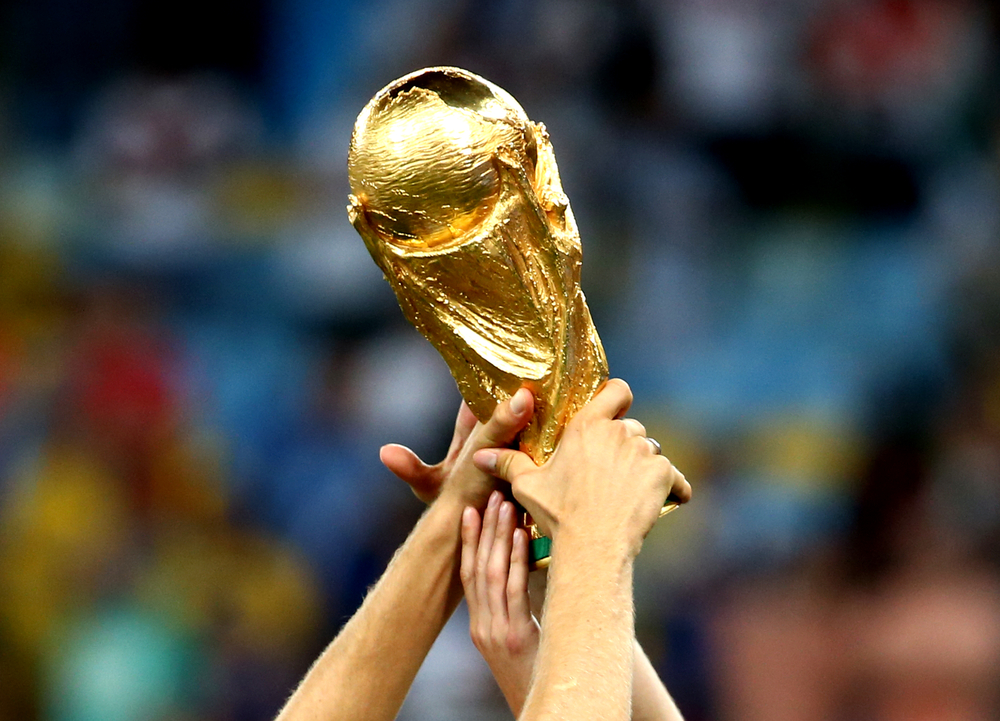
The Teams Most Likely To Go Deep
Beyond identifying a favorite, the model created a broader picture of which nations are expected to make significant runs during the tournament.
The top ten teams according to the projections are:
- Spain
- England
- France
- Germany
- Portugal
- Argentina
- Netherlands
- Brazil
- Belgium
- Norway
Portugal received an 8.9 percent chance of winning, while defending world champion Argentina followed closely at 8.2 percent. The Netherlands, Brazil, Belgium, and Norway completed the upper tier of contenders.
These rankings reflect football’s changing landscape. Traditional giants remain near the top, but the margins separating many teams have become increasingly narrow. A strong group-stage performance, a favorable draw, or a breakout star can quickly reshape expectations.

Why Probability Is Not Destiny
One of the most fascinating aspects of the research is how much uncertainty remains, even when sophisticated models are involved.
Many fans may see Spain’s 14.5 percent probability and assume that makes them a clear favorite. In reality, it also means there is an 85.5 percent chance that another nation will win the tournament.
Co-author Andreas Groll emphasized this point when discussing the findings. “The probability that the top favorite will actually win the tournament is usually no more than 20 per cent, which conversely also means that some other team wins with a probability of 80 per cent.”
He continued, “As a statistician, I’m therefore more interested in whether, on average, many of the teams we predict to go far will actually do so.”
Those comments reveal an important truth about forecasting. Statistical models are often better at identifying strong contenders than they are at predicting a single winner. Success in knockout football depends on countless variables that can change in a matter of minutes.
The Teams Facing The Longest Odds
At the opposite end of the rankings sit the nations that face the steepest challenge in their pursuit of World Cup glory.
Jordan was identified as the least likely winner among all participating teams. Qatar, Iraq, South Africa, Curacao, Saudi Arabia, New Zealand, Haiti, Panama, and Uzbekistan also appeared near the bottom of the projections.
Scotland’s outlook was particularly sobering. The model assigned the team just a 0.2 percent chance of winning the tournament. While such odds may seem discouraging, football history contains plenty of examples where expectations were overturned.
The researchers themselves stressed that their forecasts are probabilistic rather than definitive. Every tournament produces surprises. Every generation witnesses unexpected breakthroughs. The data may identify likely outcomes, but the matches still need to be played.
A Tournament That Could Deliver Plenty Of Surprises
What makes the World Cup unique is the tension between prediction and possibility. Statistics can highlight strengths and weaknesses, but they cannot measure belief, momentum, or the emotional force of a nation rallying behind its team.
The researchers have reason to be confident in their methods, having produced successful forecasts for previous major tournaments. Even so, they recognize the limits of any model when faced with the unpredictability of sport.
“The probabilistic forecasts leave a lot of room for surprises and excitement during the 2026 FIFA World Cup,” the researchers noted. They added, “But what is absolutely certain is that we look forward to an entertaining tournament as football fans (much more than as professional forecasters).”
Perhaps that is the most human takeaway from all the numbers. The data can point toward likely outcomes, but the magic of football begins where certainty ends. For the next month, billions of people will watch to discover whether the algorithms were right, or whether another unexpected story is waiting to unfold on the world’s biggest stage.
2026 FIFA World Cup, England football team, FIFA, FIFA World Cup, football analytics, football fans, football forecasting, football predictions, France football team, Germany football team, international football, Machine Learning, soccer news, soccer tournament, Spain football team, sports research, sports science, sports statistics, tournament predictions, University of Innsbruck, World Cup 2026, World Cup favorites, World Cup odds, World Cup predictions