
Your cart is currently empty!
Africa’s Rare Black Wild Cat Is Appearing In Unexpected Places, And Scientists Are Still Searching For Answers
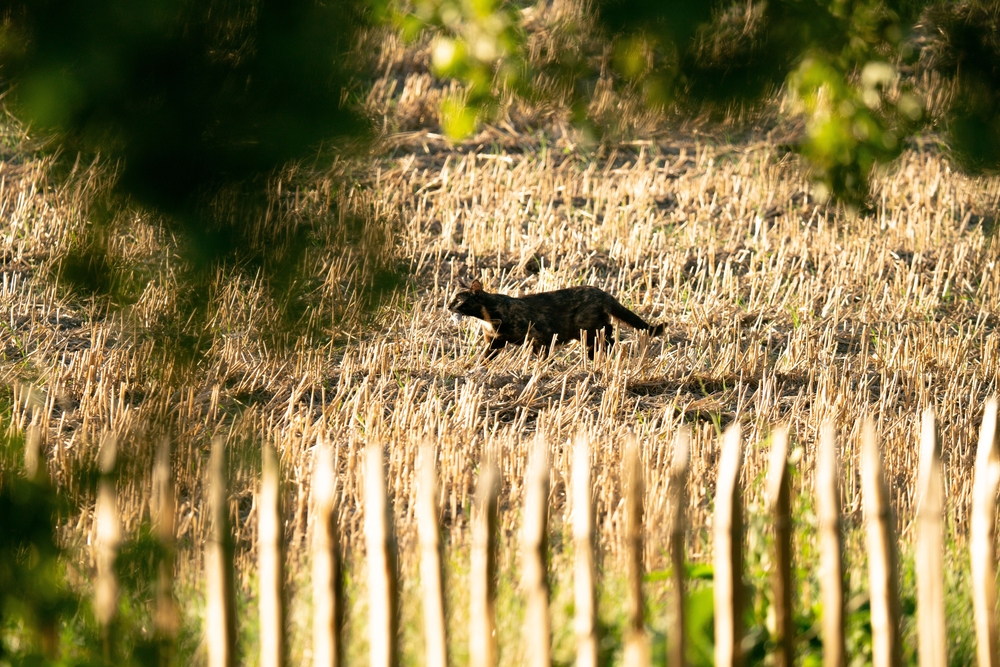
A rare wild cat with a jet-black coat, enormous ears, and legs capable of launching it metres into the air is attracting attention for an unusual reason. These striking animals are appearing in places where researchers might not expect to find so many of them, raising questions about what makes them different from their more familiar relatives.
Contents
show
Known as black servals, these elusive felines are a melanistic variation of the African serval, a medium-sized wild cat with an extraordinary set of hunting skills. They were traditionally associated with cool, densely forested mountain regions, but sightings in Kenya’s dry grasslands have complicated that picture. One survey recorded a surprisingly high proportion of dark-coloured servals, leaving researchers with several possible explanations and no definitive answer.
In the heart of Africa’s wild grasslands lives one of nature’s rarest wonders the black serval. Born with a genetic mutation called melanism, this cat carries more pigment than usual, giving its coat a deep, velvety black color! https://t.co/qKb73IboHi
— cat of the day (@catoftoday) September 22, 2026
Meet The Wild Cat With An Almost Completely Black Coat
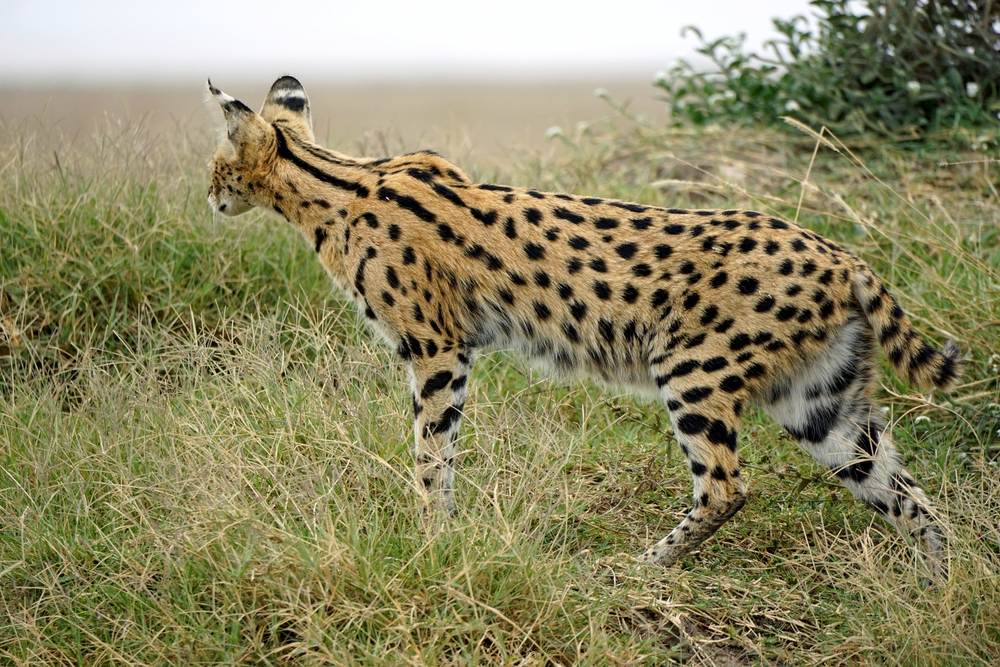
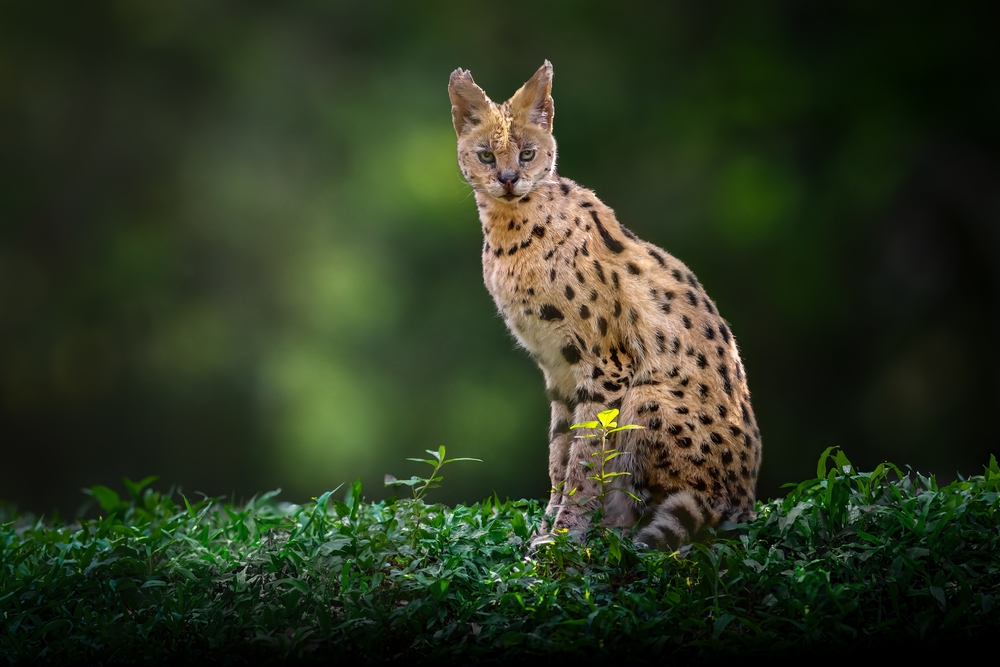
The serval is already one of Africa’s most distinctive wild cats, thanks to its long legs, slender body, spotted coat, and oversized ears. Its appearance is often compared to a smaller, more delicate version of the cheetah, although the serval has its own remarkable adaptations. The black serval takes that unusual appearance in a different direction, with fur that can look almost completely black and faint markings that sometimes appear beneath the dark surface.
This unusual colouring is known as melanism, a condition associated with increased production of dark pigment. While ordinary servals usually have golden coats covered in black spots, melanistic individuals can appear dramatically different despite belonging to the same species, Leptailurus serval. The precise genetic explanation for black servals remains unidentified, leaving scientists with questions about how this distinctive trait develops and spreads through populations.
Their appearance makes them stand out, but the serval’s physical abilities are just as fascinating. These cats stand around half a metre tall at the shoulder and can reportedly reach speeds of approximately 40 miles per hour. Their powerful hind legs also allow them to leap up to three metres, helping them catch prey and escape dangerous encounters in the wild.
@jayroo69 Look this imitator looking like he got that Serval Pawsies…you’re a house cat black!! Chill out with them counterfeit cheetah feets 🤣🤣🤣 https://t.co/kc992jhGjb
— Shaughn_A (@Shaughn_A2) October 7, 2026
The Serval Has Some Of The Most Unusual Hunting Abilities
A serval’s long legs and remarkable jumping ability are useful when hunting small mammals, reptiles, and amphibians. Many of these animals hide in tall grass or beneath the ground, making them difficult to spot before an attack. Servals compensate with a combination of speed, agility, and highly developed hearing that allows them to detect prey without relying entirely on their eyesight.
Their oversized ears are particularly impressive because they are the largest relative to head size among cats. Each ear can rotate independently through 180 degrees, controlled by 22 muscles. This movement helps servals determine where sounds are coming from, even when potential prey remains hidden beneath vegetation. Their hearing gives them a significant advantage in environments where a clear view of their target is difficult to obtain.
The result is a highly specialised hunter that can locate and capture small animals with impressive efficiency. Servals have been reported to succeed in more than 50% of their hunting attempts, compared with roughly one-third for lions and leopards. Their smaller size does not prevent them from being accomplished predators, although they must also remain alert to threats from larger carnivores, including hyenas, leopards, and African wild dogs.
Serval melanico, estremamente raro in natura. 📹 wildlife_ley/IG https://t.co/rx5VF8FT8Q
— Nina🕷Ricci 💫📚👠 (@NinaRicci_us) October 24, 2026
Why Black Servals Were Traditionally Found In Mountain Forests
Black servals have traditionally been associated with high-altitude environments, including Kenya’s Aberdare Mountains and the Ethiopian Highlands. These regions contain densely forested habitats where mist, shadows, and cooler conditions can create a very different environment from the open African grasslands. Their dark colouring has been thought to offer camouflage in these shadowy surroundings, potentially making it easier for the animals to blend into their surroundings.
Camouflage can play an important role in the survival of wild animals, particularly those that depend on stealth when hunting or avoiding predators. A dark coat may be less conspicuous in a forest with limited light, although the benefits of any particular colour depend on the environment. The existence of melanistic servals in these habitats has therefore raised questions about whether their unusual appearance provides an advantage under certain conditions.
However, coat colour alone cannot explain where a species lives or how successful its members are. Genetic variation, population size, environmental conditions, and chance can all influence the frequency of particular traits. The traditional association between black servals and mountain forests provided a starting point for understanding the animals, but sightings elsewhere suggest that the picture may be more complicated than previously assumed.
Kenya’s Dry Grasslands Have Produced An Unexpected Finding
The Tsavo Ecosystem in Kenya has added an intriguing twist to the story of the black serval. Unlike the cool, forested highlands traditionally associated with melanistic individuals, Tsavo includes extensive areas of dry, open wilderness. A survey conducted by the Sheldrick Wildlife Trust and Wildlife Works between 2011 and 2016 recorded a striking proportion of dark-coloured servals in this ecosystem.
According to the reported findings, 47% of serval sightings in Tsavo involved melanistic individuals. That is a notable figure because it differs from the pattern traditionally associated with black servals in high-altitude forests. The observations raise an obvious question about why so many dark-coloured individuals were recorded in an environment that appears very different from the habitats where they were expected to occur.
The percentage refers to the serval sightings recorded during the survey, rather than a confirmed count of every serval living across Tsavo. The distinction matters because wildlife surveys can be affected by where researchers look, which animals they encounter, and how easily particular individuals are detected. Even with that limitation, the reported pattern gives researchers a compelling reason to investigate the distribution of melanistic servals more closely.
Three Possible Explanations Could Solve The Mystery
Scientists have several possible explanations for the apparent abundance of black servals in Tsavo, although none has been confirmed as the definitive answer. One possibility is that the numbers reflect a sampling effect, meaning the animals recorded during the survey may not accurately represent the wider population. If melanistic servals were more likely to be noticed under the conditions in which observations took place, they could account for a larger share of sightings than their actual population numbers would suggest.
Another explanation involves genetic chance. The frequency of particular genes can change between generations, sometimes causing a trait to become more common without providing a direct survival advantage. If the melanism-associated genes became more frequent within a local population, that could help explain the observations. This possibility would require further information about the servals’ genetics and population structure before researchers could determine whether it fits the pattern in Tsavo.
A third hypothesis suggests that the genetic factors associated with melanism could also influence other biological characteristics. These might include thermoregulation, which helps animals maintain a suitable body temperature, or disease resistance. If such characteristics provided a survival or reproductive advantage, melanistic individuals might become more common in certain populations. However, the reported observations do not establish that black servals possess these advantages, and further research would be needed to test the idea.
What Scientists Still Need To Understand About Black Servals
The mystery involves more than discovering why some servals have black fur. Researchers also need to establish whether the apparent concentration of melanistic animals in Tsavo reflects the true composition of the local population or the way sightings were collected. More systematic surveys across different habitats could help establish whether dark-coloured servals are genuinely more common in some environments than others.
Genetic research could also help identify the mechanisms responsible for melanism and determine how the trait is inherited. Comparing populations from forests, highlands, and grasslands could reveal whether the frequency of dark colouring is associated with particular environmental conditions. Scientists could then investigate whether melanistic individuals differ in survival, reproductive success, or other measurable characteristics from normally coloured servals.
Long-term monitoring would provide another useful piece of the puzzle by showing whether the observed patterns remain consistent over time. A high proportion of sightings during one survey does not necessarily establish a permanent trend, especially when researchers are studying elusive wild animals. Establishing how the trait varies between populations and generations would help distinguish genetic chance from possible environmental influences.
The Black Serval Remains One Of Africa’s Most Intriguing Wild Cats
The black serval combines a striking appearance with some of the most specialised hunting adaptations found among wild cats. Its dark coat makes it visually distinctive, while its long legs, powerful leaps, and extraordinary hearing make it exceptionally well suited to hunting small prey. Yet the reported sightings in Kenya’s Tsavo Ecosystem have introduced questions that appearance and anatomy alone cannot answer.
The explanations range from survey-related effects and random genetic changes to possible biological advantages associated with melanism. Each remains a possibility rather than an established conclusion, leaving scientists with more work to do before they can explain the pattern confidently. For now, the black serval’s unusual distribution offers a compelling example of how a seemingly simple difference in appearance can open up much bigger questions about wildlife genetics and survival.
Sources:
- Buffalo, B. B. (n.d.). Melanism in servals. Sheldrick Wildlife Trust. https://www.sheldrickwildlifetrust.org/news/wilderness/melanism-in-servals?
- Living Species – Serval | IUCN CATSG. (n.d.). IUCN CatSG. https://www.catsg.org/living-species-serval