
Your cart is currently empty!
AI Can Write Powerful GPU Code but Humans Are Struggling to Explain It
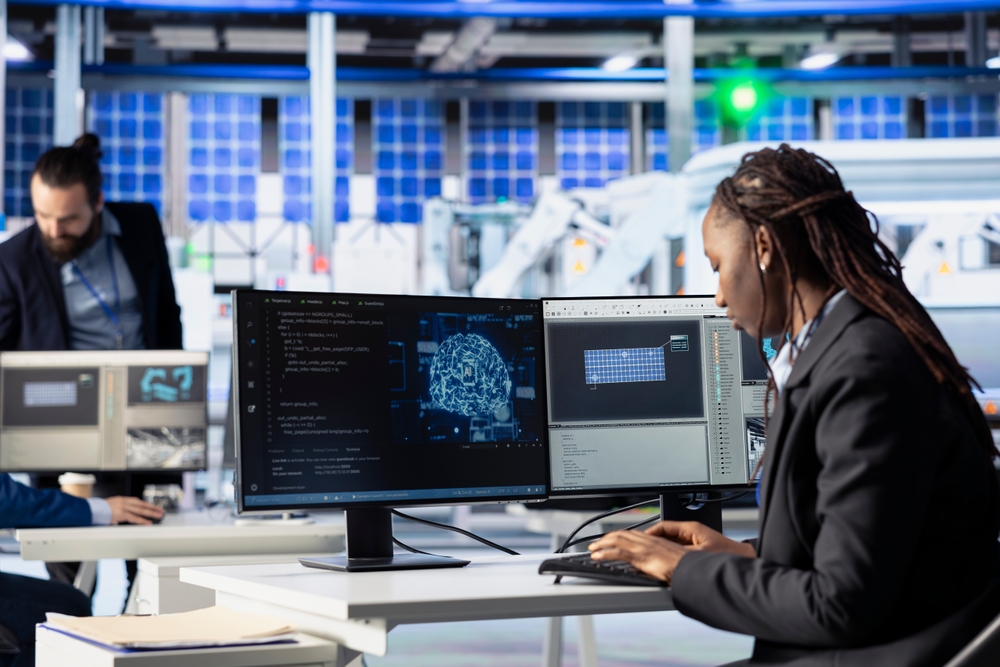
Artificial intelligence is beginning to change one of Silicon Valley’s most specialized jobs, and the results are raising uncomfortable questions about who really understands the technology being built. Some AI systems can now generate GPU code that performs exceptionally well, even when experienced engineers struggle to explain exactly how it works.
Contents
show
For CUDA specialists who have spent years mastering the intricate relationship between software and computer hardware, the change is already reshaping their daily responsibilities. Instead of writing every line themselves, they are increasingly supervising AI agents, testing their output, and deciding whether code they did not write can be trusted.
AI Is Taking Over One Of The Most Demanding Jobs In Tech
For years, engineers specializing in Nvidia’s CUDA software have been among the most sought-after professionals in the technology industry. CUDA, short for Compute Unified Device Architecture, is Nvidia’s platform for programming its graphics processing units, commonly known as GPUs. These chips are essential to the enormous computing demands of modern artificial intelligence systems.
The work requires a rare combination of programming ability and hardware knowledge. Engineers must understand how a GPU processes information and find ways to make demanding calculations run as efficiently as possible. Even relatively small improvements can deliver substantial savings when a company operates thousands of expensive chips.
Traditionally, CUDA engineers spent much of their time writing and refining kernels. These are small pieces of code designed to perform specific operations on a GPU, and improving them can involve testing numerous versions to identify the fastest implementation.
The process demands patience and considerable technical expertise. A programmer might spend hours adjusting a kernel, examining its performance, and changing the way information moves through the hardware to eliminate unnecessary delays.
AI systems are increasingly capable of performing much of that work themselves. They can generate hundreds of potential kernels, run tests, compare performance, and select implementations that deliver strong results.
That development is changing what companies expect from their most experienced engineers. Their value increasingly depends on directing AI systems and evaluating their decisions, rather than personally producing every line of optimized code.
Engineers Are Struggling To Explain What AI Has Written
The most striking part of this shift is that AI can produce code that works well without its human reviewers necessarily understanding how the implementation achieves its results. This is becoming a particularly important issue in GPU programming, where tiny differences in how instructions execute can significantly affect performance.
Jeremy Nixon, founder of Infinity, a startup developing AI systems that optimize chip software, discussed the trend with Business Insider. He explained that engineers are increasingly responsible for setting goals, checking results, and intervening when coding agents become stuck.
A separate example involving OpenAI engineers illustrates how difficult the transition can become. Jordan Nanos, a technical staff member at independent research firm SemiAnalysis, described an encounter involving engineers examining a GPU kernel associated with DeepSeek’s Multi-head Latent Attention, or MLA, system.
The kernel was designed to help use computing hardware more efficiently when training and running AI models. According to Nanos, the engineers understood the underlying hardware and the broader system, but struggled to explain what the particular kernel was doing.
Nanos described the experience in an interview with Fireside Alpha host Mansour Karam. “You can go line by line and it’s like nope, nope, nope,” he said, describing the difficulty of understanding the code.
He also argued that the AI could understand and test its own output, producing kernels that were both correct and highly performant. His account raises questions about how much human understanding is necessary when a system can generate an implementation that passes tests and delivers measurable improvements.
However, the example does not establish that engineers generally cannot understand AI-generated code. It illustrates a narrower but significant problem: sophisticated AI systems may produce implementations that are difficult for even experienced specialists to interpret.
The Engineer’s Job Is Becoming More About Supervision
The growing use of AI coding agents is changing the responsibilities attached to specialist engineering roles. Rather than manually creating each implementation, engineers increasingly define objectives and assess whether AI-generated solutions meet them.
That shift involves several distinct tasks, including the following responsibilities that remain central to the work.
- Setting performance goals: Engineers establish what a kernel needs to accomplish and specify the constraints the AI must respect.
- Generating potential solutions: AI systems produce multiple versions of the code, allowing teams to compare approaches that might otherwise take considerable time to develop manually.
- Testing the results: Candidate implementations are evaluated to determine whether they function correctly and deliver the required performance.
- Reviewing generated code: Engineers inspect the output and assess whether its behavior meets the requirements of the larger system.
- Resolving unexpected problems: When an AI agent becomes stuck or produces an unusual result, human specialists investigate and decide what should happen next.
This arrangement can improve productivity when AI handles repetitive tasks and tests alternatives faster than a person could. It also allows experienced engineers to concentrate on architecture and broader technical decisions.
However, the review process can introduce its own difficulties. Anne Ouyang, cofounder of AI infrastructure startup Standard Kernel, said AI can introduce “bizarre” bugs that human engineers would not have written themselves. She also described reviewing AI-generated code as “more intense.”
The challenge is clear. Engineers may spend less time writing code from scratch, but they must still determine whether the generated implementation is reliable. That responsibility becomes harder when the code follows an unfamiliar approach or behaves correctly under some conditions while failing under others.
New Data Raises Questions About AI Coding Productivity
The concerns surrounding AI-generated software extend beyond GPU programming. A recent analysis by software company Undo examined how engineering teams work with code produced by AI systems and identified a substantial gap between generating code and fully understanding it.
Undo reported that 35% of AI-generated code was pushed into production without engineering teams fully comprehending it beforehand. The company also found that 94% of surveyed software engineers had encountered this situation at least once during the previous six months.
Another finding suggested that the issue can affect productivity directly. According to Undo, 29% of respondents said they had lost productivity several times a month because engineers needed to untangle AI-generated code.
These figures suggest that faster code generation does not automatically translate into faster software development. A system might produce a working implementation quickly, but developers can still lose valuable time investigating its logic, identifying potential weaknesses, and determining how to maintain it.
The statistics should be understood within their limits. They reflect Undo’s analysis and survey findings rather than a universal measurement of every software company. Nevertheless, they identify a practical problem for organizations that increasingly depend on automated coding tools.
If teams must repeatedly reconstruct the reasoning behind generated software, some of the time saved during implementation may disappear during testing, review, and maintenance. Companies therefore face a more complicated question than simply asking how much code their AI tools can produce.
They must also determine how much additional work is required to make that code dependable.
Why Human Oversight Still Matters When AI Gets It Right
A program can pass a test without proving that every part of its behavior is safe or reliable. Tests evaluate specific conditions, and they cannot automatically rule out every possible defect or unexpected interaction with other software.
That distinction becomes particularly important in large systems, where a seemingly minor change can affect many connected services. Engineers need enough understanding of an implementation to assess what could happen when the surrounding software changes or the code encounters unfamiliar conditions.
Amazon’s reported experience offers a useful example of why companies are concerned about software reliability. According to reporting cited by Futurism, Amazon introduced a 90-day “code safety reset” in 2026 following outages that disrupted customer orders. The company disputed claims that AI was responsible for those failures.
Internal meeting notes reportedly showed concerns about the “high blast radius” of generative AI-assisted changes. The available information does not prove that AI caused the outages, but the episode illustrates the potential consequences of software changes that are not adequately assessed.
For organizations deploying AI-generated code, effective oversight involves more than checking whether the immediate output appears correct. Engineers also need to consider how an implementation behaves within the wider system and whether other developers can safely modify it later.
The problem becomes more difficult when a model produces code that is technically correct but difficult to interpret. A reviewer might be able to confirm that a kernel passes its tests without being able to explain every decision that produced its performance.
That approach may work in carefully controlled circumstances, particularly when clear correctness criteria and strong testing procedures are available. However, it becomes riskier when teams treat successful test results as a substitute for meaningful review.
CUDA Hiring Remains Strong Despite AI Automation
Despite the growing capabilities of AI coding tools, demand for CUDA specialists remains strong. Labor market analytics firm Lightcast reported that US job postings requiring CUDA skills during the first eight months of 2026 had already surpassed the total recorded throughout 2025.
Nvidia remained the largest employer recruiting for these positions, according to Lightcast. The firm reported more than 300 active US job postings requiring CUDA skills as of September 2026, while public Nvidia listings for CUDA-related engineering roles advertised base salaries reaching $431,250 before stock and benefits.
These figures suggest that AI automation has not eliminated the need for people with specialized hardware and programming knowledge. Instead, companies continue to compete for professionals capable of improving computing performance and evaluating sophisticated technical systems.
Bing Xu, founder of AI optimization startup INT21, said the shortage of experienced CUDA engineers remains a challenge. Much of the deepest expertise developed over more than 20 years, long before the latest surge in demand for AI computing.
AI could make it easier for less experienced programmers to produce code that previously required substantial specialist knowledge. Yet generating a plausible solution is different from recognizing whether that solution is efficient, reliable, and appropriate for a particular system.
Experienced engineers have years of practical knowledge to draw upon when assessing an AI-generated implementation. Their ability to recognize unusual behavior and verify results could become increasingly valuable as automated coding systems improve.
The employment picture is therefore more complicated than a simple story of machines replacing programmers. Some tasks are becoming easier to automate, while the ability to supervise those tasks effectively remains in demand.
Junior Engineers Could Face The Biggest Challenge
The transition may create different opportunities and risks for engineers at different stages of their careers. Experienced specialists can use years of accumulated knowledge to assess AI output, while junior developers are still building the technical foundations needed to recognize mistakes.
Ouyang warned that junior CUDA engineers could be particularly vulnerable as AI takes on more implementation work. Specialists who can outperform AI and verify its results may become more valuable.
AI tools could also lower the barrier to entering GPU programming. Developers who previously lacked extensive experience might be able to generate functional code, experiment with different approaches, and contribute to projects that once required more specialized training.
However, relying heavily on generated implementations could reduce opportunities to develop an intuitive understanding of how software works. Engineers learn valuable lessons by debugging their own mistakes, testing alternative approaches, and examining why one implementation performs better than another.
Those experiences help developers build the judgment needed to assess unfamiliar code. Without that foundation, a person may be able to operate an AI coding tool but struggle when its output fails in an unexpected way.
Companies adopting these systems will need to consider how junior employees acquire practical skills while benefiting from automation. Training that combines AI-assisted development with hands-on programming and rigorous code review could help preserve the expertise needed to supervise increasingly capable systems.
AI Could Eventually Write Code Better Than Humans
The longer-term implications extend beyond changing engineers’ daily routines. AI systems are beginning to demonstrate that they can produce certain optimized implementations that compete with, or outperform, human-written alternatives.
Xu said research conducted by his company had shown AI outperforming human engineers on certain benchmarks involving kernel generation. Nixon has also described cases in which AI writes CUDA code that engineers cannot fully understand but can verify as correct.
These reports offer an early indication of what more advanced coding systems might accomplish. An AI model could discover efficient ways of moving data through hardware that a human programmer might not immediately consider, potentially improving the performance of increasingly demanding AI workloads.
However, success on selected benchmarks does not establish that AI can independently handle every aspect of software engineering. Real-world systems involve complex dependencies, changing requirements, security considerations, and failures that may not appear during initial testing.
The ability to produce high-performing code is only one part of building reliable software. Teams must also decide what should be built, define the conditions that make an implementation acceptable, and establish how it will be monitored and maintained.
For CUDA engineers, the central skill may increasingly be knowing how to evaluate a machine’s work rather than producing every implementation personally. Their expertise will remain valuable when they can identify weaknesses that automated tests miss and recognize when an apparently successful result deserves closer examination.
AI is already changing the relationship between writing software and understanding it. The challenge for Silicon Valley will be ensuring that the people responsible for its most important systems retain enough technical knowledge to question the machines creating them.