
Your cart is currently empty!
Alex Gibney, America’s Most Feared Documentarian, Takes Aim at Elon Musk
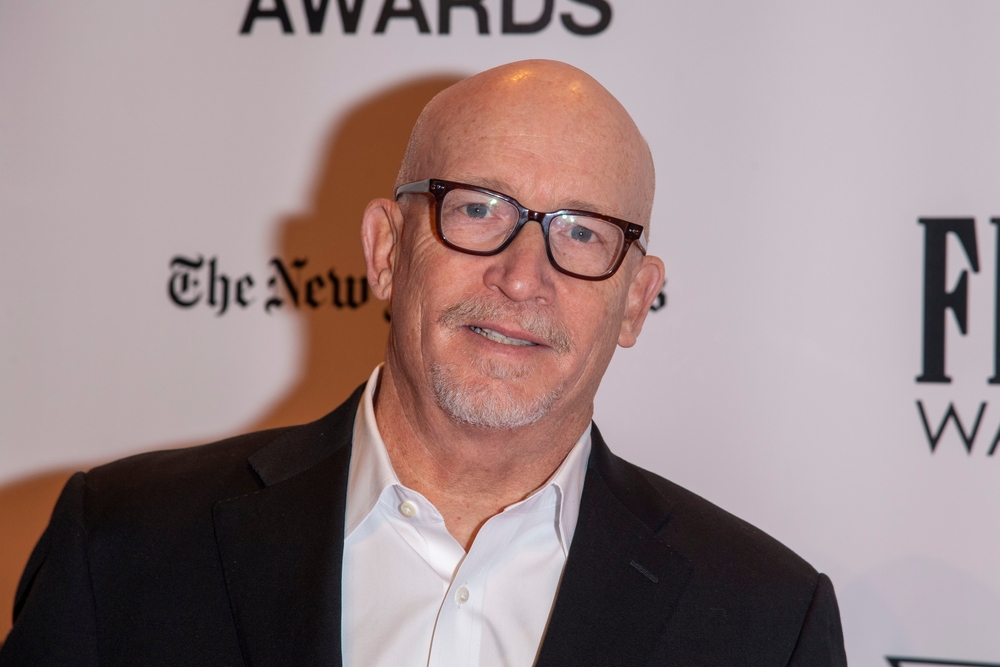
A filmmaker with a habit of leaving powerful men exposed has spent months quietly building something. He works methodically, off and on, and he tends to pick subjects who would rather he looked elsewhere. Torture at a CIA black site. The men who gutted Enron. The inner machinery of Scientology. Each time, the people at the center of his films learned that his camera does not flatter.
Contents
show
Now he has trained that camera on the richest man alive. Alex Gibney, who won an Academy Award for his work and has built a career out of institutions and figures that operate above ordinary scrutiny, announced in early 2023 that he was several months into a documentary titled Musk. He described it as a definitive and unvarnished examination of the man who runs Tesla, SpaceX, and, as of late 2022, Twitter. His subject did not welcome the news. Musk answered the announcement with a two-word verdict that told you everything about how he expected the film to go.
A Director Who Specializes in the Powerful
To grasp why Musk might feel uneasy, look at what Gibney has already made. His 2007 film Taxi to the Dark Side won the Oscar for best documentary. It centered on the death of an Afghan taxi driver named Dilawar, a man with no connection to any attack, who was beaten to death by American soldiers while held in extrajudicial detention at a black site at Bagram air base. Gibney followed that killing all the way up the chain of command, and the film refused to let anyone off easily.
He went on to make Enron: The Smartest Guys in the Room, which dissected the accounting fraud that brought down one of America’s largest companies. He made Going Clear: Scientology and the Prison of Belief, which pulled apart a secretive religious organization through the testimony of people who had escaped it. He made Steve Jobs: Man in the Machine, a portrait that declined to soften a beloved figure after his death.
A pattern runs through all of it. Gibney gravitates toward people and institutions that wield outsized power and prefer to control their own story. He takes that control away from them. That reputation is what makes his interest in Musk a matter of public attention rather than routine celebrity coverage.
What the Film Promises to Be
Gibney and his collaborators have framed Musk as a rigorous portrait rather than a puff piece. In a statement announcing the project, the director made his enthusiasm plain. “I have been working on this film, off and on, for some time and am hugely excited about it,” he said, adding that he was delighted by the group working alongside him.
One of the film’s producers, Closer Media founder Zhang Xin, argued that the timing demanded such a film. She placed Musk among the most influential people of the present moment and said that reason alone justified a close, careful study of him. The description attached to the project promised to take on the difficult work of examining Musk and the effect he has on the world around him, a phrasing that signaled the film would weigh consequences rather than simply catalog achievements.
Musk saw it differently. Replying to a tweet about the announcement, he offered his assessment in three words: “It’s a hit piece.” He had not seen a frame of the film. He did not need to. Given who was making it and how those films tend to land, his reaction read less as a reaction to the movie itself than to the man behind the camera.
Why the Timing Made Sense

The producers argued that a scrutinizing film about Musk fit the moment, and events supplied plenty of reasons. Musk had closed his $44 billion acquisition of Twitter in October 2022, a deal that gave one man control over a platform central to political and journalistic life across much of the world. Around the time of the announcement, Musk reclaimed his standing as the world’s richest person after Tesla’s stock climbed, lifting his net worth by close to $7 billion to $187 billion. He also drew heavy criticism for defending racist statements made by Dilbert cartoonist Scott Adams, and for continuing to cut staff at Twitter.
Taken together, these developments strengthened the case that a warts-and-all film belonged to this exact stretch of Musk’s life. A man accumulating that much wealth and that much influence over public speech invites the kind of examination Gibney builds his career on.
Inside a Company on Fire
To understand why scrutiny of Musk carries weight beyond his fortune, look at what reporters found happening inside the company he had just bought. A BBC Panorama investigation by Marianna Spring, drawing on dozens of current and former Twitter employees, described a workplace in chaos and a platform quietly coming apart.
An engineer, whom the BBC agreed to identify only as Sam to protect his job, offered a striking picture of the platform’s condition. “For someone on the inside, it’s like a building where all the pieces are on fire,” he said. From the outside, he explained, the façade looked fine, but he could see that nothing worked, that the plumbing and the faucets and the rest of it had broken.
Sam attributed the disarray to the collapse in staffing. At least half of Twitter’s workforce had been fired or had chosen to leave since Musk took over. People from unrelated teams now scrambled to cover functions they did not fully understand. One person without the relevant expertise, Sam said, was doing work that more than twenty specialists used to handle, which opened the door to far more risk. He also described how Musk brought in engineers from Tesla and asked them to judge Twitter employees’ code within a few days, code that would take months to properly understand, before deciding whom to cut. In Sam’s reading, the whole arrangement betrayed a deep distrust of the people who actually knew how the platform functioned. That distrust extended to Musk’s physical security. Two bulky bodyguards followed him everywhere in the office, Sam said, even to the restroom.
The staffing numbers confirmed the scale of the exodus. A New York Times report near the end of February put Twitter’s head count below 2,000, down from roughly 7,500 at the time of the takeover, with the most recent round of cuts hitting engineers responsible for keeping the site running.
Safety Teams Gone, Banned Accounts Back

The human cost of those cuts showed up most sharply in the teams built to protect users. Lisa Jennings Young, Twitter’s former head of content design, led a group that had spent years developing features to blunt harassment. Her entire team was laid off after Musk’s arrival, and she left in late November. Speaking publicly for the first time about her experience, she said the work had been far from perfect but that her team had kept improving things.
One of her team’s tools was the harmful reply nudge, which warned users before they sent a tweet that artificial intelligence had flagged for abusive language. Internal Twitter research, reviewed by the BBC, credited that nudge with real effect. When prompted, sixty percent of users edited or deleted the reply, and after a single nudge, people went on to compose eleven percent fewer harmful replies. Jennings Young had no idea what had become of the feature after her departure. When the BBC ran an experiment, testing a tweet she expected to trigger a warning, no nudge appeared. As Sam had predicted, the safety machinery seemed to be running unmanned.
Meanwhile, Musk had restored thousands of previously banned profiles, including that of influencer Andrew Tate, who has faced accusations of promoting misogyny. Research from the Institute for Strategic Dialogue, a UK think tank, found that tens of thousands of new accounts created after the takeover immediately began following known abusive and misogynistic profiles, a rate sixty-nine percent higher than before Musk took charge. The think tank concluded that his ownership had produced a permissive environment for exactly these kinds of accounts.
A Crowded Field, and a Different Kind of Film

Gibney is not the first to point a camera at Musk. FX’s Elon Musk’s Crash Course, from The New York Times Presents strand, examined his record. Netflix released Return to Space, made by the Free Solo directors, which followed SpaceX; a New York Times critic knocked it as material that could double as promotion. The BBC aired The Elon Musk Show, a series built around interviews with Musk’s family, friends, and employees.
What sets Gibney’s project apart is the man making it. The softer entries approached Musk with varying degrees of admiration. Gibney approaches his subjects the way a prosecutor approaches a case. That difference is precisely why Musk reached for the phrase “hit piece” before a single scene existed.
The Film’s Uncertain Release
For now, the film sits without a release date. Requests for comment to both Musk and Gibney have gone unanswered. Gibney, characteristically, has other work in motion, including an Apple TV two-parter on tennis player Boris Becker titled Boom! Boom! The World vs Boris Becker and a producer credit on Return to Timbuktu, a film about musicians returning to Mali after conflict.
Whatever Musk eventually reveals, the collision it promises is already clear. On one side stands a man who has spent a fortune buying the ability to shape his own narrative. On the other stands a filmmaker who has built a reputation, film by film, on taking that ability away.
Alex Gibney, Andrew Tate, BBC Panorama, Closer Media, content moderation, documentary film, Elon Musk, Elon Musk Twitter, Enron The Smartest Guys in the Room, Going Clear, Institute for Strategic Dialogue, investigative documentary, Marianna Spring, Musk documentary, online harassment, social media safety, SpaceX, Steve Jobs Man in the Machine, Taxi to the Dark Side, tech billionaires, Tesla, Twitter acquisition, Twitter layoffs, Zhang Xin