
Your cart is currently empty!
Americas Biggest Underground Water Supply Is Slowly Running Dry
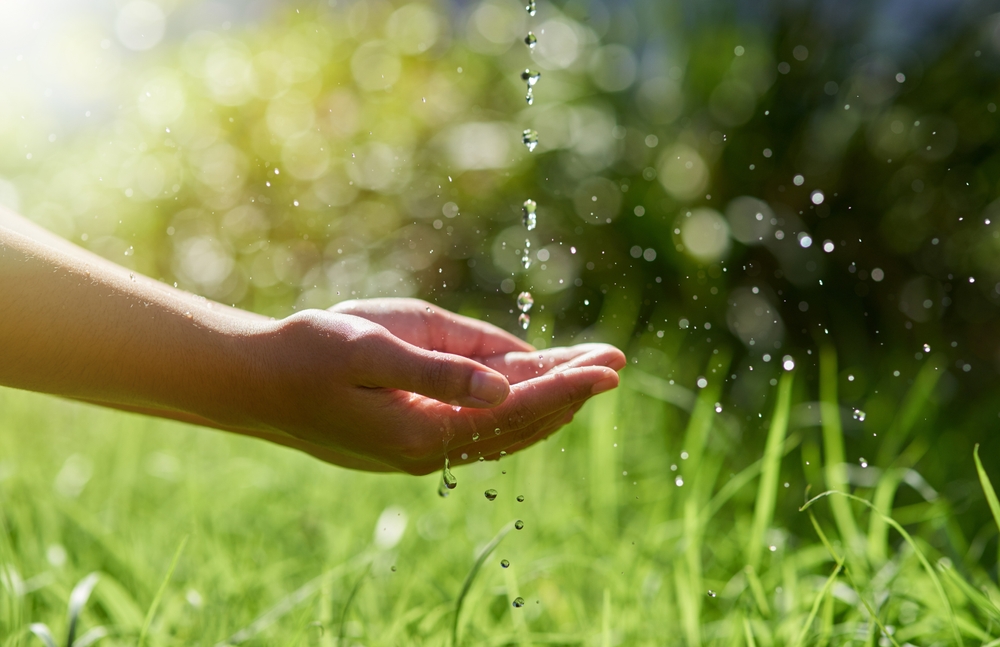
For generations, it has quietly powered one of the world’s most productive farming regions without most Americans ever knowing it existed. Stretching beneath eight states, this vast underground water reserve has helped feed millions of people, support rural communities, and fuel a multi-billion-dollar agricultural economy.
Contents
show
Now scientists warn that this enormous natural resource is being drained far faster than nature can replace it. In many areas, the damage has already reached a point where recovery could take thousands of years, raising difficult questions about the future of farming across the American Great Plains.
The Underground Reservoir That Built America’s Breadbasket
Hidden beneath nearly 174,000 square miles of the Great Plains lies the Ogallala Aquifer, one of the largest underground freshwater reserves on Earth. It stretches beneath parts of Colorado, Kansas, Nebraska, New Mexico, Oklahoma, South Dakota, Texas, and Wyoming, supplying water to farms, ranches, businesses, and communities across the region.
Although few people ever see it, the aquifer plays a vital role in everyday life across the United States. Around one-fifth of the nation’s agricultural production depends on water pumped from this underground source.
Corn, wheat, cotton, cattle, and countless other agricultural products begin with water drawn from beneath the Great Plains.
Its importance extends well beyond the eight states sitting above it. Crops grown using Ogallala water become livestock feed, breakfast cereals, cooking oils, dairy products, and countless grocery items shipped throughout the country.
Without the aquifer, modern American agriculture would look dramatically different.
A Natural Resource That Took Millions Of Years To Form
Unlike lakes or rivers that refill seasonally, the Ogallala Aquifer is largely made up of ancient groundwater that accumulated over immense stretches of geological time.
Millions of years ago, rivers flowing east from the Rocky Mountains deposited layers of gravel, sand, clay, and silt across the Great Plains. Water gradually seeped into these underground sediments, creating a massive natural reservoir hidden beneath the surface. Over time, changing landscapes cut off many of the original water sources feeding the system. Today, most recharge comes only from rainfall and melting snow filtering slowly through the soil.
That process happens at an astonishingly slow pace.
Across much of the aquifer, natural recharge averages less than one inch per year. Scientists estimate that if the Ogallala were ever completely emptied, nature would require roughly 6,000 years to refill it under current conditions.
This means much of the water being pumped today is effectively nonrenewable on any human timescale.
The Fourth National Climate Assessment reaches a similar conclusion, noting that current groundwater extraction greatly exceeds natural recharge across large portions of the aquifer, making sections of it function more like a finite resource than a renewable one.
How Farming Transformed The Great Plains
The story of the Ogallala’s decline begins more than a century ago.
In 1911, the first successful motor-driven irrigation well was drilled near Plainview, Texas. For farmers battling unpredictable rainfall, the discovery seemed almost miraculous. Water that had remained underground for thousands of years could suddenly be pumped onto dry fields whenever crops needed it.
The impact was immediate.
Communities expanded, farmland values climbed, and vast areas previously considered too dry for intensive agriculture became some of the world’s most productive cropland.
Following World War II, technological advances accelerated groundwater extraction even further. High-capacity pumps, improved irrigation systems, and expanding demand for food encouraged farmers to draw larger volumes of water every year.
By the 1960s, thousands of irrigation wells operated across Texas alone. Areas that once relied almost entirely on rainfall had become highly dependent on groundwater.
The transformation helped turn the Great Plains into an agricultural powerhouse worth roughly $35 billion annually.
For decades, the system appeared sustainable because the aquifer seemed almost limitless.
Scientists now know otherwise.
The Numbers Reveal An Alarming Trend
Groundwater has been disappearing from the Ogallala for decades, but recent measurements show the scale of depletion more clearly than ever.
According to data from the U.S. Geological Survey, groundwater levels have fallen by more than 200 feet in some heavily irrigated areas since large-scale pumping began during the twentieth century. Satellite observations have confirmed widespread declines across much of Texas, Kansas, and neighboring states.
The pattern is not uniform.
Nebraska has experienced localized improvements where groundwater management practices and natural conditions allow greater recharge. Farther south, however, declining water levels dominate the landscape. Parts of Kansas, Texas, and New Mexico have experienced some of the steepest losses recorded anywhere in the aquifer.
Some projections paint an even more troubling picture.
The Texas State Water Plan estimates that water levels across parts of the Ogallala could decline by more than 50 percent before 2060 if current trends continue. Other studies suggest that large areas of the southern aquifer may no longer support irrigated agriculture within the coming decades.
Researchers emphasize that the crisis is unfolding gradually rather than all at once.
Instead of wells suddenly running dry everywhere, farmers increasingly face lower water pressure, declining pumping rates, and shrinking areas that can still be economically irrigated.
Climate Change Is Making The Problem Worse
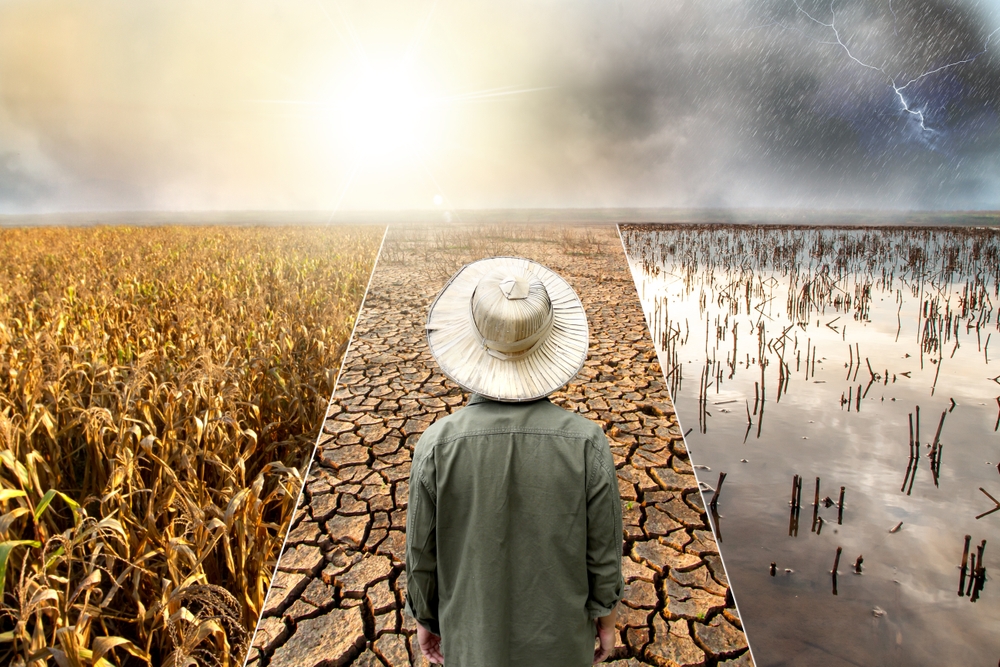
Human water use remains the primary driver behind the aquifer’s decline, but climate change is increasing pressure on an already stressed system.
The National Climate Assessment warns that rising temperatures are expected to increase evaporation, intensify drought conditions, and lengthen dry periods across the Great Plains during the coming decades. At the same time, higher temperatures increase crop water demand, forcing farms to pump even more groundwater to maintain yields.
Longer droughts also reduce opportunities for natural recharge.
Because the aquifer depends largely on rainfall and snowmelt, reduced precipitation means less water filters back underground each year. Even modest declines in annual recharge become significant when pumping continues at industrial scale.
Scientists note that climate change does not create the depletion problem by itself.
Instead, it accelerates a system that was already out of balance.
As groundwater reserves shrink, farming also becomes more vulnerable to weather extremes. Irrigation has long served as a safety net during dry years, protecting harvests from catastrophic losses. As that safety net weakens, severe droughts could have greater impacts on crop production and food supplies.
The Ripple Effects Could Reach Every Grocery Store

Many Americans may never hear about the Ogallala Aquifer until water shortages become impossible to ignore, yet its decline could eventually affect households far beyond the Great Plains.
The region produces enormous quantities of corn, wheat, cotton, beef, and dairy products that supply markets across the country. Reduced irrigation does not necessarily eliminate farming, but it often forces growers to shift toward less water-intensive crops or reduce the amount of land they cultivate.
Researchers expect these adjustments to happen gradually.
Rather than spreading limited water across every field, many farmers concentrate irrigation on smaller areas to preserve crop yields, leaving more land dependent on rainfall alone. While this strategy helps maintain productivity in selected fields, overall agricultural output still declines.
Less reliable harvests can also make food prices more volatile.
Groundwater irrigation has historically protected farms during drought years. As access to that reserve becomes more limited, extreme weather could trigger larger swings in crop production, livestock feed availability, and ultimately grocery prices.
The consequences extend well beyond farming communities, affecting supply chains that millions of consumers depend upon every day.
Farmers Are Already Being Forced To Adapt
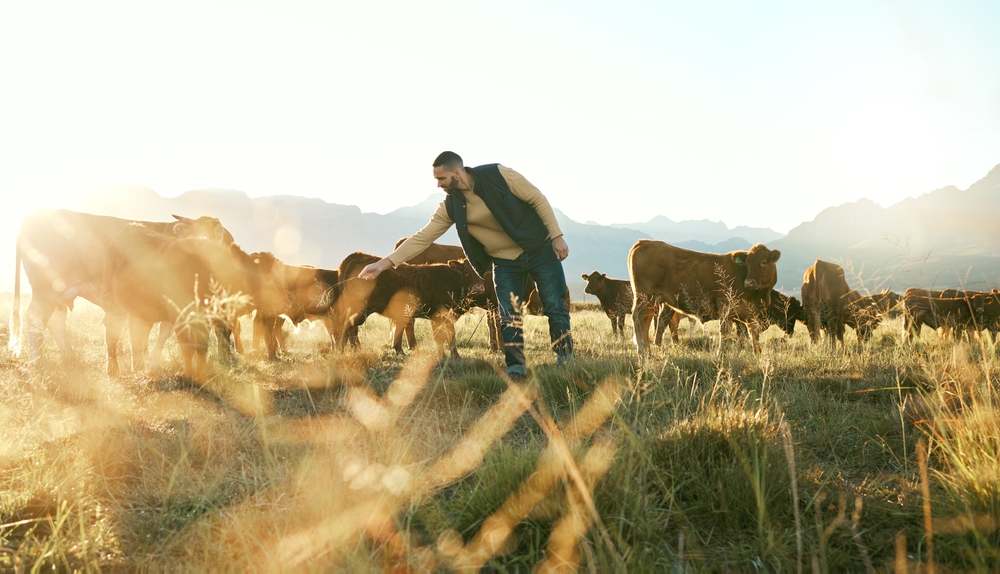
Across the Great Plains, the effects of groundwater depletion are no longer theoretical. Many farmers have watched well outputs decline over the years, forcing difficult decisions about what to plant, how much land to irrigate, and whether traditional farming practices can continue.
Some regions have already begun shifting away from heavily irrigated crops. Others are investing in technologies that help stretch every gallon of water further.
Chris Bowden, a postdoctoral researcher specializing in agricultural water management, explained that the transition is unlikely to happen all at once.
“They won’t try to spread less water across the same land. That’s not good for yields,” Bowden told Newsweek. “Instead, they shrink the area they irrigate, so more land becomes rain-fed while they maintain high yields on a smaller area.”
That strategy may help preserve farm income in the short term, but it comes with trade-offs. Rain-fed farming is far more vulnerable to prolonged drought, making annual harvests increasingly unpredictable.
Some communities have already experienced what that future looks like.
In parts of Kansas, groundwater declines have reached the point where irrigation is becoming difficult or uneconomical. Texas has also seen thousands fewer operating irrigation wells than during the peak years of groundwater pumping, reflecting the gradual transition away from intensive irrigation.
For farming families whose livelihoods have depended on reliable groundwater for generations, adapting is no longer optional.
Water Conservation Is Beginning To Change The Culture
Despite the scale of the challenge, many communities are showing that groundwater conservation can produce meaningful results.
One of the most closely watched examples comes from western Kansas, where farmers near the town of Hoxie voluntarily agreed to reduce irrigation by 20 percent across nearly 100 square miles.
The effort required years of discussion before participants reached an agreement. Farmers who had long viewed groundwater as an unlimited resource began recognizing that declining well levels threatened everyone in the region.
Fourth-generation farmer Mitch Baalman described how attitudes gradually shifted as neighbors openly discussed falling water levels.
“We had to change the culture,” he said. “We took water for granted.”
The conservation zone became one of the first locally driven efforts to reduce groundwater withdrawals before regulations forced action.
Not every participant found the sacrifices easy.
Some fields inside the conservation area stopped receiving irrigation months before neighboring farms located outside the zone. Even so, supporters argued that preserving groundwater for future generations justified the short-term economic costs.
Projects like this demonstrate that conservation is possible when communities recognize the long-term value of protecting shared water resources.

Technology Could Slow The Decline
Scientists agree there is no single solution capable of restoring the Ogallala Aquifer. Instead, progress will likely come from combining many smaller improvements across agriculture, policy, and water management.
Precision agriculture has become one of the most promising developments.
Modern soil moisture sensors can measure water content beneath fields in real time, allowing irrigation systems to deliver only the amount crops actually need. Infrared technology can monitor leaf temperatures, giving farmers early warning when plants begin experiencing water stress.
Researchers are also developing drought-tolerant crop varieties that require less irrigation while maintaining productivity. Advances in weather forecasting and irrigation scheduling are helping producers avoid unnecessary pumping during periods when rainfall is expected.
Other changes focus on the soil itself.
No-till farming leaves crop residue on the ground after harvest, helping retain moisture, reduce erosion, and improve soil health. Planting less water-intensive crops such as sorghum and certain varieties of wheat can also reduce groundwater demand without eliminating agricultural production.
Scientists continue exploring more ambitious ideas as well, including methods to improve underground water storage and enhance groundwater monitoring using satellite imagery and machine learning.
The common goal is simple.
Use every available drop of water more efficiently.
Better Policies May Be Just As Important As Better Technology

Improved farming practices alone may not be enough if groundwater withdrawals continue exceeding natural recharge.
Researchers increasingly point to policy changes as a critical part of the solution.
One challenge is measuring exactly how much groundwater is being pumped from individual farms. Without reliable data, enforcing conservation policies becomes difficult.
Bowden noted that satellite technology may help close this gap by allowing governments to estimate irrigation across large farming regions.
“One of the big challenges is that we don’t have good data on how much water is actually being used,” he said. “Even where policies are in place, it’s very difficult to enforce them without that visibility.”
Some experts have also suggested replacing existing tax incentives that reward equipment depreciation with incentives tied directly to groundwater conservation. Others support limiting the expansion of irrigated farmland or encouraging more efficient irrigation systems through financial assistance.
None of these approaches will refill the aquifer overnight.
Their purpose is to slow depletion enough for agriculture to remain productive while protecting the remaining groundwater for future generations.
The Future Of America’s Largest Groundwater Supply
The Ogallala Aquifer has supported more than a century of agricultural growth, helping transform the Great Plains into one of the world’s most productive farming regions. Yet the very success made possible by this underground reservoir has also placed it under extraordinary strain.
Scientists stress that the aquifer is not about to disappear overnight. The challenge is more gradual and, in many ways, more difficult to confront. Wells become less productive, irrigation grows more expensive, and each passing decade leaves less flexibility for the generations that follow.
Many of the tools needed to slow the decline already exist. Precision irrigation, drought-resistant crops, improved groundwater monitoring, conservation incentives, and voluntary reductions in water use have all shown promise in different parts of the Great Plains. What remains uncertain is whether these efforts can expand quickly enough to match the pace of depletion.
As groundwater sustainability researcher Dr. Robert Mace warned, “In the end, an aquifer can only produce what it can produce. That means, at some point, the Ogallala will be managed sustainably whether we like it or not.”
The Ogallala has quietly sustained American agriculture for generations without attracting much public attention. Its future will depend on choices made by farmers, researchers, policymakers, and consumers over the coming decades. The water stored beneath the Great Plains may be out of sight, but its importance reaches dinner tables across the nation, making its preservation one of the defining environmental challenges of this century.