
Your cart is currently empty!
Americans Are Scrambling for Canadian Citizenship, and a New Law Just Made Millions Eligible

Ellen Robillard remembers the night in 2016 when she first typed “how to get Canadian citizenship” into a search bar. Her mother had been born in Nova Scotia, and Robillard, a Democrat living outside Rochester, New York, felt a pull northward as election results rolled in. But a quick scan of immigration law stopped her cold. Canada’s first-generation limit meant her US-born son would never qualify, and she wasn’t willing to go without him. She closed the browser tab and moved on with her life.
Contents
show
Nine years later, at 52, Robillard is gathering documents, contacting archives, and preparing an application for both herself and her now-19-year-old son. What changed wasn’t her politics or her family tree. What changed was Canadian law.
A Law Struck Down, a Door Swung Open
In 2009, Canada’s Conservative government imposed a first-generation limit on citizenship by descent. Anyone born outside Canada to a Canadian parent could claim citizenship, but that right stopped there. Children of those born-abroad Canadians were shut out, no matter how deep their roots ran.
An Ontario Superior Court of Justice ruling in 2023 found that the restriction was unconstitutional. Bill C-3, an amendment to Canada’s Citizenship Act, followed and took effect on December 15, 2025. It removed the generational cap entirely. Americans who can prove direct lineage to a Canadian ancestor, whether a grandparent or a great-great-grandparent, may now apply for citizenship by descent. As long as no ancestor in the chain formally renounced their Canadian citizenship, the claim holds.
From 10 Cases a Month to 100
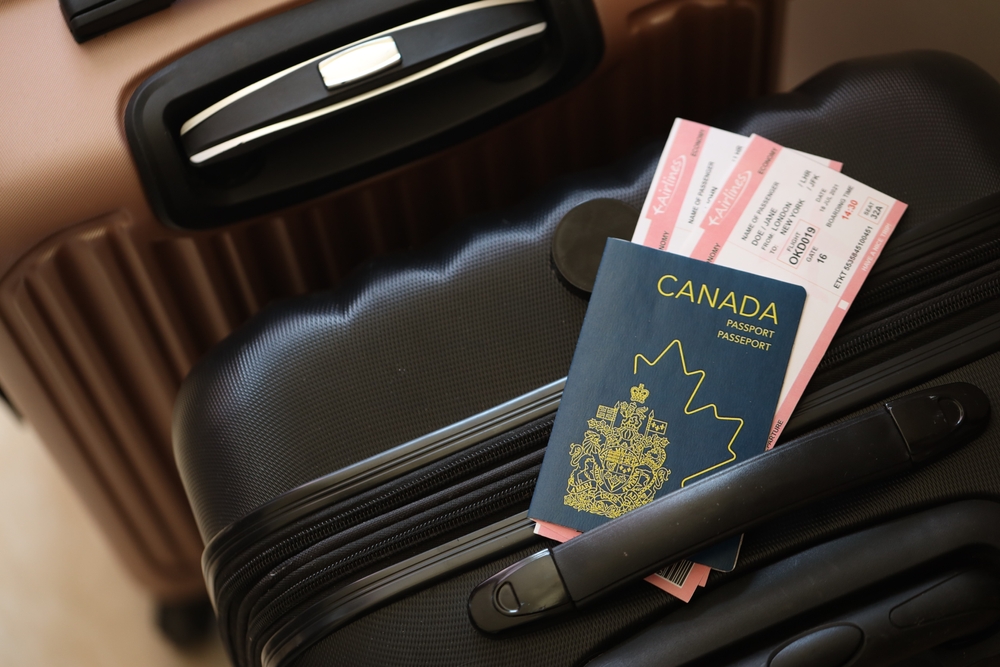
Numbers tell the story of what happened next. Cassandra Fultz, an Ottawa-based regulated immigration consultant and dual American-Canadian citizen, watched her American caseload jump from an average of 10 applications per month to 100 after Bill C-3 passed. Archives across the country began reporting similar pressure.
At Quebec’s Bibliothèque et Archives nationales du Québec, known as BAnQ, requests for certified copies of vital records from Americans exploded. In January 2025, staff processed 32 such requests. By January 2026, that figure had climbed past 1,000. February’s numbers were even more dramatic, with requests from US addresses ballooning from 100 in 2025 to 1,500 in 2026.
Immigration, Refugees and Citizenship Canada reported at the time of writing that roughly 50,900 people were waiting for a decision on citizenship certificate applications, with processing times running between 10 and 11 months.
Why Interest Hasn’t Faded After Election Season
Fultz has spent 17 years in immigration consulting, and she knows the pattern well. After every US presidential election, regardless of which party wins, a wave of Americans contacts her about Canadian options. Interest peaks around November and fades by January, once the initial shock wears off. Not this time.
Fultz describes the sustained demand since November 2024 as unprecedented in her career. In previous cycles, people would get over it within weeks. But with midterms approaching and inquiries still climbing two years after the 2024 election, she says nothing about the current wave resembles past patterns.
Bill C-3’s timing may explain part of the staying power. It arrived during a period of political upheaval in the US, giving Americans a concrete legal pathway at the exact moment many were searching for one.
“I Really Don’t Recognize My World Anymore”
Robillard’s case puts a face on the phenomenon. As the leader of her local Democratic Committee in a town of 3,000, she has become a visible political figure in her community. Visibility has come at a cost. She has received veiled threats on social media and was once followed home after a protest. Friendships and family relationships have fractured over political disagreements. Burnout, depression, and insomnia have taken a toll.
A spring 2025 trip to Nova Scotia, her mother’s birthplace, offered a reprieve. Robillard says she felt like a different person there, struck by how much less stressful daily life seemed and how warm people were to one another. She came home with a renewed connection to her Canadian heritage and a firmer sense of purpose.
Now that Bill C-3 has removed the first-generation barrier, Robillard can pass citizenship to her son, and both are assembling the required paperwork. She frames the effort in practical terms, saying that if conditions in the US deteriorate, she wants to know she can get in her car and go. It may never come to that, but having the option matters.
A Biracial Expat Finds an Unexpected Safety Net

Rachel Rabb left the US in 2018, hoping to escape anti-immigrant sentiment and fears of racial violence during the first Trump administration. At 34, biracial with an African-American father and an Irish-German mother, she split her time between Costa Rica and Mexico and believed distance would keep her safe.
Donald Trump’s re-election in 2024 erased that sense of security. A US-backed military strike against a cartel leader in Mexico in February triggered retaliatory violence across the country, killing more than 60 people. A subsequent presidential proclamation promised further military operations across Latin America, fueling fears of wider destabilization.
Rabb decided to search her ancestry on the chance she might qualify under Canada’s revised citizenship rules. Her gamble paid off. She discovered her great-great-grandmother was born in Peterborough, Ontario. She has no plans to return to the US, calling the current environment too dangerous for anyone who might be mistaken for an immigrant or simply looks Latino. Should conditions in Latin America worsen, Canada will become her exit plan.
Heritage First, Politics Second
Not every applicant is motivated by fear. Timothy Beaulieu, 45, of New Hampshire, traces his interest in Canadian citizenship to a cultural awakening rather than a political one.
In his early 20s, Beaulieu began spending more time with his US-born grandfather and heard stories about the family’s French-Canadian heritage, passed down through his great-grandfather. He joined Franco-American associations, traveled to New Brunswick, Nova Scotia, and Montreal, and fell in love with poutine along the way. In 2016, he founded PoutineFest, which hosts outdoor poutine festivals around New England. He insists politics play no part in his decision to apply, saying he would pursue citizenship with equal passion regardless of who occupied the Oval Office.
Patricia Evan Martins shares a similar sentiment. Her Québécois grandmother, one of 12 children, was sent to Maine around age 11 to work in a mill. Evan Martins grew up speaking French before English, attended a French Catholic school, sang French songs, and ate French food. For her, Canadian citizenship would formalize something she has felt her entire life. She says she has always felt Canadian at heart and that official recognition would bring her deep happiness.
Little Canadas and the Great Hemorrhage

Stories like Beaulieu’s and Evan Martins’s are rooted in a migration wave that reshaped New England. Between 1840 and 1930, close to one million French-speaking Canadians, most of them Québécois, emigrated to the United States in what historians call the Great Hemorrhage. Depleted farmlands and scarce employment in Quebec pushed families south to work in textile mills across factory towns in Massachusetts, Maine, New Hampshire, and beyond.
French-Canadian neighborhoods, known as Little Canadas, sprang up around those mills. While many families eventually returned to Canada, millions of descendants remain in the US today. David Vermette, a Maryland-based author specializing in Franco-American history, believes Bill C-3 presents Quebec with an opportunity to reconnect with a population that has long felt invisible on both sides of the border. He views Franco-Americans as a natural resource for the province, one that has gone largely unrecognized.
Paperwork, Patience, and Parish Registers
Claiming citizenship by descent requires more than a family story. Applicants must produce documentation proving an unbroken chain of Canadian lineage. According to Fultz, required records include baptismal or birth certificates showing parentage and place of birth, along with marriage certificates to account for name changes.
Complications often arise. French names were frequently anglicized when families crossed the border. Pierre became Pete. Parish records may list approximate dates rather than exact ones. Spelling of surnames shifted over generations. In difficult cases, applicants may need supplementary evidence such as death certificates, census records, property deeds, or even criminal records to confirm an ancestor’s identity.
Mary and Ryan Hamel, a family of four who moved to Quebec from Massachusetts as temporary foreign workers during the COVID-19 pandemic, can attest to the difficulty. Both have French-Canadian roots and began tracing their lineage after Bill C-3 passed. Securing a birth certificate through Quebec’s Directeur de l’état civil required multiple phone calls, appointments, and a sworn oath before a commissioner that the document would not be used for ill purposes. Mary described the process as grueling and time-consuming at every step.
Archives Under Pressure
Canadian archives are feeling the weight of demand. Sarah Hanahem, an archivist at BAnQ’s Montreal office, warned that international applicants should expect delays. Quebec residents receive priority, she noted, because BAnQ operates as a government entity funded by Quebec tax dollars.
Beyond staffing, the work itself is painstaking. Archivists must handle bound parish registers dating back to the 1600s with extreme care. Discrepancies in spelling, missing parish information, and approximate dates all slow the process. Archives in New Brunswick, British Columbia, Newfoundland, and Ontario have reported similar increases in requests compared to the same periods last year.
“A Canadian Is a Canadian Is a Canadian”
Not everyone in Canada welcomes the change. On online forums, some Canadians argue the law favors Americans with few ties or contributions to the country, while tax-paying immigrant households face lengthy and complicated citizenship procedures.
Fultz pushes back against that criticism. She points out that Bill C-3 corrected legislation that a court had already deemed unconstitutional and discriminatory. It also restored status to “Lost Canadians,” people who lost or never received citizenship because of the old rules. In her view, Canada does not operate on a tiered system of citizenship, and the amendment reinforces that principle. She also notes that American applicants in her practice include doctors, lawyers, and graduates of Harvard and MIT, people she believes would strengthen the country.
Waiting for the Letter from Ottawa
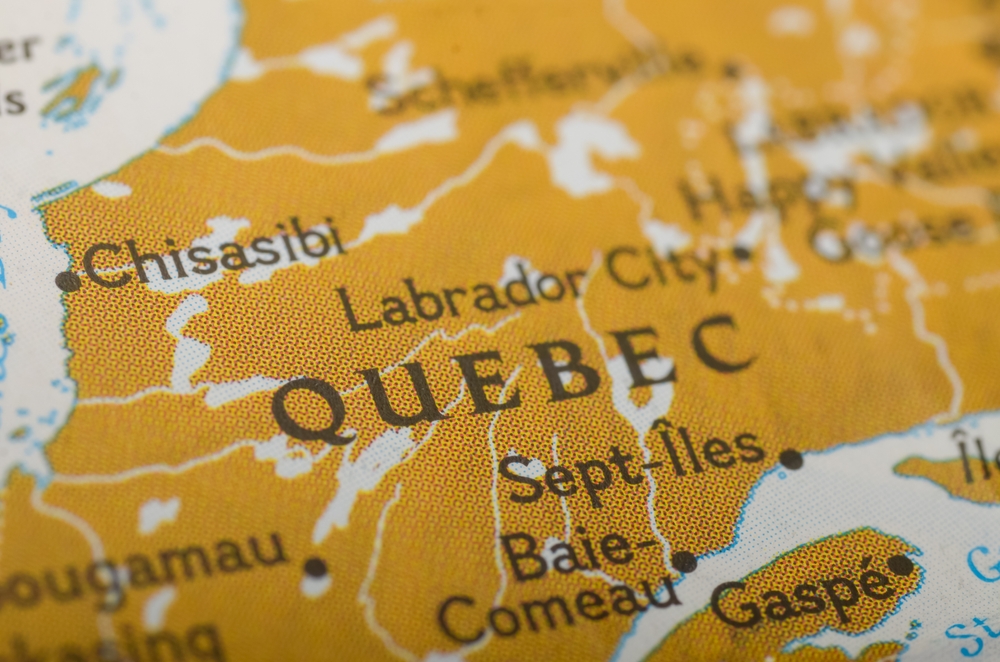
With their paperwork submitted, the Hamels now wait. Ryan has traced his ancestry all the way back to Jacques Archambault, the man who dug Montreal’s first well in 1658. Mary can look at maps of Quebec and identify where her grandparents were born, a connection that has grown deeper through the application process itself.
IRCC has said it expects tens of thousands of citizenship certificate requests in the coming years under Bill C-3, though it cannot estimate exactly how many people the legislation will affect. For now, roughly 48,000 applicants sit in the queue.
Whether driven by politics, heritage, or a quiet desire for a safety net, a growing number of Americans are staking a claim to a country many of them have never called home but have always, in some way, belonged to.
American immigration to Canada, BAnQ vital records, Bill C-3, Canadian citizenship by descent, Canadian immigration law, citizenship by ancestry, citizenship certificate, dual citizenship, Franco-American heritage, Little Canadas, Lost Canadians, New England French Canadians, Plan B citizenship, US political migration