
Your cart is currently empty!
Arizona Homeowner Loses Hundreds Of Thousands Of Dollars In Home Over HOA Debt

A homeowner in Mesa, Arizona, has lost a house worth hundreds of thousands of dollars after an unpaid homeowners association bill that began at less than $1,000 escalated into a foreclosure case. The property was eventually sold at auction for $8,172, according to reporting based on court records and accounts from the homeowner.
Contents
show
Toby Newton says the financial trouble began after he lost his job and was diagnosed with diabetes. He says he contacted his homeowners association to arrange payments, but the dispute continued through the courts and eventually resulted in the sale of his home.
The Homeowner Fell Behind After Losing His Job
Newton purchased the four-bedroom property in Mesa’s Superstition Springs community in 2022. Reports have put the purchase price at around $449,000 to $475,000, depending on the figure being referenced, but there is no dispute that the property was worth vastly more than the eventual auction price.
The financial problems developed in 2024 after Newton lost his job. Around the same period, he was diagnosed with diabetes, adding medical expenses and another financial burden while he was already struggling to keep up with his regular household costs.
His HOA assessments were relatively modest compared with the value of the property. Reports say the quarterly assessments were approximately $170, while the initial amount Newton owed in missed assessments and related charges was reported at $977.
Newton later summarized the circumstances surrounding the dispute in an interview with The Mesa Tribune, saying, “I bought the house and then I got sick.” His account describes a situation in which an unpaid association balance became increasingly difficult to resolve after his personal finances deteriorated.
The dispute would eventually become far more expensive than the original bill, with collection costs and legal fees added as the foreclosure process moved forward.
Newton Says He Offered To Pay The Debt

Image Credits – Gofundme @Toby Newton
Newton says he did not simply ignore the HOA’s demands. According to reports, he contacted the Superstition Springs Community Master Association and attempted to negotiate a payment arrangement that would allow him to remain in the home while gradually clearing the outstanding balance.
His first proposal reportedly involved paying an additional $50 each month toward the amount he owed. When that proposal was rejected, he says he increased the amount and eventually offered to pay $200 per month toward the outstanding debt.
The association did not accept the proposals, according to Newton’s account. The disagreement continued, and the HOA eventually moved forward with foreclosure proceedings.
By November 2024, the foreclosure process had begun. That development changed the scale of the dispute because the costs associated with pursuing the debt began appearing alongside the original unpaid assessments.
Newton’s situation also illustrates how an HOA dispute can become much more complicated once it moves from ordinary collection efforts into formal legal proceedings. The original assessment may be relatively small, but fees associated with the legal process can add substantially to the amount ultimately claimed.
Legal Costs Pushed The Debt Higher

Court documents cited in reporting show that the balance associated with Newton’s property increased as the foreclosure case progressed. The amount eventually included several categories of charges beyond the assessments that had originally gone unpaid.
By July 2025, reported figures included $1,311 in missed assessments and late charges, $1,042.09 in plaintiff’s fees and $3,345 in attorney fees. The reported total debt had reached approximately $6,579 by that point.
Those numbers are significant because the original amount reported as being owed was $977. The eventual foreclosure debt was therefore substantially larger than the initial HOA balance after additional charges accumulated during the legal process.
A default judgment was entered in the foreclosure case in 2025, according to reporting on the proceedings. The property was then scheduled for a public auction, setting up the sale that would attract widespread attention because of the enormous gap between the home’s value and the winning bid.
The case was no longer simply about a homeowner being behind on quarterly association assessments. It had become a dispute involving a residential property worth hundreds of thousands of dollars and a debt that had grown through the foreclosure process.
The HOA Bought The House For $8,172
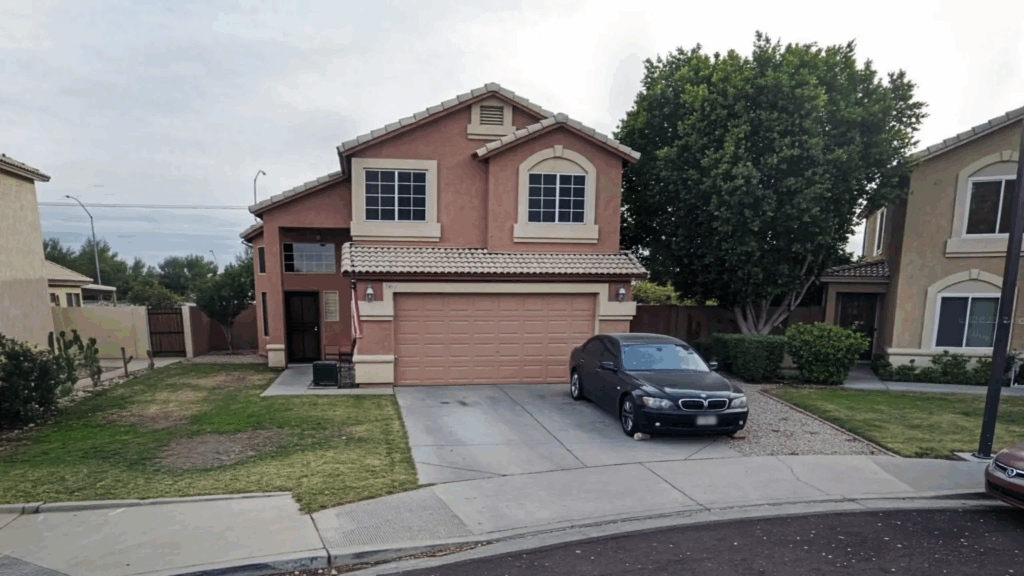
Image Credits – Google Maps @Superstition Springs
The property was sold at public auction in October 2025 for $8,172, according to reports. The buyer was the Superstition Springs Community Master Association, the HOA that had pursued the foreclosure.
The auction price was dramatically lower than the amount Newton had paid for the home. Depending on the reported valuation used, the property had originally cost roughly $449,000 to $475,000, meaning the auction price represented only a small fraction of that amount.
That difference is the detail that turned the case into a national news story. A home purchased for hundreds of thousands of dollars had changed hands through foreclosure for slightly more than $8,000.
The sale also created another financial challenge for Newton because losing the property did not immediately end the dispute. Reports say he was informed that he could potentially redeem the home by paying the required amount within a specified period.
Newton and his longtime partner, Sherrie Patten, were unable to raise the money needed during the initial redemption period. Their financial situation had also become more difficult because Patten was diagnosed with breast cancer and subsequently went on long-term disability, according to Realtor.com.
The couple later sought financial assistance through a GoFundMe campaign as they continued their efforts to deal with the foreclosure and related expenses.
The Redemption Amount Later Increased

Newton’s attempt to recover the property continued after the auction. According to Realtor.com, the HOA agreed to extend the redemption period until May 15, 2026, giving him additional time to come up with the money required to redeem the home.
However, the amount needed had increased. Reports put the redemption figure at $10,484 by the time the extended deadline approached.
Newton filed an emergency request for a stay on May 14, one day before the extended redemption deadline, according to the reporting. The filing represented another attempt to prevent the foreclosure process from reaching its final stage while he continued pursuing relief.
The financial circumstances surrounding the case were especially difficult because Newton and Patten were dealing with multiple problems at the same time. Newton had lost his employment and faced medical issues, while Patten was dealing with cancer treatment and disability.
Their GoFundMe campaign sought money to help with the legal battle and their financial needs. Patten described the situation as having placed a significant burden on the couple.
The case therefore extended well beyond the original HOA assessment. By the time Newton was trying to redeem the property, the financial demands associated with the foreclosure had become substantially larger than the amount that had initially triggered the dispute.
Arizona Changed Its HOA Foreclosure Rules
The foreclosure also unfolded during a period when Arizona lawmakers were changing the state’s rules governing homeowners association liens and foreclosures.
In April 2025, Arizona enacted Senate Bill 1494, which changed the circumstances under which an HOA can foreclose on a common-expense lien. Under the amended law, an association generally cannot foreclose unless the homeowner has been delinquent for 18 months or owes at least $10,000 in unpaid assessments, whichever occurs first.
The legislation also established additional requirements concerning communication with homeowners and payment arrangements before foreclosure proceedings can move forward. The changes were intended to place additional conditions around the use of foreclosure as a collection mechanism.
The timing is important in Newton’s case because his foreclosure proceedings had already begun in November 2024, before the legislation was enacted in April 2025. Reports have discussed the new law in connection with his situation, but its precise application depends on the procedural history and legal issues in the case.
The enacted statute itself provides the revised threshold for HOA foreclosure. It says the association’s lien may be foreclosed when the owner has been delinquent for 18 months or owes $10,000 or more in assessments, whichever occurs first.
That change has made the legal landscape different from the one that existed when Newton’s foreclosure proceedings began. It also provides important context for understanding why his case has attracted attention beyond his individual dispute with the HOA.
How A Small HOA Bill Can Become A Foreclosure

HOA assessments are generally recurring charges paid by homeowners in communities governed by an association. The money can be used for expenses associated with common areas, community maintenance and other responsibilities established by the association’s governing documents.
When an owner stops paying, the unpaid amount can become subject to late charges and collection efforts. If the matter eventually enters litigation, additional expenses can arise depending on the circumstances and applicable law.
Newton’s case shows how several separate charges can accumulate over time. The figures reported in the case included unpaid assessments and late charges, plaintiff’s fees and attorney fees, creating a final debt substantially larger than the initial $977 balance.
The sequence reported in the case can be summarized through several key figures:
- $977: The initial amount reportedly owed in missed HOA assessments and related charges.
- $1,311: The reported amount of missed assessments and late charges by July 2025.
- $3,345: The reported attorney fees included in the foreclosure debt.
- $6,579: The reported total debt at that stage of the proceedings.
- $8,172: The amount the HOA paid at the October 2025 foreclosure auction.
- $10,484: The reported amount required to redeem the property after the redemption period was extended.
The figures should not be treated as interchangeable because they represent different points in the legal process. The $977 figure refers to the initial reported delinquency, while later amounts included additional costs and expenses associated with the dispute.
That distinction is important when describing what happened to Newton’s home. The property was not auctioned because the HOA was owed only $977 at the time of the sale. The original unpaid amount was followed by additional charges as the foreclosure proceedings developed.
Newton Has Challenged Parts Of The Foreclosure

Newton has continued to challenge the circumstances surrounding the loss of his home. Reports say he has raised concerns about the foreclosure process and the notices he received as the case progressed.
The HOA, meanwhile, has maintained that the required notices were properly delivered, according to reporting on the dispute. Those competing accounts should be distinguished from facts established by a final court ruling.
Newton’s emergency filing before the extended redemption deadline represented another effort to preserve his ability to challenge or delay the loss of the property. The legal proceedings have therefore continued beyond the original auction.
The case has also drawn attention because of the unusual relationship between the value of the property and the amount paid at auction. The HOA’s winning bid of $8,172 was dramatically below the home’s reported purchase price, creating a gap of hundreds of thousands of dollars.
A foreclosure auction does not necessarily operate like an ordinary real estate sale. The circumstances surrounding the auction, the applicable lien rules and the legal rights of the parties can all affect how a property is sold and what happens to the proceeds.
Those details are particularly important in Newton’s case because the headline numbers alone do not capture the entire legal process. The dispute involved the original unpaid assessments, subsequent fees, a court judgment, the auction and later efforts to redeem the property.
The Case Has Put HOA Powers Under A Spotlight

Newton’s experience has become part of a broader debate over how homeowners associations should be able to collect unpaid assessments. Supporters of HOA enforcement mechanisms argue that associations need legal tools to collect money that homeowners are contractually required to pay.
At the same time, the Arizona legislature’s 2025 changes show that lawmakers have placed additional restrictions on when an HOA can use foreclosure. The new threshold means that associations face statutory conditions before they can take that step under the amended law.
The difference between the original debt and the eventual financial consequences in Newton’s case has also focused attention on legal and collection costs. A homeowner who falls behind on relatively small assessments can face a substantially larger financial obligation once a dispute enters the court system.
For Newton, the consequences went beyond the balance shown on a collection notice. The foreclosure resulted in the loss of the property, while his efforts to redeem the home required him to raise additional funds during a period when his household was already facing unemployment and serious medical expenses.
The reported facts also demonstrate why the timing of legislation can matter in an individual legal dispute. Arizona’s foreclosure rules changed while Newton’s case was already moving through the courts, creating a complicated question about which provisions applied at different stages.
A $977 Dispute Ended With An $8,172 Auction
The central figures in Newton’s case remain difficult to ignore. A homeowner who purchased a Mesa property for hundreds of thousands of dollars faced foreclosure after an HOA dispute that began with a reported $977 balance, while the property was ultimately sold to the association for $8,172.
The case also shows how the financial stakes can change as an HOA dispute moves from unpaid assessments to formal foreclosure. Legal fees, collection costs and court proceedings can transform the amount at issue, while changes in state law can alter the rules governing future cases.
Arizona has since tightened the statutory conditions surrounding HOA foreclosures. For Newton, however, those changes arrived after his foreclosure proceedings had already begun, leaving his case to unfold under a legal process that started before the new rules were enacted.
Featured Image Credits – Gofundme @Toby Newton