
Your cart is currently empty!
Arkansas Librarians Face Criminal Liability Over Books Available To Children

A library worker shelves a novel. A child checks it out. Months later, someone decides the book was harmful to minors.
Contents
show
Under a revived Arkansas law, that scenario could carry criminal consequences, leaving librarians trying to determine where ordinary library service ends and potential liability begins.
The uncertainty returned on July 30, when a federal appeals court reversed a lower court ruling that had blocked key parts of Arkansas Act 372 for nearly three years.
A Court Ruling Just Put Arkansas Libraries On Notice
Act 372 became Arkansas law in 2023, but two sections were quickly challenged by a coalition of 18 plaintiffs, including public libraries, bookstores and other organizations.
U.S. District Judge Timothy Brooks initially blocked Sections 1 and 5 in July 2023. In December 2024, he made that injunction permanent after ruling that both provisions were unconstitutional.
That changed on July 30, 2026.
A three-judge panel of the Eighth Circuit reversed Brooks’ ruling. Judge L. Steven Grasz wrote the 24-page opinion, joined by Judge Ralph Erickson. Chief Judge Steven Colloton agreed with the judgment and wrote separately.
The ruling means the two sections can now be enforced while the legal fight continues.
For librarians, the immediate problem is figuring out exactly what enforcement looks like in practice.
Adam Webb, director of the Garland County Library and president of the Arkansas Library Association, said librarians are struggling to determine what the law actually means for books.
“We’re trying to figure out exactly what ‘harmful to minors’ would mean in the context of books when an 8-year-old can read a book, but we’re not sure if they understand all the concepts that could be in an adult fiction book,” Webb told the Arkansas Advocate.
That uncertainty is now being translated into changes on library shelves.
The Law Can Carry Criminal Penalties

Section 1 makes furnishing a harmful item to a minor a Class A misdemeanor.
According to the source article, the provision covers material involving nudity, sexual conduct, sexual excitement or sadomasochistic abuse when the material is considered patently offensive and lacks literary, scientific, medical, artistic or political value for minors.
The maximum penalty for a Class A misdemeanor in Arkansas includes up to one year in jail. The source article also notes that Arkansas law caps an individual fine at $2,500.
There is an important distinction in the wording of the law.
A child simply opening a book does not automatically create a criminal charge. Section 1 turns on knowingly furnishing the material.
That distinction has done little to eliminate librarians’ concerns because libraries routinely purchase, catalogue, shelve and lend thousands of books to people of different ages.
The Word “Knowingly” Is Raising Questions

Librarians are now confronting questions about what they are expected to know before putting a book on a shelf.
Does a librarian need to review every potentially controversial title?
Would a book with a sexual passage be treated differently from a book that contains an explicit illustration?
Could a librarian face consequences if a child checks out a book that was considered acceptable when it entered the collection?
The source article does not provide definitive answers to those questions.
That is part of the problem library directors say they are trying to solve.
One Library Has Already Restricted Manga
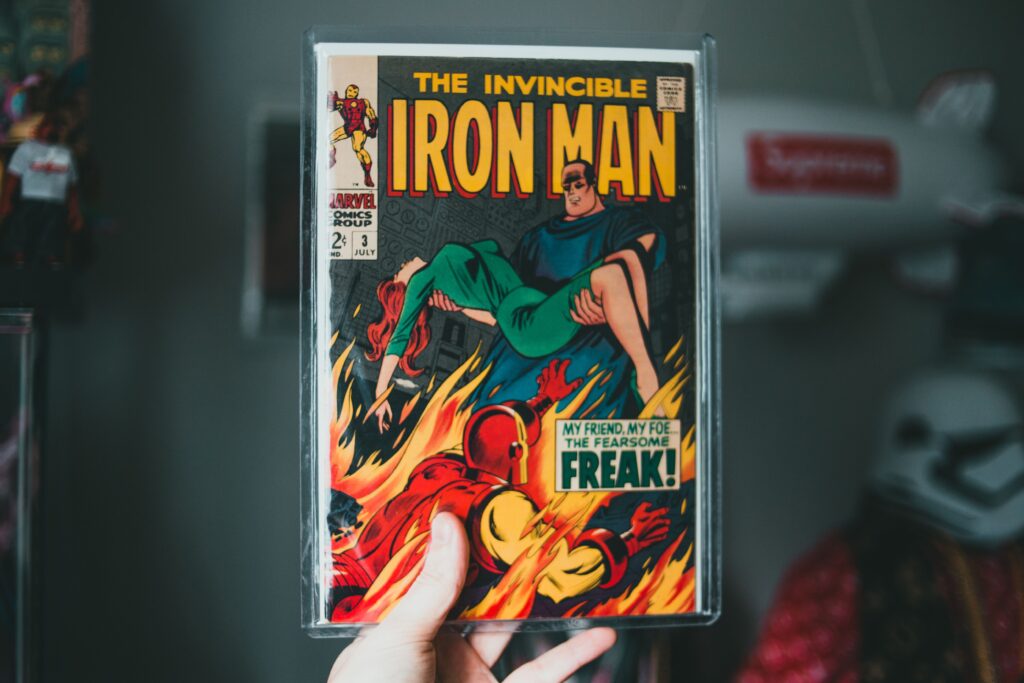
The legal ruling produced an immediate response at at least one Arkansas library.
On July 31, the day after the appeals court decision, the Independence County Library announced that manga and adult graphic novels were being restricted to patrons 18 and older.
Some restricted books now require a parent to check them out. Staff are also placing warning stickers on books containing sexually explicit prose.
The library’s director, Carlene Morrison, indicated that the changes were being made amid continuing uncertainty.
“I hope they overturn it [in court] again and we don’t have to jump through these hoops,” Morrison said.
The changes illustrate the practical problem facing libraries across the state.
A court can revive a statute in a legal opinion. Library employees then have to translate that ruling into decisions about physical books, checkout policies and patrons standing at the circulation desk.
Another Part Of The Law Lets Officials Challenge Books

Section 5 creates a separate process for challenging materials held by public libraries.
Under that process, a review panel can consider a challenge to a book. If the panel votes to keep the book in its current location, city or county officials ultimately get the final say on whether it should be moved.
That creates another layer of decision-making beyond the criminal provision.
David Johnson, executive director of the Fayetteville Public Library, said his library is more comfortable implementing Section 5 than Section 1.
Fayetteville was the lead plaintiff in the original lawsuit.
The library is now considering several possible responses to the appeals court decision.
Fayetteville Has Several Legal Options

Johnson told KUAF that the library is considering four paths:
- Implement the law: Follow the revived provisions while the legal process continues.
- Seek clarification: Ask the appeals panel to provide additional guidance about the ruling.
- Request an en banc rehearing: Ask all 11 judges of the Eighth Circuit to reconsider the case.
- Appeal to the Supreme Court: Seek further review from the nation’s highest court.
Johnson said the library had believed it had a strong case.
“And I felt like we had a strong case,” Johnson said. “I felt like our attorneys represented us well.”
For now, the library is waiting for greater clarity about what compliance with Section 1 requires.
“We really don’t know what we need to do,” Johnson said. “So it’s sort of a hurry up and wait kind of position.”
The Appeals Court Rejected The Lower Court’s Hypotheticals
The legal dispute also turned on what evidence was actually before the court.
Judge Grasz rejected the lower court’s reliance on hypothetical examples of how libraries might respond to the law.
Brooks had warned that the statute could potentially affect books including “Romeo and Juliet,” romance novels and puberty or sex-education manuals.
Grasz argued that those concerns were based on speculation rather than evidence presented by the plaintiffs.
He wrote that the district court had “speculated that some libraries and bookstores may try to comply with” Section 1 by “creating strict adults-only areas.”
The appeals court’s response was blunt: “But courts cannot conjure up their own hypotheticals en route to striking down laws as overbroad.”
The panel also concluded that the plaintiffs had not demonstrated that others would be affected differently from them.
That reasoning allowed the court to revive the disputed sections without resolving every possible scenario librarians might encounter.

Critics Say The Stakes Go Beyond One Book
The decision has produced sharply different responses from supporters and opponents of the law.
Arkansas Attorney General Tim Griffin, whose office defended Act 372, welcomed the ruling.
“I applaud the Eighth Circuit’s decision and its careful review of this case,” Griffin said, arguing that the decision allows Arkansas to enforce protections for children while increasing accountability for public-library curation decisions.
The ACLU of Arkansas took the opposite position.
“Access to ideas and information is fundamental to a free society,” executive director Holly Dickson said. “Libraries and bookstores exist so people can encounter new perspectives, challenge assumptions, and make up their own minds, not so the government can decide which thoughts are acceptable.”
John Adams, the lead attorney for the plaintiffs, also criticized the revived law.
He said libraries and bookstores “should be places where people can freely explore ideas” rather than places where employees “face criminal liability for selling, checking out, or even just shelving constitutionally protected books.”
His team is evaluating further legal options.
One Librarian Raised A Question About Parents

Perhaps the strangest question surrounding the law reaches beyond library shelves altogether.
John McGraw, who runs the Faulkner-Van Buren Regional Library, said he interprets Section 1 as potentially applying to anyone who gives a book to another person, including someone doing so inside a private home.
That interpretation led Webb to ask what happens when a parent checks out a book and gives it to their own child.
“If a parent checks that book out and gives it to their minor child, do we as librarians have a duty to report that parent as having violated the law because the parent has made the material available to the child?” Webb asked.
The source article does not establish that parents would actually face prosecution in that situation.
It does show how broadly librarians believe the statute’s language could potentially be read.
Nate Coulter, who leads the Central Arkansas Library System, raised a different concern involving young people who use libraries for community service hours.
“What do I tell the parents who are happy that their kids will get some service credit hours to graduate by coming to the library?” Coulter asked.
The Supreme Court Could Eventually Get The Case
The Eighth Circuit’s decision did not necessarily end the fight over Act 372.
Fayetteville Public Library is considering whether to seek additional review. Other legal options remain available to the plaintiffs as they evaluate the ruling.
The Arkansas State Library Board was also scheduled to consider its own rules related to the law on August 14.
Meanwhile, Chief Judge Steven Colloton’s separate concurrence introduced another significant point into the debate.
Colloton wrote that “third-party library patrons have no constitutional right to receive unfettered access to books of their choice at taxpayer expense.”
That statement does not resolve every dispute surrounding Act 372. It does, however, reveal the constitutional question now sitting behind the day-to-day decisions being made in Arkansas libraries.
For librarians, the debate has moved from a courtroom injunction to the checkout desk.
A book can now trigger a policy decision before it ever reaches a child’s backpack. And until the courts provide clearer answers, library staff are left deciding how much caution is enough when the penalty for getting it wrong could involve a criminal charge.