
Your cart is currently empty!
Bikini Tradie’ Claims She Has Right to Work Topless Like Male Co-workers
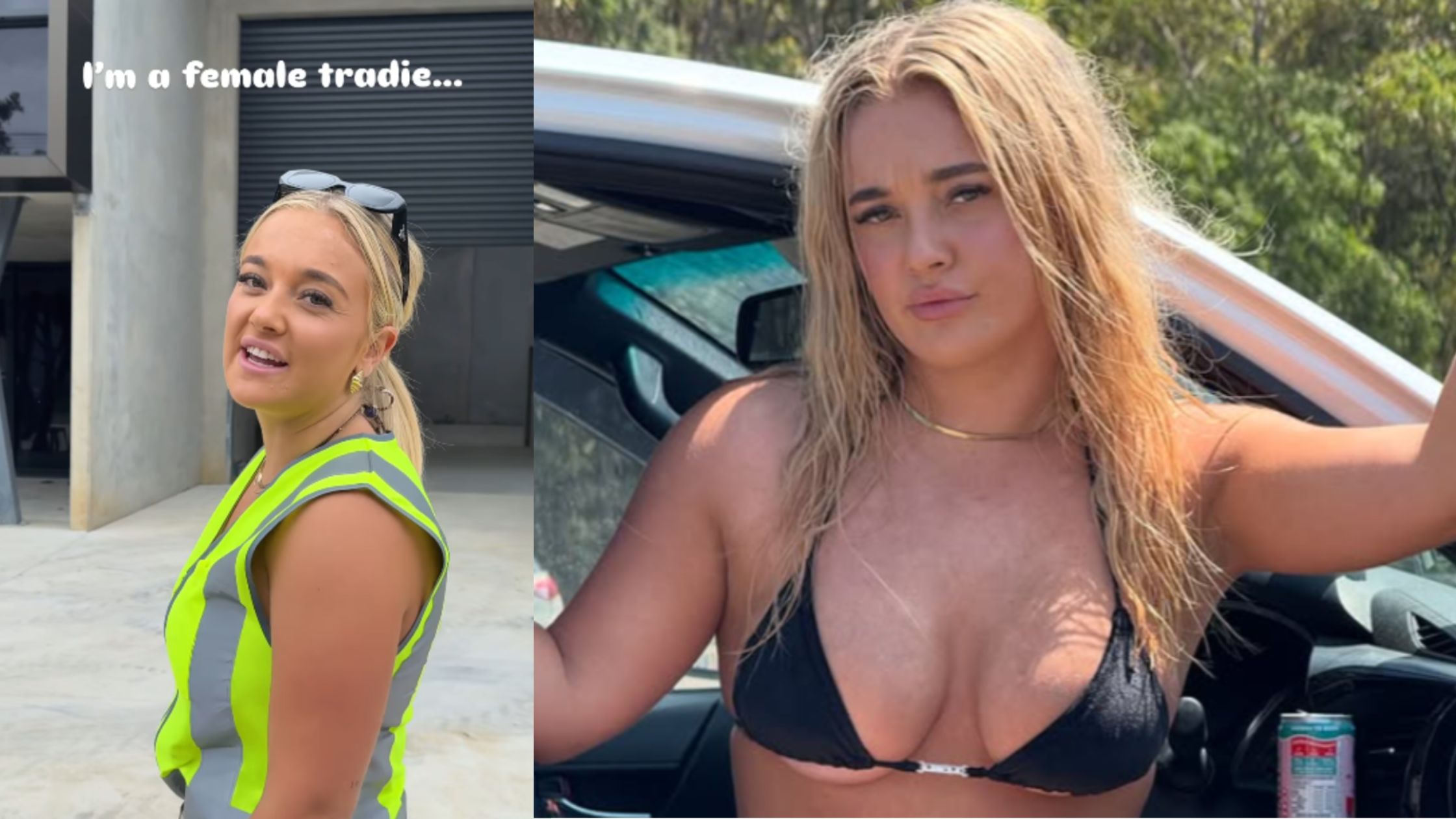
In the scorching heat of a Sydney summer, one female tradie’s decision to challenge a workplace dress code has sparked a heated debate. Shianne Foxx, known as the ‘Bikini Tradie,’ took to social media to question why male workers are allowed to shed their shirts in the heat while women like her are told it’s “inappropriate.” Her viral post quickly captured attention, igniting a conversation about gender equality, workplace policies, and the often-unspoken rules that govern what men and women can wear on the job. But is this just a simple wardrobe issue, or is there a deeper conversation about fairness, power, and representation at play?
Contents
show
The Double Standard
For many in the trades industry, hot days often mean working without a shirt to stay cool. It’s a standard practice for male workers, but for women like Shianne Foxx, the rules are different. On a particularly sweltering 40-degree Celsius day, Foxx, a landscaper by trade, asked her boss if she could remove her shirt, just like her male colleagues. The response? She was told it would be “distracting” to others.
This moment became the catalyst for Foxx’s viral outburst, where she called out the double standard she believed was unfairly imposed on her and other women in male-dominated fields. Her argument was simple yet powerful: if men can work topless on hot days, why can’t women do the same? Foxx pointed out that women’s bodies, particularly their breasts, are too often treated as objects of distraction, even though male workers aren’t subject to the same scrutiny.

Image credits: Instagram @thebikinitradie
In a candid TikTok video, Foxx vented her frustration: “I just want to be topless like the boys, but no, I will ‘distract them.’” She didn’t hold back in expressing how exhausting it is to constantly navigate these gendered expectations at work. To her, this wasn’t just about a piece of clothing; it was about the underlying sexism that limits her freedom to make choices based on comfort and practicality.
Her message, although raw and unapologetic, struck a chord with many. On social media, some supported her stance, arguing that her body should not be policed simply because it’s considered “distracting.” Yet, others raised concerns about potential workplace distractions and whether such a policy change could lead to unintended consequences. The divide was evident, but what remained clear was the very real issue of gender inequality at play.
The Larger Conversation

Image credits: Instagram @thebikinitradie
Foxx’s experience highlights a pervasive issue that women in male-dominated industries face every day: the subtle but powerful ways in which gender inequality manifests in seemingly innocuous policies. The argument she raised isn’t just about whether women should be allowed to work topless on hot days, but about a much larger cultural and societal expectation placed on women in the workplace.
In industries like construction, landscaping, and mining — where physical labor and harsh conditions are the norm — there’s a long-standing assumption that the male experience is the default. Men work shirtless, take breaks when they need to, and often operate under a dress code that prioritizes practicality and comfort. Meanwhile, women are subjected to different rules that more often than not, reflect outdated gender norms rather than professional necessity.
The case of the “Bikini Tradie” is a stark example of how this imbalance plays out in real-time. Foxx, who works in a field that’s already overwhelmingly male, wanted to take the same liberties as her male counterparts, but was denied. This incident is not just about a fight over clothing, but about dismantling the implicit message that women’s bodies are inherently distracting or unprofessional in ways that men’s bodies are not.

Image credits: Instagram @thebikinitradie
While some might dismiss Foxx’s argument as trivial or even inappropriate, it’s important to recognize the ripple effects such small issues can have on larger workplace dynamics. When the dress code itself signals that women must dress differently from men, it reinforces the idea that they are, in some way, less entitled to the same freedoms and comfort. It sends a message that their presence in these industries, and their bodies, must be policed in a way that men’s are not.
By raising this issue, Foxx isn’t just challenging one instance of unfair treatment; she’s calling attention to the systemic barriers that discourage women from entering or staying in these industries in the first place. The irony is that while women make up a growing portion of the workforce in male-dominated jobs, the overall culture often fails to adapt to these changes. In fact, a 2023 Deloitte survey highlighted the underrepresentation of women in blue-collar industries, with women making up only about 20% of the workforce in these fields. The disparity not only reflects a gender bias but also reveals the lack of a supportive environment for women in the trades.
The Social Media Backlash
Shianne Foxx’s video quickly gained traction on social media, and with it, a wide range of reactions. Some followers rallied behind her, applauding her stance on gender equality in the workplace. “It ain’t the lads you work with that would be complaining, direct the hate towards those running the show,” one supportive commenter wrote, suggesting that Foxx’s frustration was aimed at outdated management policies rather than her male co-workers. Another supporter added, “Sure, there’d be comments and looks for a week or so, but then it really wouldn’t matter,” showing solidarity in her desire to challenge workplace norms.
For many, Foxx’s position was clear — if men can work topless during the heat, why shouldn’t women have the same right? The issue was framed less as an issue of appearance and more about fairness. In the viral video, Foxx made it clear that she didn’t believe her breasts should be seen as a “distraction.” “At the end of the day, we all have breasts. It’s just a natural thing,” she said in a direct challenge to the notion that women’s bodies are inherently distracting in a way that men’s are not. Her candid remark, “If you’re going to be childish and feel like they’re going to be distracting, then you should just grow up,” resonated with many who saw the gendered double standard as outdated and immature.

However, not all reactions were positive. While many supported Foxx’s right to challenge the system, others expressed concerns about the potential risks of allowing such a policy change. One commenter warned, “Surely there’s an aircon in the kitchen,” dismissing the debate with a sexist remark that ignored the real issue at hand. Others voiced worries about the impact on workplace safety, fearing that allowing women to work topless might distract male workers or even lead to accidents. “The only possible problem is that the men could get too distracted and get hurt,” one user argued, emphasizing the perceived risk of letting women work in a way that was “too revealing” for a construction site.
Foxx didn’t let the negative comments get to her. In fact, she responded with resilience, stating that if she took all the hateful remarks personally, she’d be “the most unhappiest person in the world.” The tradeswoman’s ability to brush off the negative feedback and continue pushing forward with her message is a testament to her confidence in both her body and her stance on equality.
But amidst all the support and criticism, there were also some inappropriate and sexist comments that detracted from the discussion. One user remarked, “yep totally agree spread the t-ts and f–k the boys,” reflecting an attitude that was less about the workplace issue and more about objectifying Foxx’s body. The experience of dealing with such comments is, unfortunately, common for women who challenge gender norms in professional spaces.
What Needs to Change?
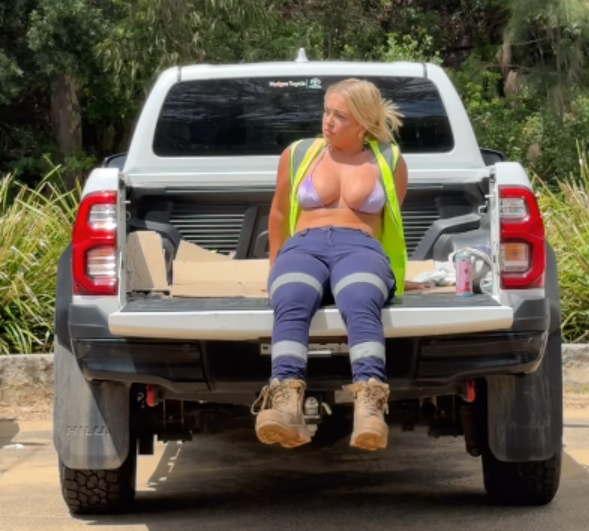
Image credits: Instagram @thebikinitradie
Shianne Foxx’s case specifically revolves around the right to dress comfortably in hot weather, it’s about much more than just a shirtless policy — it’s about dismantling the ingrained gender norms that persist in these workplaces and building an environment where women are treated as equals.
- Reexamining Dress Codes for Fairness: First and foremost, dress codes need to be reexamined for fairness. As Foxx pointed out in her video, “It’s a f***ing 40-degree day today and I’m the one who has to wear my shirt, while all the boys on the site don’t have to wear theirs.” This illustrates the imbalance: when workers are expected to perform physical tasks in extreme conditions, the focus should be on comfort and safety — not gendered standards. Allowing women the same freedom as men to work in whatever clothing is appropriate for the weather is a step toward creating a more inclusive, fair working environment.
- Challenging the Sexualization of Women’s Bodies in the Workplace: The deeper issue at play is the normalization of sexualizing women’s bodies in the workplace. Foxx’s request to work topless was dismissed as a “distraction,” yet the same argument wasn’t made when her male co-workers worked shirtless. The underlying message is that a woman’s body is inherently more distracting than a man’s, and this kind of thinking needs to be challenged. “At the end of the day, we all have breasts. It’s just a natural thing,” Foxx stated. Shifting the perspective to see women’s bodies as natural, not as objects of distraction, would help foster a healthier, more equitable work culture.
- Creating Supportive Spaces for Women in Male-Dominated Industries: More attention needs to be given to creating a supportive space for women who work in male-dominated industries. With women making up only about 20% of the workforce in trades, there is a significant gender imbalance that requires change. Industries need to create policies that not only address issues like dress codes but also provide support structures for women entering and staying in these fields. Whether it’s mentorship programs, more female representation in leadership positions, or simply creating a culture of respect, industries must actively work to make these workplaces more welcoming for women.
- Addressing Cultural Mindsets and Gender Biases: Equally important is the need to address the broader cultural mindset around women in blue-collar jobs. Gender biases are deeply entrenched in these industries, and policies that seem neutral often carry underlying assumptions about what women should or should not do. As Foxx mentioned, women in these fields are often discouraged from standing out or expressing themselves fully, and the fact that she felt the need to speak out about something as simple as a dress code proves how stifling these unspoken rules can be.
- Building a Culture of Equality: Changing workplace policies and attitudes is about more than just removing a shirt — it’s about fostering an environment where women feel comfortable, valued, and equal. That change begins with rethinking what’s considered “appropriate” and “distracting” and ends with creating a culture of fairness that allows every worker, regardless of gender, to perform their job to the best of their ability without unnecessary restrictions.
Why Women Deserve the Same Workplace Rights as Men
Shianne Foxx’s stand against the double standards in her workplace may have started with a simple request to work topless, but it has sparked a much broader conversation about gender equality, workplace policies, and societal expectations. Her viral video has made one thing clear: as long as men are given the freedom to dress comfortably on hot days, women should have the same right. It’s a matter of fairness, comfort, and respect — core principles that should be applied across the board, regardless of gender.
But beyond the immediate issue of dress codes, Foxx’s story also sheds light on the deeper cultural shifts that need to take place in male-dominated industries. Women have long been underrepresented in fields like construction and landscaping, and it’s time to start addressing the systemic inequalities that discourage them from entering or thriving in these roles. Gendered dress codes, outdated stereotypes, and a lack of support structures must be reevaluated and reformed to ensure that women have the same opportunities to succeed.
The conversation Foxx started might have been about a shirtless dress code, but the implications reach far beyond that. It’s about creating spaces where every worker, regardless of gender, can perform their job with dignity, equality, and respect. Only then can we hope to see a more inclusive, balanced workforce where both men and women can thrive equally.