
Your cart is currently empty!
Brazilian Frog Spotted Inside Flowers Could Be the First Amphibian Pollinator Ever Recorded
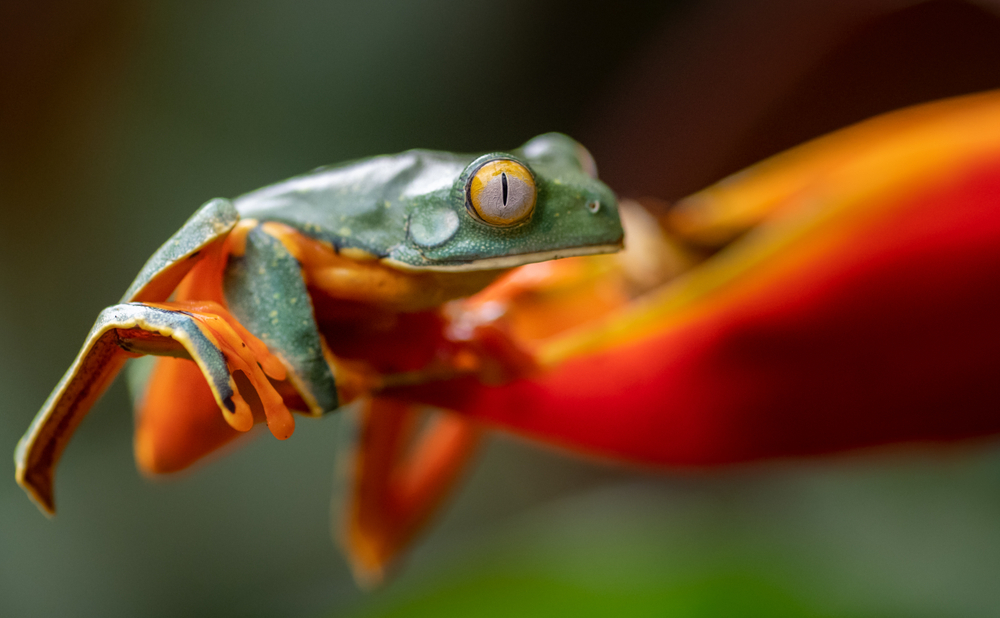
A tiny orange frog crawling out of a flower with pollen stuck across its back was not something researchers expected to find on Brazil’s coast. The animal had disappeared inside the creamy white bloom for several minutes, apparently feeding on nectar, before emerging covered in grains that could potentially be carried to another flower.
Contents
show
The discovery has put a little-known Brazilian tree frog into an unexpected scientific spotlight. Researchers have already watched the species eat fruit, floral structures, and nectar, but one crucial question remains unanswered: can this frog actually transfer pollen between flowers and help plants reproduce?
The Frog Spent Minutes Feeding Inside Flowers
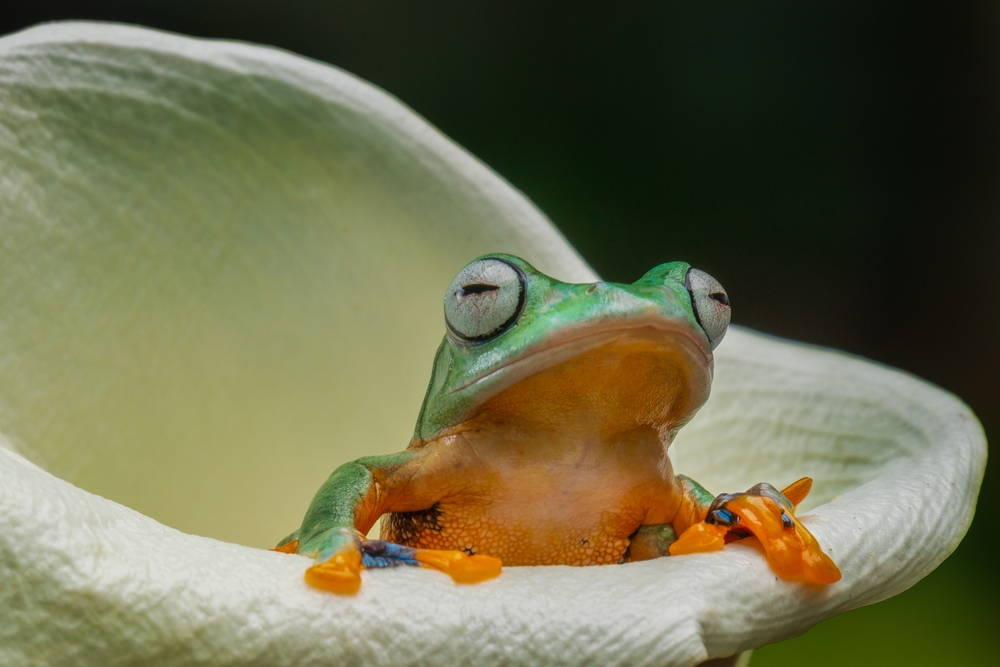
The unusual observations took place in December 2020 in the sandy coastal vegetation near Armação dos Búzios, outside Rio de Janeiro. Researchers were conducting fieldwork when they saw a specimen of Xenohyla truncata, also known as Izecksohn’s Brazilian tree frog, enter an open flower of a milk fruit tree. The frog remained inside for roughly five minutes before climbing out, and pollen grains were visible on its back.
That was only part of what the team witnessed. Researchers also recorded a frog sitting on a bearded iris while feeding for around 15 minutes. On another occasion, three frogs were observed competing over a single ripe fruit. Together, the encounters suggested that this species has a far more plant-heavy diet than scientists would normally expect from an adult frog.
Carlos Henrique de-Oliveira-Nogueira and his colleagues described the behaviour in their research, writing: “The frog fed on different plant parts, consuming fruits, floral structures and nectar with suction-like movements, and we observed pollen grains adhered to the frog’s back.” The suction-like feeding was particularly striking because the frog appeared to draw nectar from the flower rather than simply consuming insects found nearby.
The discovery created an unusual possibility. If the frog repeatedly visits flowers and carries viable pollen from one bloom to another, it could perform a role that has never previously been confirmed in an amphibian. That possibility is why a small amount of pollen on one frog’s back attracted so much attention.
This Frog Already Has a Very Unusual Diet
Most people picture frogs snapping up flies, mosquitoes, spiders, and other small creatures. That image is generally accurate. Adult frogs are overwhelmingly carnivorous, which helps explain why scientists have historically had little reason to investigate them as potential flower visitors.
Xenohyla truncata breaks that pattern. The species actively consumes fruit, and its eating habits can also affect the plants around it. Small fruits can be swallowed whole, allowing seeds to survive digestion and later be deposited elsewhere.
That behaviour makes the frog a seed disperser as well as an unusual amphibian. Seeds carried away from the original plant may gain an opportunity to grow in a new location, depending on where the frog travels and the conditions where those seeds eventually land.
De-Oliveira-Nogueira described the animal as an exceptional case among amphibians. “Xenohyla is the only species that actively seeks out fruits, and now, flowers and nectar for feeding,” he said. “It is a unique case among amphibians.”
Scientists Had Never Seen This Before
Frogs have appeared in photographs sitting among flowers before, but simply resting on a plant is very different from actively entering a bloom to feed. The observations of Xenohyla truncata offered something researchers had not previously documented in the same way.
“Some species are photographed in flowers, but nobody’s ever seen a species interacting with a flower,” de-Oliveira-Nogueira said. The distinction is important because pollination depends on physical interaction with the reproductive structures of a plant.
The findings were published in Food Webs in 2023, and the frog later received recognition from Guinness World Records as the first amphibian pollinator on record. That wording reflects the extraordinary nature of the observation, although the scientific evidence still leaves an important gap.
JJ Apodaca of Amphibian and Reptile Conservation described the discovery as significant while also acknowledging that researchers may eventually find other examples. “It’s probably not the only case of this in the world, but it’s certainly significant in that it’s the first one that’s ever been discovered,” he said.
The discovery also raises an obvious question about what scientists may have missed elsewhere. Amphibians were never considered major candidates for pollination because their diets and behaviour rarely brought them into direct contact with flowers. A fruit-eating frog living in a specialised coastal habitat was simply not where many people were looking.
One Major Piece of Evidence Is Still Missing
The researchers saw the frog enter a flower and later emerge with pollen on its body. That is an important observation, but pollination requires another step. The pollen must reach a suitable second flower and successfully contribute to reproduction.
Nobody has yet watched Xenohyla truncata complete that entire process. The pollen seen on its back may have remained there, fallen away in an unsuitable location, or been affected by the frog’s wet skin and natural secretions.
Researchers also do not yet know whether the frog visits enough flowers to make a meaningful difference to the reproduction of the plants it feeds on. An occasional visit would have a very different ecological impact from a frog that repeatedly moves between flowers throughout a breeding season.
Several questions still need answers:
- Does pollen remain viable after touching the frog’s skin?
- Can the frog transfer that pollen to another flower of the same species?
- How often do the frogs visit flowers for nectar?
- Do enough visits occur to affect plant reproduction?
- Are other amphibians performing similar roles elsewhere?
Answering those questions will require more than a handful of observations. Long-term monitoring could reveal how frequently the frogs visit flowers, while controlled experiments could compare plants exposed to frogs with plants kept beyond their reach.
The eventual answer could be dramatic or surprisingly modest. The frog may prove to be a genuine pollinator with a specialised ecological role. It could also turn out to be an occasional nectar thief that simply gets covered in pollen without helping plants reproduce.
The Frog’s Habitat Is Also Disappearing
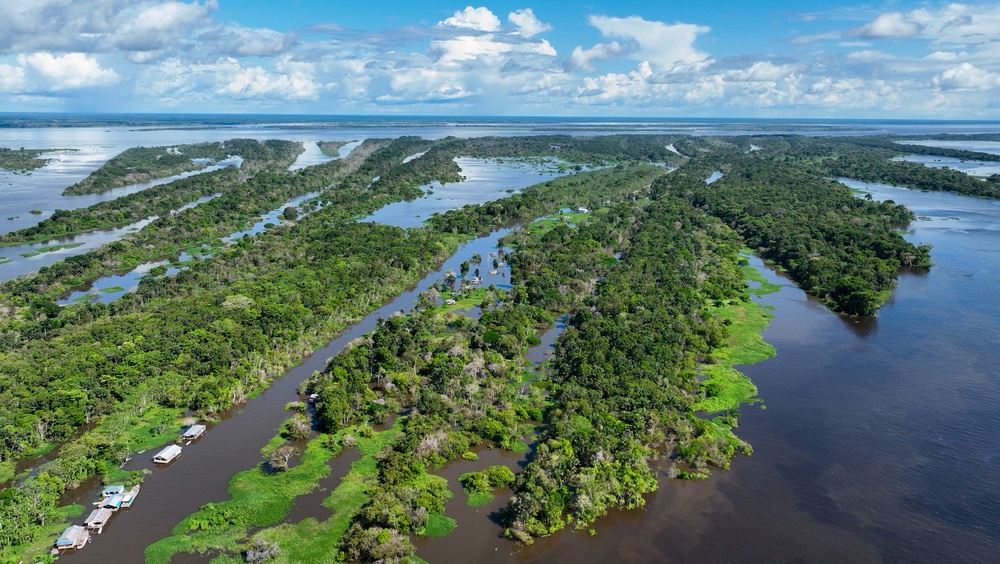
The story becomes more urgent when the frog’s home is considered. Xenohyla truncata lives in restinga, a distinctive ecosystem of sandy scrub and low coastal forest along parts of Brazil’s shoreline.
The species shelters in bromeliads during the day and breeds in temporary pools. It is found nowhere else on Earth, leaving it heavily dependent on the survival of a relatively narrow and increasingly fragmented habitat.
A survey of Rio de Janeiro state’s restinga areas identified 21 remaining fragments and linked major damage to vegetation clearing for housing, invasive plants, and changes to the original sandy substrate. Development along the coast has placed increasing pressure on ecosystems that can appear sparse or unremarkable to people unfamiliar with their ecological importance.
Brazil classifies Xenohyla truncata as vulnerable to extinction. Its populations are scattered, and the loss of individual habitat fragments can further isolate animals that already occupy a limited range.
“Every day we lose more Restinga areas, and along with those areas, we lose populations of Xenohyla,” de-Oliveira-Nogueira said. The potential discovery of a new ecological role adds another layer to concerns about losing the species before scientists fully understand it.
A Small Orange Frog Could Change Pollination Research
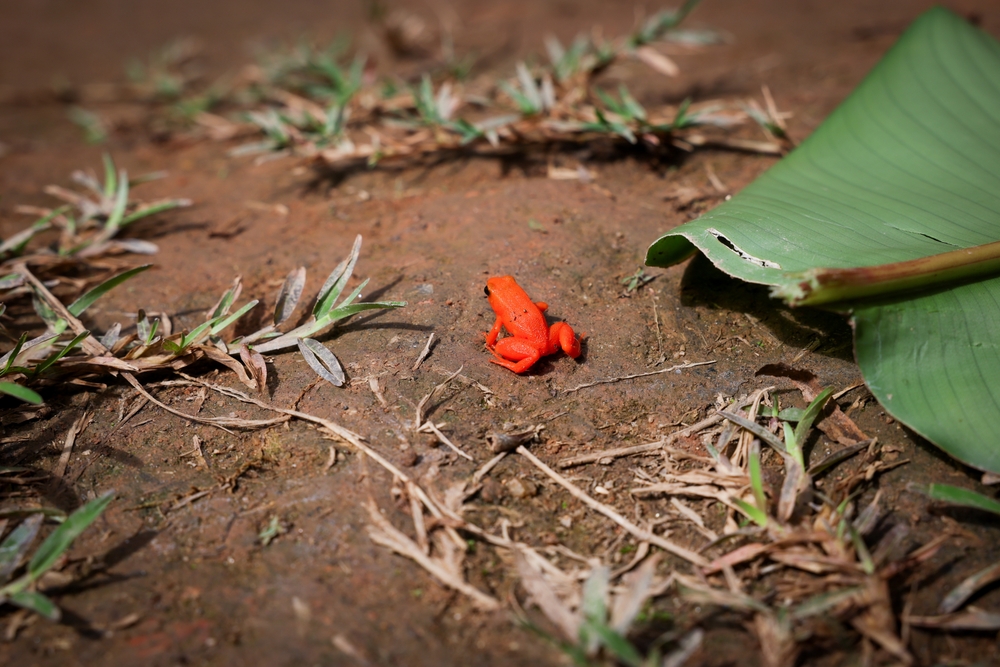
The pollen found on one frog’s back has not yet been shown to help a single tree produce fruit. Scientists still need to prove whether Xenohyla truncata moves viable pollen between flowers often enough to qualify as a true pollinator.
That uncertainty is part of what makes the discovery so interesting. Researchers did not set out expecting to find an amphibian feeding on nectar inside flowers, and a routine observation opened an entirely new line of questions.
For most people, this might still look like one small frog in one corner of Brazil. But its behaviour suggests that ecosystems can hold relationships scientists have not yet noticed, especially when the species involved are disappearing faster than researchers can study them.
The next time this orange frog crawls into a flower, scientists will be watching much more closely. One trip between two blooms could answer a question that has never been settled for an amphibian before.
Sources:
- Elbein, A. (2024, February 20). This frog may be the first amphibian known to pollinate flowers. Scientific American. https://www.scientificamerican.com/article/this-frog-may-be-the-first-amphibian-known-to-pollinate-flowers/
- Peterson, C. (2023, July 5). Frogs as Pollinators? Cool Green Science. https://blog.nature.org/2023/07/05/frogs-as-pollinators/