
Your cart is currently empty!
Family Left a Hidden Message on Dad’s Gravestone and Now the Cemetery Wants It Gone
A family in Iowa says they found the perfect way to honor their late father’s sense of humor. Cemetery officials say the tribute crosses a line.
Contents
show
What began as a heartfelt memorial for Steven Paul Owens has turned into an unexpected controversy after staff overseeing the cemetery discovered a hidden message embedded within his gravestone. The inscription appeared completely ordinary at first glance, but a closer look revealed an acrostic message that has divided family members, cemetery trustees, and local residents.
Now, the family is fighting to preserve what they see as a deeply personal tribute, while officials argue the message has no place in a public cemetery.
A Hidden Message Few People Noticed
Visitors walking through Warren-Powers Cemetery in Polk County, Iowa, would likely see nothing unusual about Steven Owens’ gravestone.
The inscription reads:
“Forever in our hearts.
Until we meet again.
Cherished memories.
Known as.
Our son, brother.
Father, papa, uncle.
Friend and cousin.”
On its surface, it looks like a traditional tribute commonly found on gravestones across the country.
But when the first letter of each line is read vertically, a different message emerges.
The letters spell out “F**K OFF.”
The hidden phrase was not an accident. It was intentionally designed by Owens’ family as a private joke and a tribute to a phrase they say perfectly captured his personality.
To those who knew him best, the message was less an insult and more a symbol of affection.
The family insists the phrase represented the way Steven communicated with the people he loved most.
Why the Family Says the Message Fits Their Dad Perfectly

Steven Paul Owens died on September 2, 2021, at the age of 59.
According to his children, humor was one of the defining features of his personality. Family members describe him as someone who enjoyed teasing people, getting involved in playful arguments, and keeping those around him laughing.
His daughter, Lindsay Owens, explained that her father frequently used the phrase as a joke.
“It was definitely his term of endearment. If he didn’t like you, he didn’t speak to you. It’s just who he was,” she said.
The phrase apparently became so closely associated with Steven that family members immediately recognized it as an appropriate way to remember him.
His son, Zachary Owens, described his father as someone who could be easily fired up but rarely held serious grudges.
Friends and relatives often intentionally pushed his buttons because they knew his reactions would be entertaining.
What outsiders might interpret as offensive language carried a completely different meaning among those closest to him.
For family members, seeing the hidden message on the gravestone brings back memories of conversations, laughter, and the personality that made Steven unique.
The idea reportedly came from a cousin who suggested incorporating the phrase discreetly into the inscription rather than displaying it openly.
According to the family, everyone immediately supported the idea.
The Headstone That Almost Never Reached the Cemetery
The controversy actually began before the gravestone was installed.
According to family members, officials responsible for overseeing the cemetery became aware of the hidden message while the stone was being prepared.
Camp Township Trustees, who oversee Warren-Powers Cemetery, reportedly objected to the design before installation.
The family says they were informed that the hidden profanity created concerns about whether the memorial should be allowed.
Despite those objections, the company responsible for producing the gravestone proceeded with the installation.
The memorial was eventually placed at the cemetery, where it remains today.
Its arrival immediately reignited concerns among trustees who had opposed the design from the start.
What had initially been a private family tribute suddenly became a public debate about decency, freedom of expression, and the purpose of memorial spaces.
Why Cemetery Officials Want It Removed
For trustees overseeing the cemetery, the issue extends beyond one family or one gravestone.
Officials argue that allowing hidden profanity on a monument could create challenges for future decisions regarding acceptable inscriptions.
One representative explained that the concern is not necessarily about Steven Owens himself but about establishing standards that apply equally to everyone.
According to cemetery officials, permitting one controversial message could make it difficult to reject future requests containing language that many community members would consider offensive.
The representative also expressed concern about where the line would be drawn.
“If we allow profanity of that sort in the cemetery, and that’s okay for that, how are we ever gonna draw a line on anything else?” the representative said.
Officials say they have received complaints from local residents since the gravestone was installed.
Some visitors reportedly believe cemeteries should remain places of solemn reflection and respect.
Others argue that families visiting nearby graves should not have to encounter profanity while mourning loved ones.
Trustees have suggested that maintaining standards for a public cemetery requires considering the broader community rather than the wishes of a single family.
According to one representative, “People have the right for decency, not just the one family.”
A Debate About Who Gets to Define Respect
The dispute has raised a broader question that reaches beyond a single cemetery in Iowa.
What makes a respectful memorial?
For some people, respect means preserving traditional values and avoiding language that could offend visitors.
For others, respect means accurately reflecting the personality of the person being remembered.
The Owens family firmly falls into the second camp.
They argue that removing the hidden message would effectively erase a piece of who Steven was.
To them, the phrase was not vulgar. It was personal.
Family members say the tribute was never intended to provoke controversy or upset visitors.
Instead, it was designed to create a smile among those who knew Steven best.
Lindsay Owens said the family’s intentions have often been misunderstood throughout the dispute.
“Our intention was never to offend anyone, ever,” she explained.
From the family’s perspective, the hidden nature of the message also matters.
The phrase is not prominently displayed across the monument.
Most visitors would never notice it unless someone pointed it out or they deliberately examined the inscription.
That fact has become one of the family’s strongest arguments for keeping the memorial unchanged.
The Emotional Impact on the Family

While the debate has focused heavily on questions of public standards and community values, family members say the situation has become deeply personal.
Losing a loved one is already difficult.
Facing the possibility of altering a carefully planned memorial has added another layer of stress to the grieving process.
The family spent considerable time deciding how they wanted Steven to be remembered.
For them, the inscription represented far more than a joke.
It served as a final expression of his identity.
When trustees began discussing removal, family members said they felt hurt by the suggestion that their tribute was somehow inappropriate.
Zachary Owens has repeatedly emphasized that the gravestone was created out of love.
“No one’s forcing anyone to come out and look at it. That’s a choice that you make. We didn’t do it to offend anyone, make anyone mad or hurt anyone’s feelings,” he said.
“We did it because it was our father, and we love him, and that’s how we remember him.”
The family believes that intention should matter when evaluating the memorial.
In their view, the hidden phrase cannot be separated from the person it was designed to honor.
Not the First Unusual Gravestone to Spark Debate
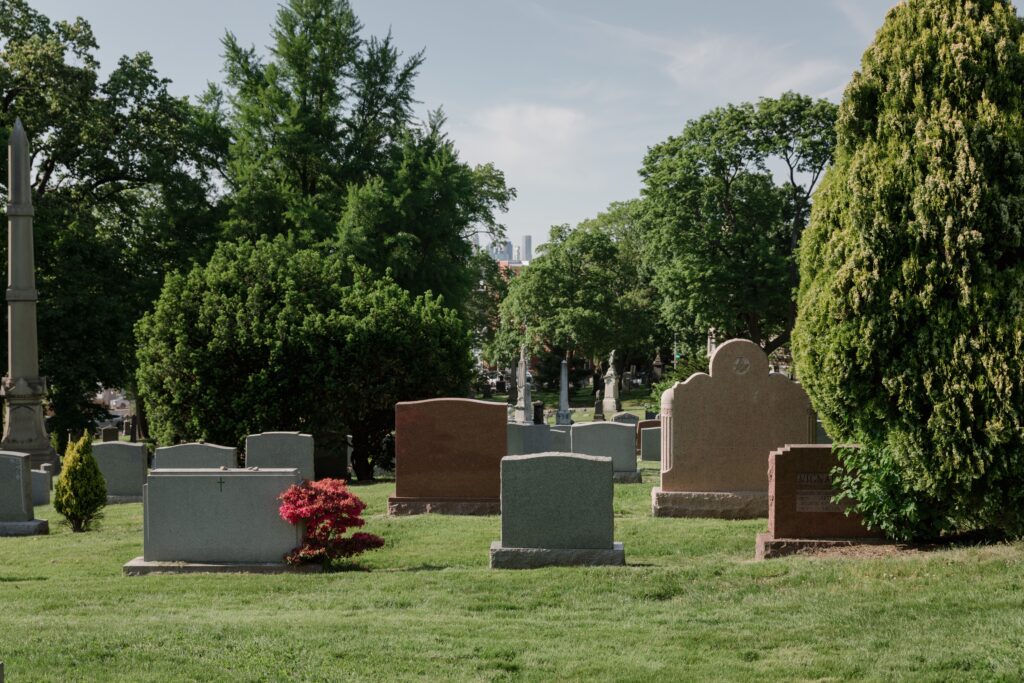
Controversies involving gravestones are far from uncommon.
Throughout history, families have used memorials to express personality, humor, beliefs, and individuality.
Some gravestones contain jokes.
Others feature unusual artwork, personal messages, or unconventional designs.
Many have sparked disagreements about what is appropriate in spaces dedicated to remembrance.
In recent years, unusual memorials have included QR codes linking to online tributes, headstones shaped like favorite objects, and inscriptions that challenge traditional expectations.
The common thread in many of these disputes is a tension between personal expression and community standards.
Cemeteries often serve both private and public functions.
A gravestone belongs to an individual family, but it also becomes part of a shared landscape visited by others.
Balancing those competing interests can be difficult.
The Owens family’s case highlights exactly how complicated that balance can become.
What Happens Next?
The future of Steven Owens’ gravestone remains uncertain.
Reports indicate that township officials have explored legal options related to the monument and have continued discussions about whether it should remain in place.
For now, the headstone is still standing.
Visitors who stop by Warren-Powers Cemetery can still see the inscription and decide for themselves whether it crosses a line or represents a clever tribute.
The dispute has transformed a local memorial into a story that has attracted national attention.
What started as a hidden family joke has become a public conversation about grief, individuality, and the different ways people choose to remember those they love.
The controversy may eventually be resolved through legal discussions or community compromise. Yet, regardless of the outcome, Steven Owens has achieved something few people ever do after death.
Years after his passing, he is still making people laugh, argue, and tell stories about him.
For a man whose family says loved stirring things up, that might be the most fitting memorial of all.