
Your cart is currently empty!
Hackers Leak Details of 41000 US Homeland Security Employees in Major Breach

More than 41,000 employees and contractors working for the US Department of Homeland Security have had their professional identities and contact information exposed in a major data breach. The leaked records include immigration officers, border agents and personnel connected to sensitive investigations, creating serious security concerns for a department already facing intense political scrutiny.
Contents
show
The incident has opened another front in the growing dispute surrounding President Donald Trump’s immigration crackdown. While the hackers describe their actions as an attempt to increase government accountability, former officials warn that exposing the identities of federal personnel could put employees and their families in danger.
More Than 41,000 DHS Employees Appear In Leaked Database
A searchable database containing information on more than 41,000 Department of Homeland Security employees and contractors was published online on Wednesday. The database, named Icepick, reportedly contains names, work addresses, phone numbers, email addresses, professional assignments and descriptions of employees’ responsibilities across several government agencies.
The scale of the disclosure has attracted particular attention because the information includes personnel involved in immigration enforcement and undercover investigations. According to the records, more than 21,000 individuals work for US Customs and Border Protection, while thousands more are associated with Immigration and Customs Enforcement and other DHS divisions.
Reporting by The Washington Post indicated that the newspaper reviewed the leaked information and verified its authenticity with current and former department officials. Those officials described the exposure as an unprecedented disclosure of DHS employee information, although the organizations publishing the database cautioned that it was not a complete directory.
The information reportedly covers several agencies and divisions operating under DHS, including:
- Customs and Border Protection (CBP): More than 21,000 personnel records, representing the largest group identified in the database.
- Immigration and Customs Enforcement (ICE): Nearly 6,600 records in the initial breakdown, alongside additional personnel identified in other reporting.
- Homeland Security Investigations (HSI): Employees involved in investigations and enforcement operations.
- Cybersecurity and Infrastructure Security Agency (CISA): Personnel associated with the protection of government networks and critical infrastructure.
- Federal Protective Service: Employees responsible for security functions connected to federal facilities.
- US Citizenship and Immigration Services: Personnel associated with the department’s immigration services operations.
The database reportedly provides more than basic employee identification information. Some records also identify supervisors, direct reports and professional relationships, allowing users to examine how personnel are connected within the department.
Hackers Claim They Accessed DHS Information Through Okta
A group identifying itself as the Department of Peace claimed responsibility for obtaining the records. According to the group’s account, it accessed internal DHS employee profiles by exploiting the department’s single sign-on system, which allows authorized personnel to access multiple internal platforms through a central authentication process.
The group subsequently shared the information with Distributed Denial of Secrets, commonly known as DDoSecrets. The nonprofit organization worked with Swiss activist and cybersecurity researcher maia arson crimew to make the records available through a searchable online database.
The reported use of a single sign-on service has raised questions about how the attackers managed to obtain access to such a large collection of employee information. These systems are widely used by organizations because they simplify access management and allow administrators to control which employees can enter particular platforms.
However, the claims surrounding the breach do not establish that the authentication provider itself was compromised. Okta, the company associated with the service identified by the hackers, said it was aware of the allegations but disputed suggestions that its systems had been breached.
An Okta spokesperson stated, “Okta is secure, and we have no evidence our data or systems were compromised.” The distinction leaves an important question unanswered: whether the attackers exploited a vulnerability within DHS infrastructure, compromised credentials or gained access through another weakness in the department’s security arrangements.
Department Of Peace Explains Why It Targeted Immigration Officials
The Department of Peace presented the disclosure as a response to the government’s collection and use of information about ordinary people. In a statement accompanying the release, the group argued that exposing government personnel would help create greater transparency around the agencies responsible for immigration enforcement.
The group’s message included the words, “they have our information, so it’s only fair that we have theirs.” Its statement also directly referenced Homeland Security Secretary Markwayne Mullin and connected the operation to his previous remarks about increasing pressure on ICE.
The group wrote, “On July 17th, Markwayne Mullin said he was ‘turning up the heat’. This is what happens to ICE when you do that.” Mullin became Secretary of Homeland Security in March, placing him at the centre of the department’s immigration enforcement operations and wider policy decisions.
DDoSecrets co-founder Emma Best also defended the publication, arguing that the database could help people understand who is responsible for particular government operations. Best said the information identified officials connected to covert operations, investigations into government leaks and deportation programmes.
She described the release as an attempt to replace “anonymity with accountability.” The argument reflects the activists’ position that public scrutiny of government personnel and organizational structures can help journalists and researchers investigate how federal agencies operate.
However, the stated intention of increasing transparency does not resolve concerns about the potential consequences of publishing personal information. The database includes thousands of employees who may have had no involvement in setting immigration policy or making decisions about enforcement operations.
Former ICE Director Warns Of Serious Security Consequences
The disclosure has prompted strong concerns from former officials who believe the exposed information could create significant risks for immigration enforcement personnel. John Sandweg, who served as acting director of ICE during the Obama administration, described the incident as a “nightmare scenario” in comments reported by The Washington Post.
Sandweg warned that identifying officers and investigators could place them in danger and potentially compromise investigations involving criminal organizations. Personnel working on cases involving gangs and drug cartels may face threats if their identities and professional connections become publicly accessible.
“I feel terrible for the agents and their families,” Sandweg said. “The array of threats they face as a result of this is stunning.” His comments reflect concerns that the consequences of the leak could extend beyond government offices and affect employees’ private lives.
The exposure of organizational relationships presents another potential problem because investigators may rely on confidentiality when working on sensitive operations. If supervisors, direct reports and operational assignments become easier to identify, people seeking information about particular investigations could gain additional leads.
A former ICE official also told The Washington Post that the intelligence unit within ICE’s Homeland Security Investigations had issued a bulletin warning agents about the breach. However, several ICE officers and CBP agents contacted by the newspaper in Tucson, Philadelphia and East Texas reportedly said they had not been informed about the incident at the time.
Trump’s Deportation Agenda Has Intensified Political Tensions

The data breach comes as the Trump administration continues its large-scale immigration enforcement campaign. Since returning to the White House in January 2025, Trump has pushed for increased arrests and deportations of people suspected of being in the United States illegally.
ICE operations have taken place at homes, workplaces, courthouses and other public locations, attracting protests and criticism from immigration advocates. The administration has defended its enforcement priorities, while opponents have questioned the methods used by federal officers and the treatment of people targeted during operations.
The supplied reporting cites Migration Policy Institute data indicating that the United States has carried out nearly one million deportations since Trump’s return to office. It also states that more than 70% of those deported had no criminal record, a figure that has become part of the wider debate over the administration’s approach.
Immigration enforcement has also faced scrutiny following violent encounters involving federal officers. The reference reporting states that ICE agents have shot more than two dozen people this year and killed at least nine, including Alex Pretti and Renee Good in Minnesota.
Those deaths have intensified criticism of enforcement practices and increased demands for greater transparency surrounding the identities of officers involved in controversial operations. The administration’s supporters have also pointed to the dangers faced by immigration personnel and argued that officers need protection while carrying out their duties.
Why Masked Immigration Officers Have Become A Political Issue

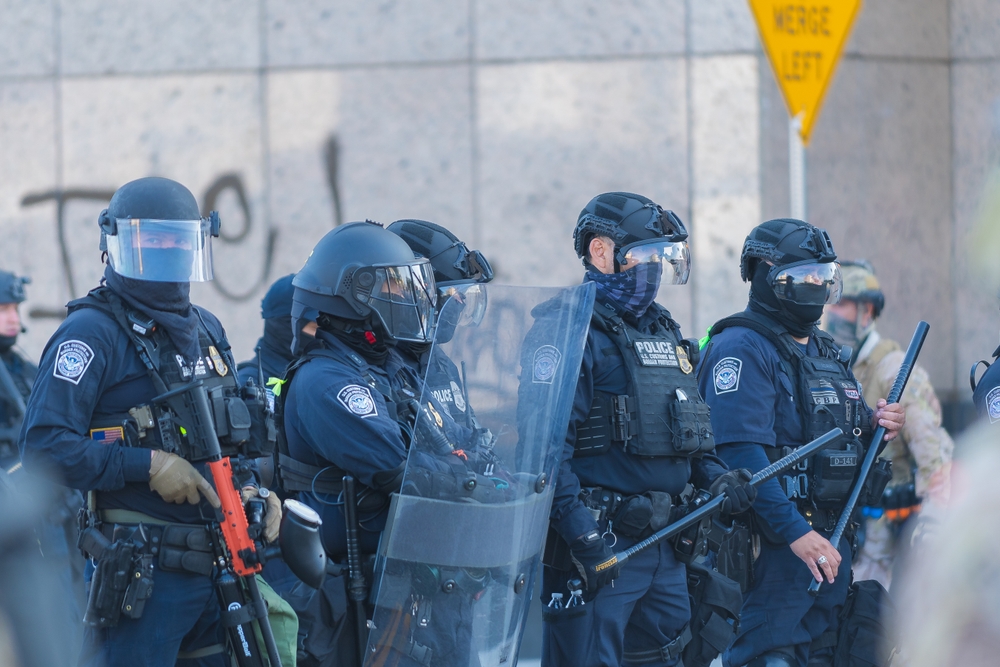
One of the most contentious aspects of the immigration debate involves the growing use of masks and plainclothes operations by federal officers. ICE agents frequently conduct enforcement activities with their faces covered by masks and sunglasses, making it difficult for members of the public to identify them during encounters.
Critics argue that concealed identities can complicate efforts to establish accountability when questions arise about an arrest or the conduct of an officer. Some US politicians have demanded that DHS ensure immigration agents properly identify themselves, pointing to legal requirements governing the identification of law enforcement personnel.
DHS officials have defended the practice by citing threats against officers and their families. According to the department, personnel have faced assaults, stalking and death threats, making it necessary to take precautions when carrying out enforcement activities.
The disagreement has become particularly difficult because both sides raise concerns involving public safety. People affected by immigration enforcement want to know which officials are exercising government authority, while officers argue that revealing their identities can expose them to harassment or physical attacks.
The Icepick disclosure has brought these competing arguments into sharper focus. Publishing information about thousands of personnel may help researchers investigate the department, but it also risks exposing individuals who work in sensitive roles and may have little influence over the policies they implement.
The Database Could Reveal More Than Employee Identities

One of the most significant aspects of the leak is the organizational information reportedly included in the records. According to NPR’s reporting, the searchable database allows users to examine relationships between employees by identifying supervisors and direct reports within different parts of DHS.
This information could help journalists understand how particular responsibilities are distributed throughout the department. Researchers investigating enforcement operations may also be able to identify personnel associated with specific units and examine how different divisions interact.
The records reportedly contain dozens of previously unknown operation names, along with the officials who led or participated in those operations. They also reference technology used in government work, including products associated with Cellebrite and Palantir.
Emma Best argued that the database was intended to identify people responsible for overseeing particular policies and operations rather than simply publish an indiscriminate list of government employees. That distinction is central to the organizations’ defence of the project, although the published information still contains details about a much wider group of personnel.
The organizations involved have also acknowledged that Icepick may contain inaccuracies and does not represent every DHS employee. Consequently, anyone examining the database should be cautious about treating every record as definitive evidence of an individual’s responsibilities or involvement in a particular operation.
DHS Faces Questions After Multiple Government Data Incidents
The incident is part of a wider series of cybersecurity concerns involving US government institutions. The supplied reporting describes the DHS breach as the third recent incident involving a government agency being targeted by hackers or facing a suspected cyberattack.
Last month, a group called ShinyHunters reportedly hacked the FBI and obtained personal information belonging to thousands of agents. The incident raised additional concerns about the protection of information connected to federal law enforcement personnel.
The Federal Election Commission also experienced disruption after a suspected hacking attempt in recent days. The agency, which makes political campaign donation information publicly available, was taken offline as officials dealt with the incident.
These separate incidents do not establish that the same attackers or vulnerabilities were involved. However, they demonstrate the range of cybersecurity challenges facing government institutions responsible for storing sensitive employee and operational information.
For DHS, the immediate challenge involves determining how the attackers accessed the records and establishing which employees may face increased risks. The department must also assess whether other internal information could have been exposed through the same access route.
The investigation will need to establish what happened before officials can provide a complete account of the breach. Until then, questions about the scale of the exposure and the possible consequences for affected employees remain unresolved.
Government Accountability And Employee Safety Remain In Conflict
The Icepick incident has exposed a difficult disagreement about how government agencies should balance transparency with the protection of their personnel. Supporters of greater oversight argue that federal officials exercising significant authority over the public should face scrutiny, particularly when their work involves controversial enforcement operations.
Those concerned about the leak argue that publishing employee identities and contact information creates unnecessary risks. Their concerns become particularly serious when the information includes investigators, undercover personnel and employees whose responsibilities may involve sensitive criminal cases.
There are several important issues emerging from the disclosure:
- Employee protection: Thousands of personnel may need additional security measures after their professional information became publicly accessible.
- Government transparency: Journalists and researchers may use the database to investigate agency structures and identify officials responsible for particular operations.
- Cybersecurity weaknesses: The reported access through an internal authentication system raises questions about how DHS protects sensitive employee records.
- Investigative security: Exposed reporting relationships and operational assignments could create difficulties for personnel working on sensitive cases.
- Public accountability: The controversy over masked officers and concealed identities is likely to remain part of the wider immigration debate.
The competing arguments will continue to shape discussions about how federal agencies should operate during an increasingly contentious period of immigration enforcement. The disclosure has also demonstrated how a cybersecurity incident can quickly become a political controversy when the information involves government officials and policies already attracting national attention.
For the thousands of employees whose details appeared in Icepick, however, the immediate concern is personal security. The political arguments surrounding immigration enforcement may continue for years, but the consequences of having their identities and professional information exposed are already a pressing issue for the people affected.