
Your cart is currently empty!
This New DNA Computer Can Solve Math Problems Without Continuous Power

A computer that performs mathematical calculations using the building blocks of life sounds like something from a futuristic science experiment. Researchers in Ireland have now demonstrated that this idea can work, using DNA strands suspended in a tiny amount of liquid to process information without a continuous supply of external energy.
Contents
show
Developed at Maynooth University, the molecular computer can perform addition, multiplication and division using interacting strands of DNA rather than conventional electronic circuits. In one demonstration, the system calculated 10 plus 3 in just 30 seconds, offering a glimpse of a very different approach to computing.
Researchers Built a Computer Inside a Test Tube
The research team at Maynooth University developed what is known as a Scaffolded DNA Computer, a system that uses molecular structures to carry out calculations. Instead of relying on silicon chips and electrical circuits, it uses short DNA strands that interact with a longer DNA structure called a scaffold.
The ingredients are surprisingly simple compared with those found inside a conventional computer. The researchers combine water, salt, short pieces of DNA and a longer DNA scaffold inside a test tube, then apply a small amount of heat before cooling the mixture to initiate the process.
Once the reaction begins, the DNA strands interact and assemble into a structure that represents the result of a calculation.
The system uses the physical behaviour of molecules to process information, allowing the computation to proceed without a continuous external energy supply.
Dr Abeer Eshra, an assistant professor and computer scientist at Maynooth University’s Hamilton Institute, conducted many of the experiments. Explaining the concentration of molecular material involved, Eshra said, “A small droplet of liquid contains billions, and sometimes trillions, of DNA strands. These strands interact with one another to produce a result.”
The findings were published in the scientific journal Nature. The researchers described the machine as one of the most complex and fastest molecular computers yet reported, marking a significant development in the field of DNA-based computation.
How DNA Strands Can Produce Mathematical Answers
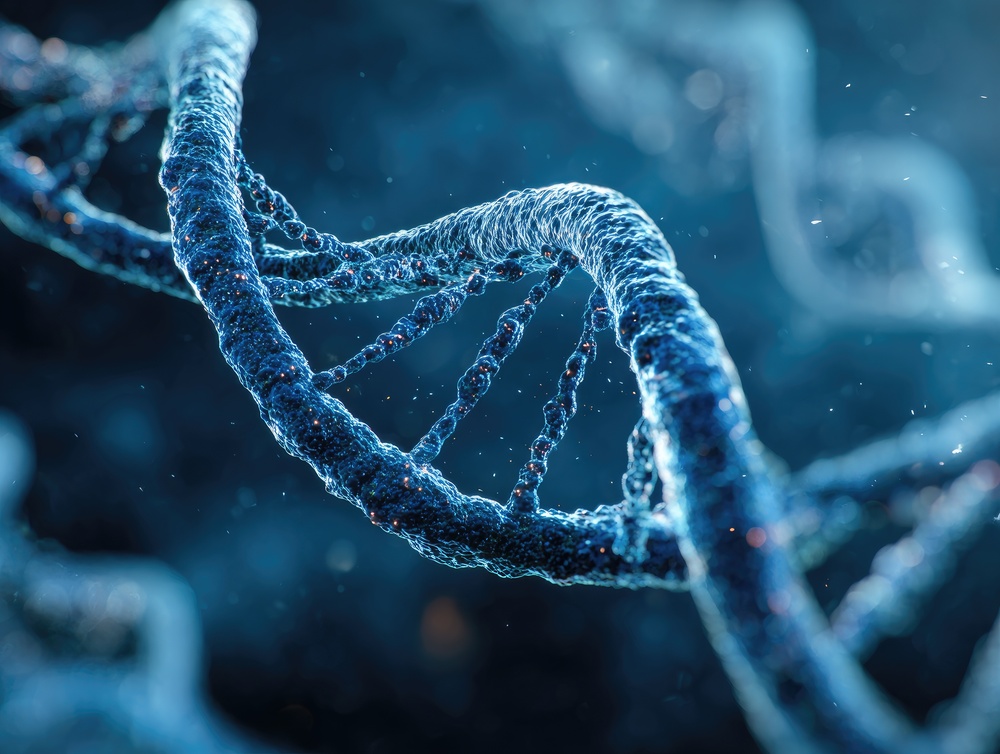
Traditional computers process information through electronic circuits containing transistors, which control the flow of electrical signals. DNA computers take a different approach by using interactions between molecules to represent and solve computational problems.
In the Maynooth system, the longer DNA scaffold provides a structure onto which shorter DNA strands can attach. These shorter strands, sometimes described as computing tiles, interact with the scaffold and with one another as the reaction progresses.
The system is designed so that the molecules can settle into a more energetically favourable arrangement. Incorrect pairings can be replaced as the strands interact, helping the structure move towards a configuration that represents the answer.
Professor Damien Woods of Maynooth University’s Hamilton Institute explained the principle in a university statement. “The molecules interact, form a structure and that structure is the answer,” Woods said.
This approach makes the physical arrangement of molecules part of the computational process. Rather than requiring an electronic processor to execute every operation through a sequence of powered steps, the molecular system uses chemical interactions to arrive at a stable configuration.
The researchers identified the ability to find an answer without continuous energy inputs as a key innovation. The system still requires preparation and an initial application of heat, but the computation itself can proceed without a constant external power supply.
The Computer Successfully Completed Different Calculations
To test the technology, the researchers ran 10 different programs, including computations involving as many as 100 bits of information. The experiments demonstrated that the molecular system could handle several types of mathematical and computational tasks rather than a single simple equation.
One of the clearest demonstrations involved adding 10 and 3, which took approximately 30 seconds. The computer also performed multiplication, division and parity detection, a task used to determine whether a binary value contains an even or odd number of ones.
More complex calculations took considerably longer. In one experiment, the system added numbers ranging from approximately 11 million to 34 million, with the computation taking up to 14 hours to reach a result.
The researchers also demonstrated that the system could be reused for up to 25 different calculations in a row. That capability is significant because molecular computers must do more than produce a single successful answer to become useful tools for further research.
The experiments indicate that DNA-based systems can handle a range of computational tasks under controlled laboratory conditions. However, the reported results do not mean that the molecular computer can already perform every task handled by conventional electronic machines.
Instead, the work establishes a platform for investigating how molecular interactions might be used to solve problems and process information in ways that differ from traditional computing.
Why This DNA Computer Will Not Replace Your Laptop Yet
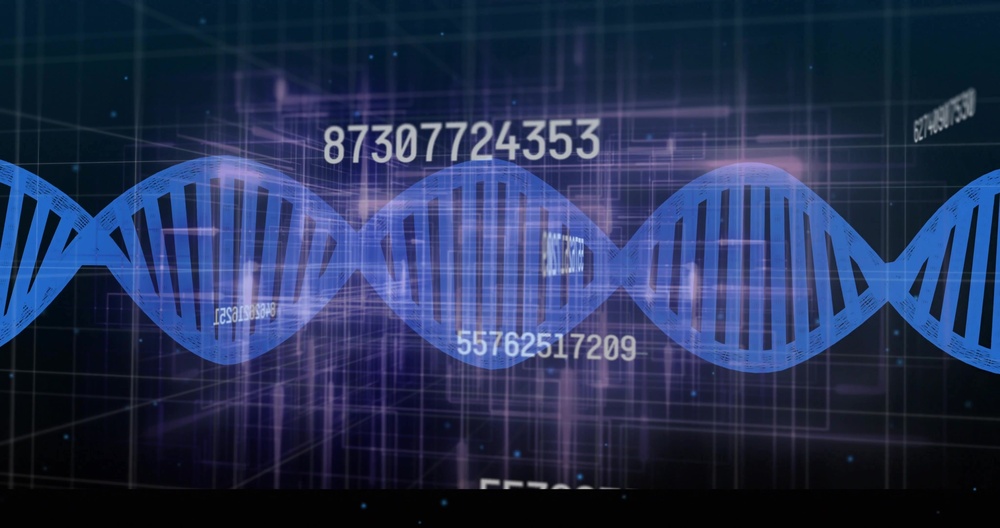
The ability to calculate without continuous electricity may sound like a direct challenge to conventional computers, but the researchers are clear about the system’s current limitations. DNA computers operate differently from electronic processors, and their performance cannot be judged by calculation speed alone.
Modern silicon processors can perform enormous numbers of operations in extremely short periods. The DNA computer, by comparison, may take seconds to solve a basic equation and several hours to complete more demanding calculations.
Eshra acknowledged this difference when discussing the system’s performance. “The reaction happens fast in the test tube, but not as fast as silicon, nor is it intended to be. But compared to other DNA computers, ours is the fastest,” she said.
The distinction is important because the purpose of molecular computing is not necessarily to outperform existing processors at every task. Its potential advantages could emerge in specialised applications where molecular interactions, large numbers of simultaneous reactions or long-term storage offer benefits.
The system’s current performance also reflects the experimental conditions under which it was developed. Researchers still need reliable methods for preparing the molecular mixture, controlling the reactions and interpreting the resulting structures.
For everyday activities such as browsing the internet, editing documents or running games, conventional computers remain far more practical. The Maynooth discovery instead expands the range of physical systems scientists can investigate when designing future computing technologies.
DNA Could Offer New Possibilities for Long-Term Data Storage
Computing is only one area in which DNA technology could have a significant role. Researchers are also investigating whether DNA can be used to preserve digital information over long periods.
DNA naturally stores biological instructions in living organisms, and its molecular structure can also be used to encode information. This has attracted interest from scientists looking for alternative ways to store data in compact physical forms.
The Maynooth project, known as DISCO, stands for DNA-based Infrastructure for Storage and Computation. Led by Woods and supported by a €4 million European Innovation Council grant, the project aims to develop new ways to compute and store information using DNA technology.
The computer developed by the team demonstrates that molecular structures can perform calculations under carefully controlled conditions. That ability could support further research into systems that combine computation and information storage within the same molecular environment.
However, the successful operation of a DNA computer does not automatically establish that it can replace current data-storage systems. Practical applications would require researchers to address questions involving cost, reliability, the speed of accessing information and the ability to preserve and retrieve data consistently.
For now, DNA-based storage remains a broader research direction associated with the project rather than a fully developed replacement for conventional drives or cloud infrastructure. The team’s work provides another step towards understanding how biological molecules could support future information technologies.
Scientists Are Exploring Whether Molecular Computers Could Work Inside Cells
One of the more ambitious possibilities raised by the research involves molecular systems that could eventually operate inside living cells. Such technology might one day help detect biological signals associated with disease, although the Maynooth computer has not yet demonstrated that capability.
The underlying idea is that carefully designed molecular interactions could be used to recognise specific signals and produce a corresponding result. If researchers can make such systems reliable in biological environments, they may be able to investigate new approaches to detecting changes inside cells.
The laboratory environment used in the current experiments is considerably more controlled than the inside of a living cell. Biological systems contain many interacting molecules, and researchers would need to establish how a molecular computer could function accurately amid those conditions.
They would also need to address questions about stability, unwanted molecular interactions and the safe operation of any system intended for medical applications. These challenges mean that disease detection inside cells remains a possible future application rather than an established use of this particular technology.
Nevertheless, the research provides a foundation for studying how molecular structures can be engineered to carry out defined tasks. It also demonstrates why scientists are examining biological molecules as potential components of computing systems, rather than limiting their research to conventional electronics.
Why Researchers Are Looking Beyond Silicon Chips
Computers have become essential to communication, scientific research and the storage of digital information. The growing use of computing infrastructure has also increased interest in how much electricity is required to operate processors and data centres.
Woods highlighted this issue when explaining why his team is investigating alternative forms of computation. “Silicon-based computers use so much energy,” he said, pointing to the fact that computing and data storage account for 23% of Ireland’s electricity consumption.
That figure refers specifically to Ireland, but it illustrates the energy demands associated with modern computing infrastructure. Researchers are exploring different approaches to determine whether particular tasks can be performed with fewer energy requirements.
DNA computing offers a different model because its calculations depend on molecular interactions rather than continuous electrical processing. The Maynooth system requires a small amount of heat to initiate the reaction, after which the molecules can work towards the result without ongoing external energy input.
The potential energy advantages still need to be assessed in practical settings. Preparing DNA strands, controlling the reaction and reading the answer all involve processes that must be considered when evaluating the total resources required.
Even so, the research challenges the assumption that every computer must operate through conventional electronic hardware. Biological molecules provide another possible foundation for processing information, and scientists are beginning to establish which tasks such systems might perform effectively.
What Happens Next for DNA Computing?
The Maynooth team’s results establish that a molecular computer can perform several kinds of calculations, handle computational problems involving up to 100 bits and be reused for multiple operations. Those demonstrations provide researchers with a platform for testing more sophisticated molecular computing systems.
Further development will need to improve reliability, expand the range of useful calculations and establish how efficiently results can be recovered from the molecular structures. Researchers will also need to determine which applications offer the clearest practical advantages over existing technology.
Long-term data storage, specialised computation and possible biological applications remain areas of interest. However, each would require additional testing before the technology could be considered ready for widespread use.
Woods offered a measured assessment of the project’s future when discussing the broader research effort. “This is blue skies science. We don’t know where the future is going to take us,” he said.
For now, the achievement is concrete: researchers have demonstrated that DNA strands can be organised into a reusable computer capable of solving mathematical problems without continuous external power during computation. Whether the technology eventually finds a place in data centres, biological research or long-term storage will depend on what scientists can build from this early result.