
Your cart is currently empty!
Doctor Injects Just One Half of Her Face with Botox to Reveal What It Really Does to Your Face
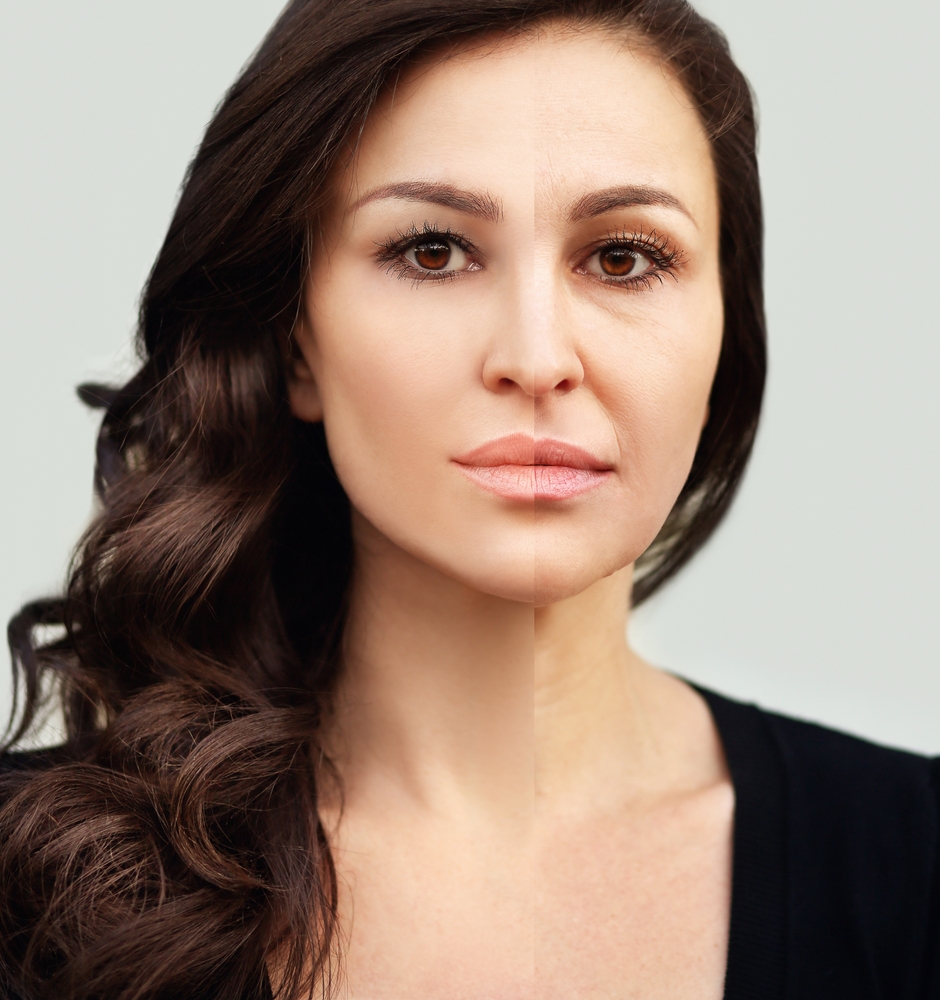
Millions of people receive Botox injections every year. Most see before-and-after photos showing smooth foreheads and lifted brows. But photos can be manipulated. Lighting changes everything. Angles deceive.
Contents
show
One California physician wanted to show people exactly what botulinum toxin does to facial muscles. Not through curated images or filtered selfies. She needed something more direct, more scientific, more impossible to fake.
Dr. Bita Farrell drew a line straight down the middle of her face. She injected Botox into the muscles on the right side only. The left side received nothing. Two weeks later, she filmed herself attempting to move both sides simultaneously.
Results proved startling. One half of her face moved naturally, muscles contracting and pulling as designed by evolution. The other half remained frozen despite her efforts to activate those same muscles. Viewers watched in real time as she struggled to generate any movement from the paralyzed side.
Her experiment demonstrated something photos cannot capture: the complete inability of injected muscles to respond to neural commands. No amount of concentration or effort could override the neurotoxin’s blockade.
The Physician Who Became Her Own Lab Rat
Dr. Farrell brings serious credentials to her aesthetic medicine practice. She trained and served as Clinical Professor at UCLA, accumulating over 20 years of injection experience. Board certification backs her technical skills. She understands facial anatomy at a level most cosmetic practitioners never reach.
Her social media presence spans platforms, with follower counts ranging from 101,000 to 250,000 depending on the channel. Content focuses on education rather than promotion. She explains procedures, demonstrates techniques, and answers questions about aesthetic treatments.
Choosing herself as the subject for this experiment eliminated ethical concerns about demonstrating on patients. Nobody could claim she pressured someone into participating. Nobody could suggest that financial motivations influenced the demonstration. Her face, her choice, her professional risk.
Why She Drew a Line Down Her Face
“For the sake of science and education and all of you, and myself, I made myself my own lab rat,” Dr. Farrell told viewers.
Educational value drove the experiment. Prospective patients deserve to understand what treatments actually do. Marketing materials show polished results. Sales pitches emphasize benefits. Few sources demonstrate the mechanism in action.
Splitting her face down the middle created perfect control. Same genetics, same age, same underlying facial structure, same environmental exposures. The only difference was the injection status. Such an experimental design eliminates confounding variables that muddy most cosmetic treatment comparisons.
Ethical considerations made self-experimentation the right choice. Physicians historically tested treatments on themselves before offering them to patients. Dr. Farrell continued that tradition, accepting temporary asymmetry to provide genuine education.
The Two Muscles She Chose to Paralyze
Dr. Farrell targeted specific muscles in her lower face. Depressor anguli oris, abbreviated as DAO, pulls down the corners of the mouth. When contracted, the DAO creates a frown or sad expression. Relaxing it allows the mouth corners to lift naturally.
The platysma muscle spans from the jawline down into the neck. Platysma contributes to facial expressions and mouth movements. Contraction of the platysma pulls the jawline downward, creating visible bands in the neck and emphasizing jowls.
These muscles work constantly during normal facial expressions. Talking, eating, laughing, and showing emotions all activate the DAO and platysma. Paralyzing them eliminates those movements on the affected side.
Muscle selection reveals strategic thinking. Lower face muscles pulling downward oppose muscles pulling upward. Eliminating downward pull allows upward pull to dominate. Facial structure appears lifted without surgical intervention.
Two Weeks Later: The Moment of Truth
Botox requires time to take effect. Neurotoxin must diffuse into muscle tissue, bind to nerve endings, and block acetylcholine release. The process takes days to complete.
Dr. Farrell waited two weeks after the injection before filming the results. Such timing allowed maximum effect to develop. Earlier filming might show incomplete paralysis. Later filming risks the regeneration of nerve function.
She positioned herself before a camera, drew attention to the invisible line dividing her face, and prepared to demonstrate. Viewers watching had no idea what to expect. Photos exist showing Botox results. Video showing active attempts to move paralyzed muscles? Rare.
Trying to Move Both Sides: The Stark Contrast

Dr. Farrell began contracting her lower facial muscles. She pulled downward with DAO. She activated the platysma in an exaggerated expression. The left side responded perfectly. Muscles bunched and pulled. Jawline descended. Mouth corner dropped.
The right side did nothing. Despite identical neural commands sent to both sides, the injected muscles refused to respond. Botulinum toxin had severed the connection between nerve and muscle, leaving tissue inert.
“I’m really trying to pull this side!” she said, referring to her paralyzed right half. Effort was visible in her attempts. Yet results remained absent. No amount of concentration could overcome the chemical blockade.
“You can see that the platysma muscle on this side is really contracting and pulling my jawline down, and so is my DAO, pulling the corner of my mouth down,” she explained while gesturing to her left side.
The contrast between the sides shocked viewers. One-half performed as designed by millions of years of evolution. The other half demonstrated modern pharmacology’s power to override biological programming.
How Botox Actually Works
Botulinum toxin ranks among the most potent biological substances known. Bacteria Clostridium botulinum produce it naturally. Scientists purified and weaponized this toxin for medical and cosmetic use.
The mechanism involves blocking neurotransmitter release. Nerves communicate with muscles through acetylcholine. Electrical signals travel down nerve axons, triggering acetylcholine release at the neuromuscular junction. Acetylcholine binds to muscle receptors, causing contraction.
Botox cleaves proteins required for acetylcholine vesicle fusion with nerve terminals. Without fusion, no acetylcholine is released. Without acetylcholine, muscles receive no contraction signal. Brain commands travel down nerves normally, but die at the junction between nerve and muscle.
Paralysis remains temporary. Nerves eventually regenerate blocked proteins. New neuromuscular junctions form. Muscle function gradually returns over three to four months. Permanent paralysis would require either repeated injections or nerve destruction.
Visual Differences That Speak Louder Than Words

Beyond movement differences, structural changes appeared between Dr. Farrell’s two sides. Cheek on the Botox side sat higher than the untreated side. Gravitational pull affects only mobile tissues. Paralyzed tissues maintain their position.
The nasolabial fold, running from the nose to the corner, appeared softer on the injected side. Muscle contraction deepens these folds. Eliminating contraction reduces fold depth. Skin appears smoother without underlying muscle bunching.
Marionette lines, extending from the mouth corners downward, showed reduced shadowing on the treated side. Such lines deepen when DAO pulls mouth corners down. Paralyzed DAO cannot create that pull, leaving lines less prominent.
Overall facial asymmetry became obvious. One side appeared lifted and smooth. The other side showed natural aging effects amplified by muscle contraction. Same person, same moment, dramatically different appearances.
Why Relaxing Down-Pulling Muscles Lifts Your Face
“Muscles of the face either pull up or pull down. When the muscles that pull the lower face down (platysma and DAO) are injected and relaxed with a neuromodulator such as Botox, the muscle that pulls the mid face up (zygomaticus or cheek muscle) dominates and pulls the face up!” Dr. Farrell explained.
Facial muscle architecture operates through opposition. Muscles pulling upward fight against muscles pulling downward. Expression and facial structure result from this constant tug-of-war.
Gravity assists downward-pulling muscles. Over time, repeated contractions combined with gravitational effects create sagging. Jowls, marionette lines, and neck bands all reflect downward muscular forces winning the battle.
Paralyzing downward-pulling muscles removes one side from the equation. Upward-pulling muscles continue functioning unopposed. Face appears lifted without surgical intervention. Cheek muscles pull the mid-face upward, creating a subtle lifting effect throughout the lower third of the face.
What Botox Can Fix: Jowls, Frown Lines, and Resting Sad Face

Dr. Farrell’s demonstration revealed multiple aesthetic improvements from strategic muscle paralysis. Marionette lines faded when DAO stopped pulling the mouth corners downward. Jowls appeared reduced when the platysma ceased dragging jawline tissue toward the neck.
Resting facial expression shifted from neutral or slightly sad to more positive. Without downward pull at the mouth corners, the resting position defaults to a slight upturn. People often describe this as eliminating resting bitch face, though Dr. Farrell uses more clinical terminology.
Nasolabial folds, those lines from nose to mouth, appeared less deep on the paralyzed side. The neck appeared lifted when the platysma bands disappeared. Jawline appeared sharper without tissue sagging. Cheeks seemed fuller and more lifted when upward-pulling muscles dominated.
Such changes occur without removing tissue, adding fillers, or surgical alteration. Pure muscular manipulation through chemical paralysis creates visible structural effects.
The Expiration Date: Three to Four Months of Smooth Skin
Results last an average of three to four months, according to Dr. Farrell. The temporary nature of Botox requires repeat treatments to maintain effects. Once nerve function regenerates, muscles resume normal activity. Downward pull returns. Aging effects reappear.
Being a Botox patient demands commitment. Quarterly injections, ongoing costs, and accepting that natural facial movement will eventually return. Some view this temporary nature as a safety feature. Others see it as a financial burden requiring lifelong participation.
Maintenance schedule varies by individual. Metabolism, muscle mass, injection technique, and dose all influence duration. Some people need retreatment after three months. Others maintain results for five or six months.
Risks Most People Don’t Talk About

Botox carries risks beyond temporary asymmetry. Excessive dosing creates completely frozen faces, unable to show any expression. Improper injection placement causes drooping eyelids or eyebrows. Vision problems, including blurriness and double vision, can occur if the toxin affects eye muscles.
Breathing difficulties represent serious but rare complications. If the toxin spreads to the respiratory muscles or the throat muscles, breathing and swallowing become impaired. Such effects require immediate medical attention.
Research published recently suggested nearly four in five patients receiving anti-wrinkle injections experience side effects. The most commonly reported include headaches, pain, dizziness, and brain fog. While usually temporary, these effects impact quality of life.
Bruising and pain at injection sites affect many patients. Flu-like symptoms sometimes develop. Nausea occurs in some people. Redness and swelling mark injection locations. Temporary facial weakness or drooping affects those who receive injections near critical muscle groups.
From £100 Quick Fix to Lifelong Commitment
Neurotoxins such Botox relax the muscle that pulls the jaw down. This results in a neck lift (Nefertiti neck lift) and…
Posted by Natural Aesthetics Center by Dr. Bita Z. Farrell on Thursday, January 12, 2023
Private Botox costs as little as £100 in some UK clinics. The procedure takes roughly 10 minutes. Convenience appeals to busy people wanting quick cosmetic improvements. However, results take days to appear as the toxin takes effect.
Low initial cost deceives. Quarterly treatments mean £400 yearly minimum. Over the decades, costs accumulate into thousands of pounds. Lifelong commitment to maintaining results represents a substantial financial investment.
Dr. Farrell’s experiment provided education that most people never receive before their first injection. Seeing actual muscle paralysis in real time reveals what marketing photos hide. Her willingness to create temporary facial asymmetry for educational purposes demonstrates professional dedication.
After filming, she joked, “Now, I better go inject the other side to even things out!” Asymmetry served its educational purpose. Time to restore balance and resume normal life with both sides moving in harmony, or both sides equally paralyzed, depending on aesthetic preferences.
Botox remains popular despite risks and costs. Dr. Farrell’s demonstration won’t change that. But informed consent requires understanding what treatment actually does. Watching one side of a face refuse to move despite maximum effort provides that understanding better than any glossy before-and-after photo ever could.