
Your cart is currently empty!
Doctors Could Hardly Believe What They Found During This Australian Mom’s Pregnancy
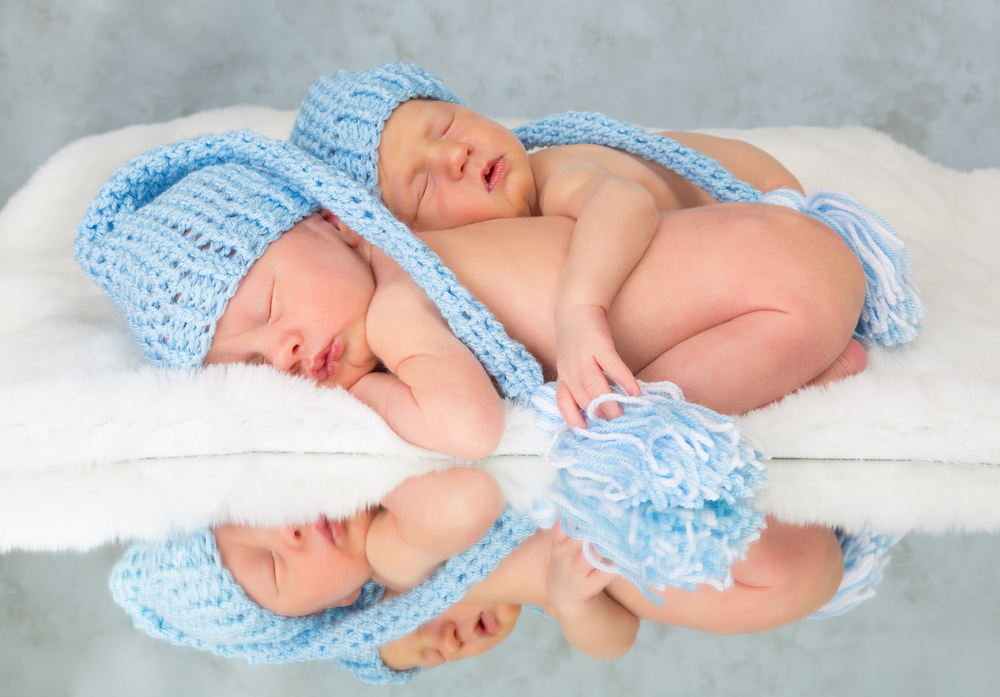
For most parents, hearing they’re expecting twins is enough to come as a shock. But one Australian couple found themselves facing news so extraordinary that even experienced specialists could barely believe what they were seeing. What started as a routine pregnancy soon became one of the rarest cases doctors at the Royal Brisbane and Women’s Hospital had ever encountered, setting the stage for months of careful monitoring and medical uncertainty.
Contents
show
Against staggering odds, that journey has now ended with four healthy baby girls. Jenitar Na’amoana, 34, gave birth to naturally conceived identical quadruplets after an “extremely high-risk” pregnancy, leaving both her family and the medical team celebrating an outcome few thought possible. The remarkable birth has drawn attention not only because identical quadruplets are exceptionally uncommon, but because the babies shared a single placenta, making the pregnancy even more extraordinary.
Doctors Were Stunned When They Realized What They Were Seeing
Jenitar and her husband, Jortham, were already busy raising four children when they attended what they expected would be a normal pregnancy appointment. Instead, doctors delivered life-changing news that instantly transformed what they thought the coming months would look like.
Scans revealed Jenitar wasn’t carrying twins or even triplets. She was pregnant with four identical babies, all developing from a single fertilized egg that had split into four separate embryos. The diagnosis immediately placed her pregnancy among the rarest ever recorded, prompting specialists to prepare for months of intensive monitoring.
Dr. Alexa Bendall, a maternal fetal medicine specialist and obstetrician at the Royal Brisbane and Women’s Hospital, said naturally conceived identical quadruplets occur in around one in every 15 million pregnancies. Even after years of treating high-risk pregnancies, she knew this case stood apart from almost anything most obstetricians would ever encounter.
The surprises did not stop there. According to Dr. Bendall, all four babies shared the same placenta, something she described as virtually unheard of. “But to share the same placenta, this is unheard of,” she said, highlighting just how exceptional Jenitar’s pregnancy had become.
Un nacimiento que ha sorprendido a la comunidad médica. Una mujer dio a luz a cuatrillizas idénticas que compartieron la misma placenta, un fenómeno que ocurre aproximadamente una vez cada 15 millones de nacimientos.https://t.co/cRSn7NBAvd
— Primer Impacto (@PrimerImpacto) July 21, 2026
Why This Pregnancy Was So Unusual
Most multiple pregnancies occur when separate eggs are fertilized, resulting in fraternal twins, triplets, or even quadruplets. Identical quadruplets follow an entirely different path. They begin with a single fertilized egg that splits multiple times during the earliest stages of development, producing babies who share the same genetic makeup.
That process alone is extraordinarily rare. Having all four babies also rely on a single placenta increases the medical risks significantly because each baby depends on the same blood supply and nutrients throughout pregnancy. Doctors must carefully monitor growth and circulation to ensure every baby continues developing safely.
For specialists, pregnancies like this represent one of the greatest challenges in maternal medicine. Every additional week the babies remain safely in the womb can dramatically improve their chances after birth, making constant observation essential.
Woman defies the odds and gives birth to rare identical quadruplets in ‘one in 15 million’ pregnancy https://t.co/ScASGd3czT
— The Right News, Right Now. (@BradPorcellato) July 21, 2026
Every Week Became a Victory for the Medical Team
Because of the enormous risks involved, Jenitar’s pregnancy quickly became a race against time. Doctors admitted her to the Royal Brisbane and Women’s Hospital at 25 weeks so specialists could monitor both mother and babies around the clock.
Multiple pregnancies sharing one placenta carry increased risks of premature labor, growth complications, and problems with blood flow between the babies. Rather than waiting for complications to develop, the medical team chose to closely observe Jenitar in hospital during the final weeks of her pregnancy.
Dr. Bendall said the team’s primary goal was simply reaching 28 weeks, a milestone that would greatly improve the babies’ chances of survival. “We always said that if we could get her to 28 weeks, we would be doing well,” she explained.
Throughout those critical weeks, Jenitar exceeded expectations. Dr. Bendall praised the mother’s resilience, saying she remained remarkably calm despite the constant uncertainty. “Jenitar has taken everything in her stride from day one… she has somehow dodged every complication and risk for both herself and her babies.”
Four Healthy Girls Arrived Against Incredible Odds
On July 14, after weeks of intensive monitoring, doctors decided the time was right to deliver the babies. Jenitar underwent a caesarean section at 28 weeks and four days, reaching the milestone the medical team had hoped for since admitting her to hospital. While the babies arrived more than two months before their due date, the delivery marked the successful conclusion of one of the hospital’s most complex pregnancies.
Dr. Bendall said the outcome exceeded everyone’s expectations. “So the fact that we’ve got four beautiful, healthy babies born at 28 weeks and four days is incredible and we’re very happy to be a part of it,” she said. For a pregnancy carrying so many risks, safely delivering all four girls was a moment of relief for both the parents and the doctors who had spent months preparing for every possible complication.
The newborns were named Emily, Harriet, Catherine, and Alexa, with one daughter receiving her name in honor of Dr. Alexa Bendall. The obstetrician said the gesture came as a complete surprise and described it as “a beautiful tribute,” reflecting the close relationship that had developed between the family and the medical team during the challenging pregnancy.
Although the girls were born prematurely, they have continued to make encouraging progress. They remain in the hospital’s neonatal intensive care unit, where specialists will care for them until they are strong enough to go home. According to Dr. Bendall, all four babies are “currently doing extremely well,” offering the family plenty of reasons to feel optimistic.
A Family of Six Suddenly Became a Family of Ten
Before welcoming their four daughters, Jenitar and Jortham were already parents to four young children ranging from one to 10 years old. Overnight, their household doubled in size, bringing a new set of challenges that few families could ever prepare for.
While the birth has been filled with joy, the practical realities of caring for eight children are impossible to ignore. Feeding, transporting, and providing for four newborns at the same time requires resources most families never anticipate needing. Even something as routine as travelling together has become a major logistical challenge.
To help prepare for life after leaving the hospital, the couple launched an online fundraising campaign with one immediate goal: purchasing a vehicle large enough to carry their growing family. They hope to buy a van with at least 10 seats, allowing everyone to travel together safely for hospital appointments, school runs, and everyday family life.
In a heartfelt message shared with supporters, Jenitar expressed both gratitude and honesty about what lies ahead. “Our four precious miracles have arrived safely, and while our hearts are overflowing with gratitude, the reality of caring for four newborns at once has brought challenges we never could have imagined.” The fundraiser has already attracted more than A$37,000 in donations from people moved by the family’s remarkable story.
Just How Rare Are Naturally Conceived Identical Quadruplets?
Medical experts estimate that naturally conceived quadruplets occur in roughly one in every 700,000 births. However, identical quadruplets represent an even smaller fraction because all four babies must develop from a single fertilized egg that divides multiple times during the earliest days of pregnancy.
The rarity increases even further when all four babies share one placenta. Shared placentas can create serious complications because each baby depends on the same source of nutrients and blood flow throughout pregnancy. Managing those risks requires constant monitoring by highly specialized medical teams, and even then, successful outcomes cannot be guaranteed.
Why Doctors May Never See Another Case Like This
Many obstetricians spend their entire careers without encountering a pregnancy like Jenitar’s. Cases involving naturally conceived identical quadruplets are so uncommon that they are often documented in medical literature because they provide valuable insights for specialists around the world.
For the team at the Royal Brisbane and Women’s Hospital, the successful delivery represents years of expertise combined with careful planning and extraordinary determination from the mother herself. Dr. Bendall credited Jenitar’s resilience throughout the pregnancy as a major factor in reaching the crucial 28-week milestone with all four babies healthy.
For the Na’amoana family, attention will eventually fade, but life is only becoming busier. Their days will soon revolve around NICU visits, sleepless nights, school schedules, and the joyful chaos that comes with raising eight children. Against odds measured in the millions, what began as one of the world’s rarest pregnancies has become the start of an unforgettable new chapter for a family that is now twice the size it was only months ago.