
Your cart is currently empty!
Scientists Discover Why Antarctica’s Doomsday Glacier Could Melt Faster Than Expected

Scientists have been watching Antarctica’s Thwaites Glacier retreat for decades, but new research suggests a crucial part of the process has been underestimated. Beneath the enormous mass of ice, seawater is reaching farther inland than previously accounted for, potentially accelerating the glacier’s deterioration and raising fresh concerns about future sea levels.
Contents
show
The findings suggest Thwaites Glacier could contribute up to 1.2 inches of global sea-level rise by 2100, twice the amount projected by previous estimates. The discovery does not mean the glacier is certain to collapse this century, but it indicates that some existing forecasts may have underestimated the risks facing coastal communities.
Why Thwaites Glacier Has Earned Its Doomsday Nickname
Located in West Antarctica, Thwaites Glacier is one of the most closely monitored ice formations on the planet. Its enormous size and position make it particularly important to scientists studying how Antarctica could influence future sea-level rise.
The glacier is often called the Doomsday Glacier because of the potential consequences of its retreat. It currently contributes around 4% of global sea-level rise, according to the supplied research report, and its continued deterioration could affect far more than the ice directly contained within its boundaries.
Thwaites holds enough ice to raise global sea levels by more than two feet if it were to collapse completely. The concern extends beyond that immediate contribution because the glacier also helps restrain ice farther inland, slowing its movement toward the ocean.
If that natural barrier weakens significantly, additional parts of the Antarctic Ice Sheet could become less stable. The combined consequences could eventually contribute to around 10 feet of sea-level rise, although this is a potential longer-term outcome rather than a prediction that such a rise will occur by 2100.
Scientists have therefore spent years attempting to understand the forces controlling the glacier’s retreat. Its remote location and the complicated environment beneath the ice have made that task particularly challenging.
The latest study offers a new explanation for why the glacier may be losing ice more rapidly than conventional models have suggested. Researchers from the University of California, Irvine, and NASA’s Jet Propulsion Laboratory developed an updated ice sheet model that accounts for processes occurring beneath the glacier.
Scientists Have Identified a Hidden Melting Zone Beneath the Ice
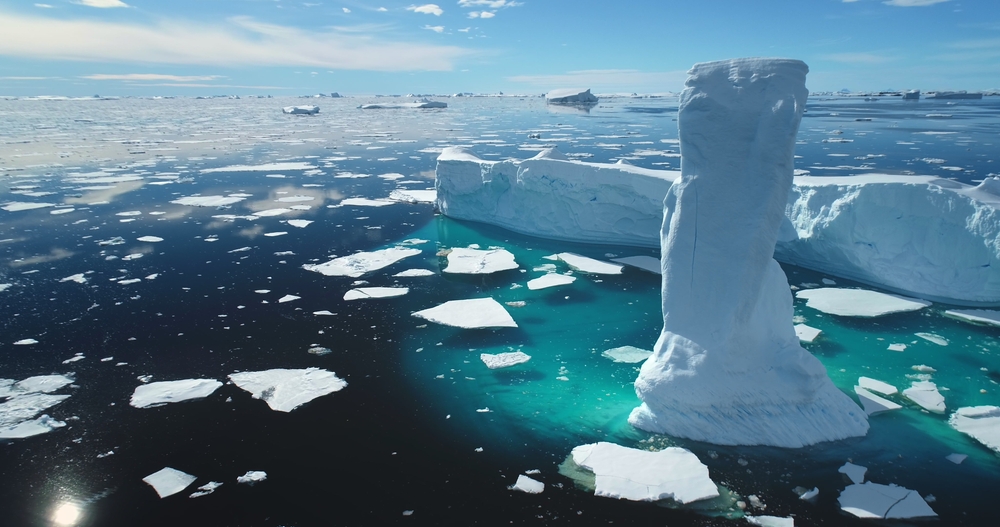
The research focuses on a region where Thwaites Glacier transitions from resting on the seabed to floating on the ocean. Scientists traditionally refer to this boundary as the grounding line, and it has played a central role in models predicting the movement of Antarctic glaciers.
Older approaches generally represented the grounding line as a relatively narrow and stable boundary. However, satellite observations indicate that the area where the ice interacts with seawater can extend several kilometers inland beneath the glacier.
Researchers describe this wider region as a grounding zone. Instead of marking a simple dividing line between grounded and floating ice, it represents a dynamic area where seawater can move beneath the ice as ocean tides change.
Mattia Poinelli, the study’s lead author, explained the significance of this discovery in the research report. “Satellite observations demonstrate the existence of a ‘grounding zone,’ sometimes kilometers wide, where warm ocean water is reaching deep underneath the ice sheets and causing vigorous melting.”
This interaction provides a possible explanation for the differences between earlier computer simulations and observed changes in the glacier. If seawater can penetrate farther beneath the ice than a model assumes, that model may underestimate the amount of melting and the speed of retreat.
The research team adjusted its model to account for this wider zone and its effects on glacier movement. The resulting simulations provided a closer match to historical observations, suggesting that the missing processes had been an important source of uncertainty in previous forecasts.
How Tidal Pumping Allows Seawater to Attack the Glacier

One of the key mechanisms examined in the study is a process known as tidal pumping. As ocean tides rise and fall, the pressure around the glacier changes, allowing seawater to move into and out of the grounding zone.
These tidal movements can temporarily lift sections of ice from the seabed. When seawater penetrates beneath grounded ice, it can carry heat into areas that were previously represented differently in conventional models.
The result is a complicated interaction between ocean water, the underlying bedrock and the glacier itself. Rather than remaining fixed at a single boundary, the grounding zone changes as tides affect the position of the ice and the movement of water beneath it.
Researchers used synthetic aperture radar measurements from Finland’s ICEYE satellite constellation to examine fluctuations along the main trunk of Thwaites Glacier. These observations helped reveal changes occurring across distances of several kilometers.
The satellite data indicated that seawater can penetrate several kilometers beneath grounded ice, lifting it during tidal cycles and exposing the underside to relatively warm water. Ocean currents influenced by climate change also help push seawater toward the Antarctic coastline.
The updated model incorporated a grounding zone measuring approximately four to six kilometers wide, equivalent to around 2.5 to 3.7 miles. Accounting for this wider area helped the researchers reconstruct historical glacier changes that were substantially more pronounced than those produced by traditional models.
The findings suggest that scientists need to understand the conditions beneath a glacier to forecast its future accurately. Observing changes on the surface alone may not fully capture the processes determining how quickly the ice moves toward the ocean.
The New Model Predicts Twice as Much Sea-Level Rise

After adjusting their model, the researchers projected that Thwaites Glacier could contribute up to 30 millimeters of sea-level rise by 2100. That measurement is equivalent to approximately 1.2 inches, twice the amount indicated by previous estimates.
The projection reflects the revised understanding of how seawater interacts with the glacier’s grounding zone. According to the research, the updated model can reproduce historical changes more effectively and produces a larger estimate of future ice loss.
The researchers reported that this projection remains possible even without additional global warming beyond the conditions considered in the study. This does not mean future warming would have no effect on the glacier, nor does it establish that the projected amount is guaranteed.
Instead, the result shows that the physical processes already occurring beneath Thwaites could have a greater influence on future sea levels than earlier models accounted for.
The distinction is significant because climate scientists use ice sheet models to estimate future changes and assess the risks faced by coastal regions. If those models underestimate how quickly a glacier loses ice, planners may also underestimate the scale of the resulting sea-level rise.
Eric Rignot, a co-author of the study and a professor of Earth system science at UC Irvine, said the updated approach addresses important weaknesses in earlier projections. The research team found that accounting for more complete physical processes produced estimates twice as large as previous projections.
The results do not provide a precise timetable for the glacier’s eventual retreat. However, they suggest that improving the representation of processes beneath Antarctic ice is essential to narrowing the uncertainty surrounding future sea levels.
An Underwater Ridge Could Be Holding Back Faster Retreat
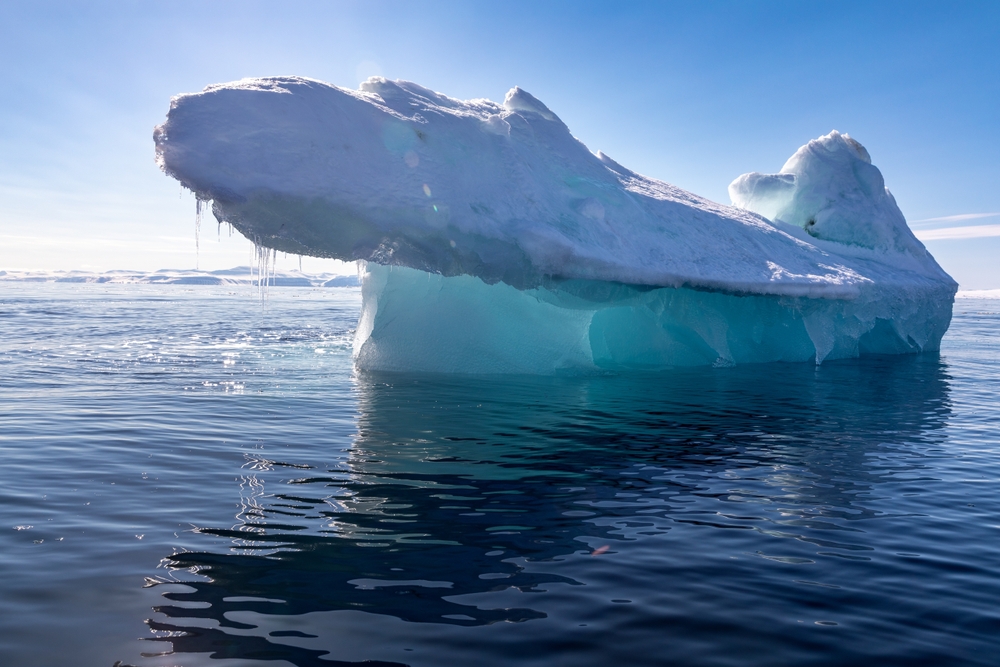
Another important finding concerns the Mouginot Ridge, an underwater feature that currently helps stabilize the main trunk of Thwaites Glacier. The ice remains partly anchored to this ridge, which slows its movement toward deeper water.
The glacier’s retreat is complicated by the shape of the seabed beneath it. In some areas, the land slopes downward farther inland, meaning that retreat can expose increasing amounts of ice to seawater.
This creates concern about what could happen if Thwaites loses its connection to the Mouginot Ridge. According to the researchers, melting within the grounding zone is accelerating the process that could eventually detach the glacier from this stabilizing feature.
Poinelli described the current situation in the study’s accompanying research statement. “The Thwaites main trunk is being temporarily stabilized by the Mouginot Ridge.”
Computer simulations incorporating the wider grounding zone suggest there is a 60% probability that the glacier will become unpinned from the ridge by the end of the century. This is a projected probability rather than a certainty, but it highlights a potential turning point in the glacier’s retreat.
If the ridge no longer provides support, the glacier could continue retreating across a seabed that slopes downward toward the next major topographic high, known as the South Ridge. That movement could expose more ice to the ocean and allow the retreat to accelerate.
The research therefore identifies two connected concerns: melting within the grounding zone and the potential loss of the physical support currently provided by the underwater ridge. Together, these processes could influence the pace of future ice loss.
Why an Additional 1.2 Inches of Sea-Level Rise Matters
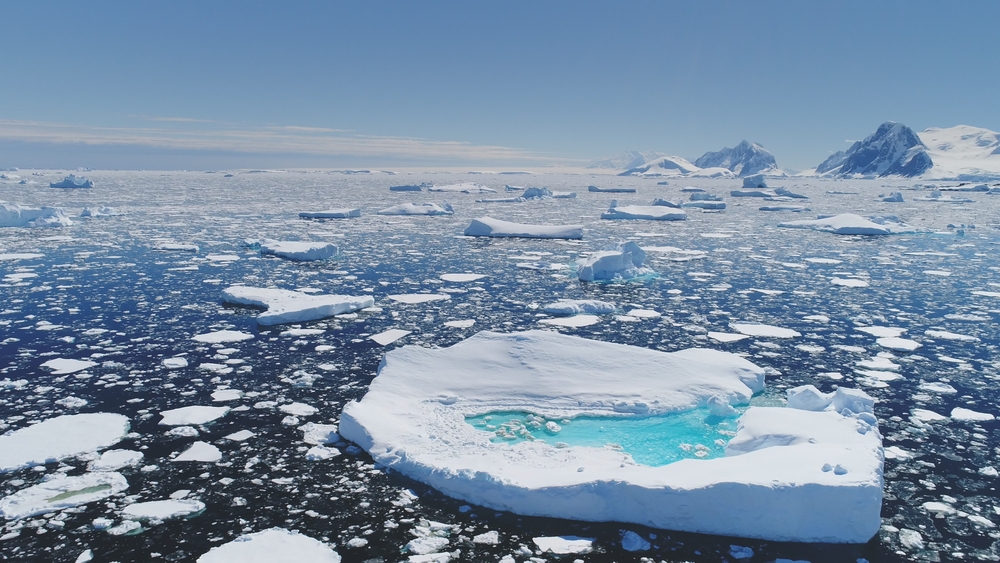
An increase of 1.2 inches may appear relatively small when considered on its own. However, the consequences of rising seas depend on existing water levels, local geography and the exposure of communities to coastal flooding.
Higher baseline sea levels can allow storm surges to reach farther inland, increasing pressure on areas already vulnerable to flooding. Even modest additional rises can complicate efforts to protect infrastructure and manage long-term coastal development.
Rignot warned that the revised projections indicate greater exposure to coastal flooding than previously anticipated. His assessment reflects the potential consequences of underestimating the amount of ice Thwaites could lose over the coming decades.
Coastal cities such as Miami and Manila face particular challenges from rising seas because of their exposure to coastal water and flooding. The precise risks vary by location, and the study does not predict identical consequences for every city.
Potential effects of rising seas include:
- Increased coastal flooding: Higher sea levels can allow storm surges to reach farther inland, exposing more areas to flooding.
- Greater pressure on infrastructure: Roads, ports, drainage systems and coastal defenses may face more difficult operating conditions.
- Risks to homes and businesses: Low-lying communities could experience greater exposure to flooding and associated damage.
- More challenging coastal planning: Governments and local authorities need reliable projections when deciding how to protect vulnerable areas.
These outcomes depend on several factors, including local conditions and future sea-level changes. The study does not quantify the damage each community will face, but its findings suggest that existing assessments may need to account for a greater contribution from Thwaites Glacier.
Scientists Say More Evidence Is Needed Beneath Thwaites
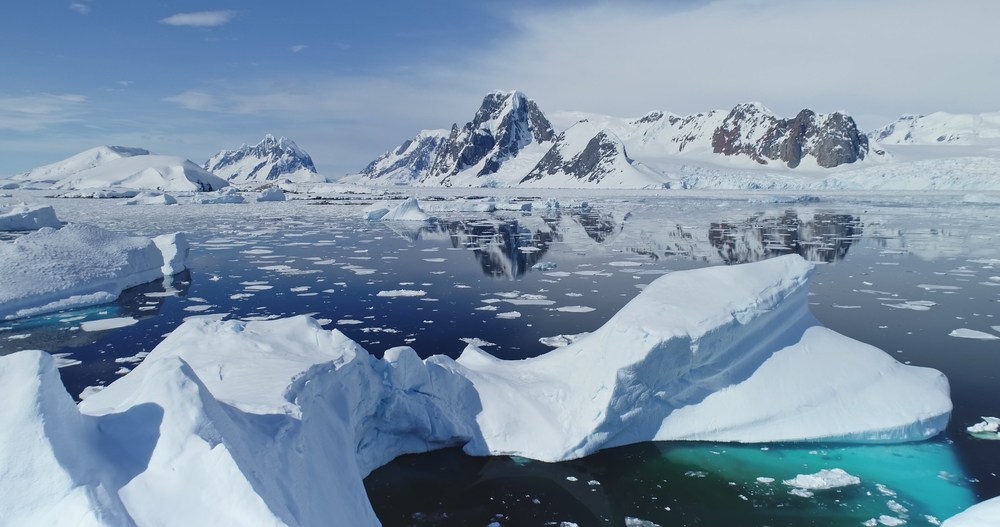
Despite the updated projections, researchers caution that important uncertainties remain. The environment beneath Thwaites Glacier is exceptionally difficult to access, limiting the amount of direct information scientists can collect about the interactions between seawater and grounded ice.
Robert Larter, a marine geophysicist at the British Antarctic Survey who was not involved in the study, emphasized the need for additional observations. “The reality is that there is a lot we still need to find out about grounding zone processes to be able to make confident predictions about how fast ice will be lost,” Larter said.
His comments underline the limitations of forecasting a glacier whose behavior depends on processes that are difficult to observe directly. Although satellite measurements provide valuable evidence, researchers still need to investigate what happens beneath the ice to test their assumptions.
Ted Scambos, a senior research scientist at the University of Colorado Boulder’s Earth Science and Observation Center who was also not involved in the study, said the findings could be “a real gamechanger for sea level forecasting from Thwaites.”
The researchers plan to travel to the glacier in 2028 to deploy instruments capable of documenting the movement of seawater into and out of the grounding zone. Those measurements could help them evaluate the model and improve future predictions.
Direct observations will be particularly valuable for understanding how tidal pumping changes over time and how different sections of the glacier respond. The results could help scientists determine whether the processes identified in the model are operating as expected beneath the ice.
Cutting Emissions Could Help Limit Future Ice Loss
The findings highlight a difficult challenge for climate science. Researchers have monitored Antarctic ice loss for decades, yet new observations continue to reveal physical processes that can change projections of future sea-level rise.
The revised model does not establish that Thwaites Glacier will collapse by 2100. It does, however, suggest that its contribution to rising seas could be larger than previously estimated, even under the warming assumptions used in the study.
Rignot has emphasized that reducing planet-heating pollution remains necessary to limit the impacts of climate change. He has also warned that some future sea-level rise is already expected because of changes that have occurred.
Reducing emissions cannot immediately reverse all existing ice loss, but limiting additional warming can help reduce further pressure on the planet’s ice sheets. Better observations and more accurate models can also help communities understand the risks they may face.
Thwaites Glacier remains one of the most important uncertainties in forecasting future sea levels. The discovery of an extensive grounding zone shows why scientists must look beneath the ice, where seawater is quietly influencing the fate of a glacier capable of affecting coastlines worldwide.