
Your cart is currently empty!
Earliest Known Evidence of the Plague Reveals a Deadly Outbreak 5,500 Years Ago
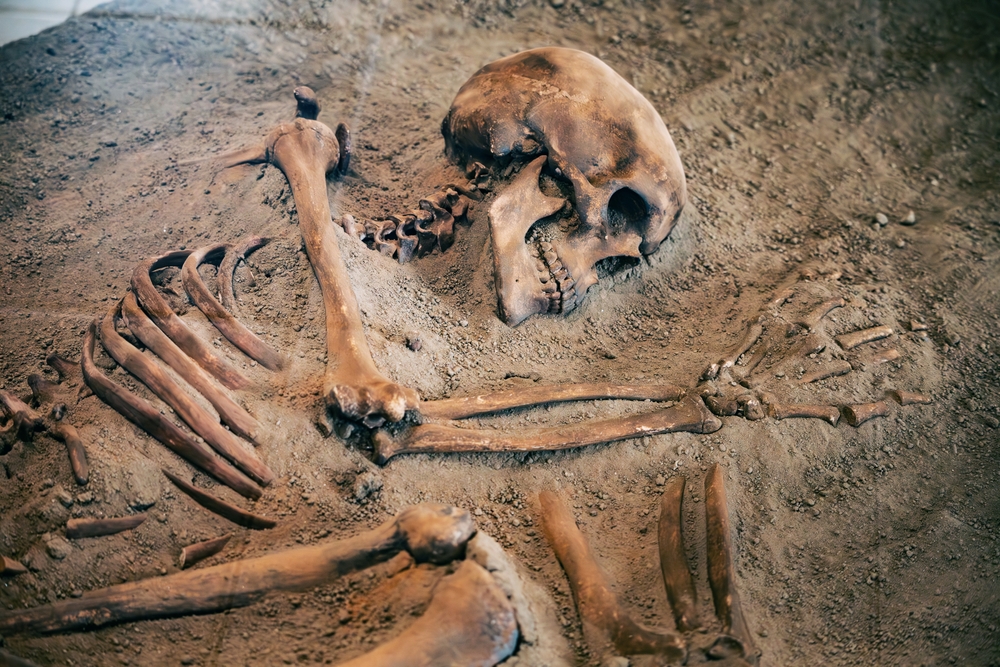
Deep in the Siberian permafrost, an archaeological anomaly has puzzled scientists for decades: shared graves filled predominantly with children and young adults who perished simultaneously without a single mark of violence. For years, the invisible killer responsible for this ancient tragedy remained hidden.
Contents
show
Now, cutting-edge DNA analysis has unmasked the culprit, uncovering an origin story for one of history’s most notorious diseases that predates the rise of agriculture and crowded cities by millennia. This breakthrough not only solves a heartbreaking prehistoric cold case but completely reshapes our understanding of humanity’s earliest encounters with infectious outbreaks.
Unearthing a Prehistoric Tragedy at Lake Baikal

A June 2026 study published in the journal Nature reveals the exact identity of this ancient killer: the bacterium Yersinia pestis. The pathogen responsible for the plague was found to have decimated small, mobile communities near southeast Siberia’s Lake Baikal roughly 5,500 years ago. By extracting genetic material from the roots of teeth belonging to 46 individuals buried across four cemeteries in the region, including a site known as Ust’-Ida, scientists detected plague DNA in 18 of the remains. This nearly 40 percent infection rate surpasses the pathogen detection levels found in some medieval plague pits.
“The unusually high number of children and the short time-span was a real puzzle that we’ve been trying to solve since the 1990s,” notes Andrzej Weber, principal investigator of the Baikal Archaeology Project at the University of Alberta. “Finding out that plague was the cause is extraordinary, but it makes so much sense.”
The presence of the pathogen in multiple members of the same family, including half-sisters laid to rest side-by-side, indicates that the bacterium was fatal long before it evolved the specific traits associated with the catastrophic Black Death of the 14th century. “Whether the earliest forms of plague were mild or virulent has been a matter of debate, but our findings demonstrate that these ancient strains were already highly lethal,” explains Eske Willerslev, an evolutionary geneticist at the University of Cambridge and the University of Copenhagen who led the research.
Tracing the Pathogen: Marmots and a Deadly Superantigen

Understanding how this prehistoric community encountered the plague requires looking at the local ecosystem. The Lake Baikal region was—and remains—home to marmots, large burrowing rodents that are known carriers of the disease. Archaeological evidence, including marmot teeth fashioned into pendants found within the burial sites, underscores the close interaction between these hunter-gatherers and the local wildlife. Researchers believe the initial infection likely occurred when individuals handled or consumed raw infected marmots, a practice that still occasionally causes isolated plague cases in the region today.
Once the bacterium crossed the species barrier, it moved swiftly through the community. Genetic analysis indicates that this 5,500-year-old strain lacked the specific mutations that later enabled Yersinia pestis to spread efficiently via fleas—the transmission method infamous for fueling the bubonic plague during the Middle Ages. Consequently, scientists suggest these early victims likely contracted pneumonic plague. This form of the disease attacks the lungs and spreads directly from person to person through respiratory droplets, devastating families sharing close quarters in a matter of days.
The lethality of this ancient strain, despite missing the flea-transmission genes, lies in a unique genetic signature. The sequenced genomes revealed the presence of a “superantigen,” a potent toxic protein not found in later historical strains. This superantigen was capable of triggering an overwhelming and catastrophic immune response in the host.
This biological mechanism helps explain the heartbreaking demographics of the Ust’-Ida graves, where children and young adolescents made up the vast majority of the victims. “Even before the bacterium evolved efficient flea-borne transmission, these ancient strains appear to have carried a potent combination of virulence factors that could make infection highly lethal,” says Martin Sikora, an associate professor at the University of Copenhagen and a senior author of the study.
A Heartbreaking Human Element: Family Bonds and Tragic Losses
The true weight of this 5,500-year-old discovery lies in the deeply personal stories preserved within the Ust’-Ida burial grounds. By combining archaeological analysis with ancient DNA and radiocarbon dating, researchers reconstructed the kinship among the victims, revealing the devastating toll the plague took on small family groups.
Excavations uncovered multiple shared graves illustrating this human toll, with parents frequently buried alongside their offspring. The poignant grave containing the two half-sisters, for instance, revealed they were aged just five and ten, and were buried simultaneously with an unrelated twelve-year-old boy. DNA testing confirmed that all three perished from the plague during the same outbreak. Furthermore, the complete absence of physical trauma across these skeletons solidified the conclusion that a rapid infectious disease, rather than conflict, caused these concentrated deaths.
As earlier noted, the high mortality rate among children is linked to the bacterium’s ancient “superantigen” toxin. Researchers now understand that this specific gene likely triggered an extreme inflammatory complication—comparable to modern Kawasaki syndrome—that overwhelmingly targeted young immune systems. The result was a rapid, fatal illness that offered families no time to recover or protect their most vulnerable members.
While the data provides a groundbreaking scientific timeline, it also offers a somber glimpse into the emotional reality of ancient hunter-gatherers. “That adds a really, really human element to all of the scientific work that we’ve done; seeing the impact on communities and how these communities have responded to this very tragic set of events,” notes Ruairidh Macleod, a postdoctoral researcher at the University of Oxford and lead author of the study. Angela Lieverse, a professor of archaeology at the University of Saskatchewan who has studied these remains for decades, echoes this sentiment: “Thinking of these little sisters and cousins who all died horribly from this nasty infectious disease breaks your heart. But in a way, we can tell their story now. And I think that’s very powerful.”
Rethinking the Origins of Pandemics

Scientists believed that major infectious diseases only emerged after humans started farming and living in crowded settlements alongside livestock. Small, nomadic groups of hunter-gatherers were thought to be too spread out for a pathogen like the plague to cause massive harm.
The Siberian graves prove this assumption wrong. Catastrophic disease did not wait for the invention of agriculture or the construction of ancient cities.
“The fact that we’re finding this happening in an isolated group of prehistoric hunter-gatherers is really, really extraordinary to me and challenges a lot of that epidemiological theory,” says Macleod. He notes that the Lake Baikal communities lived entirely off hunting and fishing, completely separated from farming societies.
This discovery also settles a long-standing debate about how the plague evolved. Previously, scientists assumed early strains of the bacteria were mild because they lacked the genetic mutations needed to spread through flea bites—the main driver of the medieval Black Death. But the sheer number of victims buried in the Siberian permafrost shows the plague was already highly contagious and deadly without the help of insects.
A Timeless Warning from the Past

The tragedy at Lake Baikal is more than an archaeological curiosity; it is a stark reminder of humanity’s enduring vulnerability to zoonotic diseases. Even in small, isolated communities thousands of years ago, close contact with local wildlife was enough to trigger a devastating outbreak. This ancient event proves that pathogens do not require crowded cities or global travel networks to cause mass casualties—they only need an opportunity to cross the species barrier.
Today, as human expansion increasingly encroaches on natural habitats, the risk of diseases spilling over from animals to humans is higher than ever. The silent graves of Ust’-Ida emphasize the critical need to respect ecological boundaries and actively monitor wildlife for emerging pathogens. Unearthing the origins of ancient pandemics is not just about understanding our past; it is an essential tool for preparing for and preventing the next global health crisis.
Source:
- Macleod, R., Seersholm, F. V., De Sanctis, B., Lieverse, A., Timpson, A., Schulting, R., Stenderup, J. T., Gaunitz, C., Vinner, L., Goriunova, O. I., Bazaliiskii, V. I., Vasilyev, S. V., Jessup, E., Wang, Y., Ramsey, C. B., Thomas, M. G., Corbett-Detig, R., Iversen, A. K. N., Weber, A. W., & Sikora, M. (2026). Lethal plague outbreaks in Lake Baikal hunter-gatherers 5,500 years ago. Nature, 654(8119), 697–705. https://doi.org/10.1038/s41586-026-10540-5