
Your cart is currently empty!
Earth Crosses First Climate Tipping Point, Scientists Warn of Catastrophic Consequences

The world just crossed a critical threshold that scientists have warned about for decades. According to a recent CNN report, researchers have confirmed that the Earth has officially hit its first major climate tipping point, a moment when natural systems shift irreversibly, potentially setting off cascading consequences across the planet. This marks a point of no return for certain ecosystems and could trigger accelerating feedback loops that worsen the climate crisis.
Contents
show
The latest findings reveal that the collapse of warm-water coral reefs is now inevitable within the coming decades, even if global warming is stabilized at 1.5°C. The tipping point has been breached. Scientists say this could disrupt ocean biodiversity, fisheries, and coastal protection, reshaping marine life and human livelihoods in ways that cannot easily be reversed.
The warning, echoed, has left experts calling this moment a “wake-up call for humanity.” The collapse of coral reefs serves as a warning sign of broader ecological instability, showing how close we may be to triggering a chain reaction across critical Earth systems. But what exactly are these “tipping points,” and why do they matter so much?
Understanding Climate Tipping Points
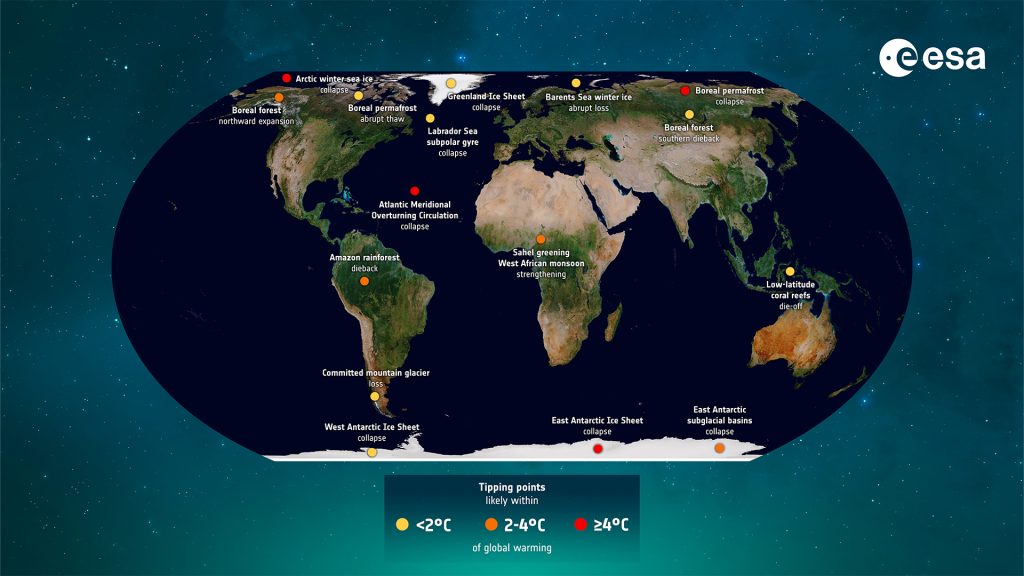
Climate tipping points are thresholds within the Earth’s complex system where gradual changes reach a critical level, causing sudden and often irreversible transformations. They are not linear responses but rather abrupt shifts akin to pushing a boulder up a hill until it rolls uncontrollably down the other side.
Once triggered, these tipping points can alter regional and even global climate conditions for centuries. For example, when the Greenland ice sheet starts melting beyond a certain limit, it cannot refreeze easily, leading to irreversible sea-level rise. These phenomena transform the environment in ways that ripple outward, reshaping weather patterns, disrupting agriculture, and displacing populations.
Credits: ESA
The scientific community uses tipping points as warning markers. They show us where humanity stands in relation to the limits of Earth’s resilience. Yet despite years of research and global summits, human activity continues to push these boundaries, and the planet is responding with intensifying signals from record-breaking heatwaves to melting glaciers and shifting ocean currents.
The newly confirmed tipping point of coral reef collapse is a powerful reminder that the consequences are not theoretical anymore. The first domino has fallen.
The Major Climate Tipping Points at Risk
Scientists have identified several major tipping points across the Earth’s climate system that could reshape the planet’s future. Each one has unique dynamics, yet they are interconnected, meaning one can trigger or amplify another.
This intricate network of feedback loops underscores how fragile the Earth’s balance truly is. When one system begins to falter, it doesn’t act in isolation. Instead, it influences other systems, amplifying instability across the globe. This interconnectedness makes predicting outcomes increasingly complex and highlights the urgency of preventing further tipping points.
Greenland and West Antarctic Ice Sheets
These massive ice sheets hold enough frozen water to raise global sea levels by more than 10 meters combined. Once melting accelerates beyond a certain threshold, it becomes irreversible, locking in centuries of flooding risk for coastal cities worldwide.
The accelerated melting of these ice sheets also contributes to the disruption of ocean currents and weather systems. As the influx of fresh water dilutes ocean salinity, it interferes with global heat distribution, potentially leading to more extreme weather events and unpredictable climate patterns across continents.

Credit: Jet Propulsion Laboratory-CalTech/NASA
Permafrost Thawing
The Arctic permafrost contains enormous amounts of methane, a greenhouse gas far more potent than carbon dioxide. As permafrost melts, it releases this gas into the atmosphere, accelerating global warming in a dangerous feedback loop.
Beyond methane release, thawing permafrost also destabilizes infrastructure in Arctic communities, damages ecosystems, and releases long-trapped bacteria and viruses. This could have profound ecological and health impacts, particularly in regions unprepared for such changes.

Coral Reef Collapse
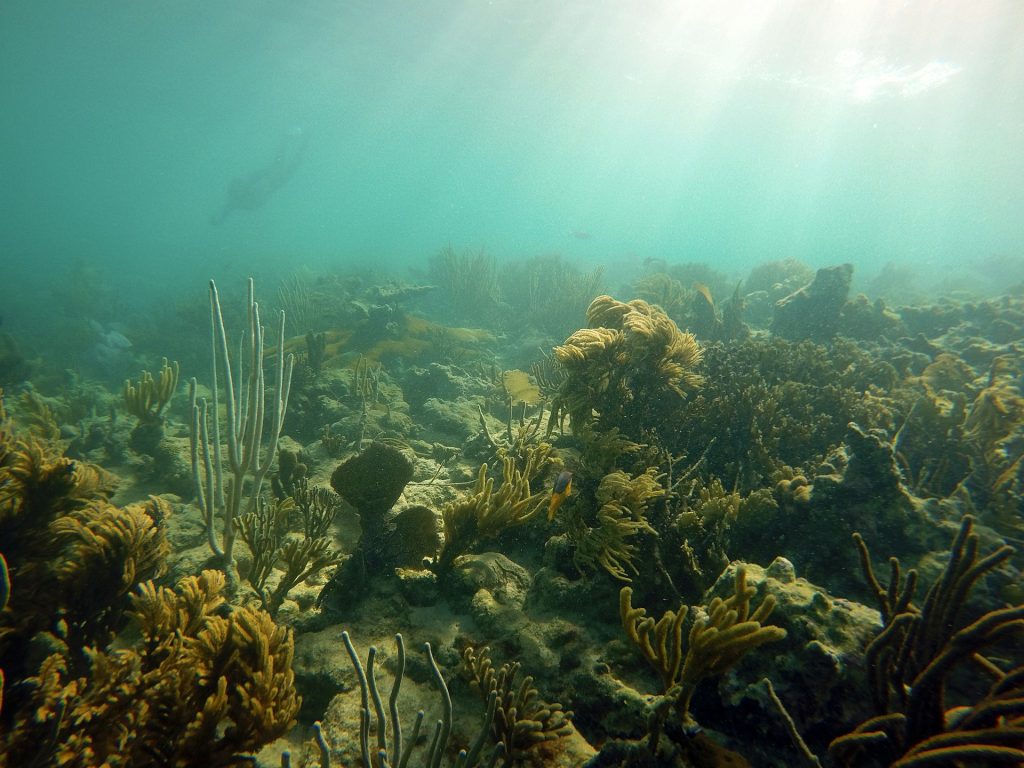
The first tipping point was officially confirmed. As ocean temperatures rise and acidification increases, coral bleaching events are becoming permanent, leading to ecosystem collapse.
The collapse of coral reefs is not just an environmental loss but a socioeconomic crisis. Millions of people depend on these ecosystems for food, tourism, and coastal defense. Their disappearance could push small island nations into deeper vulnerability, threatening livelihoods and cultural identities tied to the sea.
These systems are like threads in a web. Once one snaps, the rest may follow. The coral reef collapse marks the first unraveling strand, with ominous implications for the rest.
Amazon Rainforest Dieback
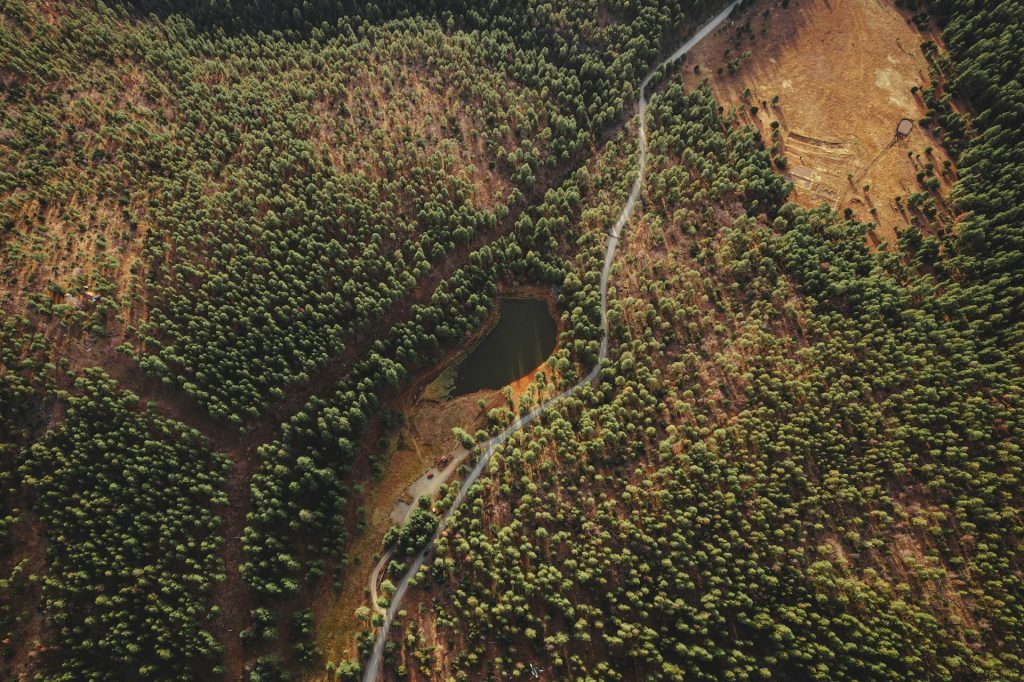
Deforestation and warming threaten to turn parts of the Amazon into dry savannas. Losing the rainforest would not only devastate biodiversity but also remove one of the planet’s most crucial carbon sinks.
The transformation of the Amazon could alter global rainfall patterns and lead to severe droughts in South America. It would also disrupt indigenous communities that have relied on the forest for generations, erasing cultural and ecological knowledge that sustains biodiversity.
Atlantic Meridional Overturning Circulation (AMOC)
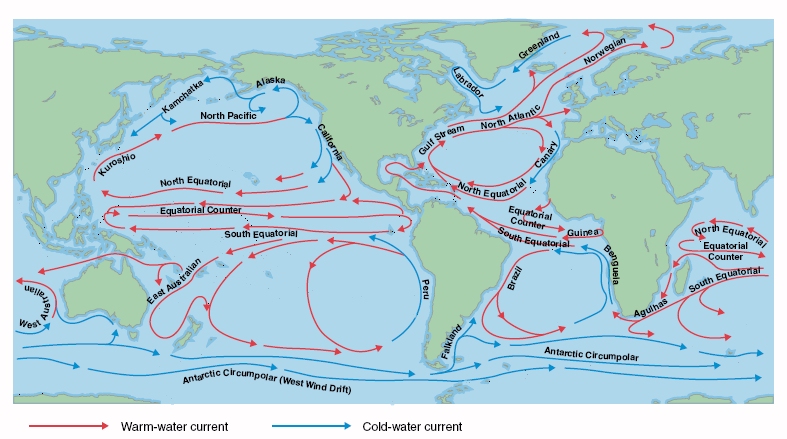
This ocean current system, which includes the Gulf Stream, regulates temperatures across Europe and North America. Scientists warn that it could weaken or collapse entirely, leading to colder winters in the north and disrupting monsoon patterns globally.
If the AMOC slows significantly, it could also cause shifts in sea levels along the Atlantic coast and affect food security by altering rainfall distribution in agricultural regions. The resulting climate instability would have far-reaching economic and environmental consequences.
The First Tipping Point: Coral Reef Collapse
According to the new report, coral reefs are now past the critical threshold of survival. Even if global warming is limited to the Paris Agreement’s target of 1.5°C, up to 99% of warm-water coral reefs are expected to vanish by the end of the century. This represents a monumental loss for marine biodiversity, which depends heavily on coral ecosystems.
Coral reefs are often referred to as the “rainforests of the sea,” supporting roughly a quarter of all marine life despite covering less than 1% of the ocean floor. Their collapse will have cascading effects, including the loss of fish species that billions of people rely on for food and livelihoods.
Economically, coral reefs contribute an estimated $2.7 trillion annually through tourism, fisheries, and coastal protection. Their disappearance will leave countless communities more vulnerable to storms and erosion, especially in tropical regions like Southeast Asia, the Pacific Islands, and the Caribbean.
Ecologically, the collapse signals the first domino in a broader sequence of potential planetary shifts. As marine biodiversity declines, carbon sequestration in the ocean weakens, amplifying climate change further. Scientists now fear that this may accelerate the risk of hitting other tipping points sooner than expected.
How Humanity Can Still Protect the Earth
While the news is deeply concerning, scientists stress that it is not a reason for despair but a call for action. Crossing one tipping point does not mean all others are inevitable. Every fraction of a degree of warming prevented can still make a significant difference in avoiding further catastrophic outcomes.
1. Accelerating Decarbonization: The most urgent step is drastically cutting greenhouse gas emissions. This means transitioning to renewable energy sources like solar and wind, phasing out fossil fuels, and investing in carbon capture and storage technologies.
2. Protecting and Restoring Nature: Reforestation, wetland restoration, and sustainable agriculture can help absorb carbon dioxide and restore ecological balance. Nature is our strongest ally in the fight against climate collapse.
3. Ocean Conservation: Expanding marine protected areas can safeguard what remains of coral reefs and marine biodiversity. Local actions, such as reducing pollution and overfishing, can increase the resilience of ecosystems still capable of recovery.
4. Global Cooperation: The climate crisis transcends borders. Countries must commit to stronger international climate agreements and financing mechanisms to support vulnerable nations adapting to inevitable changes.
5. Innovation and Adaptation: From developing climate-resilient crops to building coastal defenses, innovation can help societies withstand impacts that are now unavoidable. Every investment in adaptation reduces suffering and economic loss.
A Turning Point for Humanity
The moment stands as both a scientific achievement and an ethical turning point. The collapse of the first major Earth system is a stark reminder that humanity’s actions are reshaping the planet in ways that can no longer be ignored or delayed.
We are living in the narrow window of time where collective action can still determine the future. The choices made this decade will define the legacy of the 21st century, whether it becomes a story of irreversible decline or one of resilience and renewal.
The tipping points are not just scientific thresholds. They are mirrors reflecting how far we’ve pushed the planet and how urgently we must pull back. The future of all life depends on how humanity responds to this warning swiftly, collectively, and decisively.