
Your cart is currently empty!
Earth Might Be Inside a Colossal Cosmic Void 2 Billion Light-Years Wide
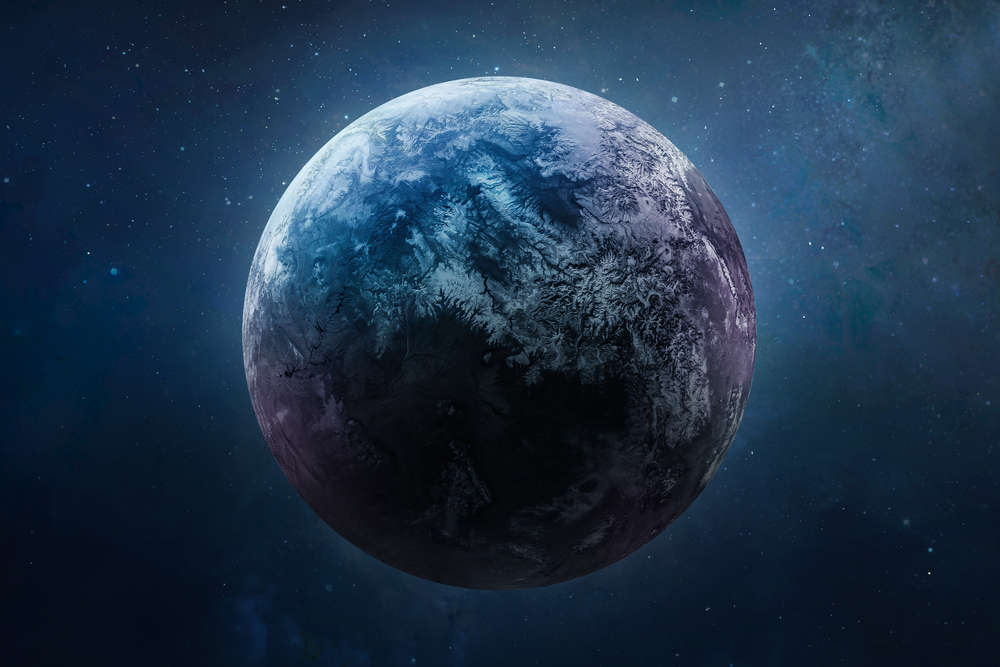
Astronomers have uncovered startling evidence that our planet may be sitting inside a massive cosmic void, stretching over 2 billion light-years across. This discovery challenges long-held assumptions about the uniformity of the universe and offers a fresh lens through which we might understand cosmic expansion. The implications are staggering, touching on everything from the Big Bang to the mysterious discrepancies in measuring the universe’s growth rate.
Contents
show
The concept of a cosmic void is not new, but the scale suggested by this research is unprecedented. Researchers have long mapped the large-scale structure of the cosmos, discovering filaments, clusters, and vast empty spaces. However, this newly identified void, which might encompass our entire Milky Way, dwarfs anything previously cataloged. Scientists believe it could be a key factor in understanding one of the most puzzling issues in modern cosmology: the Hubble tension, the mismatch in the calculated rate of the universe’s expansion.
For the general public, the idea of Earth being inside a void may seem alarming, even existential. However, scientists emphasize that this does not pose a direct threat to life on our planet. Instead, it offers a rare opportunity to study cosmic structures at an unprecedented scale and refine our models of the universe. It could also provide insight into the behavior of dark energy and the distribution of matter over billions of light-years.
This article will explore the discovery in depth, examining the science behind cosmic voids, how researchers made this startling observation, the implications for our understanding of the universe, and what it might mean for humanity’s place in the cosmos.
What Is a Cosmic Void?
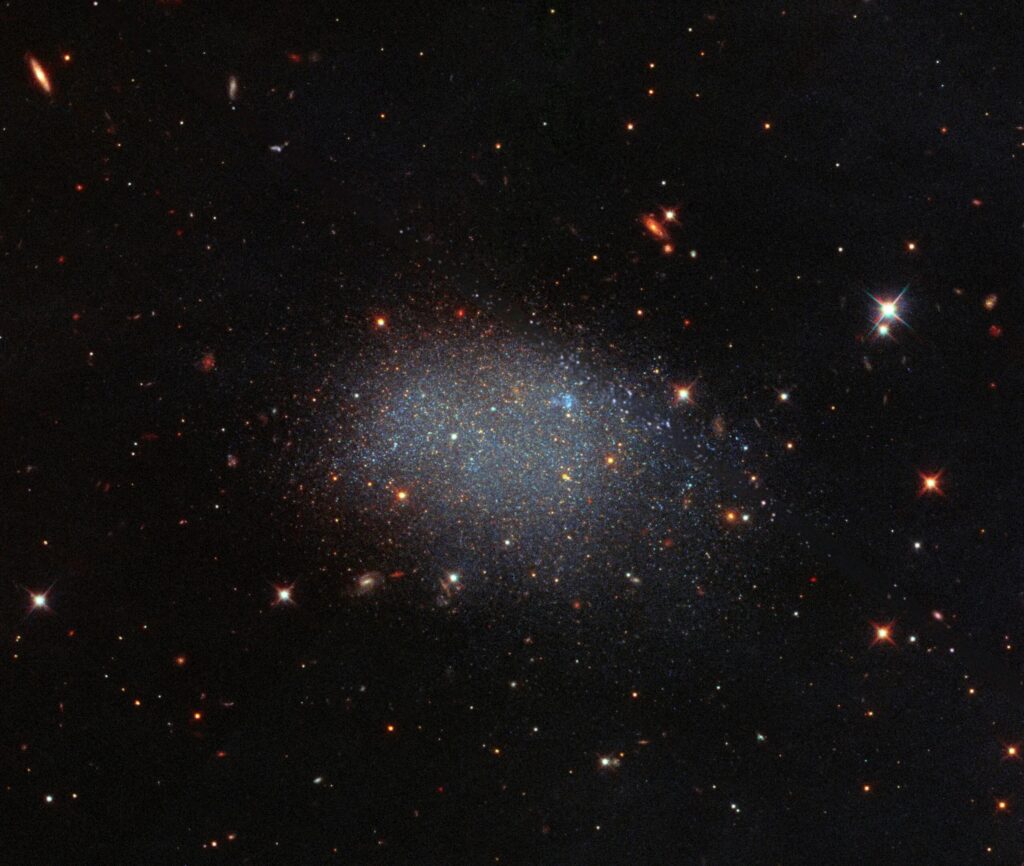
Cosmic voids are enormous regions in the universe with very few galaxies, stars, or other forms of matter. They are the opposite of cosmic filaments and clusters, which are dense areas filled with galaxies. Essentially, voids are vast expanses of near-empty space that make up a significant fraction of the cosmos. Scientists estimate that these voids occupy over 80 percent of the volume of the universe, though they contain only a small fraction of its mass.
The recently identified void is extraordinary not only for its size but also for its implications. Spanning approximately 2 billion light-years, it is far larger than previously known voids. Researchers suggest that its existence could help explain why measurements of the Hubble constant, which quantifies the universe’s expansion rate, differ depending on the method used. Specifically, if Earth is inside such a low-density region, the local gravitational effects could skew observations, leading to the apparent discrepancy.
Voids are not entirely empty. They contain dark matter, tenuous gas, and occasional galaxies. Studying these regions can provide insights into how galaxies form and evolve in low-density environments. Additionally, voids serve as natural laboratories for testing cosmological theories, such as the behavior of dark energy and the influence of initial conditions in the early universe.
Astronomers use various techniques to detect voids, including mapping galaxy distributions and analyzing cosmic microwave background signals. These observations reveal the voids as large underdense areas, often surrounded by dense cosmic filaments. In the case of the newly proposed void surrounding Earth, scientists relied on subtle patterns in light and cosmic sound waves left over from the Big Bang to identify its presence.
How Scientists Discovered the Giant Void
The discovery of this enormous void is rooted in careful observations of the cosmic microwave background and the large-scale distribution of galaxies. Researchers noticed anomalies in the light coming from distant galaxies that suggested our local universe is less dense than expected. By combining data from the Hubble Space Telescope and other observatories, they were able to map the boundaries of this massive empty region.
One of the key methods involved studying baryon acoustic oscillations, the ripples in the distribution of matter left over from the Big Bang. These ripples act like cosmic yardsticks, allowing scientists to measure distances in the universe with remarkable precision. Analyzing these oscillations revealed that the density of matter around Earth is unusually low, pointing to the presence of a vast void.
The findings were corroborated by multiple independent studies, which examined light from thousands of galaxies across the observable universe. This consistency across different datasets increases confidence in the conclusion that Earth resides in an enormous cosmic void. While other voids are known to exist, none are thought to be this large or to contain our planet within their bounds.
Scientists emphasize that this discovery is still subject to verification and further study. Mapping such a massive region requires precise measurements and careful analysis, and researchers are calling for additional observations to confirm the void’s exact size and structure. Nevertheless, the current evidence strongly supports the idea that Earth occupies a low-density cosmic neighborhood, reshaping our understanding of the local universe.
Implications for Cosmology and the Hubble Tension
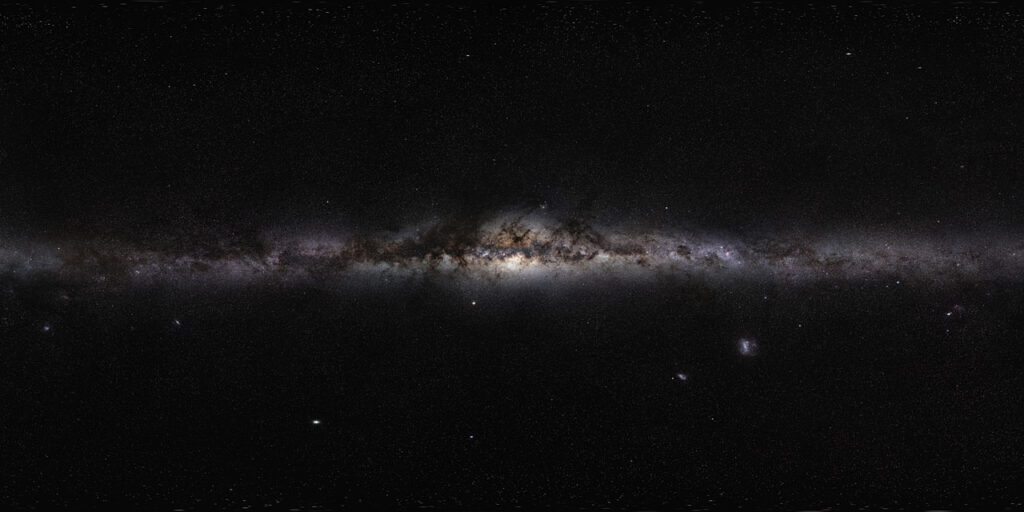
One of the most intriguing consequences of this discovery relates to the Hubble tension, a persistent puzzle in cosmology. The Hubble constant measures how fast the universe is expanding, but different methods yield conflicting results. Observations of the early universe using the cosmic microwave background suggest one value, while local measurements based on supernovae and galaxy distances indicate a higher rate.
If Earth is located inside a vast cosmic void, the local underdensity could account for some of this discrepancy. In a low-density region, galaxies experience less gravitational pull from surrounding matter, potentially causing them to move differently than expected. This would influence local measurements of the Hubble constant, providing a natural explanation for the observed tension.
Furthermore, understanding the distribution of matter at such scales can refine models of dark energy, the mysterious force driving the universe’s accelerated expansion. A massive void may affect how dark energy interacts with matter and influence the dynamics of cosmic expansion. By incorporating the void into simulations and theoretical models, cosmologists can develop a more accurate picture of the universe’s evolution.
Beyond technical implications, this discovery challenges our philosophical perspective on humanity’s place in the cosmos. For centuries, humans have assumed that Earth occupies a fairly typical region of the universe. Realizing that we might be in a unique, underdense area prompts deeper reflection on cosmic structure and our role within it.
Could Life on Earth Be Affected?
Despite the mind-bending scale of this void, researchers stress that life on Earth is not at risk. Cosmic voids are vast but do not inherently pose a danger to planets within them. Our solar system continues to orbit the Milky Way’s center, and the local conditions required for life remain stable. The void primarily affects large-scale cosmic measurements rather than daily life on Earth.
However, the existence of the void could influence the distribution of galaxies and cosmic matter, indirectly affecting the formation of stars and planetary systems in the surrounding regions. Studying these effects can help astronomers understand the long-term evolution of galaxies and the conditions under which life-supporting systems form.
For scientists, this presents a unique opportunity. Observing life within a cosmic void may provide insights into how underdense regions influence galaxy formation and the potential habitability of planets. By comparing galaxies inside and outside voids, researchers can test theories about cosmic evolution and the factors that shape planetary systems.
Public fascination with the idea of living in a cosmic void also opens avenues for education and outreach. It allows astronomers to communicate the scale and complexity of the universe in ways that capture the imagination, while reinforcing the idea that scientific discoveries often challenge our assumptions in profound ways.
Rethinking Our Place in a Cosmic Void
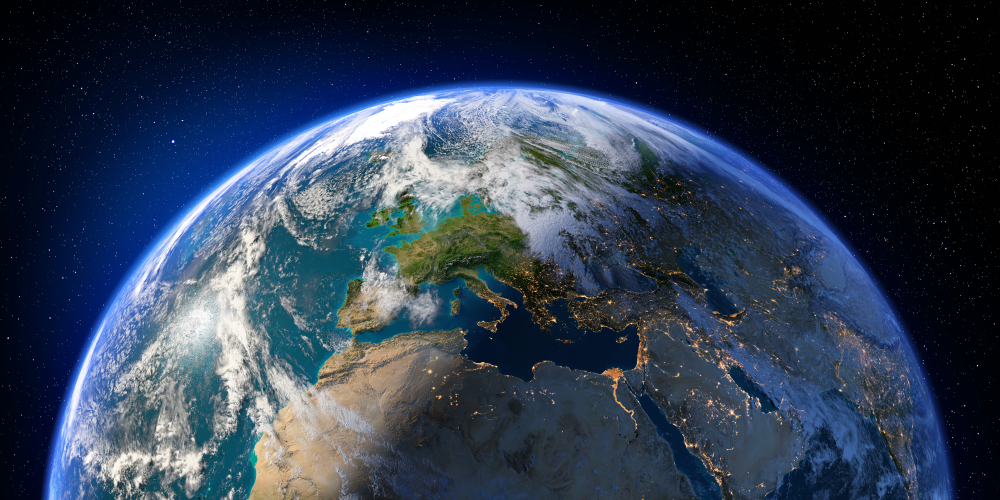
The discovery that Earth may be located inside a 2-billion-light-year cosmic void reshapes our understanding of the universe on an unprecedented scale. From addressing the Hubble tension to refining models of dark energy and cosmic evolution, this finding offers both practical and philosophical insights. While life on Earth remains unaffected, the implications for astronomy and cosmology are profound.
This revelation encourages us to reconsider assumptions about our cosmic neighborhood and our place within it. Studying this void will likely lead to new discoveries about galaxy formation, dark energy, and the universe’s early moments. It serves as a reminder that the universe is far more complex and surprising than we often imagine, and that even our tiny corner of space can hold extraordinary secrets.
Moreover, this discovery opens exciting new avenues for future research. Advanced telescopes, more precise cosmic mapping, and international collaboration may uncover additional voids or refine our understanding of this one. Each step forward will not only deepen our knowledge of the cosmos but also inspire new generations of scientists and enthusiasts to explore the vast, mysterious universe we call home.