
Your cart is currently empty!
Earth’s Mysterious Second Moon: The Truth About 2025 PN7

For millennia, humanity has looked up at the night sky and found comfort in the Moon’s steady, familiar glow. It has been the clock of ancient civilizations, the muse of poets, and the guiding light of travelers. The Moon has shaped tides, mythologies, and the rhythms of life itself. Yet in 2025, astronomers confirmed something extraordinary: Earth is not as solitary as we once believed. A small celestial body asteroid 2025 PN7 has been silently following our planet for decades, tracing a path so close to ours that scientists have dubbed it a quasi-moon. While it’s not a true second moon, it represents a new kind of companion a mysterious traveler caught in Earth’s gravitational choreography.
Contents
show
The discovery has stirred both fascination and confusion. Social media buzzed with claims that “Earth now has two moons until 2083,” prompting speculation about cosmic shifts, spiritual meanings, and potential dangers. NASA has since clarified that 2025 PN7 poses no threat; it’s a small, harmless rock, roughly the size of a city bus, orbiting the Sun in near synchrony with Earth. But beneath the scientific details lies a deeper curiosity. Why are such objects appearing now? What do they reveal about the intricate mechanics of our solar system and perhaps, metaphorically, about Earth’s journey through the cosmos? The case of 2025 PN7 reminds us that even familiar skies still hold surprises, and that the dance between Earth and its companions both physical and symbolic continues to evolve.
What Is a Quasi-Moon?
To understand 2025 PN7, it’s important to clarify what astronomers mean by “quasi-moon.” Unlike our true Moon, which orbits Earth directly, a quasi-moon orbits the Sun just as Earth does but at nearly the same speed and distance. From our perspective, this makes it appear as though the object is following or looping around our planet. In reality, it’s performing a complex gravitational dance, moving in a figure-eight pattern that keeps it near Earth but never truly captured by our gravity.
The term quasi-moon reflects this strange in-between status: part asteroid, part companion. These objects belong to a rare group of celestial travelers that share Earth’s orbit in a delicate resonance, often remaining nearby for decades before drifting away.
2025 PN7, for instance, is believed to have settled into its current pattern in the 1950s and will stay with us until roughly 2083. At its closest, it comes within about 4 million kilometers ten times the distance of the Moon. At its farthest, it wanders more than 17 million kilometers away. It never threatens collision, yet its synchronized rhythm with Earth reveals the intricate balance of gravitational forces that shape the solar system.
What makes quasi-moons so fascinating is how they challenge our simplistic notions of orbit and companionship. They’re not bound satellites, nor are they distant wanderers. They exist in a gray zone of motion a liminal space between independence and connection. For astronomers, quasi-moons serve as test cases for understanding orbital resonance and stability. For philosophers and astrologers, they suggest that even celestial relationships can defy binary definitions.
The Discovery of 2025 PN7

The story of 2025 PN7 began in August 2025, when astronomers at the Pan-STARRS Observatory in Hawaii detected an object that seemed to move in lockstep with Earth. After weeks of careful observation and orbital calculations, NASA confirmed it as a quasi-moon one of only a handful ever identified. However, archival data soon revealed that this tiny asteroid had likely been near Earth’s orbit since the mid-20th century. It had simply gone unnoticed, lost amid the faint background of stars.
The asteroid measures between 18 and 36 meters across, small enough to remain invisible without a high-powered telescope. Its faintness (around magnitude 26) explains why it escaped detection for so long. The discovery underscores the growing sophistication of our observational technologies; even in the 21st century, our cosmic neighborhood still holds uncharted objects. Researchers estimate that 2025 PN7 belongs to a family of asteroids known as Arjunas objects that share nearly circular, Earth-like orbits around the Sun. Some may originate from the main asteroid belt between Mars and Jupiter, while others could be fragments from the Moon or other collisions billions of years ago.
Since its confirmation, 2025 PN7 has sparked renewed interest in quasi-moons as potential mission targets. Their proximity and predictable motion make them ideal for exploration, offering insights into the formation of the inner solar system. Space agencies view them as “cosmic laboratories” safe zones where small-scale missions can test navigation and sample-return technologies. In this sense, 2025 PN7 is not merely a curiosity; it’s a stepping stone for humanity’s future ventures beyond Earth.
Is It Dangerous?

The question that flooded the internet “Is Earth’s second moon dangerous?” can be answered with scientific confidence: no. 2025 PN7 poses absolutely no threat to Earth. Its orbit keeps it far beyond the reach of our planet’s gravitational pull, and it never approaches closer than about 4 million kilometers. For comparison, that’s roughly ten times the distance between Earth and the Moon. At such a range, the asteroid exerts no measurable influence on tides, weather, or orbital stability.
NASA’s simulations suggest that 2025 PN7 has been peacefully coexisting with Earth for at least 60 years and will continue to do so until around 2083. Its trajectory is stable, predictable, and entirely safe. Unlike potentially hazardous asteroids those larger than 140 meters and capable of approaching within 5 million kilometers 2025 PN7 is small, faint, and well outside that danger zone. In scientific terms, it’s not classified as a near-Earth object of concern.
Still, its existence raises valuable questions about how we perceive risk in space. Humanity often reacts to celestial discoveries with a mix of awe and anxiety, conditioned by stories of extinction-level impacts and cosmic disasters. Yet objects like 2025 PN7 remind us that not every visitor from the void is a threat. Some are quiet witnesses to Earth’s orbit, teaching us about balance, motion, and endurance. In a sense, the asteroid symbolizes the cosmic neutrality of the universe neither benevolent nor hostile, merely present and persistent.
The Science Behind the Dance

What keeps 2025 PN7 in its peculiar orbit is a subtle interplay between gravity and velocity. Earth and the asteroid share nearly identical orbital periods, each taking about 365 days to circle the Sun. Because of this synchronization, the asteroid never drifts too far ahead or lags too far behind. Instead, its motion traces a looping path relative to Earth sometimes appearing to circle us in one direction before reversing course. Astronomers describe this pattern as a “horseshoe orbit,” a configuration governed by the gravitational resonance between the two bodies.
The beauty of such dynamics lies in their precision. If 2025 PN7 were moving even slightly faster or slower, it would eventually break free of Earth’s influence. Instead, it remains in delicate equilibrium, like a pendulum suspended between two gravitational wells the Earth’s and the Sun’s.
This type of orbit is inherently temporary; small perturbations from other planets, especially Venus and Jupiter, gradually shift the asteroid’s path until it exits the resonance zone. That’s why NASA predicts it will depart by 2083.
Studying these gravitational relationships helps refine our understanding of orbital mechanics and planetary defense. The same equations used to track quasi-moons also apply to potentially hazardous asteroids. Every observation of 2025 PN7 improves our models, enhancing our ability to predict the motion of near-Earth objects. What’s remarkable is that this small rock, invisible to the naked eye, is quietly contributing to planetary safety simply by existing where it does.
The Symbolic and Astrological Meaning
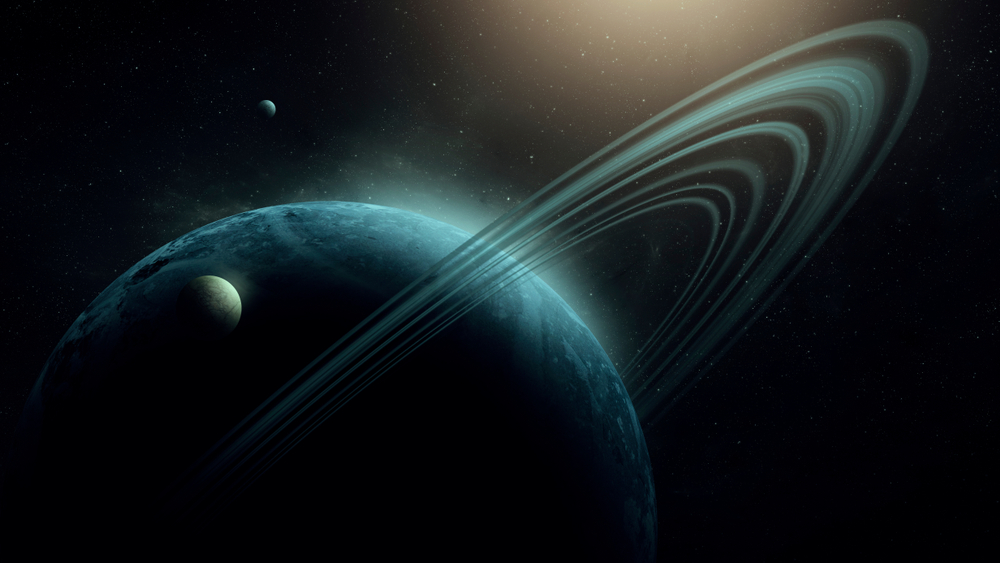
Even though 2025 PN7 is not a “moon” in the traditional sense, its discovery carries symbolic weight. In astrology and mythology, moons represent reflection, emotion, and the cyclical nature of life. They mirror the subconscious, pulling at the inner tides of human experience. The arrival of a “second moon,” even if temporary and invisible, invites contemplation on duality the idea that Earth, and by extension humanity, may now travel with two lights: one visible, one unseen.
Astrologically, the quasi-moon’s presence could be read as a metaphor for hidden companions in our own lives forces that move with us but remain just beyond our awareness. It’s an image of subtle influence and quiet guidance. Much like a secondary rhythm beneath the main melody, 2025 PN7 represents patterns that don’t dominate but still shape the whole. Its orbit mirrors how unseen relationships between people, planets, or ideas sustain balance across vast distances.
From a broader cosmic perspective, this discovery also invites humility. The fact that such a nearby object remained unnoticed for decades reminds us that our perception of the universe is still incomplete. Science and spirituality converge on this point: awareness is an evolving frontier. Just as the quasi-moon moves in resonance with Earth, human consciousness expands in resonance with discovery. The more we learn about the cosmos, the more we uncover layers of mystery within ourselves.
A Window to the Future
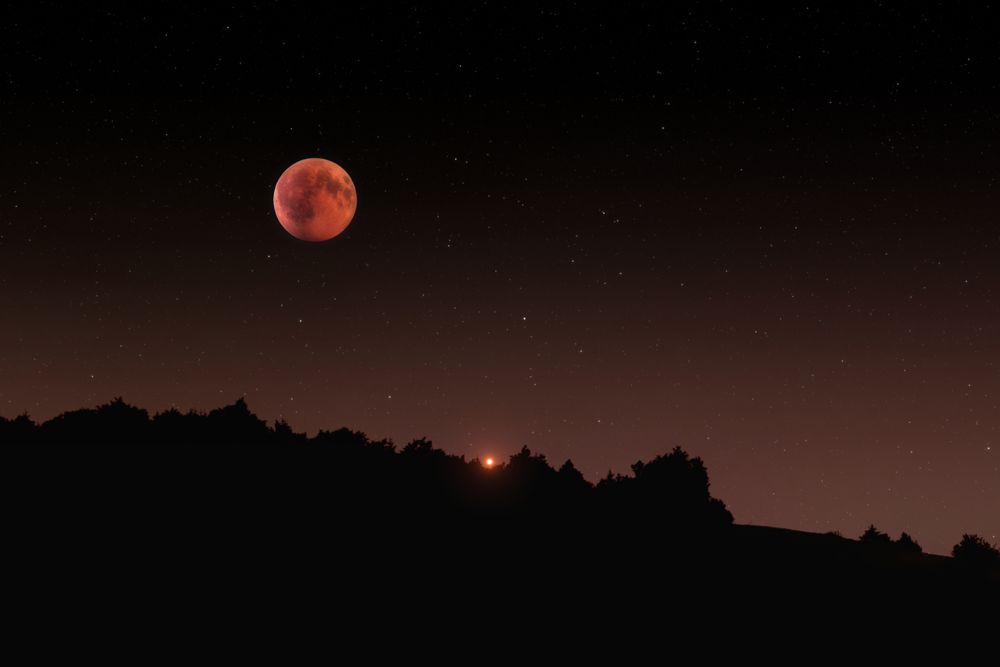
As 2025 PN7 continues its quiet journey alongside Earth, astronomers are already planning how to make the most of its presence. Because of its proximity and stability, it serves as an ideal testing ground for future missions. Robotic explorers could one day visit it to collect samples or study how sunlight and gravitational forces affect small bodies over time. These missions would not only enhance our scientific understanding but also prepare us for future asteroid encounters both for defense and resource utilization.
Beyond the technical benefits, 2025 PN7’s story offers a reminder that our solar system is not static. Objects come and go, each leaving a trace in the collective narrative of exploration. The quasi-moon will eventually drift away, but its discovery has already reshaped how we view our planet’s orbit. It has turned an ordinary slice of space into a region alive with subtle motion a place where even a tiny rock can reflect the grandeur of cosmic design.
When 2083 arrives and the quasi-moon finally departs, Earth will continue its orbit alone once more. Yet the awareness it sparked will endure. By then, humanity may have established lunar bases, expanded asteroid-mining missions, and reached Mars. The memory of 2025 PN7 will serve as a reminder that discovery often begins with noticing the faintest movement in the dark.
Companionship in Motion
The story of 2025 PN7 is both scientific and symbolic a convergence of fact and wonder. Astronomers see it as a benign asteroid caught in a temporary resonance with Earth, a chance to refine orbital models and expand knowledge of near-Earth space. Yet at a deeper level, it reflects something timeless: the truth that even in the vastness of space, Earth is never entirely alone. The universe, for all its emptiness, is woven with companionship.
This quasi-moon, invisible yet present, reminds us that not every influence must be seen to be real. Whether through gravitational balance or quiet synchronicity, 2025 PN7 reflects the enduring principle that connection defines motion. The cosmos is not a void of isolation but a network of relationships between stars and planets, between matter and meaning, between discovery and awe.
In the end, the second moon is not dangerous. It is a messenger of continuity, tracing the same path as our world while asking no recognition. It shows that the universe is always offering more to notice, more to understand. And as Earth continues its orbit through the centuries, perhaps that is the most profound message of all: that in the silent company of the cosmos, we are always part of a greater rhythm one that never truly travels alone.