
Your cart is currently empty!
Newly Released Epstein Emails Place Elon Musk Under Scrutiny

The latest release of federal documents tied to the Jeffrey Epstein investigation has once again thrust powerful names into public view, reigniting debates about accountability, influence, and how much the public is owed when elites intersect with criminal figures. Among the most scrutinized is Elon Musk, the billionaire CEO of Tesla, SpaceX, and X, whose private email exchanges with Epstein from 2012 and 2013 have now become part of the public record.
Contents
show
Musk has responded forcefully, insisting that he never visited Epstein’s private Caribbean island, never flew on the so-called Lolita Express, and never participated in Epstein’s parties. He has framed the controversy as a predictable smear campaign that accompanies any attempt to expose wrongdoing at the highest levels. Yet the newly released emails complicate that defense, revealing repeated engagement, social planning, and curiosity that sit uneasily alongside Musk’s later public denials.
What makes this episode politically significant is not simply whether Musk ever set foot on Epstein’s island. It is about transparency, credibility, and the broader question of how power insulates itself from scrutiny, even as public trust in institutions continues to erode.
The Document Release That Reopened Old Wounds
On January 30, the US Department of Justice released a massive tranche of material connected to the Epstein investigation. The scale was staggering, with roughly three million documents, 180,000 images, and more than 2,000 videos. Much of the material had been sealed or inaccessible for years, fueling conspiracy theories and deep public frustration.
The newly released files did not introduce criminal charges against new individuals. Instead, they provided context, correspondence, and names that had previously circulated only through rumors or partial reporting. This distinction is crucial, yet easily lost in the public reaction. Being mentioned in the files is not evidence of criminal wrongdoing. At the same time, the documents expose how deeply Epstein embedded himself within elite social and professional networks long after his first conviction in 2008.
For many observers, the release felt like a delayed reckoning. Epstein died in jail in 2019 while awaiting trial on federal sex trafficking charges, leaving many victims without full accountability and many questions unanswered. The documents now offer fragments of insight into how Epstein maintained relationships with politicians, business leaders, and cultural figures even as his reputation was widely known.
What the Emails Between Musk and Epstein Actually Show

The emails at the center of the controversy span late 2012 through December 2013. They show Epstein repeatedly inviting Musk to visit Little Saint James, his private island in the Caribbean, or to meet at other locations such as New York and St Barts. Musk often replied, sometimes enthusiastically, sometimes cautiously, but rarely dismissively.
In November 2012, Epstein asked Musk how many people would be traveling by helicopter to the island. Musk replied that it would likely be just him and his then wife Talulah Riley, asking which night would be the wildest party on the island. This exchange has drawn particular attention because it contradicts the image of Musk as someone who immediately rejected Epstein’s invitations.
In December of that year, Musk wrote that he wanted to let loose after an exhausting year and was seeking a lively party scene in St Barts or elsewhere. While he suggested that a peaceful island retreat was not what he was looking for, the island remained part of the ongoing discussion rather than being categorically dismissed.
By early January 2013, Musk told Epstein that logistics would not work for a visit. The reason given was scheduling, not discomfort or moral objection. Later emails show continued contact, including professional interactions related to SpaceX and social invitations in New York.
In December 2013, Musk again raised the possibility of visiting while he was in the British Virgin Islands and St Barts area. Dates were discussed. A specific plan for January 2 was proposed. The visit ultimately fell through because Epstein said he needed to remain in New York.
The emails do not show Musk visiting the island, flying on Epstein’s plane, or attending Epstein’s parties. What they do show is sustained engagement and openness to social interaction with Epstein years after his conviction for soliciting prostitution from a minor.
Musk’s Public Response and Framing

Following the release of the files, Musk took to X to defend himself. He emphasized that no one had pushed harder than he did for the Epstein files to be released. He said he had very little correspondence with Epstein and declined repeated invitations to visit the island or fly on Epstein’s jet.
Musk acknowledged that some of his emails could be misinterpreted and weaponized by detractors. He argued that this risk was worth it if it meant exposing those who committed serious crimes alongside Epstein, particularly crimes involving the exploitation of underage girls.
In subsequent posts, Musk went further, describing the experience as deeply painful but necessary. He framed himself as someone willing to endure reputational harm in service of a larger moral goal, protecting vulnerable children and holding abusers accountable.
This framing is consistent with Musk’s broader political posture in recent years. He has positioned himself as a critic of what he calls legacy media and entrenched political interests, portraying transparency initiatives as inherently threatening to those with something to hide. Within that narrative, criticism of his own conduct becomes evidence of systemic resistance rather than a legitimate line of inquiry.
The Gap Between Denial and Documentation

The political tension arises in the space between what Musk has said publicly over the years and what the emails now show. In interviews as far back as 2019, Musk described Epstein as a creep and said he declined repeated invitations to visit the island. Those statements were not false in a narrow sense. The emails do not show that he went.
However, the tone of the correspondence complicates the impression of outright rejection. Musk asked about parties, proposed dates, and discussed logistics. Plans were canceled, but not because Musk expressed moral revulsion or concern about Epstein’s past. Instead, cancellations were attributed to scheduling conflicts or logistical issues.
This distinction matters politically because credibility hinges not only on factual accuracy but on consistency and candor. When public figures simplify or sanitize past behavior, even without lying outright, they risk eroding trust. The reaction to the emails reflects this dynamic. Critics are not accusing Musk of crimes. They are questioning whether his later denials fully captured the reality of his earlier engagement.
Why This Has Become a Political Issue
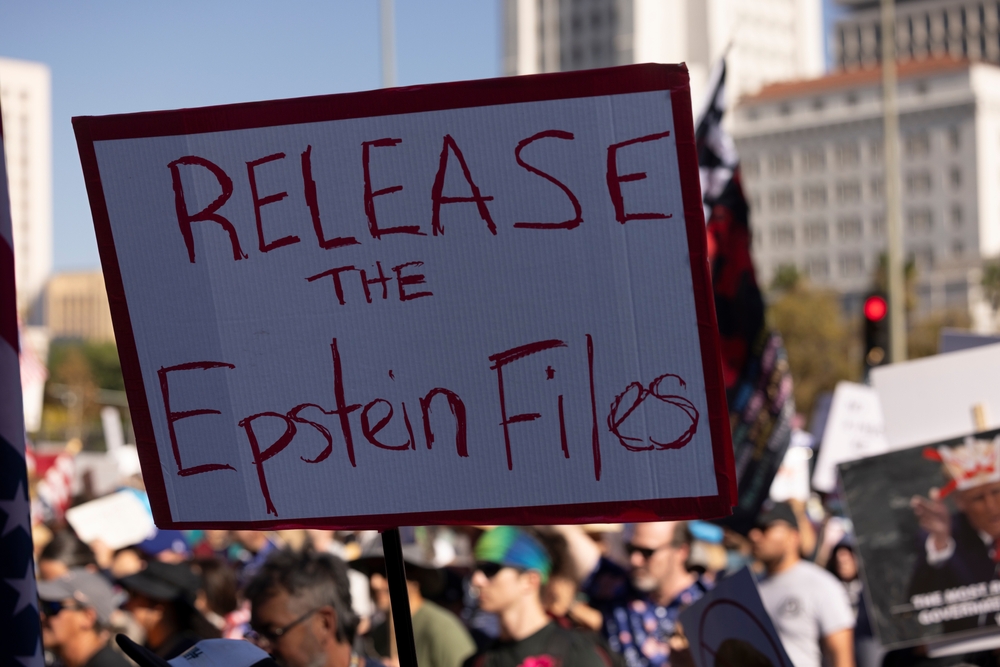
At first glance, the Musk Epstein emails might appear to be a celebrity scandal or a matter of personal judgment. In reality, they intersect directly with contemporary political debates about power, accountability, and institutional failure.
Epstein’s ability to cultivate relationships with influential figures across business, politics, and media is widely viewed as a symbol of systemic breakdown. His 2008 plea deal, which allowed him to avoid federal charges, is often cited as evidence that wealth and connections can distort justice.
When figures like Musk are revealed to have engaged socially with Epstein after that conviction, it reinforces public suspicion that elite networks operate by different rules. Musk’s prominence as a vocal critic of government institutions and media organizations further politicizes the issue. His defenders see him as an outsider challenging entrenched power. His critics see him as another billionaire benefiting from the very system he condemns.
The Role of Transparency and Selective Outrage
One of the most striking aspects of the current debate is the uneven distribution of outrage. The Epstein files mention numerous high profile individuals, including politicians from both major parties and global business leaders. Yet public focus tends to concentrate on figures who are already polarizing.
Musk’s outspoken political presence on X makes him a lightning rod. His critics argue that transparency must apply equally, including to those who claim to champion it. His supporters counter that attention is being selectively amplified to discredit him while others receive comparatively little scrutiny.
This dynamic reflects a broader problem in American politics. Transparency initiatives are often embraced in principle but resisted in practice when they threaten allies or personal narratives. The Epstein files force a reckoning with that contradiction, challenging the public to apply standards consistently rather than opportunistically.

Media Interpretation Versus Documented Facts
Media coverage of the emails has varied widely in tone and emphasis. Some outlets have highlighted the absence of evidence that Musk ever visited the island or engaged in illegal activity. Others have focused on the language of the emails, particularly references to parties and social dynamics that appear unsettling in hindsight.
Both approaches risk oversimplification. Treating the emails as proof of criminal behavior is inaccurate and unfair. Treating them as meaningless because no visit occurred ignores their significance in understanding how Epstein maintained social legitimacy.
A more responsible interpretation recognizes the emails as evidence of proximity and interest, not guilt. They show how Epstein leveraged his wealth and connections to normalize interactions that, with the benefit of hindsight, appear deeply troubling.
The Broader Implications for Elite Accountability

The Musk episode underscores a recurring pattern in American public life. When documents emerge that implicate powerful individuals, the debate often collapses into a binary choice between condemnation and exoneration. Lost in that framing is a deeper examination of how influence operates.
Elite accountability does not begin and end with criminal prosecution. It also involves ethical judgment, transparency about past associations, and a willingness to acknowledge mistakes without deflection. For many observers, the discomfort around the Musk emails stems from the sense that powerful figures rarely confront these expectations in a meaningful way.
The Epstein files offer an opportunity to rethink those norms. They invite questions about why known offenders continued to enjoy social access and why professional success so often insulated individuals from reputational consequences.
Musk’s Critics, Supporters, and the Politics of Credibility
Reactions to Musk’s response have largely followed existing political lines. Supporters argue that the emails are being weaponized to undermine someone who has challenged dominant narratives on technology, free speech, and governance. They view his call for the prosecution of Epstein’s collaborators as evidence of sincerity.
Critics argue that Musk’s rhetoric about transparency rings hollow when his own past statements appear incomplete. They see the emails as emblematic of a broader pattern in which powerful men minimize uncomfortable truths while demanding accountability from others.
Neither side holds a monopoly on reason. The emails do not justify claims of criminality. They do justify scrutiny and skepticism. In a polarized environment, acknowledging both realities is politically difficult but necessary.

The Unresolved Question of Justice for Victims
Amid the focus on powerful names, it is easy to lose sight of the people most harmed by Epstein’s crimes. Survivors have repeatedly expressed frustration that public attention gravitates toward celebrity connections rather than systemic reform or meaningful accountability.
Musk has emphasized prosecution of those who committed crimes with Epstein, framing this as his primary concern. That call resonates with a broader demand for justice that extends beyond symbolic disclosures. Transparency without accountability risks becoming another form of spectacle.
The release of documents is only a first step. Whether it leads to renewed investigations or policy reforms remains uncertain. What is clear is that public patience with half measures is wearing thin.
A Moment of Reflection for Public Figures
For Musk and others named in the Epstein files, this moment represents more than a reputational challenge. It is a test of how public figures respond when private behavior is exposed to public evaluation.
Defensiveness and counterattacks may rally supporters, but they rarely rebuild trust across ideological lines. Acknowledging complexity, expressing regret for poor judgment, and separating factual denial from ethical reflection could offer a more constructive path forward.
Such responses are rare in contemporary politics, where admissions are often seen as weakness. Yet the erosion of trust in institutions suggests that the cost of perpetual deflection may be higher.
What the Emails Ultimately Represent
The emails between Elon Musk and Jeffrey Epstein do not reveal criminal acts. They do not prove that Musk participated in Epstein’s abuses. What they reveal is something more subtle and arguably more unsettling: how proximity to power can normalize association with deeply compromised individuals.
Musk’s insistence that he never went to the island may be true. The discomfort arises from how close he appeared willing to get. In a political climate defined by distrust, that gap between denial and documentation matters.
As more Epstein related materials become public, similar debates will likely follow. The challenge for society is to resist both sensationalism and dismissal, holding space for nuance while demanding accountability.
Ultimately, this episode is less about Elon Musk alone than about the standards applied to those who shape public life. Transparency is not just about releasing files. It is about confronting what they reveal, even when the answers are inconvenient.