
Your cart is currently empty!
Researchers Develop a New Antibody to Block Epstein-Barr Virus
A silent pathogen has long been a nearly universal companion to humanity. The Epstein-Barr virus affects the vast majority of the global population, often passing as a temporary childhood illness or a tedious bout of fatigue. Yet, beneath the surface, this common infection carries long-term health risks that have challenged medical professionals for decades. Now, a groundbreaking discovery is offering new hope. By developing a specialized antibody capable of blocking the virus, scientists are not just treating an infection; they are fundamentally changing how the medical community approaches one of the most persistent health threats of our time.
Contents
show
A Common Virus with Complex Consequences

The Epstein-Barr virus infects roughly 95 percent of people worldwide. Most people know it as the cause of infectious mononucleosis, commonly called mono. However, after the initial illness, the virus stays quietly in the body. Over time, this hidden infection can lead to more serious conditions, including certain types of cancer and neurodegenerative diseases like multiple sclerosis. Because the virus is so widespread, scientists have spent decades trying to find a reliable way to stop it.
Recently, a research team at the Fred Hutch Cancer Center made significant progress. They created genetically human antibodies that can successfully block the virus. The details, published in the journal Cell Reports Medicine, explain how the team used a specialized model of mice carrying human immune genes. Through this method, they found specific antibodies that attach to weak spots on the surface of the virus.
Stopping this specific pathogen is unusually difficult. Dr. Andrew McGuire, a biochemist at Fred Hutch, explained the exact problem his team had to solve. “Finding human antibodies that block Epstein-Barr virus from infecting our immune cells has been particularly challenging because, unlike other viruses, EBV finds a way to bind to nearly every one of our B cells,” he noted.
By blocking how the virus attaches to cells, researchers have a real chance at creating a preventive treatment. Instead of just treating the symptoms of mono or the diseases that develop later, this treatment could stop the virus from taking hold in the first place.
Disarming the Virus’s Entry System
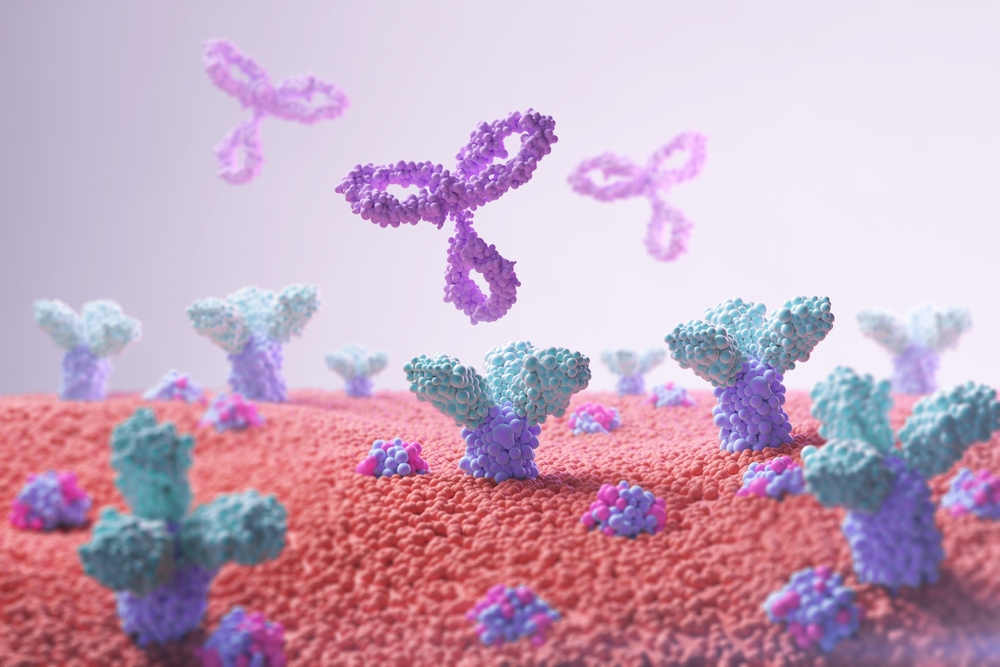
Developing a treatment that the human body will actually accept is a major hurdle in medical research. Often, when patients receive antibodies produced in other animals, their immune system recognizes them as foreign and attacks the treatment itself. To bypass this problem, the research team used a specialized model of mice engineered to carry human antibody genes. This creative step ensured the resulting antibodies would be fully compatible with human patients and less likely to trigger adverse reactions.
Once the team solved the compatibility issue, they had to pinpoint exactly where to attack the virus. They focused their attention on two critical proteins located on the surface of the virus, known scientifically as gp350 and gp42. These proteins function as a coordinated entry system. The gp350 protein acts like a grappling hook that helps the virus latch onto human cells. Following that, the gp42 protein serves as the key that unlocks the cell, allowing the virus to fuse with it and enter.
By targeting these specific mechanisms, the scientists successfully created several distinct monoclonal antibodies. Laboratory tests revealed that an antibody targeting the gp42 protein completely prevented the virus from infecting cells. Another antibody aimed at gp350 offered partial protection.
Crystal Chhan, a pathobiology doctoral student involved in the research, noted that this method goes beyond a single discovery. “Not only did we identify important antibodies against Epstein-Barr virus, but we also validated a new approach for discovering protective antibodies against other pathogens,” Chhan shared.
Protecting the Most Vulnerable Patients

While a healthy immune system can often keep this virus in check, the stakes are much higher for people with compromised immunity. This new research offers a specific lifeline to transplant recipients. Every year, thousands of people undergo organ or bone marrow transplants. To prevent their bodies from rejecting the new organs, they must take strong medications that suppress their immune systems. Unfortunately, this necessary medical step gives hidden viruses a chance to reactivate and spread.
For transplant patients, an unchecked Epstein-Barr infection can lead to aggressive and potentially life-threatening conditions, including severe forms of lymphoma. Children undergoing transplants face an even greater risk because many have never been exposed to the pathogen before their surgery, leaving them completely without natural defenses.
Dr. Rachel Bender Ignacio, an infectious disease physician at Fred Hutch, emphasized the urgency of protecting these specific individuals. “Effective prevention of EBV viremia remains a significant unmet need in transplant medicine,” she stated. By administering these newly discovered antibodies directly to patients, doctors could proactively shield them during their most vulnerable recovery periods.
The Path Forward for Treatments and Vaccines
While the laboratory results are highly encouraging, moving a new medical discovery from the lab to the clinic takes careful planning. The research team is currently collaborating with industry partners to develop a functional therapy. If the development process continues successfully, the treatment will first undergo rigorous safety testing with healthy adult volunteers. Once proven safe, the therapy would then advance to clinical trials designed for transplant recipients and other individuals with weakened immune systems.
The urgency to make this available is clear to the scientific community. Dr. Andrew McGuire emphasized the drive behind their ongoing efforts. “There’s momentum to advance our discovery to a therapy that would make a huge difference for patients undergoing transplant,” he stated. Providing these protective antibodies as a direct infusion could offer an immediate shield for those who cannot fight the infection naturally.
In addition to creating an immediate treatment, this research provides a clear foundation for long-term prevention. With assistance from specialized technology centers, the scientists were able to map out specific weak points on the surface of the virus. This detailed structural map is exactly what researchers need to design an effective vaccine. By teaching the immune system how to recognize and attack these precise vulnerabilities, a future vaccine could potentially stop the virus from spreading entirely, offering widespread protection for the global population.
A Future Free from Hidden Infections

For decades, the Epstein-Barr virus has been an accepted part of the human experience. Most people catch it, recover from a brief illness, and move on, unaware of the silent risks it leaves behind. However, as science uncovers the deep connections between this common pathogen and severe conditions like cancer and multiple sclerosis, the need for a solution has become undeniable.
The recent success at the Fred Hutch Cancer Center represents more than just a biological discovery. It is a testament to the power of persistent medical research. By figuring out exactly how to block this complex virus, scientists are rewriting the rules of engagement. They have shown that even the most stubborn and widespread pathogens can be outsmarted.
While this new antibody therapy is still in the development phase, its potential impact is profound. It promises immediate protection for vulnerable patients and lays the groundwork for a vaccine that could benefit everyone. As this research progresses toward clinical trials, it is crucial to stay informed and supportive of scientific advancements. Every breakthrough in immunology brings society one step closer to eradicating diseases that have quietly affected millions. The fight against the Epstein-Barr virus is far from over, but for the first time, humanity has a clear path to victory.
Source:
- Chhan, C. B., Lang, K., Davis, A. R., Wan, Y., Aldridge, N. T., Kher, G., Scharffenberger, S. C., Hardy, S. R., Iureniev, R., Giltiay, N. V., Edwards, K. R., Radtke, S., Kiem, H., Pancera, M., & McGuire, A. T. (2026). Transgenic mouse-derived human monoclonal antibodies targeting EBV gp350 and gp42 provide basis for therapeutic development. Cell Reports Medicine, 7(2), 102618. https://doi.org/10.1016/j.xcrm.2026.102618