
Your cart is currently empty!
People Are Reading Jeffrey Epsteins Emails After Government File Release

When the US government released millions of documents related to the investigation of Jeffrey Epstein, the stated goal was transparency. Lawmakers framed the disclosure as a long overdue step toward public accountability in one of the most disturbing criminal cases involving wealth, power, and institutional failure. Few expected that within days, members of the public would discover that the files contained something far more troubling than unflattering associations. They contained working passwords.
Contents
show
Online users, journalists, and independent researchers quickly realized that the newly released Epstein files included unredacted login credentials. Those credentials allowed access to services Epstein used before his death, including email platforms. What followed was a strange convergence of government oversight failures, internet culture, political accountability, and a broader debate about how transparency is supposed to work in a democracy.
This was not a traditional data leak or a hack carried out by foreign actors. The access came directly from documents released by the Department of Justice and Congress. The implications stretch beyond Epstein himself and into questions about public trust, political responsibility, and the risks of careless transparency in an age of digital records.
How the Epstein Files Were Released and Why It Mattered
The most recent release of Epstein-related documents came after years of pressure from journalists, advocacy groups, and lawmakers. Survivors of Epstein’s abuse and the public alike had long argued that secrecy surrounding his network protected powerful individuals and institutions. Congress ultimately responded with legislation designed to force disclosure.
The result was a massive document dump. Roughly three million pages were released, along with images, videos, and thousands of emails. The volume alone made meaningful analysis difficult. Many of the files were scanned PDFs, low quality images, or unstructured text documents. Names of victims were often left visible while the names of associates were frequently redacted, creating immediate controversy.
The political stakes were high. Epstein’s history intersected with multiple administrations, powerful donors, and influential figures across party lines. Any release was guaranteed to reignite partisan debates about who knew what and when. What lawmakers did not anticipate was that the technical execution of the release would itself become a political issue.
Buried within the documents were passwords Epstein had used for years. Some were simple. Some referenced people close to him. All of them were active credentials that had not been scrubbed before publication. In attempting to comply with transparency demands, the government inadvertently gave the public the keys to a dead man’s digital life.
From Document Dump to Inbox Access

Once users realized that passwords were included in the files, the situation escalated quickly. On forums like Reddit and other online communities, people began testing whether the credentials still worked. In some cases, they did.
Access was reportedly gained to multiple services associated with Epstein, including email accounts and other online platforms. One of the most discussed was an Outlook inbox that appeared to still exist. While some of the accounts showed limited activity or incomplete data, the discovery raised immediate ethical and legal questions.
This was not traditional hacking. The information was publicly released by the government. Anyone with enough time and curiosity could replicate the process. That fact complicated the usual narrative about unauthorized access. If credentials are published by the state, where does responsibility lie when they are used.
The story became even more surreal when internet artists and developers stepped in to make the data easier to navigate. Rather than forcing users to scroll through endless PDFs, they rebuilt Epstein’s correspondence into a familiar format that resembled a Gmail inbox. The project, known as Jmail, transformed raw documents into searchable, threaded conversations.
For the public, this dramatically changed how the information was consumed. Instead of isolated files, users could follow conversations over time. Patterns became visible. Relationships were easier to track. The archive felt less abstract and more real.
Political Figures and the Limits of Association

One of the most sensitive aspects of the Epstein files has always been the presence of well known political and business figures. Emails and contacts include names from across the ideological spectrum, from former presidents to campaign strategists, academics, and corporate leaders.
Among the most discussed figures are Donald Trump, Bill Clinton, Steve Bannon, and other individuals who played significant roles in American political life. The existence of emails or contact entries does not prove criminal behavior. That distinction has been repeatedly emphasized by journalists and legal experts.
However, the political impact does not depend solely on proof of wrongdoing. Public perception matters. The fact that influential figures maintained contact with Epstein after his 2008 conviction raises uncomfortable questions about judgment, accountability, and the social insulation of elite circles.
For politicians, the renewed attention comes at a volatile time. Trust in institutions is already low. Any suggestion that powerful individuals were protected or ignored warning signs feeds into broader narratives about a two tiered system of justice. The way the Epstein files were released, and the errors within that release, amplify those concerns.
The inbox format intensifies this effect. Seeing emails in a familiar layout makes the relationships feel immediate and personal. It strips away the abstraction of legal documents and replaces it with something closer to everyday experience. That emotional shift has political consequences, even if the underlying facts have not changed.
Government Transparency Versus Government Competence
The Epstein email incident highlights a deeper tension in modern governance. Transparency is often treated as an absolute good. Release the documents. Let the public decide. But transparency without care can create new harms.
Publishing unredacted passwords is not transparency. It is negligence. It exposes vulnerabilities, invites misuse, and undermines confidence in the institutions tasked with managing sensitive information. In this case, the negligence was especially stark because it involved a high profile investigation tied to abuse, trauma, and public outrage.
Critics argue that the Department of Justice failed on multiple levels. Victim information was insufficiently protected, while sensitive technical data was left intact. That imbalance suggests a lack of priority or expertise in handling digital records.
From a political standpoint, this failure fuels skepticism about whether the government can be trusted to manage transparency responsibly. Calls for open records are often met with warnings about privacy, national security, or technical complexity. When agencies finally release information and do so poorly, it validates those warnings and weakens future reform efforts.
Lawmakers now face a dilemma. They can demand accountability from the DOJ and committees involved in the release. But doing so also means admitting that the system they oversee is not equipped to handle the very transparency they promote.
The Role of Internet Culture in Modern Accountability
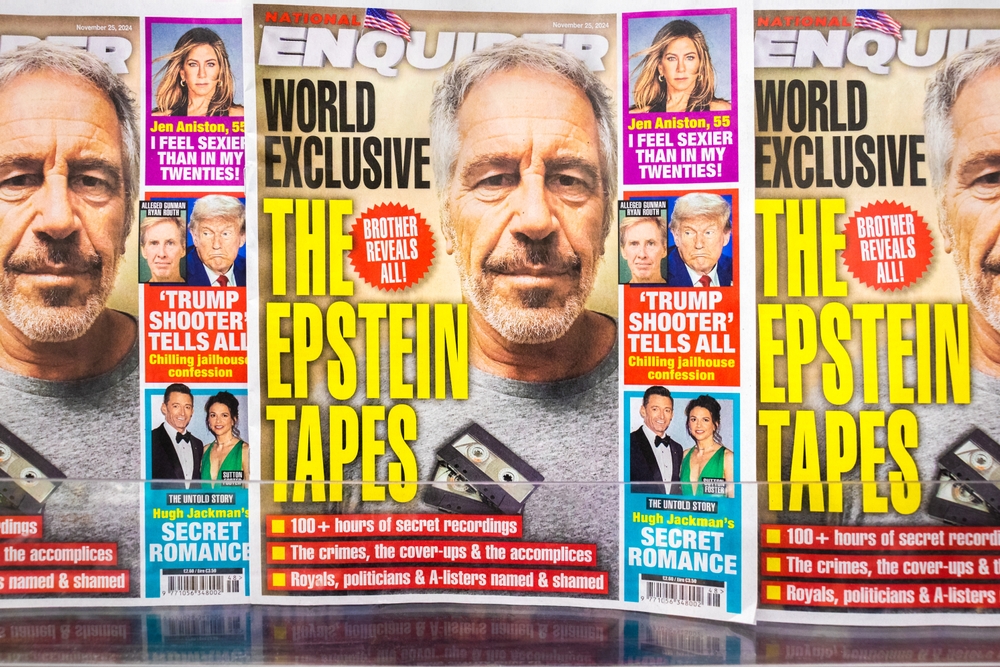
An unusual element of this episode is the role played by internet culture. The creation of Jmail was part art project, part research tool, and part commentary on how information is consumed. Its creators framed it as an accessibility experiment rather than an exposé.
This reflects a broader trend. When governments release massive data sets, it is often independent technologists and journalists who make them usable. Search tools, visualizations, and alternative interfaces increasingly shape public understanding more than official summaries.
That shift has political implications. It decentralizes power over narrative framing. It allows individuals outside traditional institutions to influence which details gain attention. In the Epstein case, it meant that the most discussed elements were not legal findings but interpersonal dynamics revealed through email threads.
At the same time, the blending of prank culture and serious journalism creates discomfort. Some critics argue that projects like Jmail trivialize serious subject matter. Others contend that without such tools, the information would remain effectively hidden due to its sheer volume.
This tension mirrors larger debates about digital activism, open data, and the role of nontraditional actors in democratic oversight.
Legal and Ethical Gray Areas

The question of legality hangs over the entire episode. If the government publishes passwords, does accessing the associated accounts constitute a crime. Legal experts are divided. Some argue that intent and authorization still matter. Others note that publishing credentials may implicitly remove expectations of privacy.
Ethically, the issue is equally complex. Epstein is dead. His victims are not. Accessing his accounts risks resurfacing material that could retraumatize survivors or spread harmful content. At the same time, the public interest in understanding how powerful networks operated is undeniable.
Politically, this gray area is dangerous. It allows bad faith actors to exploit ambiguity. It also exposes gaps in digital policy that lawmakers have not adequately addressed. Most transparency laws were written for paper records, not interconnected online accounts.
The Epstein files force a reckoning with how modern records should be handled. Email accounts are not just documents. They are systems. Releasing them without context or safeguards creates risks that existing laws were never designed to manage.
What This Moment Says About Power and Accountability
The fascination with Epstein’s inbox is about more than morbid curiosity. It reflects a hunger for accountability in a system many people believe favors the powerful. Emails feel like evidence of authenticity in a world saturated with public relations statements and legal disclaimers.
For political figures, this is a warning. Associations matter, even when they are not criminal. The public increasingly expects leaders to demonstrate judgment not just legality. Continued contact with a convicted sex offender, even for professional reasons, now carries reputational consequences that cannot be dismissed as gossip.
For institutions, the lesson is procedural but profound. Transparency requires competence. Without it, disclosure becomes another form of dysfunction. The Epstein email access incident will likely be cited in future debates about open records, digital privacy, and oversight reform.
It may also influence how future investigations handle electronic evidence. Lawmakers and agencies will be under pressure to modernize their practices, invest in technical expertise, and rethink what meaningful transparency actually looks like.
A Cautionary Tale for Digital Democracy
The discovery that people could log into Jeffrey Epstein’s email account using government released documents is a story that feels uniquely modern. It sits at the intersection of political scandal, bureaucratic failure, and internet ingenuity.
It exposes the fragility of public trust and the consequences of treating transparency as a checkbox rather than a responsibility. It also shows how power operates in subtle ways, through relationships, correspondence, and the assumption that certain rules do not apply.
Ultimately, the Epstein inbox saga is less about the contents of the emails than about the systems that allowed this to happen. In a digital democracy, information is power. How it is released, protected, and contextualized matters as much as what it reveals.
As governments continue to grapple with demands for openness, this episode should serve as a warning. Transparency without care can deepen cynicism rather than resolve it. And once trust is lost, no amount of document dumping can easily restore it.