
Your cart is currently empty!
Family Sues Elon Musk’s Tesla After Alleging Cybertruck Owner’s Bones Disintegrated in Inferno After Crash

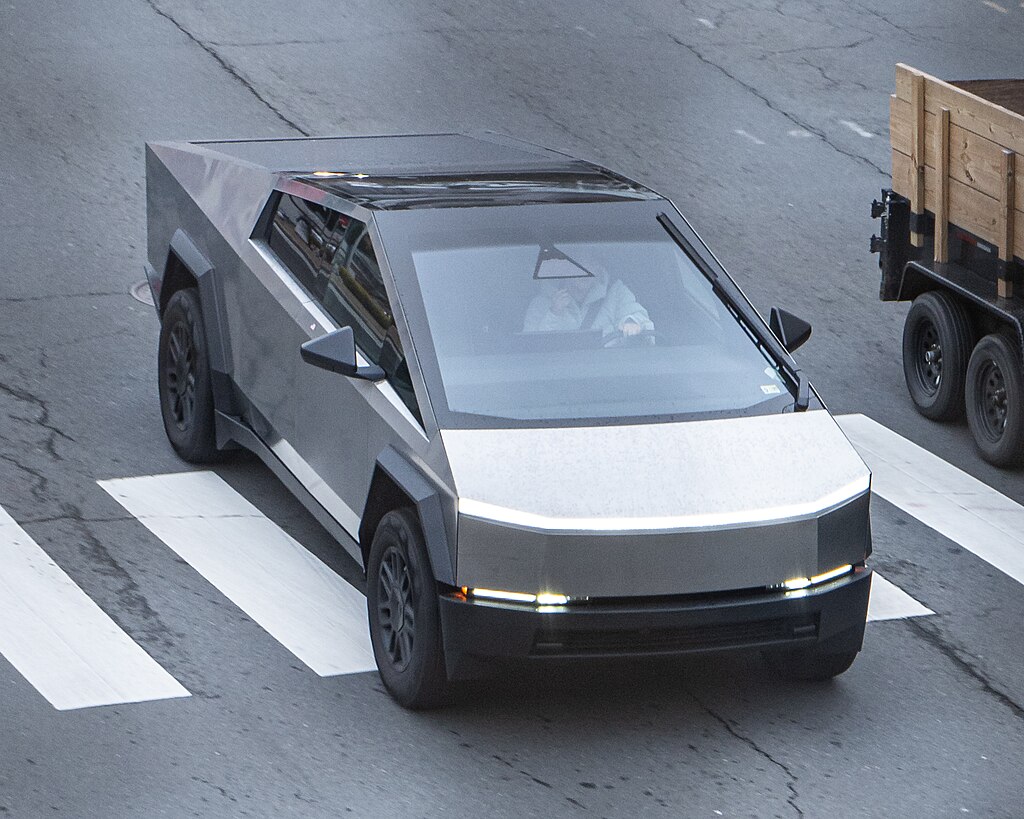
The Cybertruck was pitched as a glimpse into tomorrow’s roads, a stainless-steel emblem of innovation. But for one Texas family, it became the site of an unthinkable loss. Michael Sheehan, a respected healthcare professional with a reputation for brilliance and kindness, died after his vehicle veered off the road. The fire that followed was so extreme it left behind not just devastation, but unresolved questions about design, safety, and responsibility.
Contents
show

.jpg)
A Tragedy That Sparked Legal Action
When Michael Sheehan drove his newly purchased Cybertruck home in Texas last summer, he could not have foreseen that the same vehicle would claim his life just weeks later. In early August 2024, the truck veered off the road and struck a concrete culvert. What might have been a survivable crash instead escalated into a deadly fire, according to the lawsuit later filed by his family in Harris County.
The complaint argues that Sheehan’s chances of survival were compromised not by the impact itself, but by what followed. Once the vehicle lost power, the electronic doors would not open, the exterior handles failed, and the manual release inside was described as unreasonably difficult to find in an emergency. In the filing’s stark words, “The crash forces were survivable… except for the fire, ergonomic shortcomings, and deficient crashworthiness.”
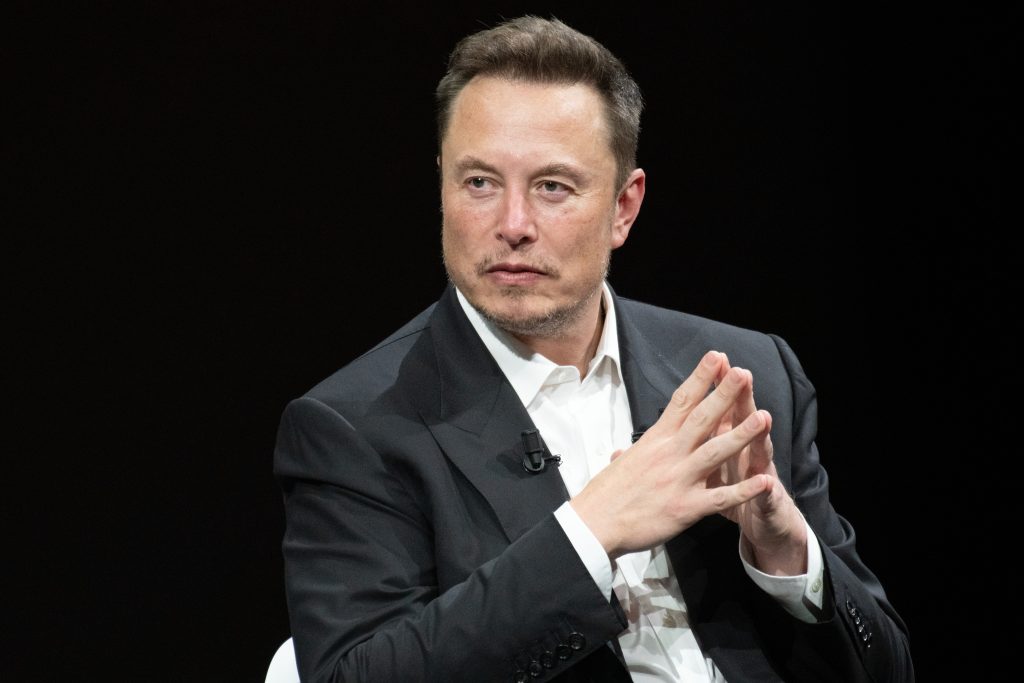
Attorney S. Scott West, representing Sheehan’s family, emphasized the intensity of the blaze, calling the resulting damage to his remains a case of “thermal fracture.” He also criticized Tesla for giving new owners inadequate instructions on how to escape the vehicle after a crash. Tesla declined to comment when contacted by reporters.
Questions Over Safety and Design
The lawsuit filed by Sheehan’s family does more than recount a single tragedy—it challenges the engineering choices behind Tesla’s most high-profile vehicle. According to court documents, the Cybertruck’s battery system went into what experts call thermal runaway, a chain reaction where overheated cells trigger one another in rapid succession. The result is a fire that burns hotter and longer than a gasoline blaze, releasing flammable gases that make suppression and escape far more difficult. Research in Nature Energy and investigations by the National Transportation Safety Board have underscored that lithium-ion fires pose unique challenges for both drivers and first responders.
The complaint claims that Tesla had alternatives. Battery cells designed to slow thermal propagation could have delayed ignition, potentially giving Sheehan enough time to exit. The filing describes such designs as both technologically and economically feasible, raising questions about why they were not adopted. It also points to structural concerns, including the close placement of drive motors to the battery modules and the lack of effective energy-absorbing structures to shield the pack during a collision.
Attorney S. Scott West argued that Tesla’s design decisions were guided less by safety than by aesthetics. Speaking to The Independent, he said the Cybertruck’s futuristic appearance “is a double-edged sword,” suggesting that style had been prioritized over the basic features needed to protect lives.
A Pattern of Recalls and High-Profile Crashes
Michael Sheehan’s case is not the only one raising questions about Tesla’s stainless-steel pickup. Since the Cybertruck’s launch in late 2023, U.S. regulators have recorded a series of recalls that touch on both convenience and safety. In March 2025, nearly every Cybertruck built to date, around 46,000 vehicles, was recalled after regulators determined that an exterior panel could detach at high speeds. It was the eighth recall since the model’s debut, according to filings with the National Highway Traffic Safety Administration.
The issues have not been minor. Previous recalls addressed accelerator pedals that could trap drivers if they became dislodged, windshield wipers prone to failure, delayed rear camera feeds, and trim pieces that risked coming loose. In November 2024, an additional recall flagged drive inverter problems that could cause sudden power loss in about 2,400 trucks.
Alongside regulatory concerns, real-world incidents have placed the Cybertruck under sharper scrutiny. During Thanksgiving week 2024, three college students died in a fiery crash in Piedmont, California. Months later, in Los Angeles, USC basketball recruit Alijah Arenas was hospitalized after his Cybertruck collided with a fire hydrant and tree, leading to serious smoke inhalation injuries and a medically induced coma. Local reports later confirmed his condition had improved.
Taken together, the recalls and high-profile accidents have kept the Cybertruck in the media spotlight. Each new filing and crash adds to a record that regulators and the public continue to examine, reinforcing doubts about whether Tesla’s most futuristic model is also its most vulnerable.
When EV Fires Become a Public Health Challenge
While electric vehicle fires are statistically rare, their behavior sets them apart from the gasoline fires most people are familiar with. The National Transportation Safety Board has warned that damaged lithium-ion batteries pose not only the risk of fire but also the danger of electric shock and delayed reignition. Even after flames are extinguished, residual energy in the pack can trigger new outbreaks, creating hazards long after a crash.
Federal guidance to first responders underscores just how complex these incidents can be. The National Highway Traffic Safety Administration advises that EV fires may require sustained volumes of water to cool the battery and prevent reignition, far beyond what is typical for internal combustion vehicles. Toxic vapors are another concern, with responders instructed to move people upwind and uphill to avoid inhalation.
Medical researchers have also highlighted the release of gases such as hydrogen fluoride during battery fires. In confined or semi-enclosed spaces, this exposure can be life-threatening. Reviews of thermal runaway incidents note that other byproducts, including carbon monoxide and nitrogen compounds, add to the toxic mix, complicating rescue and recovery efforts. These risks extend not only to drivers but to bystanders and firefighters without protective gear.
In practice, suppression is less about smothering flames than about cooling the system until the reaction halts. This can stretch the capacity of hydrants and lengthen roadway closures, creating ripple effects for public safety. For everyday drivers, the advice is clear: if a vehicle begins to hiss, pop, or emit unusual odors, distance is the safest response. Call emergency services, avoid opening the hood, and never attempt to tackle a high-voltage battery fire with a household extinguisher. Even after the flames die down, damaged EVs should be stored outside and away from structures until experts confirm they are safe.
Accountability in the Courtroom and Beyond
The Sheehan family’s lawsuit draws on Texas product liability law, which requires proof that a safer design was both feasible and available at the time of manufacture. Their complaint points to battery chemistries that slow the spread of thermal runaway as one such option. These technologies, they argue, could have given drivers precious extra minutes to escape without diminishing the truck’s performance, an argument that aligns with the legal threshold for demonstrating a “safer alternative design.”
Training and instructions also sit at the center of the case. The filing alleges that Tesla failed to provide clear guidance on how to exit the Cybertruck in the aftermath of a crash. Attorney S. Scott West described his own difficulties navigating Tesla’s controls, recalling, “I couldn’t figure out how to turn it on, I sat literally for nine minutes in a rental car parking lot,” before adding, “it’s incumbent upon you as a manufacturer to take extra steps to recognize that [new Tesla owners] need additional training.” For the plaintiffs, this highlights a duty to design not just for ideal conditions, but for real-world scenarios where stress and disorientation are unavoidable.
The case also extends beyond Tesla. The lawsuit names The Barn Whiskey Bar under Texas’s dram shop statute, which permits claims against establishments that overserve visibly intoxicated patrons. West has acknowledged that Sheehan had alcohol in his system but insisted, “that shouldn’t sign his death warrant,” framing the fire and escape failures as the decisive factors.
At its core, the case asks a question that reaches past the courtroom: should cutting-edge products anticipate human error and still provide a margin of safety? The courts will weigh the technical evidence, but ethically, the duty to prepare for the worst belongs alongside the drive to innovate.
Practical Guidance for EV Owners
Electric vehicles promise cleaner transportation and cutting-edge design, but safety is as much about preparation as it is about engineering. For drivers and their families, understanding how to respond in rare but high-stakes emergencies can make the difference between panic and protection. The following measures offer practical ways to stay ready without compromising the convenience of owning an EV.
- Know your manual exits
Every electric vehicle has manual release mechanisms for doors and windows, but many drivers overlook them until it is too late. Review the owner’s manual, locate these releases, and practice using them with the car parked. Make sure family members and frequent passengers also know where to find them. - Create a simple escape plan
Emergencies rarely allow time for clear thinking. Decide ahead of time who calls emergency services, who helps children or elderly passengers, and where everyone will exit. Practice the routine, however briefly, so it becomes second nature if a crisis occurs. - Recognize the signs of battery fire
Hissing sounds, popping noises, or unusual smoke and odors are warning signs of a failing battery. Do not attempt to investigate under the hood. Move away quickly, keep upwind, and call 911. Consumer extinguishers are ineffective against high-voltage battery packs. - Store damaged EVs outdoors
After a crash, an EV battery can reignite hours later. Park a damaged vehicle away from buildings and combustibles until it has been properly discharged and cleared by trained professionals. - Protect yourself from toxic smoke
Battery fires release gases that can be hazardous even at a distance. If you encounter such an incident, prioritize distance and fresh air. Move bystanders away and avoid standing downwind of the smoke. - Apply first aid for burns and smoke exposure
Cool burns under clean, running cool water for at least 20 minutes within the first three hours. Do not use ice. Cover with a dry, clean dressing and seek medical attention if the burns are extensive, deep, or involve the face. For signs of smoke inhalation, such as hoarseness or breathing difficulty, emergency care is essential. - Check your windows before buying escape tools
Not all glass is the same. Many newer vehicles use laminated side windows, which common punches cannot break. Look for the small label on the glass: “tempered” or “laminated.” If laminated, choose tools specifically designed for that type of glass and always keep a seatbelt cutter within reach. - Keep important information offline
In a crash, power and screens may fail. Carry a printed card in the glove box with details such as manual release locations, high-voltage warning symbols, and the VIN for recall checks. - Stay alert to recalls
Use the National Highway Traffic Safety Administration’s VIN lookup tool or the SaferCar app to monitor recalls. Many fixes cannot be applied through software updates alone and require immediate service. - Refresh training regularly
First aid courses that include burns and smoke inhalation are widely available through organizations like the Red Cross. Review your escape plan and recall status annually. Small preparations can make a significant difference.
Innovation With Human Life at the Center
Every leap forward in technology comes down to the choices made by those who design, regulate, and use it. The question is not only whether a product performs as promised, but whether it protects life when the unexpected happens. If that answer is unclear, progress is incomplete.
Design is never neutral. It can either anticipate panic, disorientation, and power loss, or it can assume flawless conditions that rarely exist in reality. True innovation accounts for human limits—ordinary people on ordinary nights when seconds matter and clarity fades.
.jpg)
There is also responsibility at the individual level. Small acts, like reviewing a manual’s emergency exits or staying up to date on recalls, are not inconveniences. They are decisions that place safety first. Such habits may seem routine, but they are forms of care, practical expressions of valuing life.
Loss often sparks a wider call for accountability. Families demand better standards, communities demand better training, and regulators refine the rules that guide industry. Conscious innovation does not mean rejecting technology. It means demanding that progress aligns with human dignity, ensuring that what is built to serve tomorrow also protects today.