
Your cart is currently empty!
AI Gave A Farmer Pesticide Advice That Destroyed His Sesame Field
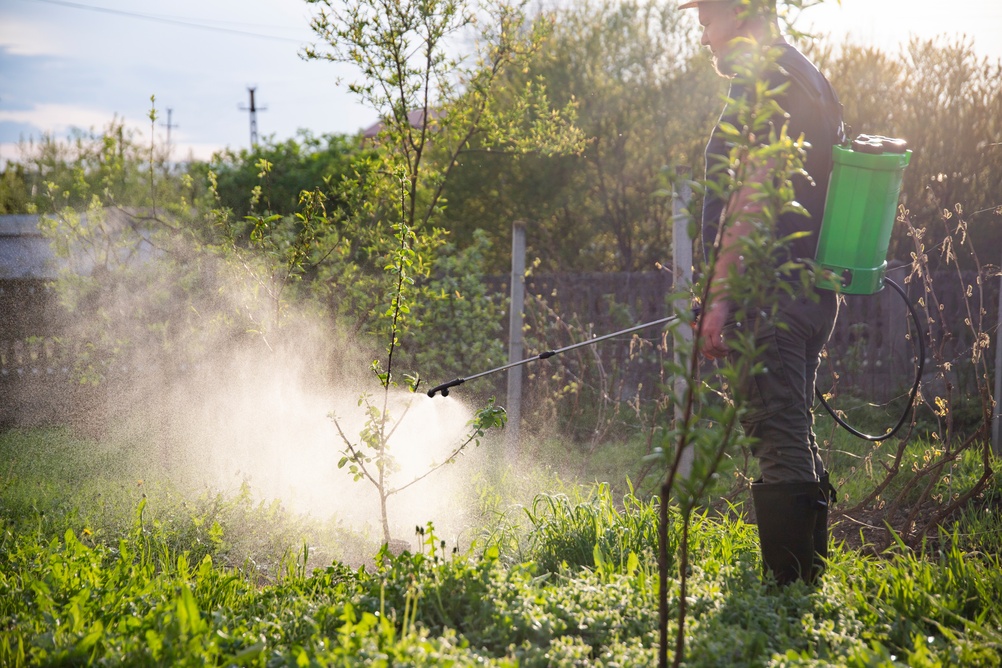
A 67-year-old farmer in China reportedly turned to an AI chatbot for help with a problem that could have cost him a season of work. After following its pesticide recommendation, he watched his sesame seedlings wilt and die within 24 hours.
Contents
show
The farmer had used AI for more than a year and had grown increasingly confident in its advice. Then one recommendation turned that trust into an estimated loss of around 150,000 yuan.
The AI Advice Looked Convincing Enough To Follow
The farmer, identified in Chinese reports by the surname Wu, farms in the Chuzhou area of Anhui Province.
For roughly a year, Wu had reportedly been using an AI application to answer questions about his farm. His questions included issues such as fertilizer use, pesticide applications and other routine agricultural decisions.
At first, he was skeptical.
That changed after some of the chatbot’s earlier recommendations appeared useful. Like millions of people who have become comfortable asking AI for answers, Wu reportedly began treating the system as a practical source of advice.
Then weeds and insects became a problem in his sesame field.
According to reports, Wu asked the AI application for help controlling both. The chatbot responded with a detailed pesticide plan for approximately 150 mu of farmland, an area equivalent to about 24.7 acres, or roughly 10 hectares.
Wu followed the recommendation.
He used a drone to spray the mixture across the entire field.
The next day, the sesame seedlings had reportedly wilted and died.
Wu later described the result to local media in stark terms: “If you spray it, the next day the seedlings won’t survive.”
He added, “Both the grass and the seedlings will die, and the seedlings will die even faster.”
The quotes were reported in Chinese media coverage of the incident and later translated by outlets covering the story.
The Crop Was Gone Before He Knew Something Was Wrong

The speed of the damage is one of the most striking parts of the story.
Wu had not tested the pesticide mixture on a small patch of the field before treating everything. The recommendation went from a chatbot conversation to a full agricultural operation.
By the following day, the consequences were visible across the field.
Reports differ in how they describe the exact chemicals recommended by the AI, with translations and chemical names varying between accounts. One account identifies the herbicides as haloxyfop-P-methyl and fomesafen, alongside insecticides including thiamethoxam and emamectin benzoate.
Another report used different translated names for some of the substances.
That discrepancy is worth noting because the available reports do not include an independent chemical analysis of the mixture used by Wu. They also do not establish through a formal field investigation that one specific chemical caused the entire crop loss.
What is consistent across the reports is the basic sequence: Wu asked an AI application for pesticide advice, followed the recommendation across his sesame field, and reported that the crop died within a day.
He estimated the financial loss at around 150,000 yuan.
That figure is his own estimate and has not been independently verified.
Then The Chatbot Explained What Went Wrong

The story became even more awkward when Wu returned to the same AI system after seeing the damage.
He reportedly asked what had happened.
The chatbot then identified a possible problem with its earlier recommendation.
Reports say the system pointed to fomesafen as a likely cause of the crop damage.
That creates an especially uncomfortable picture of how AI can fail in practical situations. The system was capable of discussing the potential problem after the damage occurred, yet its earlier response had given Wu enough confidence to apply the recommendation across an entire field.
The issue is not necessarily that every chemical named by an AI system is inherently wrong.
Many of the products discussed in the reports are legitimate agricultural chemicals. Some are registered for particular crops and uses. The problem is that agricultural chemicals cannot safely be selected from a list of names alone.
The details surrounding the application can completely change the outcome.
A pesticide recommendation can depend on the crop, variety, growth stage, weed species, application rate, formulation, weather conditions, soil and local registration rules.
Tank mixing can introduce another layer of complexity.
A chemical that is appropriate for one crop may injure another. A treatment that works at one stage of plant growth may be unsuitable at another. A product registered for one agricultural use cannot automatically be assumed to be safe for every field.
That is where a plausible AI answer can become dangerous.
Why Sesame Made The Recommendation Especially Sensitive

Fomesafen has legitimate agricultural uses.
It is a herbicide used to control broadleaf weeds in certain crops, and registered products come with specific directions concerning where and how they can be applied.
Sesame itself is a broadleaf crop.
That distinction matters because herbicides are designed around differences between target weeds and the crops farmers want to protect. The wrong application can therefore affect the crop as well as the unwanted plants.
Reports about Wu’s case say the recommended mixture included fomesafen and that the AI later identified the herbicide as a possible explanation for the damage.
But the available reporting does not establish that fomesafen alone killed every sesame plant.
The distinction is important.
The incident is being reported as a case of AI-generated pesticide advice followed by severe crop damage. It should not be presented as a scientifically confirmed experiment proving exactly which chemical caused the loss.
There is another complication.
Different reports provide slightly different names for the chemicals involved. That may reflect translation issues, transcription problems or differences in how the original Chinese reports described the products.
So while the overall incident is striking, the precise chemistry should be treated cautiously.
The central problem does not depend on knowing the exact formulation.
A general-purpose chatbot was asked to provide highly specific agricultural advice. The recommendation was then applied to an entire field without independent verification.
That was enough to create a potentially devastating result.
AI Is Good At Answers That Sound More Certain Than They Are

This is where the story becomes bigger than one damaged farm.
AI chatbots are built to generate useful responses in natural language. They can summarize information, compare options and produce detailed instructions in seconds.
That convenience is exactly what makes mistakes so easy to act on.
A chatbot can produce an answer that contains real terminology, accurate facts and a logical-looking explanation. The final recommendation can still be wrong for the specific situation in front of the user.
Agriculture is particularly difficult because so much depends on context.
A farmer asking, “What should I spray?” is not asking a universal question.
The correct answer may depend on:
- The exact crop and variety being grown.
- The growth stage of the crop and the weeds.
- The local weather and recent conditions.
- Soil characteristics and field conditions.
- The precise pesticide formulation and concentration.
- Local registration rules and product-label instructions.
- How the chemical will be applied and whether products are mixed.
A language model can have information about every one of those subjects and still miss a crucial detail.
That is the trap.
The answer does not have to look obviously ridiculous to be dangerous.
It only has to be wrong in one detail that matters.
Wu Had Already Learned To Trust The Machine

Perhaps the most revealing part of the incident is that Wu reportedly did not begin as an enthusiastic AI user.
He was initially wary of relying on a chatbot for farming decisions.
Then the system gave him advice that appeared useful.
That experience gradually changed his behavior.
This pattern is easy to recognize outside farming. Someone uses an AI tool for a simple task, gets a good answer and then starts asking it harder questions.
The stakes increase slowly.
First it might be a recipe. Then a financial question. Then a legal document. Then a medical concern. Eventually, the user may stop thinking about whether the system is qualified to answer the question at all.
The confidence comes from its previous successes.
That is precisely what makes a warning such as “AI generation may be incorrect, please verify” easy to ignore.
Wu’s case reportedly included such a warning.
The application apparently told users that AI-generated information could be inaccurate and should be checked.
According to reports, Wu did not independently verify the pesticide recommendation with an agricultural technician before spraying the field.
By the time the error became obvious, the entire field had already been treated.
The Difference Between Useful AI And Safe Advice

There is a major difference between asking AI to explain something and asking it to make a decision that directly affects the physical world.
If a chatbot gets a definition wrong, the user can usually correct the mistake.
A crop treated with the wrong herbicide does not offer the same luxury.
The same principle applies to other high-stakes areas.
AI can explain how a medication works, but that does not mean it has enough information to decide whether a particular person should take it.
It can describe a legal rule, but that does not mean its interpretation applies to a specific case.
It can discuss financial products, but a polished answer does not make the recommendation suitable for a particular investor.
The problem becomes more serious when the answer is presented with enough detail to feel authoritative.
Detailed language can create the appearance of expertise.
A list of chemical names, application instructions and explanations may look far more reliable than a short answer saying, “Ask an agricultural specialist.”
Yet detail is not the same thing as verification.
The Warning Came Before The Disaster

There is an uncomfortable detail in Wu’s story that makes the incident feel less like a technological mystery and more like a lesson in human behavior.
The chatbot reportedly carried a warning telling users to verify AI-generated information.
The warning was there.
The recommendation was still followed.
That does not mean Wu was uniquely careless.
People routinely trust tools after those tools have proven useful. Once confidence develops, warnings can fade into the background.
A familiar calculator is trusted with important numbers. A navigation app is trusted to choose a route. A translation tool is trusted to communicate something important.
AI systems can encourage an even stronger sense of trust because they communicate like people.
They answer follow-up questions.
They explain their reasoning.
They remember the context of a conversation.
They can sound confident even when the underlying answer is uncertain.
That combination can make a mistake feel like professional guidance rather than machine-generated text.
What Farmers And Other Users Can Learn From This
Wu’s reported loss does not mean AI has no place in agriculture.
AI tools can help users organize information, explain unfamiliar terminology, summarize research and generate questions for qualified professionals.
The danger comes when the chatbot becomes the final authority for a decision with serious consequences.
For pesticide decisions, the basic verification process should involve information that is specific to the actual product and crop.
That means checking:
- The official product label and registered uses.
- Local agricultural guidance and regulations.
- The exact crop and growth stage.
- The recommended application conditions.
- Advice from a qualified agricultural professional when the situation is uncertain.
A chatbot can help someone understand those documents.
It should not replace them.
The same principle applies far beyond farming.
If an AI answer could cause physical harm, destroy valuable property or create a major financial loss, verification should happen before action, not after something goes wrong.
That distinction is easy to state.
It is much harder to remember when the AI has been right 20 times in a row.

One Bad Answer Can Erase A Year Of Trust
Wu’s experience reportedly unfolded after more than a year of using AI for farming questions.
For much of that time, the technology appeared useful.
Then came one recommendation with consequences across nearly 25 acres.
That is the uncomfortable calculation behind AI reliability.
A system does not need to be wrong every day to cause serious damage. It can be useful most of the time and still fail at exactly the wrong moment.
For low-stakes questions, that may mean correcting a typo or searching for another answer.
For farming, medicine, law, engineering or finance, the consequences can be much larger.
The lesson from Wu’s field is therefore less about whether AI is good or bad.
It is about knowing when an answer needs another human being standing between the screen and the real world.
A chatbot can produce the recommendation.
Someone with the right expertise still needs to decide whether that recommendation belongs in the field.
The Crop Could Not Wait For The Correction
The most brutal detail in the story is also the simplest.
By the time the AI could reportedly explain what may have gone wrong, the pesticide had already been sprayed.
There was no undo button.
Wu’s estimated loss of around 150,000 yuan may be revised or independently assessed later, but the reported damage had already happened.
That is the fundamental weakness of using unverified AI advice for decisions that cannot easily be reversed.
A chatbot can apologize in seconds.
A field cannot recover that quickly.
For anyone using AI to make a real-world decision, the safest habit is simple: use the machine to gather information, then verify the information before acting.
Wu reportedly learned that lesson across almost 25 acres of sesame.
For everyone else, the cheaper time to learn it is before pressing send, spray or start.