
Your cart is currently empty!
The Truth Behind The Sewer Alligator Myth Finally Emerges

For decades, stories about alligators living beneath city streets were dismissed as little more than urban folklore. The tale became part of pop culture, inspired horror movies, and fueled countless conversations about what might be hiding below the manholes of major cities.
Contents
show
Then a routine maintenance job in a small Florida city produced footage that looked more like a scene from a suspense film than a public works inspection. Hidden inside a stormwater pipe was a five-foot American alligator, calmly occupying an underground world that most people never think about.
A Routine Inspection Took an Unexpected Turn
The discovery happened in Oviedo, Florida, where public works crews were trying to solve an entirely different problem.
City officials had been dealing with recurring sinkholes and potholes along a section of road. To identify the cause, maintenance workers deployed a remotely operated inspection robot equipped with a camera into the underground stormwater drainage system.
At first, everything appeared normal.
The camera rolled through the narrow concrete tunnel, illuminating little more than muddy water and dark walls. Then two glowing points appeared in the distance.
Initially, workers believed they were looking at the eyes of a small toad or another harmless animal.
As the robot continued forward, the truth slowly emerged.
The glowing eyes belonged to an American alligator measuring approximately five feet long.
The reptile lifted itself from the tunnel floor, opened its mouth, and stood its ground as the robotic camera approached. After a brief standoff, the animal turned around and disappeared deeper into the drainage system while the robot attempted to follow.
Its pursuit was short-lived.
The inspection robot became lodged against an indentation inside the pipe, leaving the alligator to vanish into the darkness.
The City of Oviedo later shared the remarkable footage on its official Facebook page, joking, “Just another reason not to go wandering down into the stormwater pipes!”
The video quickly spread across social media, capturing millions of views and reigniting one of America’s oldest urban legends.
Why the Video Captured So Much Attention

There was something uniquely unsettling about the footage.
Unlike wildlife encounters filmed in forests or swamps, this one unfolded in a place built entirely by humans.
The narrow tunnel, the robot’s dim lights, and the silence created an atmosphere that reminded many viewers of found-footage horror films. Every movement of the camera increased the tension until the alligator finally revealed itself.
For many people outside Florida, the discovery felt almost impossible.
Stories about giant reptiles hiding beneath city streets have circulated for generations, particularly in New York City, where the famous sewer alligator legend became one of America’s best-known pieces of urban folklore.
Seeing an actual alligator inside an underground drainage pipe made the legend suddenly feel much less fictional.
Online commenters reacted with everything from disbelief to amusement.
Some joked that Florida had officially surpassed every stereotype ever associated with the state.
Others pointed out that this was exactly why they preferred staying above ground.
Many viewers compared the encounter to scenes from horror movies, while comic book fans immediately mentioned Batman’s villain Killer Croc.
Despite the dramatic footage, city officials stressed that the discovery did not represent an immediate danger to residents.
Instead, they expressed gratitude that modern inspection technology allowed workers to investigate underground infrastructure without placing employees inside confined spaces.
As one city statement put it, they were simply thankful the first encounter belonged to a robot rather than a person.
How Did an Alligator End Up Underground?
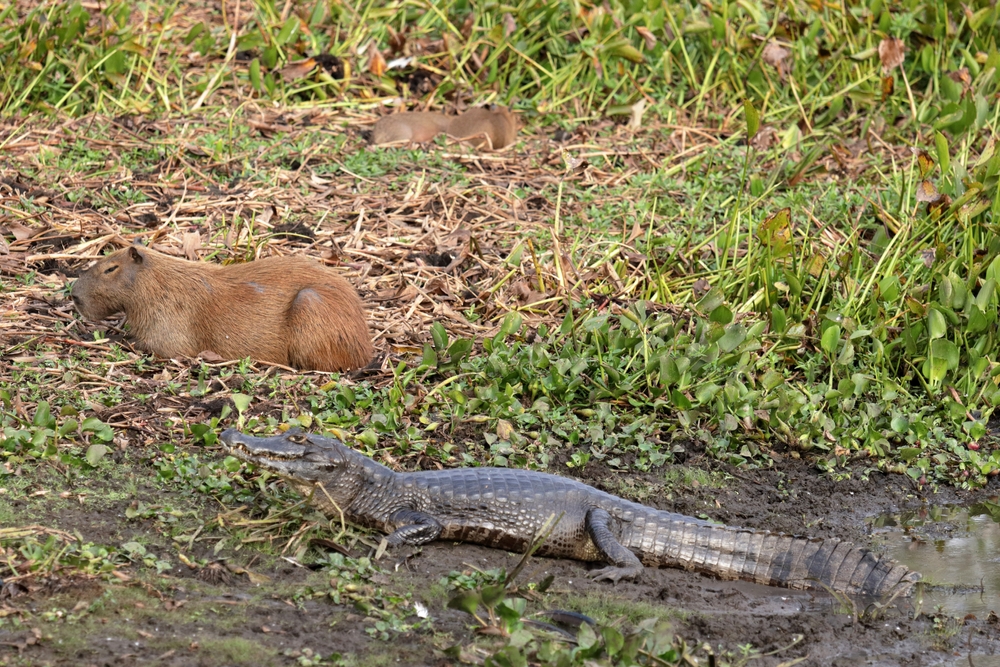
The obvious question was also the most intriguing.
How does a five-foot alligator find its way beneath city streets?
According to Oviedo officials, the explanation is surprisingly straightforward.
The city’s extensive stormwater management system stretches for roughly 75 miles beneath roads and neighborhoods. Unlike sanitary sewer systems that carry wastewater, stormwater drains transport rainwater through a connected network of ponds, retention basins, canals, and underground pipes.
Those ponds often provide suitable habitat for alligators.
During periods of heavy rainfall or changing water levels, an alligator can move from one pond into connected drainage channels, eventually entering the underground pipe network.
Rather than becoming trapped, the reptiles may simply continue exploring interconnected waterways that happen to pass beneath urban development.
Florida’s geography makes these connections especially common.
Large portions of the state were originally wetlands, and modern communities have been constructed alongside lakes, marshes, retention ponds, and canals designed to manage water levels.
For an alligator, the distinction between natural waterways and engineered drainage systems is largely irrelevant.
If water connects two locations, the animal can often travel between them.
That makes underground stormwater tunnels less like sewers in the traditional sense and more like hidden aquatic highways.
The Difference Between Storm Drains and Sewers
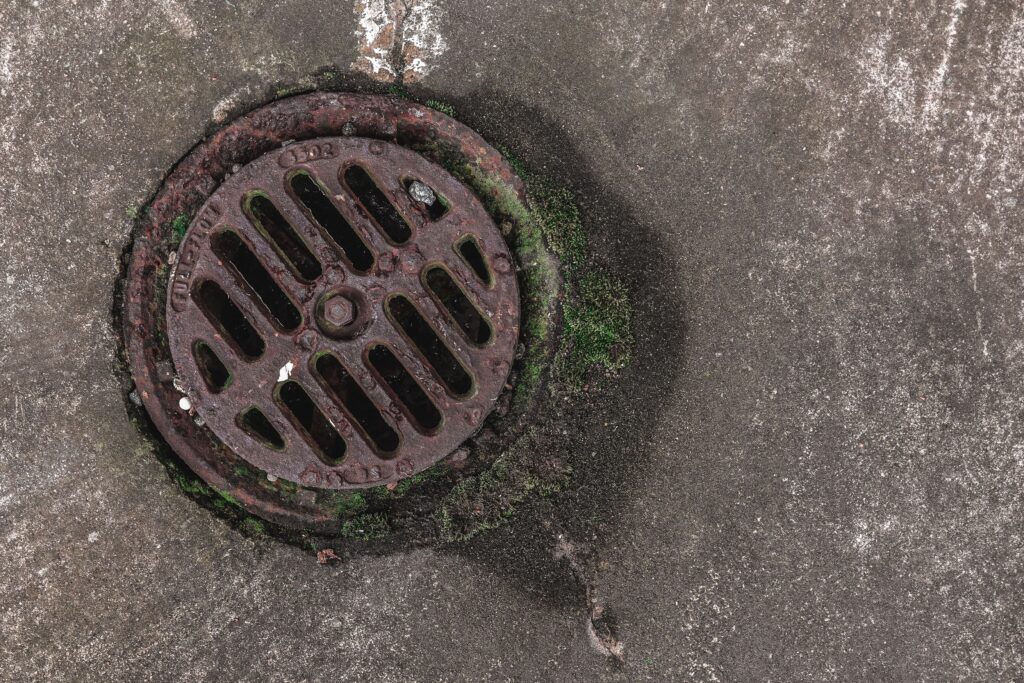
One of the biggest misconceptions surrounding the discovery involves the word “sewer.”
Most people imagine underground pipes carrying household waste.
That is not what the Oviedo alligator was using.
Stormwater drainage systems serve an entirely different purpose.
They collect rainwater during storms and direct it toward retention ponds, streams, lakes, or other water management areas. Because these systems remain connected to surface water, wildlife can sometimes enter them without difficulty.
This distinction also explains why scientists have documented a surprising variety of animals beneath Florida’s streets.
Unlike enclosed sanitary sewer systems, stormwater tunnels often function as extensions of nearby ecosystems.
Water continues flowing through them.
Fish occasionally enter.
Small mammals use them as travel corridors.
Birds forage near pipe outlets.
Predators naturally follow available food sources.
For animals adapted to wetlands, these underground passages may simply represent another route across fragmented landscapes.
The alligator found in Oviedo was dramatic because of its size and appearance, but it was not necessarily behaving in an unusual way from a biological perspective.
It was simply using available habitat.
Science Has Already Confirmed These Underground Ecosystems
The Oviedo encounter was shocking because it was caught on camera, but researchers have already found evidence that wildlife regularly occupies Florida’s stormwater infrastructure.
A study published in the journal Urban Naturalist examined stormwater sewer systems throughout Alachua County using motion-activated camera traps.
The results surprised even experienced researchers.
Across dozens of monitoring sites, scientists documented 35 different vertebrate species using underground drainage systems.
Raccoons appeared most frequently, followed by bats.
Researchers also recorded river otters, armadillos, amphibians, birds, and multiple American alligators moving through the tunnel network.
Rather than serving only as drainage infrastructure, these systems appeared to function as wildlife corridors connecting ponds, wetlands, creeks, and other habitats separated by roads and urban development.
Scientists noted that while some animals simply passed through, others seemed to use these underground spaces regularly for shelter or travel.
The findings suggest that beneath many modern cities lies an ecosystem largely invisible to the people living above it.
For most residents, storm drains are something to avoid during heavy rain.
For wildlife, they can become protected pathways linking habitats that would otherwise be isolated by expanding development.
Why Florida Keeps Producing Surprising Wildlife Encounters
For people who live outside the Sunshine State, finding an alligator beneath a city street might sound like a once-in-a-lifetime event.
For many Floridians, it fits into a much larger pattern.
The state supports an estimated 1.3 million wild alligators, making it home to one of the largest populations in North America. These reptiles occupy lakes, rivers, marshes, canals, golf course ponds, neighborhood retention basins, and even roadside ditches.
As Florida’s population continues to grow, neighborhoods increasingly overlap with habitats that alligators have occupied for thousands of years.
Urban expansion has transformed wetlands into residential communities, shopping centers, and highways. To control flooding, engineers build interconnected drainage ponds and canals that often resemble natural waterways.
For an alligator searching for food, shelter, or another body of water, these systems create convenient travel routes.
That is why reports of alligators appearing in unexpected places surface every year.
Some wander into backyard swimming pools.
Others have been found crossing busy highways or resting beneath parked cars.
A few have even walked through grocery store parking lots or entered residential garages after heavy rainfall.
The Oviedo discovery may have been startling, but wildlife experts say the underground environment offered conditions that made sense for the reptile.
Stormwater tunnels remain relatively cool during hot weather, contain standing water, and experience little human disturbance.
Those characteristics make them attractive temporary shelters for aquatic wildlife.
The Urban Legend That Refused to Die
Long before social media existed, people shared stories about giant reptiles lurking beneath city streets.
The most famous version emerged in New York City during the early twentieth century.
According to popular folklore, families returning from vacations in Florida brought home baby alligators as souvenirs. When the animals became too large to manage, owners supposedly flushed them down toilets, allowing them to survive and grow inside the city’s sewer system.
Over time, the tale became increasingly elaborate.
Some versions claimed the alligators had become enormous after generations underground.
Others suggested they had turned albino because they lived in complete darkness.
Despite repeated investigations, no evidence ever supported the idea that breeding populations of giant sewer alligators existed beneath New York.
Still, the legend endured.
It inspired Robert Daley’s 1981 novel Alligator, which was adapted into a cult horror film. The concept also found its way into comic books, television shows, children’s stories, and films such as E.T. the Extra-Terrestrial, where the myth received a memorable mention.
The enduring popularity of the story reflects a familiar human fascination with hidden places.
Cities often feel completely mapped and understood.
The thought that something large and wild might be living beneath the pavement challenges that sense of certainty.
The Oviedo footage gave the legend an unexpected dose of reality.
While it did not confirm generations of mutant reptiles hiding below major cities, it demonstrated that healthy wild alligators really can occupy underground drainage systems under the right conditions.

New York Has Had Its Own Unexpected Encounters
Although Florida remains the natural home of American alligators, New York has occasionally produced headlines that kept the old myth alive.
In 2010, police responded after an 18-inch alligator emerged from a storm drain in Queens before taking shelter beneath a parked vehicle.
Wildlife officials believed the animal had likely been someone’s abandoned pet rather than a permanent sewer resident.
More recently, another alligator surprised park visitors after it was discovered in Brooklyn’s Prospect Park Lake.
The four-foot reptile appeared lethargic after exposure to cold temperatures, and veterinarians later found a bathroom stopper lodged inside its stomach. Authorities suspected it had also been released after someone could no longer care for it.
The animal ultimately died despite receiving treatment, highlighting the dangers of abandoning exotic pets.
These isolated cases differ significantly from Florida’s situation.
New York lacks the warm climate and connected wetlands that naturally support wild alligator populations.
Florida, by contrast, offers ideal habitat across much of the state, making underground encounters far more plausible.
What Researchers Have Learned About Wildlife Beneath Cities
The Oviedo video also draws attention to a broader scientific question.
How many animals are quietly adapting to life within urban infrastructure?
Recent studies suggest the answer is more than most people imagine.
Researchers monitoring Florida’s stormwater systems found evidence that underground drainage networks function as important wildlife corridors.
Instead of acting as barriers, these tunnels connect fragmented habitats that have been separated by roads and buildings.
Animals moving between ponds, streams, and wetlands often use the underground passages without ever appearing above ground.
Raccoons were the most common visitors recorded during scientific surveys.
Bats regularly occupied sections of the tunnels.
River otters moved through the systems in search of food and new territory.
Birds gathered near drainage outlets where fish sometimes concentrated.
Alligators represented only one part of a surprisingly diverse underground ecosystem.
Scientists believe these findings could influence future urban planning.
Understanding how wildlife uses stormwater infrastructure may help engineers reduce accidental animal deaths while maintaining drainage systems more effectively.
Simple additions, including escape ramps for trapped animals or modified drainage designs, could improve survival rates for species that unintentionally enter storm drains.
The research also reminds us that cities rarely eliminate nature completely.
Instead, wildlife often adapts in unexpected ways.
Technology Is Changing How Cities Discover Hidden Wildlife
The Oviedo alligator probably would have remained undiscovered without modern inspection equipment.
Remote-controlled robots have become standard tools for inspecting stormwater pipes, sewer lines, bridges, and other infrastructure that would otherwise require workers to enter confined spaces.
Equipped with cameras and powerful lights, these machines allow engineers to identify cracks, blockages, erosion, and structural weaknesses while keeping maintenance crews safely above ground.
Occasionally, they uncover something entirely different.
Across the United States, inspection robots have encountered snakes, turtles, fish, birds, and mammals living inside drainage systems.
Each unexpected discovery provides scientists with another glimpse into environments that humans rarely observe.
For public works departments, the technology offers an additional benefit.
Encountering a defensive five-foot alligator through a video feed is considerably safer than meeting one face to face inside a confined tunnel.
The City of Oviedo acknowledged that point with a touch of humor after releasing the footage, expressing relief that the first visitor into the pipe was a robot rather than a member of its maintenance crew.
A Reminder That Nature Often Finds a Way
The alligator beneath Oviedo’s streets has almost certainly returned to its quiet routine, moving through waterways hidden beneath the city while life continues overhead.
Its brief appearance lasted only moments, yet it transformed a routine infrastructure inspection into one of the year’s most memorable wildlife stories.
The footage succeeded because it blurred the line between folklore and reality.
For generations, stories about sewer alligators belonged alongside ghost tales and urban myths. In Florida, at least, the truth turned out to be less dramatic than the legends but no less fascinating.
Scientists do not believe underground pipes are home to colonies of giant reptiles waiting beneath city streets. What they do know is that modern urban landscapes are more connected to surrounding ecosystems than they once believed.
Stormwater tunnels, retention ponds, canals, and wetlands create hidden pathways that animals continue to use as cities expand around them.
Most people will never see what lies beneath the pavement during their daily commute.
The workers in Oviedo did.
Thanks to a small inspection robot and a camera pointed into the darkness, millions of people were given a rare look into an underground world where one of America’s most iconic predators was quietly going about its day, completely unaware that it had just turned one of the country’s oldest urban legends into something undeniably real.