
Your cart is currently empty!
Four Sisters from West Virginia Share a Rare Brain Condition That Brings a Family Together

Four sisters from a small town in West Virginia are redefining what family resilience looks like. When each child was diagnosed with the same rare neurological condition known as Chiari malformation, their story became one of science, strength, and the quiet persistence of hope.
Contents
show

Chiari malformation affects the way the brain and spinal cord connect, and if left untreated, it can lead to paralysis. The Higginbotham family’s diagnosis became the beginning of an emotional and highly visible journey, prompting national discussion on how rare pediatric disorders are recognized and managed.
Understanding the Mystery Behind Chiari Malformation
In the realm of neurological conditions, few are as complex and underrecognized as Chiari malformation. It occurs when the lower portion of the brain, known as the cerebellum, extends into the spinal canal and disrupts the normal flow of cerebrospinal fluid. This pressure can interfere with communication between the brain and the rest of the body, often creating symptoms that seem unrelated at first glance. According to Verywell Health, the condition may be present from birth because of irregular skull development or may appear later in life following head injury, infection, or excessive fluid drainage.
Chiari malformation is divided into several classifications that differ in both onset and severity. Type I, the most common form, is typically discovered during adolescence or adulthood through magnetic resonance imaging. More severe forms, such as Type II and Type III, usually emerge in infancy and cause visible structural changes in the brain and spinal cord. The abnormal pressure at the base of the skull can affect balance, coordination, and vital body functions, making early detection crucial.
Symptoms often progress quietly over time. Some people live for years unaware of the condition, experiencing only mild headaches or neck discomfort. Others may notice difficulty with coordination, swallowing, or sensation in the limbs. In some cases, complications such as syringomyelia, a cyst that forms within the spinal cord, or hydrocephalus, a buildup of fluid in the brain, can develop. As outlined by Mayo Clinic, these secondary issues highlight the need for timely evaluation and medical care.
Dr. David Harter, director of pediatric neurosurgery at NYU Langone, explains that Chiari malformation can cause “weakness, scoliosis, nerve pain, and even paralysis if untreated.” When addressed early, surgical intervention can relieve pressure and restore fluid flow, significantly improving a patient’s quality of life.
A Family’s Unimaginable Journey Through a Rare Diagnosis
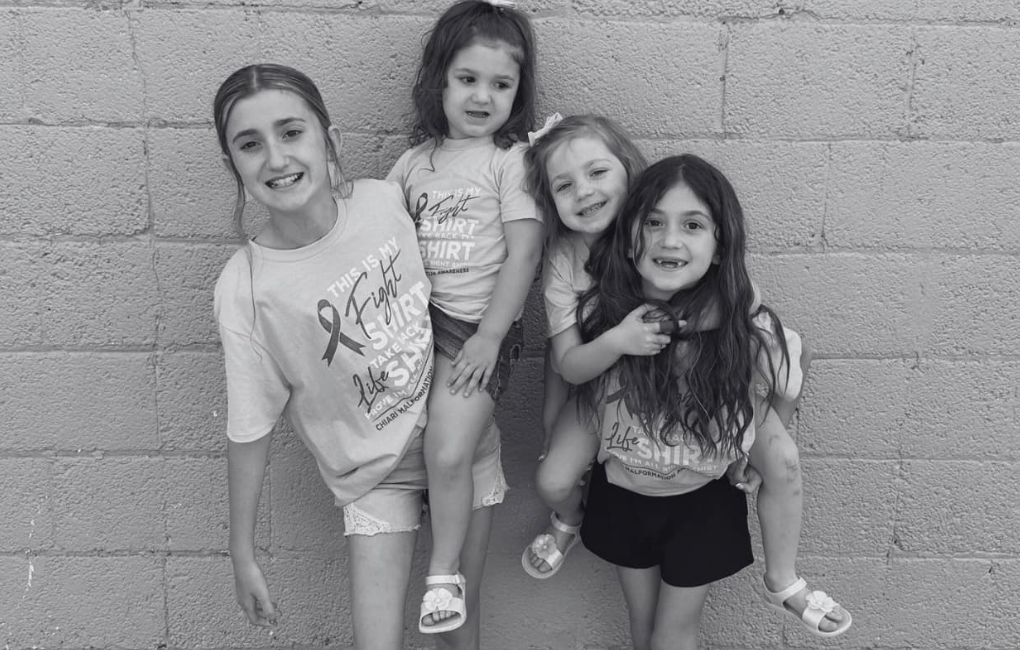
For Paul and Ashlee Higginbotham, life in West Virginia once followed a familiar rhythm built around family dinners, school runs, and the daily chaos of raising six children. That sense of normalcy began to shift when their youngest daughter, Austyn, started showing signs that something was not right. From birth, she cried often, struggled to sleep, and rarely smiled. At only eighteen months old, doctors finally provided an explanation that changed everything. Genetic testing revealed that Austyn had Chiari malformation, a rare structural condition in which part of the brain presses into the spinal canal and disrupts essential nerve function.
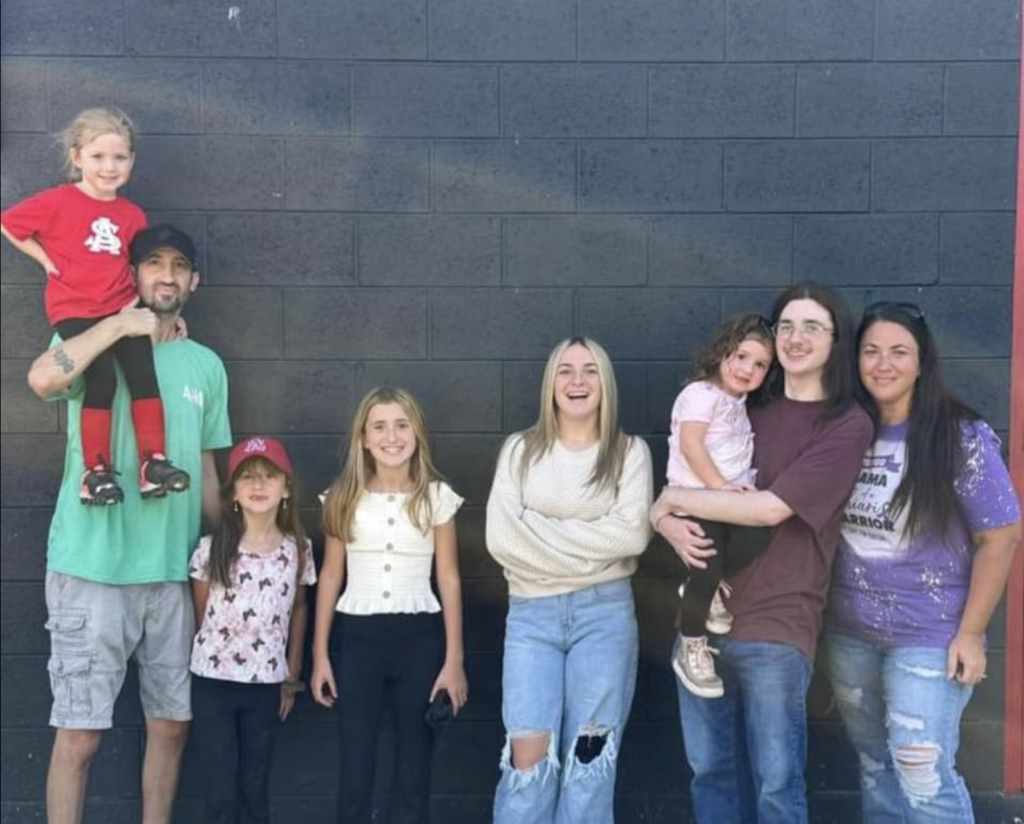
The family sought help from pediatric neurosurgeon Dr. Jeffrey Greenfield at NewYork-Presbyterian Hospital. In March 2023, Austyn underwent brain surgery to relieve pressure on her spinal cord and restore the normal flow of cerebrospinal fluid. The outcome was almost immediate. “She was smiley. It was like the pain she’d always felt was gone,” her mother told CBS News. What began as relief soon turned into disbelief when, only days later, their three-year-old daughter Amelia developed symptoms of her own.
Amelia’s doctors initially suspected Lyme disease, but testing revealed that she too had Chiari malformation along with a tethered spinal cord, a condition that required two complex surgeries. Within months, their seven-year-old daughter Aubrey began acting withdrawn and suffered recurring infections. Imaging confirmed that she also shared the same diagnosis. Their eldest child, eleven-year-old Adalee, who had endured chronic leg pain for years, was next. MRI scans confirmed that she too was living with the same rare disorder.
Dr. Greenfield described the situation as “unbelievably rare,” explaining that only about ten percent of Chiari malformation cases have a genetic component. The odds of four siblings being diagnosed within one family are almost unheard of. Today, Austyn, Amelia, Aubrey, and Adalee are rebuilding their lives through recovery and ongoing therapy. Their mother expressed her gratitude with quiet sincerity, saying, “[Dr. Greenfield] gave us our family back, and that is the most amazing gift anyone could get.”
The Emotional Landscape of Rare Diagnoses
Every rare medical condition leaves behind a story that extends far beyond the hospital walls. For families living with Chiari malformation, the challenges do not end with a diagnosis or even after surgery. The emotional strain of uncertainty, the constant monitoring of symptoms, and the quiet anxiety about what may come next can take a toll on both parents and children. Families often learn that recovery is not just physical but also deeply psychological.
Mental health professionals who work with families affected by chronic or rare illnesses note that emotional support plays a decisive role in long-term recovery. Maintaining a sense of normal life through daily routines and open conversations helps children feel grounded while offering parents a measure of control in an unpredictable situation. According to the American Psychological Association, families who engage in shared problem-solving and stay connected to community support groups often demonstrate stronger coping skills and greater resilience.

The Higginbothams’ experience reflects this balance between medical care and emotional endurance. Their willingness to share their story has not only given other families hope but also highlighted the importance of recognizing the mental and emotional layers of healing. For families dealing with rare conditions, emotional steadiness can be as critical as any surgical success, turning hardship into a form of strength that sustains everyone involved.
The Role of Public Awareness in Rare Conditions
Public awareness often determines how quickly a rare condition shifts from being overlooked to being understood. When families decide to share their experiences, they help transform a personal struggle into a collective call for understanding. Awareness shapes medical priorities, inspires early detection, and creates networks of support that help people feel less alone.
The media holds a special responsibility in how these stories are told. When reporting focuses on verified facts and compassion rather than sensationalism, it gives audiences the opportunity to learn without exploiting personal pain. Awareness delivered through honesty and respect has the power to inform while maintaining dignity. It helps the public grasp both the scientific and emotional realities behind a diagnosis, encouraging empathy over curiosity.
Increased visibility can also influence the pace of medical research and healthcare advocacy. When rare conditions enter public conversation, they invite collaboration between doctors, scientists, and families searching for answers. Awareness becomes a form of progress, guiding attention and resources to places that need them most. When awareness grows, it changes what medicine values, helps catch illnesses earlier, and connects people who might otherwise face their struggles in silence.
The Future of Research and Treatment
Scientific progress in the field of neurological disorders continues to shed light on conditions once considered medical mysteries. Chiari malformation, once diagnosed primarily through visible symptoms, is now better understood thanks to advances in imaging technology and genetic research. Modern magnetic resonance imaging allows physicians to see subtle structural differences in the brain and spine, helping identify potential cases long before symptoms become severe. These developments are gradually reshaping how early diagnosis and treatment are approached.

Researchers are also exploring how genetics influence the development of Chiari malformation. Early studies suggest that hereditary factors may play a greater role than previously believed. Understanding these genetic links could pave the way for screening methods that identify at-risk individuals and allow for preventive care. The hope among neurologists and geneticists is that identifying these markers will lead to more personalized forms of treatment, reducing the need for invasive surgery in the future.
Surgical intervention remains the most effective option for severe cases, but innovations in technique have improved recovery times and long-term outcomes. Surgeons now employ more precise methods that focus on restoring normal fluid flow around the brain while minimizing the risk of nerve damage. Ongoing research aims to refine these approaches even further, exploring how minimally invasive procedures and regenerative therapies might offer safer, faster alternatives.
While there is still much to learn, the future of Chiari malformation care looks increasingly optimistic. Each new discovery adds to a growing body of knowledge that supports patients, empowers families, and deepens the medical community’s understanding of how the brain and spine work together. Progress may be gradual, but every step brings researchers closer to ensuring that early detection and effective treatment become accessible to all.
The story of the Higginbotham family stands at the intersection of science and human spirit. It is a reminder that behind every medical discovery are the individuals and families whose courage pushes the conversation forward. Their journey has not only highlighted the importance of early detection and medical innovation but also illuminated how resilience and awareness can transform adversity into purpose.

Rare conditions such as Chiari malformation challenge both families and the medical community to think differently about what it means to live with uncertainty. They reveal how strength is often built quietly, through daily acts of care, persistence, and hope. The Higginbothams’ experience has shown that progress is not only measured in scientific breakthroughs but also in the compassion that emerges when people share their stories.
Every step forward in understanding a rare disorder reflects a larger truth about human connection. Awareness, empathy, and knowledge work together to bridge the gap between isolation and understanding. As research continues and public attention grows, stories like this one remind us that healing extends beyond medicine. It begins in the shared effort to see, listen, and care.
Featured Image from Paul Higginbotham on Facebook