
Your cart is currently empty!
MIT Makes Almost Its Entire Curriculum Available Online for Free

The cost of higher education often acts as a massive wall between ambitious students and the specialized expertise they need to succeed. In 2001, MIT decided to test what would happen if that wall was completely dismantled by launching an initiative to publish its comprehensive curriculum online at no cost.
Contents
show
What started as an experimental approach to digital learning has since evolved into an expansive educational resource utilized by millions of self-directed learners across the globe.
How MIT’s Curriculum Reached Half a Billion People
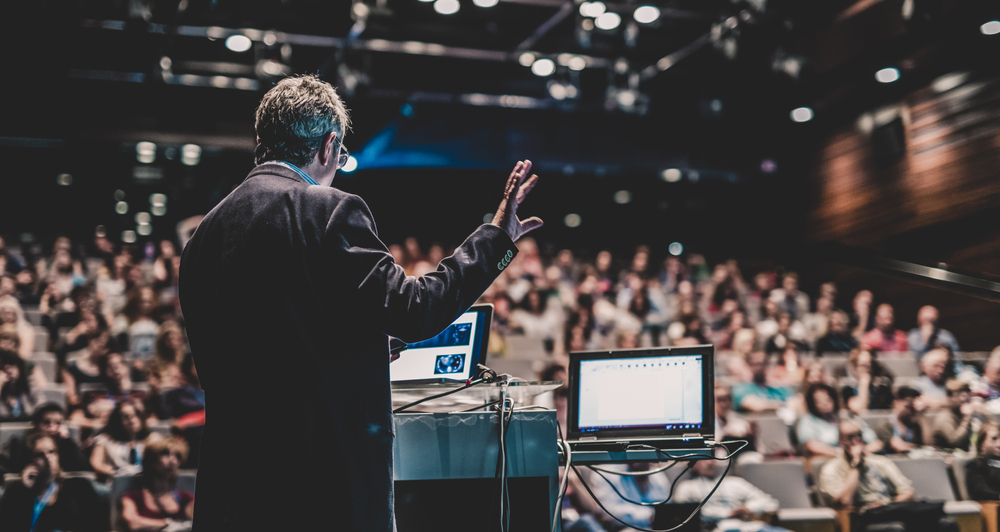
In 2001, at the dawn of the digital age, the Massachusetts Institute of Technology made a bold and unprecedented decision: to share its curriculum with the entire world for free. This visionary initiative, known as MIT OpenCourseWare, was built on the fundamental belief that knowledge should be a public good, accessible to anyone with a sincere desire to learn.
Today, this monumental project celebrates 25 years of operation, marking a milestone that has fundamentally transformed global education. MIT President Sally Kornbluth perfectly captured the core of the initiative, noting that the university effectively opened “its doors to the world without requiring a key.”
What began as a radical academic experiment has expanded into a vast digital library containing materials from over 2,500 distinct courses. Learners anywhere can dive into comprehensive educational resources. These include full video lectures, detailed syllabi, intricate problem sets, and the exact exams used inside actual MIT classrooms. The sheer scale of this reach is staggering. The initiative officially operates a YouTube channel that has gathered more than 6 million subscribers, making it the most popular higher education destination on the platform.
The impact of removing financial and geographical barriers to elite education cannot be overstated. Over the past two and a half decades, these free academic resources have reached more than 500 million individuals across the globe. By refusing to lock academic excellence behind exorbitant tuition fees, the university sparked a worldwide movement toward open education. As Dimitris Bertsimas, the Vice Provost for Open Learning, recently observed, MIT “made a bet on openness, generosity, and on the belief that knowledge is a public good. That bet has paid off 500 million times over.”
Transforming Lives Beyond the Classroom
The true power of open education lies in the individual lives it reshapes. Far beyond raw download statistics, these freely available materials act as a catalyst for personal and professional breakthroughs. For millions of self-directed learners, accessing world-class resources drastically reduces the barrier to entry for highly specialized fields.
Consider Hinata Yamahara, a high school senior who initially used the platform to explore an interest in urban planning. That initial curiosity led him to an aviation workshop, which ultimately provided the knowledge he needed to pass the Federal Aviation Administration Private Pilot Knowledge Test. Similarly, 17-year-old Tomás Orellana leveraged free pharmacology courses to study the medicinal properties of plants, aiming to develop natural treatments for health issues affecting his peers. For non-traditional students like Gustavo Barboza, a former member of the French military, the platform’s rigorous calculus and mechanics courses provided the crucial foundation needed to transition into a university electrical engineering program.
The ripple effect extends equally to educators who use these materials to elevate their own classrooms. Victor Odumuyiwa, an associate professor in computer science at the University of Lagos, utilizes the open materials to observe how complex topics are structured. Integrating these methodologies into his local curriculum yielded tangible results. “I applied the same approach back home and, sincerely, I’ve gotten a lot of positive feedback from people getting jobs in global companies after taking the course that I designed,” Odumuyiwa shared.
Catalyzing a Worldwide Educational Shift

MIT OpenCourseWare did not just unlock the doors to one single institution; it ignited a global transformation in how humanity shares information. When the university launched its open curriculum in 2001, it demonstrated that sharing educational excellence multiplies its impact rather than diminishing its value. This bold experiment quickly evolved into the Open Educational Resources movement, drastically changing higher education globally.
The initial launch inspired a massive wave of similar initiatives. Recognizing the immense interest from other institutions wanting to follow suit, the OpenCourseWare Consortium was formed in 2005. Today, that organization has evolved into Open Education Global, a massive network comprising over 970 educational institutions, technology providers, and aligned organizations committed to advancing open access worldwide. Major universities across the globe, including Harvard, Yale, and Stanford, eventually launched their own open learning platforms, standing directly on the foundation MIT established.
The influence of this movement reaches far beyond university campuses. Open education principles are now deeply embedded in government policy and international development. MIT President Sally Kornbluth emphasizes the widespread adoption of this model, stating that the initiative is “cited in national education strategies, by nonprofit initiatives, and by international development programs.” She notes that this wide-scale integration provides concrete proof “that openness scales when you lead with vision and courage.”
Steering the Next Era of Digital Learning
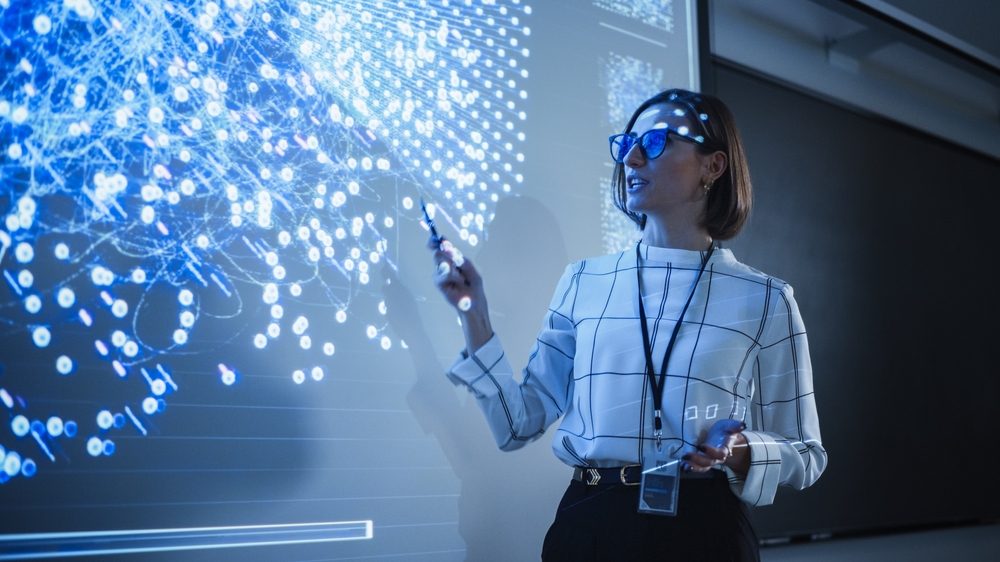
When the internet first gained global traction in 2001, it catalyzed a massive shift in how universities could share knowledge. Now, rapid advancements in artificial intelligence are presenting another distinct opportunity to revolutionize education. MIT President Sally Kornbluth notes that this current technological leap creates a new moment for academic institutions to lead the way forward.
To harness this potential, the university recently introduced MIT Learn. This new platform serves as a central, unified hub designed for lifelong learning. It brings together the vast archives of OpenCourseWare, MITx, and other digital resources, integrating them with AI-enabled guidance and personalized learning paths. Instead of merely offering a static library of files, the system uses machine learning to help individuals navigate specific courses. Furthermore, integrated language translations make complex materials highly accessible to non-English speakers globally.
By adopting these intelligent tools, the initiative shifts the focus from simply providing access to actively optimizing the learning experience. Curt Newton, the director of OpenCourseWare, recognizes the magnitude of this shift. “Sometime in the next five years, I’m looking for a moment that rhymes with what happened in 2001,” Newton recently stated.
The launch of MIT Learn is tied directly to an ambitious new target set by the university’s Open Learning division. Building on the 500 million lives already impacted over the last 25 years, the organization aims to reach 1 billion learners over the next decade.
The Future of Open Learning Is Yours
The past 25 years of open digital education have proven a fundamental truth. Elite knowledge does not lose its value when shared; instead, it gains immense power by uplifting communities worldwide. By dismantling the financial and geographical barriers that have historically restricted higher education, this movement transformed an exclusive academic privilege into a global public resource. The evolution from a static repository of recorded lectures to an intelligent, AI-powered platform ensures that learning will only become more personalized and accessible in the decades to come.
The infrastructure for world-class education is already built and waiting. Whether the goal is mastering advanced calculus, exploring the fundamentals of computer science, or pivoting into an entirely new professional field, the resources are available at absolutely no cost. The ultimate challenge is no longer gaining access to the best academic minds, but rather taking the initiative to begin. Visit the MIT OpenCourseWare platform, select a subject of interest, and join the next billion learners in shaping a more informed and capable world.