
Your cart is currently empty!
Debate Grows After Newsom Says Americans Were Better Off Under Biden

California Governor Gavin Newsom has stepped into the center of a renewed national debate after declaring that Americans were better off under President Joe Biden. The statement quickly spread across political media, cable news panels, and social platforms, drawing praise from Democratic allies and sharp pushback from conservative critics. At face value, it appears to be a defense of a recent administration. Beneath the surface, it signals something far more consequential about the future direction of American politics.
Contents
show
The question of whether Americans were better off during one presidency versus another has long been a staple of campaign messaging. It simplifies complex economic and social realities into a single emotional judgment. Yet the metrics that define “better off” vary widely depending on political values, economic class, geography, and lived experience. Newsom’s claim has reopened that divide at a moment when voters are still grappling with inflation, economic uncertainty, and broader concerns about national stability.
Supporters point to legislative achievements and post pandemic recovery indicators as evidence of progress. Critics counter that cost of living pressures erased any statistical gains for ordinary families. The debate unfolding now is less about relitigating the past and more about shaping the narrative that will guide the next election cycle.
The Economic Case for Biden’s Record
Those who agree with Newsom argue that the Biden administration oversaw measurable economic progress during a uniquely challenging period in modern history. When Biden entered office, the United States was still navigating the economic shockwaves of the COVID 19 pandemic. Businesses were shuttered, unemployment remained elevated, and supply chains were strained across industries.
Supporters highlight several key developments during that period. Job growth rebounded significantly as the economy reopened. Unemployment rates fell to levels not seen in decades. Major legislative packages aimed to stimulate economic recovery and invest in long term infrastructure. The Infrastructure Investment and Jobs Act directed funding toward roads, bridges, broadband expansion, and clean energy projects. Advocates argue that these investments were not only about immediate recovery but about strengthening the foundation of the American economy for years to come.
Healthcare policy also became part of the argument. Expanded subsidies under the Affordable Care Act reduced premium costs for millions of Americans. Enrollment numbers increased, particularly among middle income families who previously struggled with affordability. For Democrats, this reflected a tangible improvement in household security.
Climate policy further shaped the narrative. Federal incentives for renewable energy development, electric vehicle adoption, and domestic manufacturing were presented as both environmental and economic strategy. Supporters frame this as forward looking governance designed to prepare the United States for a competitive global economy increasingly shaped by clean technology.
Internationally, Biden’s administration emphasized alliance rebuilding and coordinated responses to geopolitical crises. Proponents argue that diplomatic stability contributed to economic confidence at home. In this view, Newsom’s claim rests on a broader understanding of national well being that includes not only wages and prices but institutional strength and global credibility.
Inflation, Cost of Living, and the Counterargument

Critics of Newsom’s statement do not deny that legislation was passed or that jobs returned. Instead, they argue that these measures fail to capture the lived reality of millions of households during Biden’s tenure. Inflation surged to levels not experienced in decades, particularly in 2022. Prices for groceries, gasoline, rent, and utilities climbed sharply, placing pressure on working and middle class families.
For many voters, the grocery bill and monthly rent payment carry more weight than macroeconomic statistics. Wage growth did occur, but critics contend that it lagged behind price increases during critical periods. Housing affordability became a defining issue in states across the country, not just in high cost areas like California.
Energy costs also became a political flashpoint. Although global factors contributed to fuel price volatility, opponents argue that domestic policy decisions compounded the problem. The broader critique suggests that economic management during the Biden administration was reactive rather than preventative.
Economic inequality remains another point of contention. While stock markets and certain sectors recovered robustly, skeptics argue that asset growth disproportionately benefited higher income households. The perception that economic gains were uneven has fueled political frustration across ideological lines.
This divergence in interpretation illustrates why the phrase “better off” resonates so differently among voters. For a household that secured stable employment and affordable health insurance, the Biden years may represent recovery and opportunity. For a family struggling to manage rising rent and grocery prices, the same period may symbolize strain and uncertainty.
The Timing of Newsom’s Statement
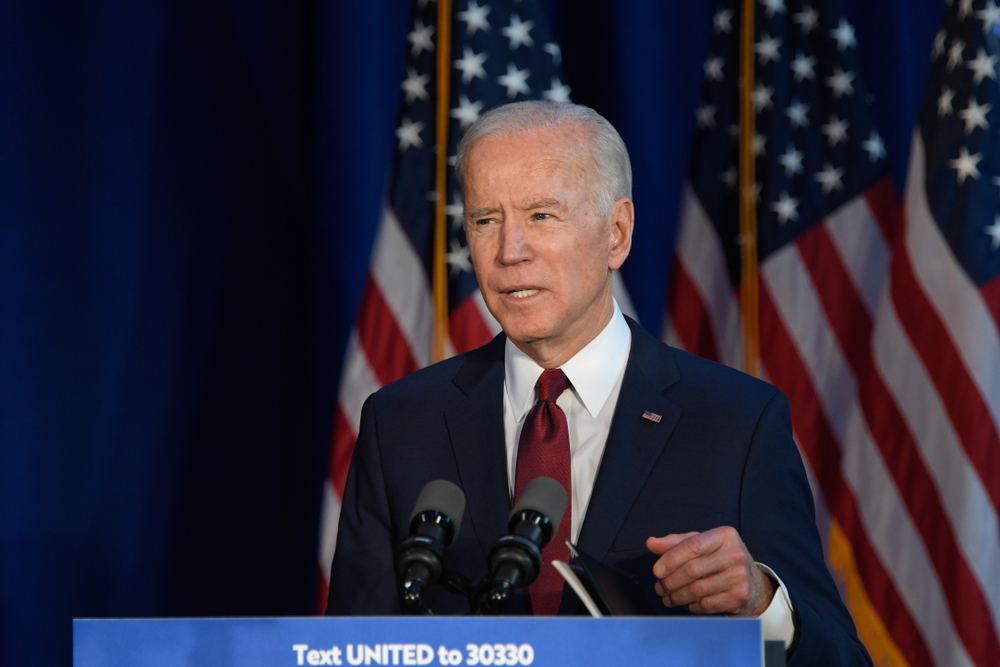
Political observers have paid close attention not only to what Newsom said but when he said it. As one of the most visible Democratic governors in the country, Newsom occupies a unique position within his party. His remarks are being interpreted by many analysts as more than a historical assessment.
Speculation about Newsom’s national ambitions has circulated for years. His leadership during high profile national debates, including responses to public health crises and cultural issues, has elevated his profile beyond California. By publicly defending Biden’s record, Newsom may be signaling continuity within the Democratic Party while also positioning himself as a credible steward of that legacy.
The statement arrives at a time when the party is navigating generational questions about leadership and electoral strategy. Some Democrats argue that defending Biden’s record is essential to maintaining policy continuity. Others believe the party must articulate a new economic message that directly addresses voter frustration.
In that context, Newsom’s words serve both as validation of past governance and as a declaration of ideological alignment. Even if the claim appears straightforward, its implications ripple through primary politics, donor networks, and grassroots organizing.
Davos, Optics, and Questions of Corporate Influence
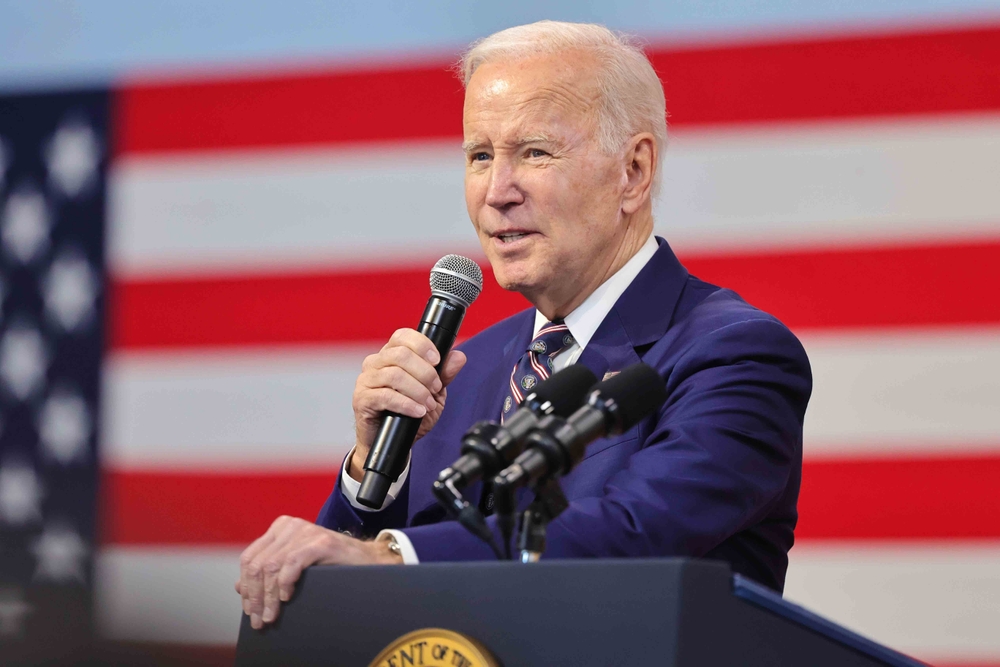
Newsom’s recent appearance at the World Economic Forum in Davos added another dimension to the debate surrounding his political trajectory. While the forum is designed as a gathering of global leaders to discuss economic and environmental challenges, critics argue that such events symbolize elite consolidation of power rather than democratic accountability.
During his participation, some commentators accused Newsom of prioritizing optics over substance. A prominent critic characterized the appearance as a moment of political accommodation toward corporate interests. The phrase used to describe the encounter gained traction among detractors, who viewed it as evidence that Newsom’s national ambitions could conflict with progressive ideals.
Supporters counter that engagement with global leaders is not synonymous with ideological compromise. They argue that California’s economic size and influence require its governor to maintain international partnerships. In their view, attending high level forums can attract investment, promote climate initiatives, and expand economic opportunities for the state.
Nevertheless, the controversy underscores a broader anxiety within American politics. Many voters remain skeptical of corporate influence and perceive a widening gap between political leaders and everyday citizens. For a governor seeking national credibility, navigating that perception is as important as any policy platform.
The Davos episode complicates the narrative around Newsom’s defense of Biden. While he praises legislative achievements aimed at middle class relief and climate action, critics question whether engagement with global elites dilutes that message. The tension between progressive rhetoric and corporate collaboration has become a defining challenge for modern Democratic leaders.
How Americans Define Being Better Off

At the heart of the debate lies a deeper philosophical question about how national well being should be measured. Political discourse often reduces complex conditions into a binary comparison. Yet economic and social realities rarely conform to such simplicity.
For some voters, employment levels and GDP growth provide the clearest indicators of progress. For others, affordability and purchasing power carry more weight. Healthcare access, environmental stability, and public safety also factor into individual assessments.
The concept of being better off may include intangible elements such as political tone and civic trust. Periods marked by relative calm can feel more stable even amid economic turbulence. Conversely, times of sharp political division can amplify perceptions of decline regardless of economic data.
Newsom’s claim effectively highlights how political narratives are constructed. By selecting certain metrics, leaders can shape public memory of an administration. Opponents do the same by emphasizing alternative data points. Both interpretations may rely on factual information, yet the emphasis determines the story voters internalize.
This dynamic is not unique to Biden’s presidency. Throughout modern history, political campaigns have revolved around competing definitions of prosperity and progress. What distinguishes the current moment is the speed at which narratives spread and the depth of polarization that colors public reception.
The Broader Implications for 2024 and Beyond
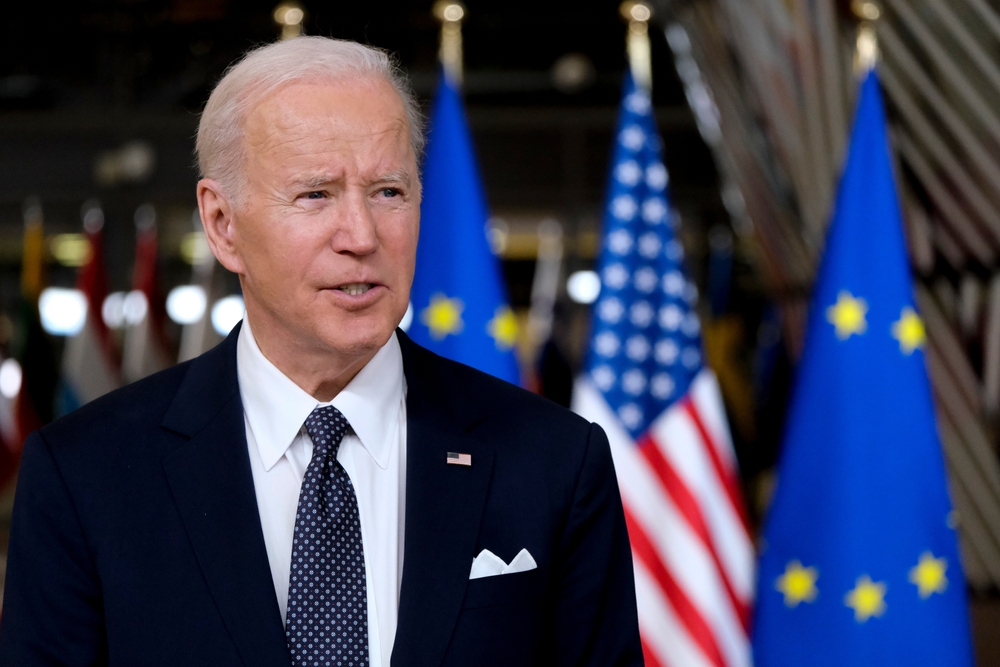
As the next election cycle approaches, statements like Newsom’s carry weight beyond partisan debate. They influence donor confidence, grassroots enthusiasm, and media framing. By asserting that Americans were better off under Biden, Newsom aligns himself with a record that remains contested but central to Democratic identity.
Republican strategists are likely to seize on inflation and cost of living as primary campaign themes. Democratic leaders may counter with job growth statistics and legislative achievements. The clash will not merely concern data but competing visions of economic management and national priorities.
Newsom’s political future will depend in part on how effectively he reconciles progressive aspirations with pragmatic governance. If voters perceive authenticity in his defense of Biden’s tenure, the statement could strengthen his credibility. If they view it as calculated positioning disconnected from household realities, it may reinforce skepticism.
The debate also reflects a broader transformation in American politics. Increasingly, leadership is evaluated not only on policy outcomes but on narrative coherence. Voters seek explanations that resonate with personal experience. Leaders who bridge statistical progress with everyday affordability concerns may gain traction in a divided electorate.
The Larger Political Picture
Gavin Newsom’s assertion that Americans were better off under Joe Biden has reignited a familiar yet evolving national conversation. It is a statement rooted in measurable legislative achievements and economic recovery statistics. It is also a statement shadowed by inflation spikes, rising housing costs, and persistent inequality.
Whether one agrees or disagrees depends largely on which aspects of the past four years carry the most personal significance. The debate underscores the complexity of evaluating presidential performance in a nation as economically and politically diverse as the United States.
In many ways, the controversy reveals less about settled history and more about the future. Political leaders are not only defending records but crafting narratives that will shape upcoming campaigns. For voters, the challenge is to look beyond slogans and assess both data and lived experience.
Ultimately, the question of whether Americans were better off under Biden cannot be answered with a single metric or partisan slogan. It demands a broader reflection on what prosperity, stability, and progress truly mean. As the political landscape continues to evolve, that reflection may prove more consequential than any individual statement.