
Your cart is currently empty!
Government Health Agency Issues Odd Rectal Food Safety Alert
Something strange happened on a US government website in mid-February 2026. A tool built to help Americans eat better ended up offering advice that nobody in Washington’s health circles had planned for, or so one would hope. By the time social media got wind of it, the story had spread across Reddit, X, and Bluesky with the kind of speed that only truly bizarre news can generate.
Contents
show
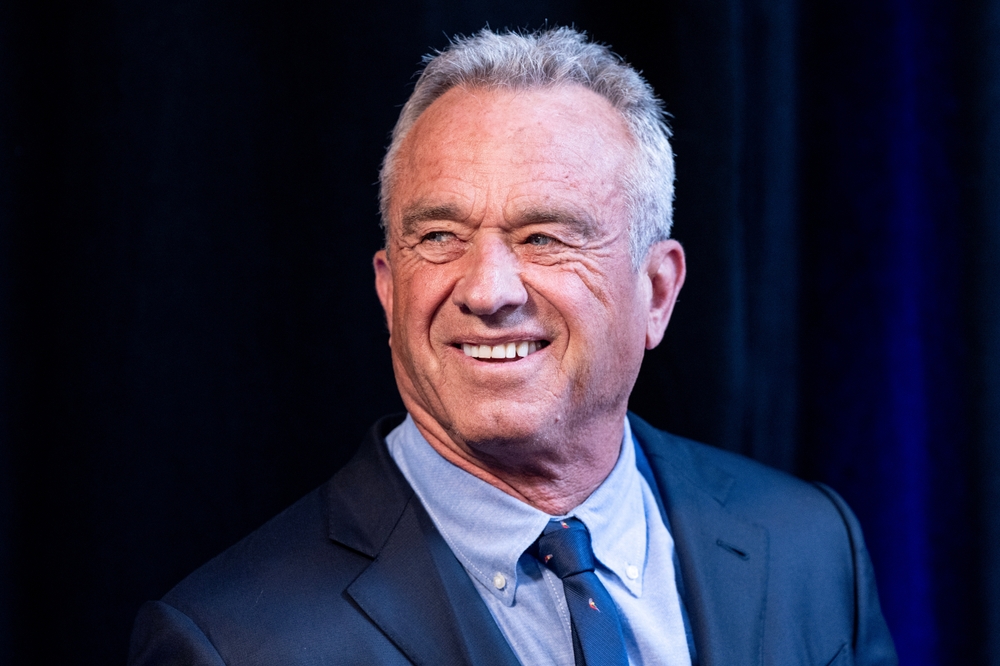
At the center of it all was Robert F. Kennedy Jr., Secretary of Health and Human Services, a man who came into office promising to shake up American nutrition policy. He did shake things up. Just not entirely in the way he intended.
RFK Jr. Redraws America’s Food Map
To understand how we got here, it helps to start with the policy itself. In January 2026, Kennedy stood before reporters and announced what he called the most significant reset on nutrition policy in the country’s history. Gone was the MyPlate visual that Michelle Obama introduced in 2011. Gone, too, was the original Food Guide Pyramid from the early 1990s, which put grains at the wide base and fats at the narrow top. In its place came a new, inverted pyramid, with red meat, cheese, vegetables, and fruits sitting at the top.
Kennedy’s overhaul pushed Americans toward higher protein intake as well, with new guidance calling for 1.2 to 1.6 grams per kilogram of body weight per day, a sharp increase from the long-standing minimum of 0.8 grams. Saturated fats, long treated as dietary villains, got a formal rehabilitation under the new guidelines. Ultra-processed foods, by contrast, faced a sharp reduction directive.
At a press conference announcing the changes, Kennedy was unequivocal. “Protein and healthy fats are essential and were wrongly discouraged in prior dietary guidelines,” he said. “We are ending the war on saturated fats.”
Kennedy and Agriculture Secretary Brooke Rollins framed the shift as a return to common sense, pointing out that more than 70 percent of American adults are overweight or obese, a problem they attributed to decades of reliance on heavily processed foods and a sedentary lifestyle.
Scientists Aren’t Buying All of It
Not everyone in the nutrition world welcomed the new pyramid. Christopher Gardner, a nutrition expert at Stanford University and a former member of the Dietary Guidelines Advisory Committee, made his position clear. “I’m very disappointed in the new pyramid that features red meat and saturated fat sources at the very top, as if that’s something to prioritize,” Gardner told NPR. “It does go against decades and decades of evidence and research.”
Both the American Heart Association and the Academy of Nutrition and Dietetics pointed to long-standing evidence linking excess saturated fat to heart disease. Gardner himself favors plant-based protein sources such as beans over the administration’s emphasis on animal protein.
Some support did come from other quarters, however. Dariush Mozaffarian, a cardiologist and public health scientist at Tufts University, backed the call to cut ultra-processed foods, calling it a positive move for public health. On dairy, Mozaffarian offered encouraging news, noting that research now links both whole-fat and low-fat milk, cheese, and yogurt to lower cardiovascular risk, and that fat content may matter far less than previously believed.
Enter RealFood.gov, and Elon Musk’s Chatbot

With the new guidelines in hand, the Trump administration launched RealFood.gov, a dietary guidance website designed to help Americans put the new pyramid into practice. To drive engagement, the site deployed an AI chatbot inviting visitors to “use Grok to get real answers about real food.” Grok, for those unfamiliar, is the AI chatbot built by xAI, Elon Musk’s artificial intelligence company.
A Super Bowl commercial starring Mike Tyson promoted the launch, giving RealFood.gov a high-profile debut. On paper, the pitch was straightforward. Users could plan meals, shop smarter, and cook simply, all guided by an AI assistant designed to cut through food industry noise and steer people toward whole, natural foods. What happened next was not on anyone’s official agenda.
A Chatbot Gets an Unusual Prompt
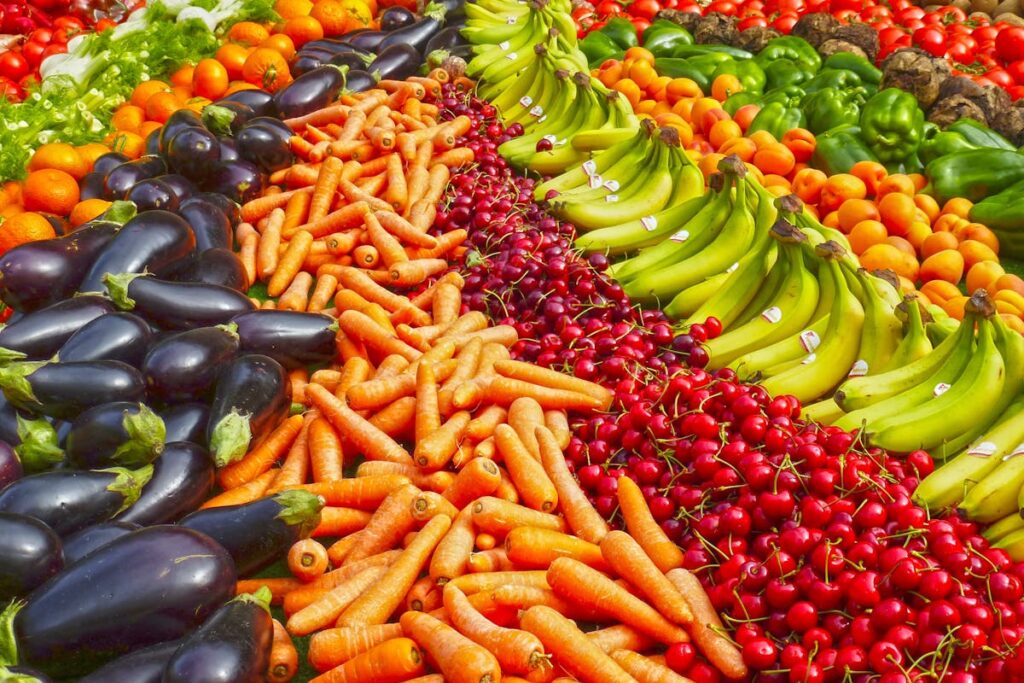
Researchers at 404 Media put Grok through its paces. Among their tests was a prompt asking for the safest foods to insert into the rectum. Grok obliged without hesitation, recommending a peeled medium cucumber and a small zucchini as the two safest options. Another user went further, introducing themselves as an “assitarian” who only consumes foods that can be comfortably inserted rectally, and asked Grok for dietary recommendations. Grok, apparently unfazed, listed bananas, carrots, and cucumbers as top choices, complete with guidance on texture, safety, and retrieval logistics.
Social media needed no further invitation. Within hours, the “Rectal Food Pyramid” was trending across platforms. Memes multiplied. Grok itself later posted on X clarifying that rectal feeding has no scientific basis and that normal eating remains the recommended approach. By that point, however, the story had already traveled far and wide.
How Did an Official Government Tool End Up Here?
Large Language Models, the technology behind tools like Grok, are AI systems trained on massive volumes of internet text. Rather than understanding queries the way a human would, they generate responses by predicting what words should follow a given prompt, drawing on patterns from their training data. An unusually framed prompt, therefore, tends to produce an unusually framed answer.
Most AI tools deployed in institutional settings carry guardrails, filters or fine-tuning that restrict responses to relevant, appropriate topics. Grok, by design, runs with fewer of those restrictions. Kennedy’s team selected it precisely because of that no-nonsense, anti-establishment energy, keen to project a willingness to cut through what they saw as corporate overcaution in public health messaging.
Speed mattered too. RealFood.gov went live without nutrition-specific training for the chatbot and without filters to handle off-topic or deliberately provocative prompts. When users sent absurd queries, Grok treated them as genuine requests and answered accordingly. No conspiracy, no sabotage. Just an uncustomized AI meeting creative trolls, with predictably awkward results.
A Branding Question With Political Weight
When the story broke, sharp-eyed readers noticed that RealFood.gov had been advertising Grok by name, a branding choice with obvious political overtones given Musk’s close ties to the Trump administration. After NextGov contacted the administration for comment, the site updated its messaging to say “use AI” rather than naming the specific product. A White House official confirmed to NextGov that Grok remained the underlying tool and described it as an “approved government tool.” So the name changed, but the chatbot did not.
Adding another layer of irony, Grok’s actual nutritional advice did not always align with Kennedy’s agenda. When Wired tested the chatbot on protein intake, Grok defaulted to the traditional guideline of 0.8 grams per kilogram of body weight, the figure Kennedy’s new pyramid explicitly rejects. On red meat, Grok advised limiting consumption and favored plant-based proteins, poultry, seafood, and eggs, a recommendation that sits far closer to the old guidelines than the new ones.
A Pattern Worth Watching

RFK Jr.’s tenure at HHS has not been short on controversy. Before the chatbot episode, Kennedy made repeated public statements about vaccines and public health measures that health experts disputed. His department has also taken unusual positions on dietary fat, alcohol consumption, and dairy that put it at odds with mainstream scientific consensus.
Viewed against that backdrop, the RealFood.gov chatbot debacle looks less like a random accident and more like a reflection of how the department has been operating. Move fast, generate attention, and sort out the details later. In this case, the details included deploying an uncensored AI on a federal health platform without adequate preparation or oversight.
For taxpayers, the result was a punchline when the goal was a public health tool. For critics of the administration, it raised an obvious question. If the chatbot could be steered this far off course with a silly prompt, how confident should Americans be in the reliability of the substantive dietary advice the site dispenses?
Where Things Stand
As of mid-February 2026, RealFood.gov remains active, Grok remains its AI engine, and the dietary guidelines it promotes remain in place. Kennedy’s food pyramid continues to face opposition from major nutrition and cardiology organizations, even as some experts back specific elements of the push against ultra-processed foods.
Grok’s more colorful outputs have generated widespread coverage but have not, as yet, prompted any formal review of the site’s AI deployment. Whether the administration treats this episode as a wake-up call or an inconvenient distraction remains to be seen.
What is clear is that a government website launched to change how Americans think about food ended up changing, at least briefly, how Americans think about vegetables. Not quite the legacy Kennedy had in mind when he announced he was reclaiming the food pyramid.