
Your cart is currently empty!
Gravitational Waves: How Einstein and Hawking’s Visions Became the Universe’s Voice

A billion light-years away, two black holes collided with such force that the fabric of the universe itself began to ripple. These ripples, known as gravitational waves, traveled across space and time until they reached Earth, carrying with them evidence that reshapes how we study the cosmos.
Contents
show

For scientists, the detection was more than a technical breakthrough. It offered the clearest confirmation yet of predictions made by Albert Einstein and Stephen Hawking, two of the most influential voices in modern physics. What had long lived in theory suddenly became measurable reality. And with that, a new era began, an era where the universe can be studied not only through light but through the vibrations of spacetime itself.
A Perfect Storm in Deep Space
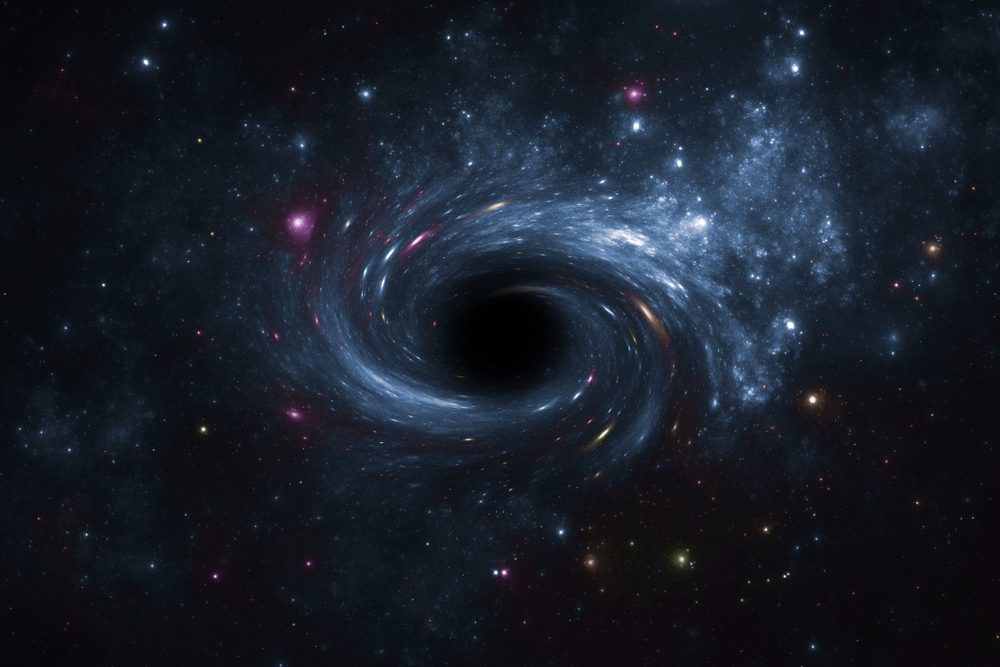
In January 2025, astronomers recorded a black hole merger that quickly became one of the most striking events in modern astrophysics. Two black holes, each estimated to be between thirty and thirty-five times the mass of our Sun, circled one another in a near perfect orbit before colliding. The result was a remnant about sixty three solar masses in size, spinning at a rate so fast it reached one hundred revolutions per second. As Columbia University astrophysicist Maximiliano Isi explained, “The black holes were about 1 billion light-years away, and they were orbiting around each other in almost a perfect circle. The resulting black hole was around 63 times the mass of the sun, and it was spinning at 100 revolutions per second.”
What made this detection stand out was not only the scale of the black holes but the clarity of the signal itself. Earlier generations of instruments struggled to capture such detail, but with improvements in sensitivity, this merger was recorded in remarkable definition. As Isi noted, “But now, because the instruments have improved so much since then, we can see these two black holes with much greater clarity, as they approached each other and merged into a single one.”
The resemblance to the very first detection of gravitational waves in 2015 gave the event even greater weight. “These characteristics make the merger an almost exact replica of that first, groundbreaking detection from 10 years ago,” Isi said. For many scientists, the event, labeled GW250114, was like watching a high definition remake of a historic moment, confirming what was once only hinted at while opening the door for even more rigorous tests of Einstein’s theories.
Its distance of one billion light years emphasized both the enormity of the cosmos and the reach of modern instruments. Far away enough to remind us of the scale of the universe yet close enough to be measured with precision, the collision became an almost ideal case study. Loud, massive, and remarkably clear, it provided a rare opportunity to test predictions that had lingered unproven for decades.
Einstein’s Theory Moves From Chalkboard to Reality
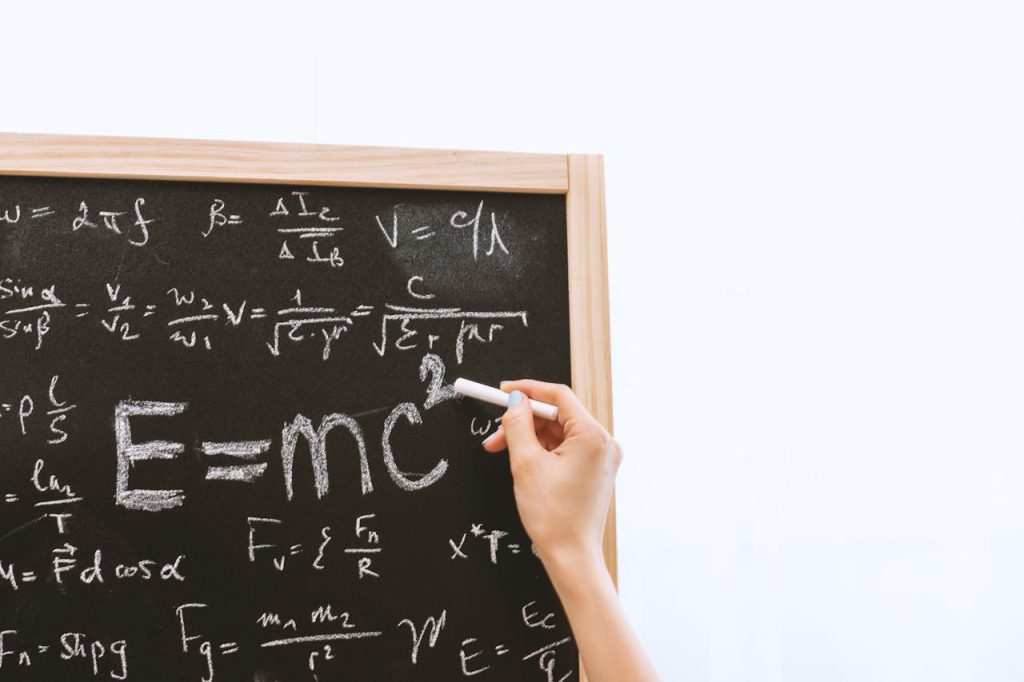
When Albert Einstein introduced general relativity in 1915, he suggested that massive objects in motion would stir the fabric of spacetime itself, creating ripples that traveled outward like waves across a pond. At the same time, he tempered expectations, admitting that “the waves would be too weak to ever be picked up by human technology.” For decades, his prediction remained a thought experiment, admired for its elegance but seemingly beyond the reach of direct observation.
That long wait ended on September 14, 2015, when the upgraded LIGO detectors registered a sharp, rising signal known as a “chirp.” For the first time, scientists had heard the universe speak in gravitational waves. Rainer Weiss, one of the architects of the project, recalled the breakthrough with disbelief: “I got to the computer and I looked at the screen. And lo and behold, there is this incredible picture of the waveform, and it looked like exactly the thing that had been imagined by Einstein.” The discovery turned gravitational waves from speculation into an observational tool and earned Weiss, Kip Thorne, and Barry Barish the 2017 Nobel Prize in Physics.
The signal itself carried a wealth of information. As two massive black holes spiraled closer, they lost orbital energy through gravitational radiation, producing a waveform that grew in both pitch and speed. Each curve of that waveform revealed how quickly the orbit shrank and how gravity behaved under extreme conditions. Unlike light, which can scatter or be blocked, gravitational waves travel directly through spacetime, arriving on Earth from a billion light years away without distortion.
A Legacy Written Into the Cosmos
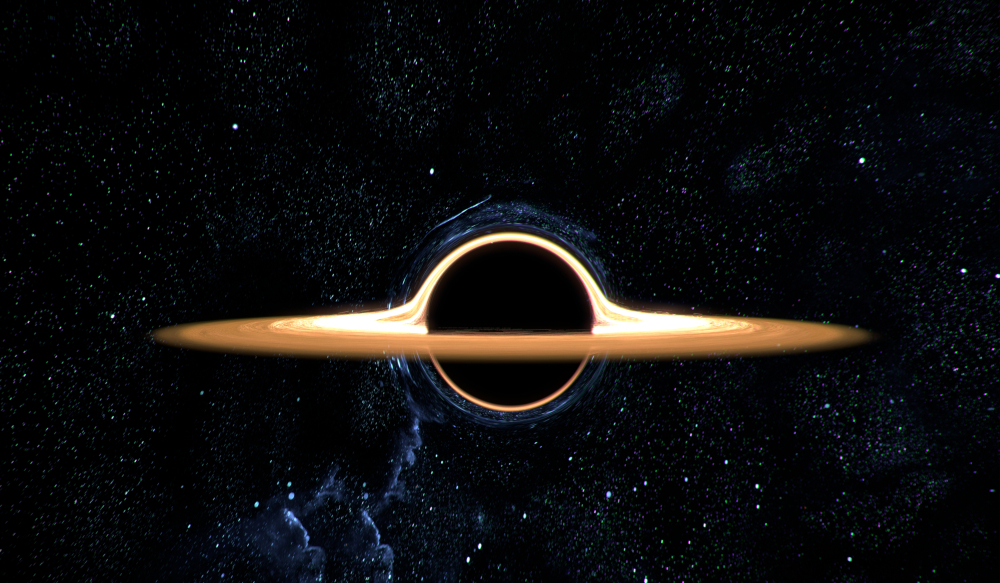
Stephen Hawking often challenged the boundaries of what physics could explain, and one of his boldest claims was made in 1971. He argued that when black holes collide, the surface area of their horizons cannot shrink. The idea, which became known as the area theorem, suggested that no matter how violent the merger, the final black hole would always be larger than the sum of its parts. For years, the concept lived only in theory, admired for its elegance but unproven.
More than half a century later, the universe delivered its answer. The event called GW250114 provided data so sharp that scientists could measure the size of each black hole during their spiraling approach and compare it with the horizon of the remnant that formed afterward. The numbers told the story clearly. The total area grew, just as Hawking had envisioned. “Because we’re able to identify the portion of the signal that comes from the black holes early on… we can infer their areas from that. Then we can look at the very final portion of the signal that comes from the final black hole, and measure its own area,” explained Maximiliano Isi and colleagues.
This confirmation does more than validate a single theorem. It strengthens the bridge between gravity and thermodynamics, reinforcing the idea that black hole horizons behave much like entropy, always moving in one direction. As Scientific American pointed out, the result offers an important step toward narrowing the search for a theory of quantum gravity, the framework that could one day unify relativity and quantum mechanics.


For Hawking’s friends and collaborators, the test carried deep emotional meaning. Nobel laureate Kip Thorne reflected on the man behind the mathematics: “If Hawking were alive, he would have reveled in seeing the area of the merged black holes increase.” The finding was a triumph not only for science but for a thinker whose intuition once seemed impossible to confirm. Now, decades later, his vision is woven into the very fabric of spacetime.
From Theory to a New Science
For much of the twentieth century, gravitational waves existed only in theory, described by Einstein’s equations but considered impossible to detect. That changed in 2015 when LIGO captured its first “chirp” from a black hole collision, a moment that confirmed a century-old prediction and opened the door to a new way of exploring the cosmos.
Until then, astronomy depended on light in its many forms, from visible and radio to infrared and X-ray, to study distant objects. Black holes, however, emit no light, and some of the universe’s most powerful events remain hidden from view. Gravitational waves offered a breakthrough. They pass directly through spacetime, reaching Earth without distortion, and carry unique information about the massive systems that created them.
This marked the birth of gravitational wave astronomy. Scientists are no longer limited to seeing the universe; they can now listen to it. Each detection reveals new details about colliding black holes, neutron stars, and the forces that govern them. The signals also allow researchers to measure cosmic distances and better understand how galaxies evolve.
In only a decade, gravitational waves have moved from speculation to one of the most important tools in astrophysics. What began as an ambitious test of Einstein’s theory has grown into a field that continues to reshape how humanity investigates the most extreme events in the universe.
The Future of Gravitational Wave Research
The discoveries of the past decade are only the beginning. The instruments that captured signals like GW250114 represent the first generation of a technology that will continue to expand in reach and sensitivity. Facilities such as LIGO in the United States, Virgo in Italy, and KAGRA in Japan are already undergoing upgrades to detect weaker and more distant signals with greater precision.
In the coming years, researchers also look toward space. The planned LISA observatory, a European Space Agency mission, will place detectors millions of kilometers apart, orbiting the Sun. By listening for much longer wavelength signals than ground-based instruments can detect, LISA will be able to track events such as the mergers of supermassive black holes at the centers of galaxies.
Each improvement opens a new window. Scientists hope to uncover evidence of intermediate-mass black holes, explore the structure of neutron stars, and perhaps detect signals that date back to the earliest moments after the Big Bang. These possibilities make gravitational wave research one of the most promising frontiers in modern physics.
The excitement comes not only from what has already been proven but from what lies ahead. The universe is filled with hidden collisions and silent catastrophes that produce no light. With the growing power of gravitational wave astronomy, those events are no longer lost to history. They are waiting to be heard.
When the Universe Finds Its Voice
Gravitational waves have turned distant collisions into messages we can finally hear. What Einstein predicted and Hawking envisioned is no longer theory but measurable reality. Each new detection confirms the laws of physics while revealing details of events once thought unreachable.
This is more than progress in technology. It is the start of a new way of knowing the universe. Instead of only seeing light from the stars, we can now listen to the vibrations of spacetime itself. Every signal carries the story of black holes, neutron stars, and the forces that shape them.
With new observatories rising on Earth and in space, the catalog of these signals will only grow. The hidden drama of the cosmos is unfolding in sharper detail, reminding us that the universe has always had a voice. We have simply learned how to listen.