
Your cart is currently empty!
He Could Have Sold His Company For $400 Million. Instead, He Gave It Away
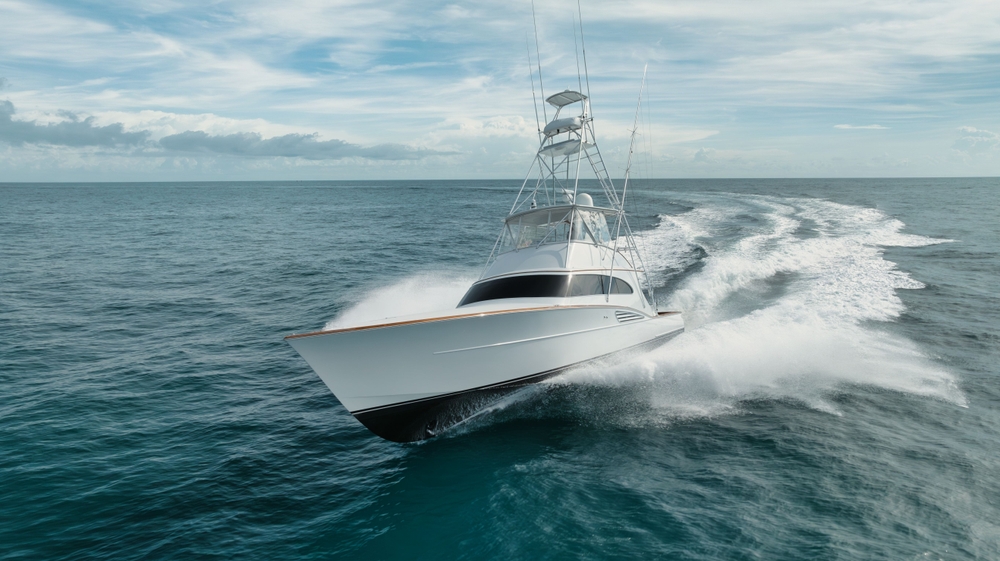
Most entrepreneurs spend decades building a business with one goal in mind: selling it for as much money as possible. For Eddie Smith Jr., that moment finally arrived after more than half a century of transforming a struggling boat manufacturer into one of America’s most respected recreational boating companies. Experts estimated he could have walked away with around $400 million. Instead, the 83-year-old made a decision that few business leaders would even consider. Rather than cashing out, he gave away ownership of the company he spent his life building, ensuring its profits will support charitable causes long after he is gone.
Contents
show
His choice comes at a time when billion-dollar acquisitions, public offerings, and massive founder payouts dominate headlines. As artificial intelligence startups create new millionaires almost overnight and many wealthy executives continue chasing ever-larger fortunes, Smith chose a very different legacy. The longtime owner of Grady-White Boats says he already has everything he needs, and believes the company’s future success should benefit communities instead of adding another fortune to his own bank account.
A Risky Purchase That Changed Everything
Long before Grady-White Boats became a household name among serious recreational anglers, the company was fighting to survive. Founded in Greenville, North Carolina, the small boat manufacturer was producing wooden boats from a deteriorating tobacco warehouse while struggling financially. By 1968, co-founder Don White was preparing to shut the business down after years of losses.
At the time, Eddie Smith Jr. had a comfortable future already mapped out. After becoming the first member of his family to graduate from college, he expected to spend his career working in his father’s successful mail-order hosiery business. He had little reason to gamble on a failing boat manufacturer that most people believed had no future.
Everything changed after meeting Don White.
Although Smith had no experience running a boat company, he saw something worth saving. Against the advice of his family’s accountant, and with financial help from his father, the then-26-year-old bought Grady-White. Looking back, Smith admits the decision was driven by something deeply personal.
“I just had a burning desire, probably unhealthy, really, to prove to myself, not to anybody else, that I could do something on my own,” he said.
The years that followed were anything but easy. Smith has said he routinely worked 100-hour weeks while trying to rescue the company from collapse. Every dollar mattered, and success was far from guaranteed. Slowly, however, his persistence began paying off as sales increased during the 1970s. What once looked like a financial disaster steadily evolved into one of the boating industry’s biggest success stories.

Building A Business That Never Lost Its Independence
As Grady-White expanded, Smith resisted a path that many growing companies eventually take. He never brought in outside investors, never sold shares on the stock market, and never gave up control in exchange for rapid expansion. Instead, he focused on building the company gradually while maintaining its independence and long-term vision.
That strategy proved remarkably successful. Over the next five decades, Grady-White developed a reputation for producing premium recreational fishing boats designed for coastal waters. The company attracted loyal customers, generated hundreds of millions of dollars in annual revenue, and remained profitable for roughly 50 consecutive years.
Unlike many founders who eventually position their companies for acquisition, Smith continued treating Grady-White as a family-run business. Employees benefited from profit-sharing programs, and decisions were made with long-term stability rather than quarterly earnings in mind. By the time the company reached its current size, industry observers believed selling it would generate an extraordinary personal fortune.
Instead, Smith was thinking about something very different. Rather than asking who would pay the highest price for Grady-White, he began asking what should happen to the company after he was gone. That question would eventually lead to one of the most unusual succession plans seen in American business.
Why He Walked Away From A $400 Million Payday
By most measures, Eddie Smith Jr. had earned the right to cash out. After spending more than five decades building Grady-White into one of America’s leading recreational boat manufacturers, selling the company could have made him roughly $400 million richer. Instead, he made the surprising decision to walk away from that opportunity entirely, saying personal wealth was no longer what motivated him.
Smith explained that he had reached a point in life where accumulating more money simply held little appeal. Rather than dreaming of extravagant purchases or luxury lifestyles, he felt grateful for what he already had and believed his fortune could accomplish far more by helping other people. His perspective stands in sharp contrast to a corporate world where many founders measure success by the size of their exit.
“God has really blessed me to put me in a position to give away the vast majority of my net worth,” Smith said during an interview.
He also dismissed the idea that greater wealth would make him happier.
“I don’t need a 200-foot yacht or to spend the winters in the Mediterranean. I’m really happy here in eastern North Carolina.”
At a time when many billionaires continue expanding their fortunes and new technology companies are producing massive personal wealth, Smith’s decision has drawn attention because it challenges the traditional definition of business success.

The Plan That Ensures Grady-White Can Never Be Sold
Rather than simply donating part of his fortune, Smith redesigned the future ownership of Grady-White itself. In recent weeks, he transferred the company’s voting shares into a legal structure known as a purpose trust, ensuring the business will remain independent forever rather than becoming another acquisition target.
The purpose trust will oversee the company’s long-term mission while preventing future owners from selling the business. Independent board members, rather than Smith or his family, will govern the trust and protect the values that shaped Grady-White for decades, including its commitment to employee profit-sharing and long-term stability.
The remainder of the company’s non-voting shares will be transferred into a newly created nonprofit organization. After Grady-White reinvests money needed to operate and grow the business, the remaining profits will be distributed to charitable causes instead of private shareholders.
Those annual profits are expected to support organizations focused on:
- Conservation and environmental protection
- Healthcare and medical research
- Education and scholarship programs
- Other charitable initiatives chosen by the nonprofit’s independent board
Although Smith will remain involved as CEO emeritus and continue receiving a salary, neither he nor his family will own the company once the transition is complete.
Personal Loss Changed His Vision For The Future
For much of his life, Smith assumed the company would eventually remain in the family. His only son, Chris, was expected to inherit Grady-White and continue leading the business into the next generation.

That plan changed after a series of heartbreaking losses.
Smith’s wife of 57 years, Jo Allison, died in 2020. Just one year later, his son Chris died from amyotrophic lateral sclerosis (ALS), the progressive neurological disease commonly known as Lou Gehrig’s disease. Losing both of them forced Smith to completely rethink what would happen to the company after his lifetime.
Reflecting on those difficult years, he remained guided by his faith.
“It was God’s plan. Sometimes we don’t understand it. I’m looking forward to getting to heaven and asking a few questions.”
Without a family successor, Smith decided the company’s future should benefit society rather than simply becoming another valuable asset to be sold.
A Growing Number Of Founders Are Choosing A Different Path
Smith’s decision did not happen in isolation. He has openly credited Patagonia founder Yvon Chouinard as a major inspiration after watching him transfer ownership of the outdoor apparel company in 2022 so that future profits would support environmental causes instead of enriching shareholders.
While this ownership model remains uncommon, it is slowly gaining momentum. According to Purpose Owned, the consultancy that helped structure Grady-White’s transition, only 81 companies currently operate under purpose trust ownership. That number has grown dramatically from just seven companies in 2018, with 15 new companies announcing similar plans this year alone.
Entrepreneur and author Eric Ries believes these examples prove there is another option beyond selling a company or taking it public.
“For decades we have taught founders they have only two options: Sell out, or let investors slowly take the wheel. These transactions show a third way is possible: an enduring company built around a long-term mission.”
For founders who want their businesses to survive beyond their own lifetimes without sacrificing their original values, the purpose trust model is beginning to attract serious attention.
A Legacy Built To Outlast Its Founder
Eddie Smith Jr. grew up in a family that often struggled financially, recalling days when Spam was served for breakfast, lunch, and dinner because it was all they could afford. From those modest beginnings, he built one of the boating industry’s most successful privately owned companies through decades of hard work, long hours, and careful decision-making.
Many entrepreneurs would see a $400 million payday as the perfect ending to that story. Smith chose a different final chapter. Instead of turning his life’s work into personal wealth, he ensured that every future success of Grady-White Boats will help fund education, healthcare, conservation, and other charitable causes for generations to come. In a business world often defined by billion-dollar exits, his decision shows that some leaders measure success by the impact they leave behind rather than the fortune they take with them.
$400 million, business leadership, business news, CEO gives away company, charitable giving, company ownership, Eddie Smith Jr., Entrepreneurship, Grady-White Boats, Inspiring Stories, legacy, nonprofit, North Carolina, Patagonia, Philanthropy, purpose trust, trending news, viral news, Yvon Chouinard