
Your cart is currently empty!
He Was Late to Class and Did the Homework Anyway. It Turned Out No One in History Had Ever Solved It

Some stories sound so perfectly structured that they feel like fiction, the kind of tale that seems designed to teach a lesson rather than record an event. This is one of those stories, except every part of it is true. In a quiet university classroom, with no audience and no sense of occasion, a simple misunderstanding led to one of the most famous moments in modern mathematics. A student showed up late, assumed he had missed homework instructions, and went home to do what he thought was expected of him. Nothing about the moment felt special, and that is precisely why it became extraordinary.
Contents
show
What makes the story endure is not just the result, but the mindset behind it. There was no confidence that history would be rewritten, no belief that greatness was within reach. There was only effort, persistence, and the assumption that difficult work was still solvable work. In an academic world often shaped by reputation and hierarchy, that assumption quietly removed the very barrier that had stopped others before him.
A Late Arrival That Changed Everything
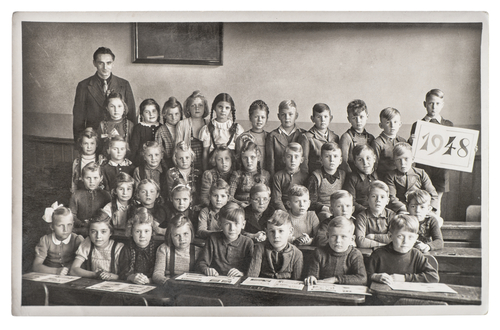
In his first year as a doctoral student at UC Berkeley, George Bernard Dantzig arrived late to a statistics class taught by the legendary statistician Jerzy Neyman. By the time he entered the room, the lecture had already begun, and two problems were written clearly on the blackboard. Dantzig did not ask what they were or why they were there. Like any student trying not to fall behind, he simply copied them down, believing they were part of the assigned homework.
There was nothing unusual about the scene. Classrooms are full of late arrivals, chalkboards full of equations, and students who quietly take notes without drawing attention to themselves. Dantzig took his seat, listened to what remained of the lecture, and left with the same expectation shared by every graduate student that difficult problems were simply part of the process.
What no one in the room realized was that the problems written on the board were not exercises designed for students. They were famous unsolved problems in statistics, questions that had already resisted solution by experienced researchers. The fact that Dantzig did not know this would become the most important detail of the entire story.

“The Problems Seemed a Little Harder Than Usual”
At home, Dantzig began working through the problems. They were challenging and required sustained effort over several days. Still, he treated them no differently than any other assignment. He did not assume they were impossible, only that they demanded more time and concentration than usual.
A few days later, Dantzig approached Neyman to apologize for the delay. As he later recalled, “A few days later, I apologized to Neyman for taking so long to do the homework—the problems seemed a little harder to do than usual.” It was a casual comment, not meant to signal anything remarkable.
The response changed everything. Neyman explained that there had been no homework assignment. The problems Dantzig had solved were well known open problems in statistics, unsolved by anyone until that point. The apology, Dantzig learned, was unnecessary. Without realizing it, he had done something no one else had managed to do.

How Not Knowing Made All the Difference
When reflecting on the experience later in life, Dantzig believed his ignorance of the problems’ reputation was the key to his success. Because he did not know they were considered unsolvable, he approached them without fear, hesitation, or self doubt. He simply assumed that if a problem was written on the board, it was meant to be solved.
Other researchers had approached the same problems fully aware of their history. That awareness, while intellectually honest, carried psychological weight. Knowing that something has never been solved can quietly convince the mind that failure is inevitable. Dantzig never carried that burden.
This idea became one of the most powerful lessons associated with his life. It also famously inspired a similar scene in the film Good Will Hunting, where a character solves an impossible equation simply because he does not know he is not supposed to be able to.

From a Classroom Incident to a Lifelong Legacy
The classroom episode was not a one time stroke of luck. It was an early sign of a mind that would go on to transform mathematics and its applications. Over a career spanning seven decades, Dantzig created the field of linear programming, a way to find optimal solutions to problems involving vast numbers of variables.
At the center of this work was the simplex method, an algorithm that allowed complex decision problems to be broken down and solved efficiently. While abstract in theory, its real power emerged when combined with the calculating ability of computers, turning it into one of the most practical tools in modern science.
Dantzig went on to become a professor emeritus of operations research and computer science, influencing generations of researchers and quietly shaping how the modern world solves problems.
Why the Simplex Method Quietly Runs the World
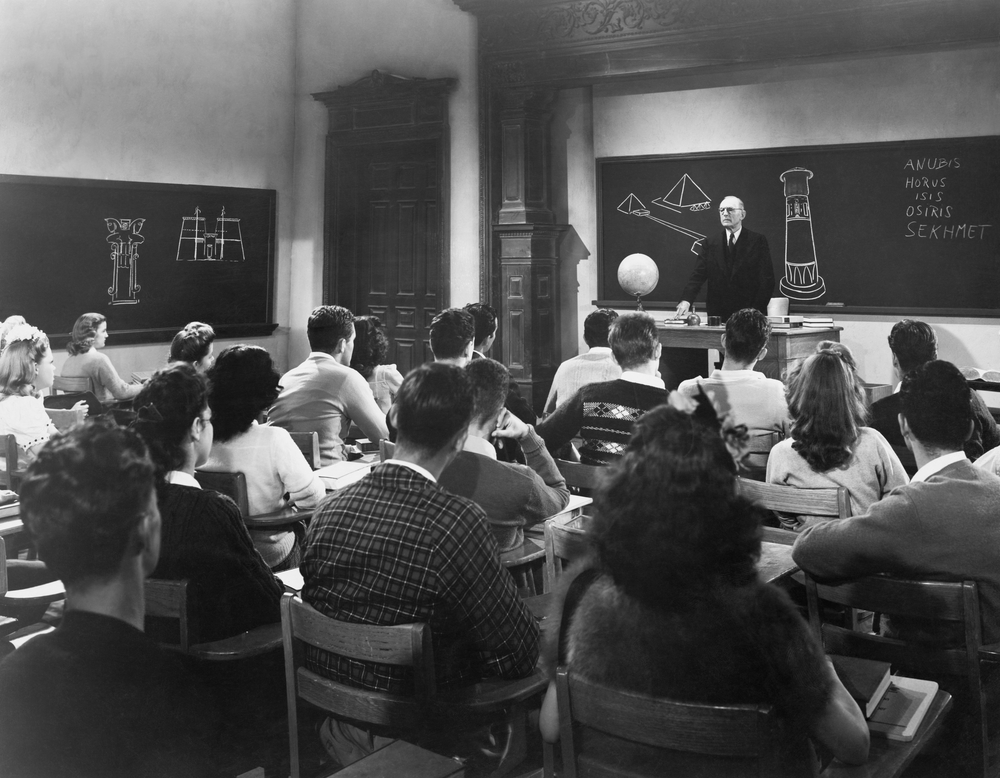
Linear programming affects daily life in ways most people never notice. Businesses rely on it to price products and allocate resources efficiently. Airlines use it to schedule flights and crews. Supply chains depend on it to move goods across continents with minimal waste.
Governments apply these methods to evaluate policy options, manage public resources, and plan infrastructure. Farmers use them to rotate crops and manage land use, while organizations rely on them to assign personnel and manage logistics on massive scales.
Arthur F. Veinott Jr., a professor of management science and engineering, once described the simplex method as “the single most widely used algorithm originated in the last six decades.” Few mathematical ideas have had such quiet and far reaching influence.

A Mind Shaped Long Before Berkeley
Dantzig was born in Portland, Oregon, to a Russian mathematician father and a linguist mother. Intellectual curiosity was part of everyday life in his household, and problem solving was encouraged from an early age.
While still in high school, his father challenged him with thousands of complex geometry problems. These were not competitions or tests, but exercises in persistence and analytical thinking that trained his mind to keep working when solutions were not obvious.
By the time Dantzig reached graduate school, he had already developed a habit that defined his life’s work: treating difficulty as a signal to think deeper rather than stop.
War, Research, and Relentless Curiosity
During World War II, Dantzig worked as an analyst for the Army Air Forces, applying mathematical reasoning to military logistics and planning. The experience reinforced his belief that abstract ideas could have real world consequences.
After earning his doctorate in 1946, he discovered the simplex method the following year. He later worked at the RAND Corporation before becoming chair and professor at Berkeley’s Operations Research Center, and eventually joined Stanford’s faculty in 1966.
Wherever he worked, Dantzig was known not only for his intellect, but for his willingness to collaborate and support younger researchers.
A Life Beyond Equations
Colleagues consistently described Dantzig as generous and encouraging. Richard Cottle, a fellow professor, remembered him as “a great colleague” who was “always providing opportunities for people.” His influence extended beyond papers and lectures into the culture of the institutions he worked within.
Outside of academia, Dantzig enjoyed painting, woodworking, and watching movies. After retiring in 1997, he completed two additional volumes on linear programming and even wrote a science fiction novel, proof that his curiosity never narrowed with age.
His interests reflected a mind that remained open and playful long after most would have slowed down.
Recognition That Came Without Flash
In 1975, President Gerald Ford awarded Dantzig the National Medal of Science, one of the highest honors in American research. By then, his ideas had already reshaped industries, governments, and scientific disciplines around the world.
His 1963 book Linear Programming and Extensions became a foundational text, while later works continued to shape the field long after his formal retirement.
Recognition came not as sudden fame, but as steady acknowledgment of decades of impact.
The Lesson Written on the Chalkboard
George Dantzig died at the age of 90 from complications related to diabetes and cardiovascular disease. He left behind his wife of 68 years, his children, grandchildren, and a legacy embedded deeply in modern systems.
Yet the story most people remember begins with a mistake. A late arrival. Two problems copied without context. It endures because it speaks to something deeply human.
Sometimes the greatest limits are not mathematical or technical, but psychological. George Dantzig did not solve the impossible because he believed he was extraordinary. He solved it because, for one moment, he did not know he was not supposed to try.