
Your cart is currently empty!
Houston Teacher’s Emotional Classroom Moment Raises Alarming Questions About Students’ Literacy Skills

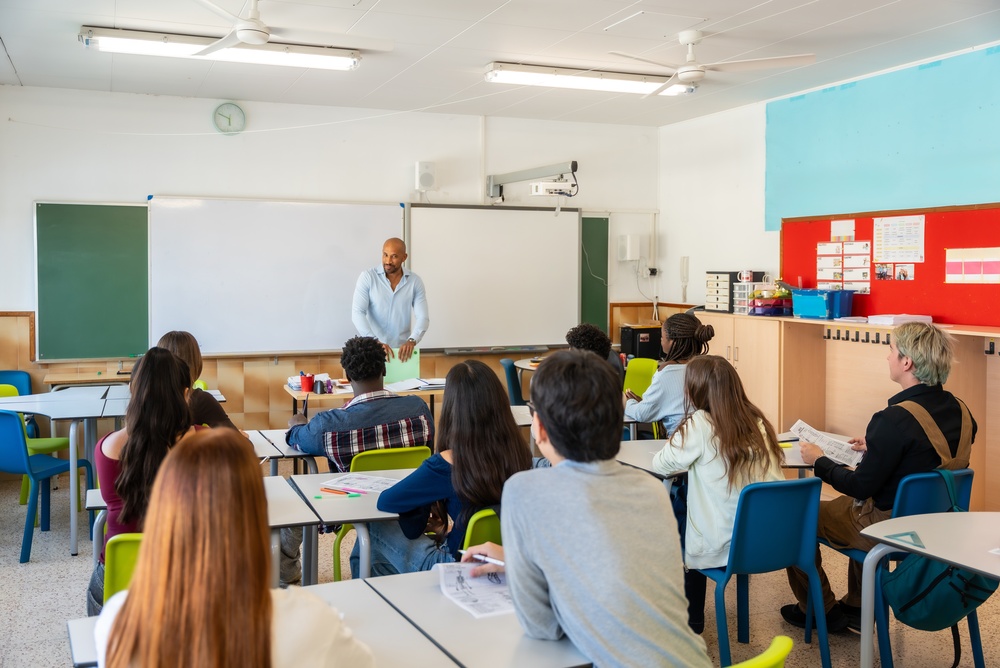
A Houston high school teacher has revealed an emotional moment in his classroom after several senior students reportedly struggled to complete a short writing exercise, leaving him questioning how prepared they were for life after graduation. Darius Williams, an educator at Wheatley High School who is also known online as DariusCooks, shared his experience in an Instagram video filmed during the opening days of the school year, explaining that the incident happened on just the second day of classes. Williams said the students were 17 and 18 years old, yet some struggled to fill in four words during a classroom assignment. His account quickly drew attention to concerns about reading, writing, and whether students approaching graduation are receiving the academic support they need.
Contents
show
The teacher became visibly emotional while describing what he had witnessed, expressing frustration over the gap between students’ grade levels and the skills he believed they should have developed by that stage. His comments have also sparked a wider discussion about the challenges facing educators, the responsibility of schools to address learning gaps, and the expectations placed on students preparing for college or employment. Houston Independent School District has responded by acknowledging that some students enter high school significantly below grade level, while emphasizing its commitment to improving academic performance. Meanwhile, questions have emerged about Williams’ teaching certification and his background as an online personality, adding another layer to a story that has drawn attention beyond his classroom.

Teacher Says He Broke Down During His Second Day In Class
Williams described the moment as an emotional breaking point after asking students to complete a writing exercise that required them to fill in four words. According to his account, several students struggled with the task despite being close to graduating from high school. “I literally broke down in the middle of class,” Williams said in the Instagram video, explaining how the experience affected him as he considered what those students might face after leaving school. He emphasized their ages and the possibility that they would soon pursue further education, saying, “These kids are leaving high school and going to college, hopefully, after they finish.”
The teacher appeared particularly troubled by the idea that students could reach their final years of high school without developing the reading and writing abilities needed for everyday academic work. Williams said he was struggling to understand how the situation had developed, especially because the school year had only just begun. “I simply don’t know where the problem is. This is only day two,” he said, expressing concern about what he had observed so early in the academic year. His account has since prompted questions about the academic preparation students receive throughout their education and whether learning difficulties are being identified early enough to prevent them from becoming more serious obstacles.
Williams Says Some Senior Students Cannot Read Or Write
Williams went beyond describing the four-word exercise and made a broader assessment of the difficulties he believed some students were experiencing. “I have seniors who simply cannot read and seniors who cannot write,” he said, highlighting what he viewed as a serious concern for students approaching graduation. He also suggested that some students could verbally explain or defend their reasoning but struggled to transfer those thoughts into written responses. That distinction matters in a classroom because students may understand an idea but still have difficulty expressing it clearly on paper, particularly when an assignment requires them to organize information and construct sentences.
Reading and writing skills affect far more than performance on a single school assignment. Students rely on literacy when completing examinations, understanding instructions, applying for jobs, pursuing college courses, and communicating in professional settings. Difficulties with written expression can also make it harder for teachers to assess what students understand, even when they can explain their thinking during a conversation. However, Williams’ account alone does not establish how many students were affected or whether the exercise accurately reflected their overall abilities. A broader assessment would be needed to understand the extent of the difficulties and determine whether students require additional instruction or individualized academic support.

Houston ISD Responds To Concerns About Academic Progress
Houston Independent School District responded by emphasizing the importance of identifying students’ academic needs and helping them improve. The district acknowledged that some students enter high school significantly below grade level and said accelerating their learning remains one of its most important responsibilities. “The first days of the school year are an important time for teachers to get to know their students’ academic abilities, assess their individual needs, and determine the support each student may require,” HISD said in its statement. The district explained that teachers use the opening weeks of school to evaluate students’ abilities, identify areas requiring attention, and determine what kind of support may be necessary.

HISD also pointed to academic progress at Wheatley High School, stating that students had made significant gains through strong instruction, high expectations, and targeted support. At the same time, the district acknowledged that some students continue to need additional academic assistance and said it would keep working with teachers and school leaders to address those needs. The response did not independently confirm the specific classroom incident described by Williams, but it addressed the broader challenge of preparing students for graduation. The district’s position places emphasis on identifying learning gaps and responding to them, particularly when students are approaching the point at which they must demonstrate their readiness for further education or employment.
Williams’ Position At Wheatley High School Explained
Williams is listed in Wheatley High School’s staff directory as an NES CTE teacher in a non-foundational program of study. CTE stands for Career and Technical Education, a category of courses designed to prepare students for additional education and careers in current or emerging professions. HISD explains that these programs can help students pursue industry certifications, while some also offer dual-credit opportunities that allow eligible students to earn college credit before graduating. The district describes its programs of study as providing real-world experience and helping students develop the knowledge and skills needed for their chosen careers.
The connection between literacy and career preparation is significant because students entering the workforce or pursuing further education must be able to understand written information and communicate effectively. Written communication can be necessary when completing applications, following workplace instructions, preparing reports, or participating in college-level coursework. A student may possess practical abilities in a particular field but still face difficulties if foundational reading and writing skills are lacking. The available information does not establish whether the students involved in Williams’ account were enrolled in his specific CTE program or whether the exercise was part of a career-focused course, so the precise circumstances of the assignment remain unclear.
Questions Emerge About Williams’ Teaching Certification
The attention surrounding Williams’ classroom video also prompted questions about his professional qualifications. In a subsequent social media video, Williams addressed those concerns and explained that he had completed the coursework required through Texas’ teacher certification program and passed his content examination. He said the remaining requirement involved completing field-experience hours, which he could not begin until the school year started. “I did all of the coursework and passed my content exam to become a certified teacher in the state of Texas by the Texas Education Agency,” Williams said, outlining the steps he had already completed.
Williams said he expected to finish the remaining requirement within a few weeks. “The third piece, getting my field hours, couldn’t get them until school started. I’ll have it done to be certified in a couple of weeks,” he added. Texas allows uncertified educators to teach while completing certification requirements, according to the supplied information, meaning that an educator may work in a classroom while progressing toward full certification. Williams also pushed back against critics questioning his decision to teach, challenging them to become certified themselves and take on the demands of working in a classroom. The available information does not establish whether he subsequently completed the remaining requirements, so his stated expectation should not be treated as confirmation of full certification.
DariusCooks Business History Adds Another Dimension
Williams is also known online as DariusCooks, and his background as a digital personality has attracted attention alongside the discussion of his teaching career. The Better Business Bureau’s profile for DariusCooks, LLC identifies Williams as the owner of the business. In May 2022, the BBB issued a consumer warning after receiving numerous complaints about the company and assigned it an F rating at the time, advising consumers to exercise caution when doing business with it. The bureau’s current profile continues to list complaints involving issues such as merchandise customers said was not delivered and disputes over refunds.
The distinction between consumer complaints and independently established facts remains important when discussing a business’s history. The BBB notes that the complaints in its profile are reports submitted by consumers and that it does not independently verify their accuracy. Those reports therefore do not establish that every allegation is true. The business history has nevertheless become part of the public conversation surrounding Williams, particularly as people examine his background beyond education. The supplied information does not establish any connection between the complaints involving DariusCooks, LLC and Williams’ classroom performance or certification process, so the two issues should be considered separately.
The Classroom Video Raises Difficult Questions About Graduation
The reaction to Williams’ video has been mixed, with some people expressing surprise at seeing the online personality working as a teacher while others have defended his concerns about students’ academic abilities. The competing responses have brought attention to two related but distinct issues: whether students are receiving the literacy instruction they need before graduation, and how educators should discuss academic difficulties in public. A short classroom exercise can reveal a problem worth investigating, but it cannot provide a complete picture of an entire graduating class. Understanding the extent of a learning gap requires broader assessments, information about students’ progress, and a clearer understanding of the support already available to them.
Schools also face the challenge of identifying why individual students struggle and determining which approaches are most likely to help them improve. Some may need additional reading and writing instruction, while others may benefit from targeted assistance that addresses specific difficulties. Teachers must be able to recognize those needs without assuming that every student who struggles with one task has the same problem. HISD has acknowledged that some students enter high school below grade level and said it remains committed to closing those gaps, while also pointing to progress at Wheatley. The available information does not establish the extent of the difficulties in Williams’ classroom, but it highlights the importance of evaluating students’ skills and responding when weaknesses become apparent.
Students Need More Than A Diploma To Be Ready For The Future
Williams’ account has drawn attention to a challenge that schools must confront when students approach graduation without the literacy skills expected at their grade level. His emotional response describes what he believes he witnessed during a writing exercise, while HISD’s statement acknowledges that academic gaps remain even as students make progress. Determining the full extent of the problem will require more information than a single video can provide, including evidence about students’ abilities and the support they receive. The district has said that closing learning gaps remains part of its responsibility, leaving the focus on whether students who need additional help receive it before they graduate.
For students preparing to enter college, technical training, or the workforce, the ability to read instructions and express ideas in writing can shape the opportunities available to them. A diploma marks the completion of a stage of education, but it does not by itself demonstrate mastery of every skill needed afterward. The challenge for schools is to identify weaknesses early enough to address them and give students a realistic opportunity to improve. The measure of graduation readiness is whether students leave school equipped to use what they have learned, not simply whether they have reached their final year.