
Your cart is currently empty!
How a Former Olympic Star Became the Center of a Landmark Legal Controversy

What was meant to be a quiet afternoon break during a long-distance cycling trip turned into a legal battle that dominated headlines across the country. In this fictional story, retired Olympic canoe champion Daniel Harper found himself at the center of an unexpected criminal investigation after stopping at one of America’s most recognizable landmarks. Within minutes, the decorated athlete went from sightseeing to sitting in the back of a police vehicle, leaving tourists and bystanders struggling to understand how such an ordinary moment had spiraled so quickly.
Contents
show
The unusual incident has since evolved into a courtroom drama that reaches far beyond one person’s actions. Prosecutors claim Harper deliberately damaged part of a recently renovated reflecting pool, while his lawyers insist the accusations ignore key facts and unfairly shift responsibility for construction problems onto an innocent visitor. As both sides prepare for trial, the fictional case has become a lightning rod for debates surrounding public property, government accountability, and the importance of evidence before drawing conclusions.

A Routine Stop Takes an Unexpected Turn
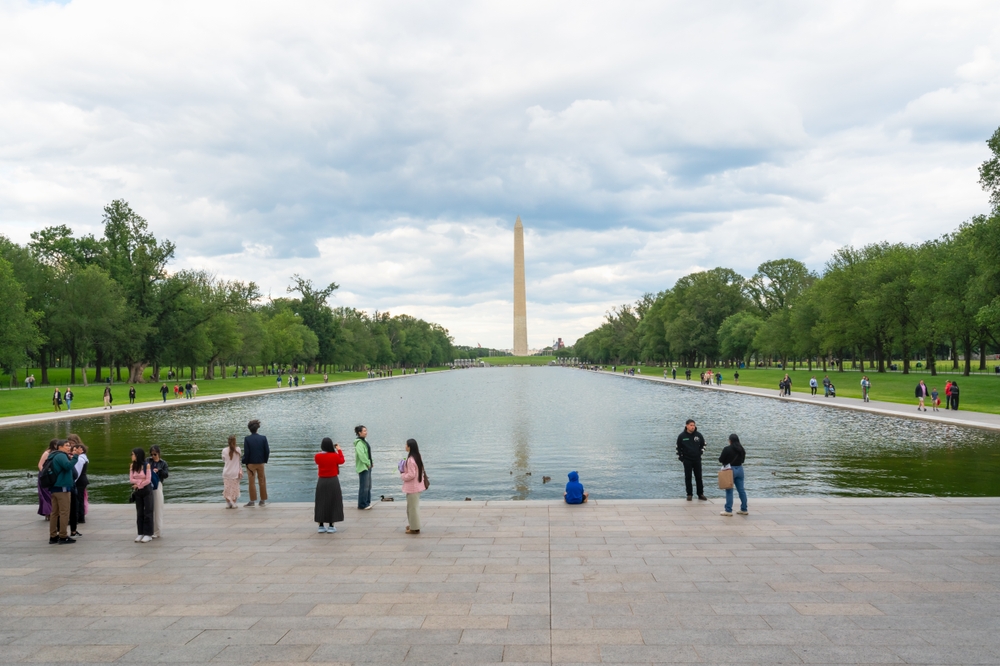
Daniel Harper had planned nothing more than a brief stop to admire the recently restored Freedom Memorial Reflecting Pool during a 50-mile cycling route through the capital. The former Olympian, now retired from international competition, had spent the morning exploring historic landmarks before deciding to pause for water and photographs.
According to this fictional account, Harper noticed what appeared to be a loose section of protective lining beneath the surface of the water. Curious about whether the material had already separated from the basin, he reached down briefly to inspect it with his hand. He later claimed he believed the damage already existed and simply wanted to understand what he was seeing.
The situation escalated almost immediately. Park officers approached Harper, questioned him about his actions, and informed him that he was suspected of damaging federal property. Within minutes, he was placed in handcuffs while confused tourists watched the scene unfold.
Harper has consistently maintained his innocence throughout the fictional investigation. He insists he never attempted to remove or tear any part of the liner and argues that his brief interaction with the pool has been completely misunderstood.

Prosecutors Believe the Damage Was Intentional
Authorities tell a very different story. Investigators allege Harper intentionally pulled at the newly installed lining, causing expensive damage to a renovation project that had only recently been completed.
During a fictional press conference, prosecutors stated they possess witness statements, surveillance footage, and expert evaluations supporting their conclusion. Officials estimate repairs will exceed several thousand dollars because specialized materials must be replaced before the pool can safely reopen.
Legal representatives for the government argue that historic landmarks require strict protection, regardless of who may be responsible for damaging them. They say every visitor has a responsibility to avoid interfering with preservation work, even when something appears unusual.
The prosecution also claims technical experts will explain how the damage could not have occurred naturally during the short period between the renovation and Harper’s visit. Those findings are expected to become one of the most closely examined aspects of the upcoming trial.
Harper’s Legal Team Fires Back
Defense attorneys reject every allegation contained in the indictment. They argue investigators rushed to assign blame without fully examining the condition of the recently completed renovation.
According to Harper’s lawyers, photographs taken before the incident appear to show visible imperfections in the pool’s lining. They believe those images raise significant questions about whether the material had already begun separating from the concrete basin before Harper arrived.
The defense says the prosecution has built its case around assumptions rather than facts. Attorneys argue that touching a damaged surface does not automatically make someone responsible for creating that damage, particularly when no evidence demonstrates deliberate intent.
They also criticize investigators for refusing to release certain evidence before trial. Their legal filings claim transparency will be essential if the public is expected to trust the outcome of the proceedings.

Questions the Defense Wants Answered
Before the trial begins, Harper’s legal team says several issues deserve closer examination:
- Whether the liner showed signs of failure before the alleged incident.
- How repair costs were estimated before a complete inspection.
- Whether surveillance footage captures the entire interaction.
- What role recent construction work may have played.
- Whether independent engineering experts agree with government findings.
Each of these questions is expected to receive significant attention during courtroom testimony.

The Athlete Behind the Headlines
Long before becoming the subject of this fictional legal dispute, Daniel Harper was known for his achievements in canoe slalom. His international career included multiple championship appearances and years representing his country on the world’s biggest sporting stages.
Following retirement, Harper remained active within the paddling community by mentoring young athletes, supporting outdoor recreation programs, and participating in environmental conservation initiatives. Friends describe him as someone who spends more time exploring rivers and hiking trails than seeking public attention.
That reputation has made the allegations particularly surprising to many who followed his athletic career. Former teammates have expressed shock that someone known for respecting nature and public spaces now faces accusations involving damage to a national landmark.
Even so, legal observers note that courtroom proceedings depend on evidence rather than reputation. Athletic accomplishments alone cannot determine guilt or innocence.
Why Reflecting Pools Require Constant Maintenance
Large reflecting pools appear simple on the surface, but they are among the most technically demanding public landmarks to maintain. Beneath the water lies a carefully engineered system of waterproof membranes, drainage layers, pumps, and protective coatings designed to withstand changing temperatures and heavy public use.
Modern restoration projects often involve replacing aging liners with specialized materials that must bond perfectly to the underlying structure. Even small imperfections can allow water to seep underneath, eventually creating bubbles, tears, or sections that lift away from the surface.
Maintenance crews also face constant environmental challenges. Algae growth, sunlight, weather changes, and thousands of daily visitors all contribute to wear over time. Engineers regularly inspect these systems because minor defects can quickly develop into expensive repairs if left untreated.
Experts say preservation projects balance historical accuracy with modern engineering. Protecting iconic landmarks requires continuous monitoring long after renovation work officially ends.
What Comes Next
The fictional case is expected to proceed to trial later this year, where prosecutors and defense attorneys will present sharply different interpretations of the same events. Expert witnesses, engineers, investigators, and bystanders are all expected to testify before a jury reaches its decision.
For Harper, the trial represents more than a legal challenge. It has transformed a quiet retirement into a national controversy that has overshadowed decades of sporting achievement. Whatever the verdict may be in this fictional story, both sides agree the evidence presented in court will determine the outcome.
One unexpected stop during a bike ride became the beginning of a courtroom battle that few could have imagined. In cases like this, every detail matters, and sometimes a single moment becomes the center of a much larger conversation.