
Your cart is currently empty!
How To Live On Earth Is the New Environmental Documentary We All Need to Watch
In the largest pear-growing forest on the planet, somewhere in China, workers move through the trees carrying feather dusters. They are not cleaning anything. They are pollinating the blossoms by hand, dusting pollen across flower after flower, performing a task so vast and so painstaking that it almost defies belief. It is the kind of image that stops you cold, and it is exactly the kind of image that opens a remarkable new film, with Benedict Cumberbatch reacting to it on screen with the same incredulity any of us might feel.
Contents
show
The footage raises an uncomfortable question, one that gives the film both its title and its purpose. How did it come to this, and what does it say about the way our species is choosing to live? The answer turns out to involve a chain of substitutions so absurd that it would be funny if it were not so alarming, a story of what we have lost and what we are scrambling to replace it with. What that chain reveals, and what the film proposes we do about it, makes for one of the more thought-provoking environmental documentaries to reach cinemas in some time.
A Different Kind Of Environmental Film
How To Live On Earth, directed by Fredi Devas and presented by Benedict Cumberbatch, is not the documentary you might expect from its subject matter. Filmed in part at London’s Natural History Museum and composed of segments contributed by a range of voices, it positions itself, with a certain cheeky ambition, as the world’s greatest “How To…” video. The framing is playful, but the intent behind it is serious, and the result is a film that demands attention while resisting the tone its genre so often falls into.
What sets it apart is its refusal to wallow. So many films about the environment and the climate crisis indulge in hand-wringing, anger, and despair, leaving audiences feeling helpless by the closing credits. This one takes the opposite approach, focusing on real, positive measures that individuals and communities can take, or begin to take, to make a difference. Cumberbatch’s considerable star power and his charismatic, engaged presentation hold the whole thing together, guiding viewers through a collection of stories from across the globe without ever lecturing them into submission. It is, in the best sense, a film that wants you to leave the cinema thinking rather than despairing.
The Bees, The Feather Dusters, And The Drones
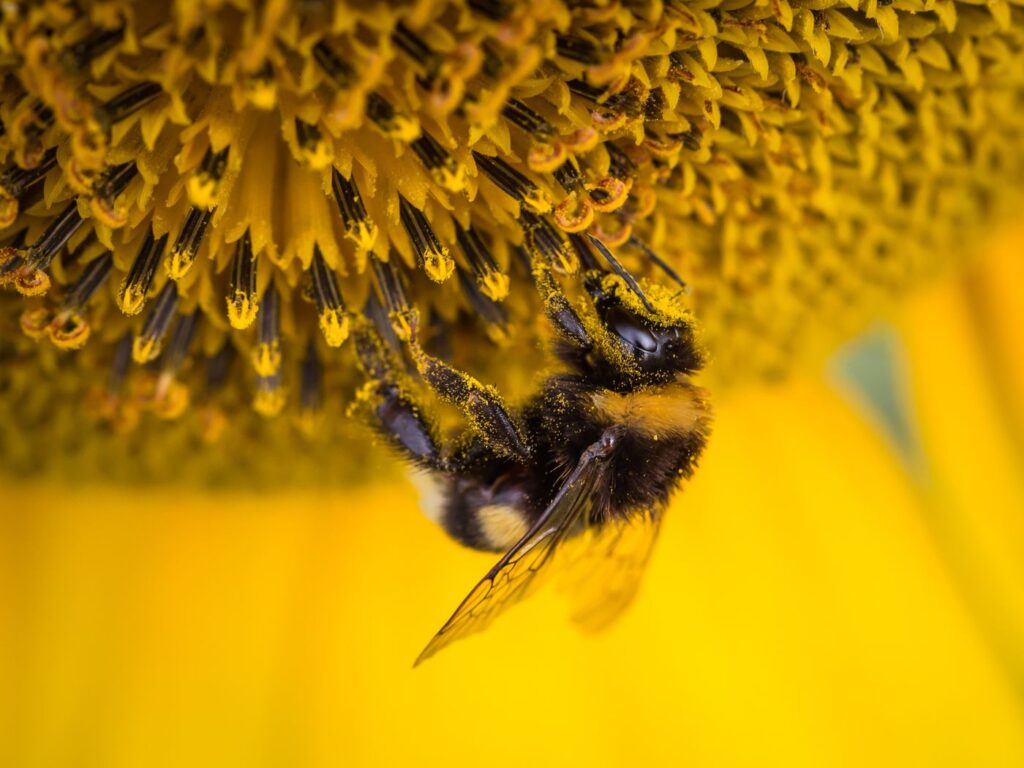
The pear forest sequence is the film’s signature parable, and it unfolds with a logic that grows more troubling the longer you sit with it. The blossom in that forest is harvested on an industrial scale, the stamens of the flowers separated and dried so the pollen can be extracted, before poorly-paid workers spread it back over the trees by hand with those feather dusters. It is laborious, expensive, and entirely artificial, a human assembly line standing in for something nature once did effortlessly.
The reason it has become necessary is the heart of the matter. The best pollinators on earth have been around since the Cretaceous period, working happily and for free for some 100 million years, until the heavy use of pesticides to boost harvests all but wiped the bees out. Without them, there would be no harvest at all, unless humans or machines step in. And here the story takes its final, dizzying turn, because those workers with their feather dusters may themselves soon be out of a job. Pollinating drones are already being trialed, machines built to replace the people who replaced the bees. Cumberbatch’s narration captures the folly with a dry precision that lingers.
“We call ourselves homo sapiens, meaning ‘wise human’. Bit presumptuous,” he observes. “We’re smart. But it doesn’t feel like we’re wise yet. How do we become wise?”
The Question At The Heart Of The Film
That question, how a clever species might actually become a wise one, runs through the entire film and gives it its shape. How To Live On Earth sets out to grapple with it directly, and in doing so it raises a cluster of larger questions that continue to ring in the viewer’s ears long after the screen goes dark. How do we value nature? How do we live alongside and with it rather than simply extracting from it? How, in the end, do we feel human again?
For Devas, the drone solution to the pollination crisis was precisely the wrong answer, and his reaction to it shaped the film’s perspective. He found the idea of building machines to do the work of pollinators both baffling and frightening, an image of the future that filled him with unease rather than hope. As he puts it, that is “not an image of a healthy, thriving future that I want for the world.” The film suggests a far simpler path, one that requires humility rather than engineering: make conditions favorable for the natural pollinators to return, and let them resume the work they have always done. It is a recurring pattern in the documentary, the contrast between elaborate technological fixes and the quieter wisdom of working with nature instead of against it.
Learning From Indigenous Communities
One of the film’s central ideas emerged from the places Devas visited in making it. He traveled to many Indigenous communities around the world, and what struck him was a shared and consistent outlook. Each of these communities made clear that they depend on the natural world and therefore take care of it, a relationship rooted not in sentiment but in a basic understanding of mutual survival.
The crucial difference, in Devas’s telling, lies in how these communities see their own place in the natural order. They regard themselves as part of nature rather than apart from it, a distinction that sounds subtle but carries enormous implications. He argues that if more of us were to adopt that same shift in perspective, it could lead to sweeping changes in how we treat the planet, the kind of changes that might allow us to hand it over to the next generation in a healthier state than we found it. It is less a single policy proposal than a way of thinking, and the film treats it as something close to its philosophical foundation.
Rethinking What Nature Is Worth
Among the film’s sharpest arguments is one about money, and specifically about how badly we measure the value of the living world. Devas offers a striking example involving trees, illustrating a problem that sits at the root of much environmental destruction. As things currently stand, a tree is often worth more in financial terms cut down and sold as timber than it is left standing, despite everything a living tree quietly provides.
A living tree, after all, draws down carbon, cleans the air, and offers homes to pollinators, services that benefit everyone yet appear nowhere on a balance sheet. The film hopes to bring that hidden value into view, to highlight the extraordinary worth of living nature and to inspire greater action to protect and restore it. It is an argument the documentary extends into other areas as well, touching on bio-investment initiatives, business models deliberately linked to regenerating the natural world that supplies their raw materials in the first place. The underlying message is that we have been keeping the wrong accounts, valuing nature only at the moment we destroy it.
Solutions From Around The World

True to its segmented structure, the film roams widely, assembling a collection of hopeful and practical stories from across the planet. It revisits the thorny issue of meat-eating, which demands colossally destructive land clearance to make room for cattle, but it does so without simply trying to make people feel guilty for enjoying meat. Instead it notes, honestly, that plant-based substitutes such as mycelium are not good enough yet, while making clear that improvements are being made all the time.
Elsewhere the film travels to South Korea to meet a forest-healing instructor who uses woodland spaces for therapy, a practice easy to mock as mere tree-hugging and yet difficult to dismiss once you consider how restorative such natural places genuinely are. In another segment, the naturalist and broadcaster Dan O’Neill visits Singapore, and rather than recoiling at this famously regimented, turbo-capitalist city, he praises its deliberate policy of weaving green spaces into the urban environment. Each of these stories offers a small, concrete model of a different way of doing things, and together they build the film’s quietly optimistic case that better choices are not only possible but already being made.
An Honest Look At The Film’s Flaws
For all its strengths, the film is not without its weaknesses, and an honest recommendation has to acknowledge them. Its tone can drift toward the touchy-feely, occasionally feeling more like a schools educational programme than a documentary made for adults, which may test the patience of some viewers. The score, too, can be heavy-handed, surging in ways that seem designed to tell the audience precisely when to feel hopeful and when to feel euphoric, rather than trusting the material to earn those responses on its own.
These are real reservations, the kind that keep How To Live On Earth from being a flawless piece of filmmaking. Yet even the more skeptical assessments concede that there is genuine food for thought here, and that the film’s substance survives its stylistic indulgences. The occasional sentimentality does not erase the value of the questions it raises or the stories it tells, and for most viewers the thoughtfulness at its core will outweigh the moments that feel a touch saccharine.
Grassroots Action Versus Top-Down Change
The film is also clear-eyed enough not to oversell what individual action can achieve, which lends its optimism a welcome credibility. It does not pretend that feather dusters, forest therapy, and greener cities will, on their own, resolve a crisis of this scale. When all is said and done, it remains probably the case that the big, decisive measures will have to come from the top, from G7 governments with the power to reshape entire economies and industries.
What the film argues, persuasively, is that grassroots thinking still plays a part in the larger picture, and that the choices made by individuals and communities are not meaningless simply because they are small. The two are not in competition so much as in partnership, with bottom-up change building the will and the example that top-down action can follow. It is a balanced position, neither naively placing the whole burden on personal virtue nor dismissing personal effort as pointless, and it reflects the film’s broader refusal to deal in easy answers.
Why It Is Worth Watching
How To Live On Earth ultimately earns its place not by being perfect but by being provocative in the truest sense, a smart, witty, and frequently unsettling collection of tales that demands your attention and leaves big questions echoing well after you have left your seat. The story of the drones replacing the humans who replaced the bees is only one example of where we are going wrong, and watching the film work through that example and many others is, as it suggests, not a bad place to begin correcting our course.
For those who want to see it, How To Live On Earth arrives in UK cinemas from June 26. It is a film that trades despair for curiosity and helplessness for possibility, and in doing so it manages to feel genuinely useful, a rarity in its field. In the end it keeps returning to the simple, pointed challenge that Cumberbatch poses as he moves through the museum reacting to all we have done, the question that gives the film its title and its conscience: is this how we want to live on earth? The film does not pretend to hold every answer, but it makes a compelling case that the question itself is one we can no longer afford to ignore.
bees, Benedict Cumberbatch, climate change, Climate Crisis, climate solutions, conservation, Dan O’Neill, documentary film, environmental documentary, environmental film, Fredi Devas, How To Live On Earth, Indigenous communities, Natural History Museum, nature documentary, pollinators, rewilding, sustainability, UK cinema