
Your cart is currently empty!
Iran Accuses Trump of Seven Falsehoods in One Hour, Warns Strait of Hormuz Could Close Again
Within sixty minutes on Truth Social, the President of the United States posted a cascade of declarations about one of the most strategically sensitive waterways on the planet. He spoke of a breakthrough, a reopening, a transaction almost complete. He thanked parties, rebuked others, and painted a picture of American diplomatic success flowing through the Strait of Hormuz.
Contents
show
Tehran read every word. And Tehran’s response, when it came, was not a press release or a measured diplomatic cable. It was a public, itemised rebuttal posted on X by the Speaker of Iran’s Parliament, accusing the President of flooding the zone with falsehoods at a rate of roughly one every nine minutes.
What followed has reopened questions that many assumed were settled days ago, questions about oil, about uranium, about who actually controls the world’s most contested shipping lane, and about whether a ceasefire built on competing narratives can hold long enough to become a deal.
Tehran’s Public Rebuke
Mohammad Bagher Ghalibaf, Speaker of Iran’s Parliament, took to X and Telegram late Friday with a message that left little room for interpretation. “The President of the United States made seven claims in one hour, all seven of which were false,” he wrote, directly contesting Washington’s account of events surrounding the Strait of Hormuz and the wider ceasefire framework.
Ghalibaf then went further. He argued that Washington had not earned leverage through public statements and would not earn it at the negotiating table either. He warned that continued US naval pressure on Iranian ports would have consequences for one of the world’s most sensitive shipping corridors.
Iran’s Parliamentary National Security Committee spokesman echoed Ghalibaf’s denials in comments to Al Jazeera. Foreign Minister Abbas Araghchi reinforced the position separately, clarifying that commercial passage through the waterway is permitted only for the remainder of the ceasefire and only along routes coordinated by Iranian authorities.
The layered response from three senior figures in rapid succession suggests Tehran viewed Trump’s social media blitz as more than routine messaging. It saw a narrative being built and moved to dismantle it before it hardened into an accepted fact.
What Trump Actually Posted
To understand the scale of the dispute, it helps to look at what the President claimed in his Truth Social sequence before Ghalibaf replied.
He wrote that Iran had agreed never to close the Strait of Hormuz again, describing the waterway as something that would no longer be used as a weapon against the world. He separated the ceasefire from Lebanon, saying the deal was in no way tied to that country while promising to “Make Lebanon Great Again.” He announced that Iran, with American help, had removed or was removing all sea mines from the region.
He then turned to the nuclear question. The United States, he said, would take all nuclear “dust” created by American B2 bombers, with no money changing hands. He added that Israel would no longer be permitted to bomb Lebanon, declaring the matter closed.
On the waterway itself, he offered a layered statement. The Strait of Hormuz was completely open and ready for business, yet the naval blockade against Iran would remain in full force until the transaction was one hundred percent complete. He said most points had already been negotiated and thanked readers for their attention.
He went on to note that Iran had announced the Strait was fully open, and closed with a jab at NATO, saying the alliance had called to offer help after the crisis passed. He turned them down, describing NATO as useless when needed, a paper tiger. Seven claims. One hour. From Tehran’s vantage point, seven fabrications.
Iran’s Line-by-Line Counter
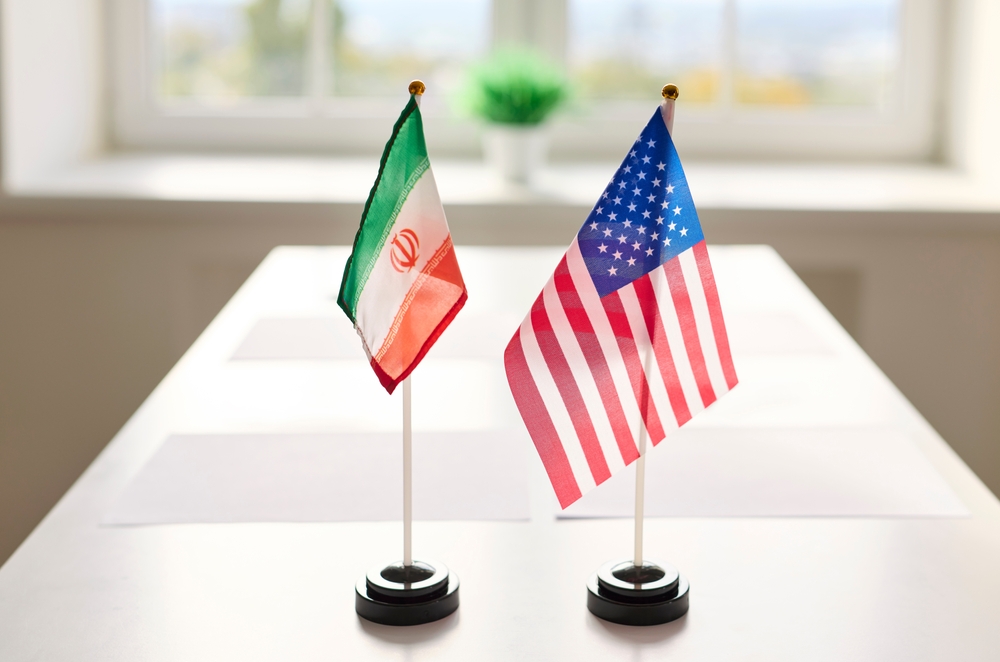
Ghalibaf’s rebuttal moved methodically through the President’s assertions. He rejected any suggestion that Iran had surrendered permanent control over maritime access. He insisted the Strait’s status would be determined by conditions in the field rather than by posts on social networks, a direct response to Trump’s framing.
Ghalibaf also dismissed the uranium claim outright, stating that Iran had not agreed to hand over its enriched stockpile. Iran’s foreign ministry reinforced the point, saying the material would not be transferred anywhere and that such a proposal had never been raised in negotiations at all.
On the waterway, Ghalibaf was specific. Passage through the Strait of Hormuz must follow designated routes and requires Iranian authorisation. He warned that if the US blockade continues, access will not. His message paired a diplomatic opening with a clear red line.
The Speaker’s closing shot was blunt. “They did not win the war with these lies, and they will certainly not get anywhere in negotiations either. With the continuation of the blockade, the Strait of Hormuz will not remain open,” he wrote.
A Conditional Reopening, Not a Deal
Much of the confusion stems from a gap between what was announced and what was actually agreed. Iran formally declared the Strait open on April 17, after a Lebanon ceasefire satisfied one of Tehran’s preconditions. Oil markets reacted immediately. Brent crude fell more than nine percent to $90.38 per barrel. US crude dropped 11.4 percent to $83.85.
Yet the reopening is neither permanent nor unconditional. Iranian officials have been careful to describe the access as tied to the temporary ceasefire framework, not to any finalised agreement with Washington. Ships must follow designated routes. They must operate with Iranian authorisation. Movement through the passage remains monitored.
No wider US-Iran accord has been signed. Negotiations continue, with major sticking points around the nuclear programme and regional security still unresolved. What exists on paper is a pause in hostilities, not a settlement.
Why Shipping Has Not Returned to Normal
Even with the Strait technically open, commercial traffic has not rebounded. Shipping volumes remain well below the pre-war average of 130 to 140 vessels per day, and more than 150 tankers are currently anchored near the waterway waiting for clarity.
Operators are reportedly holding back, seeking firmer security guarantees before committing their fleets, according to a Wall Street Journal report. Experts cited in the same piece describe the Strait as now functioning almost like a nuclear deterrent, a phrase that captures how thoroughly the passage has become a lever of geopolitical pressure rather than a routine commercial artery.
Roughly one-fifth of the world’s oil supply flows through the Strait of Hormuz. Its closure for close to two months during the recent war disrupted crude prices and supply chains across multiple economies. The memory of that disruption is fresh enough to keep insurers, charterers, and shipowners cautious regardless of what either capital announces.
The Blockade Standoff
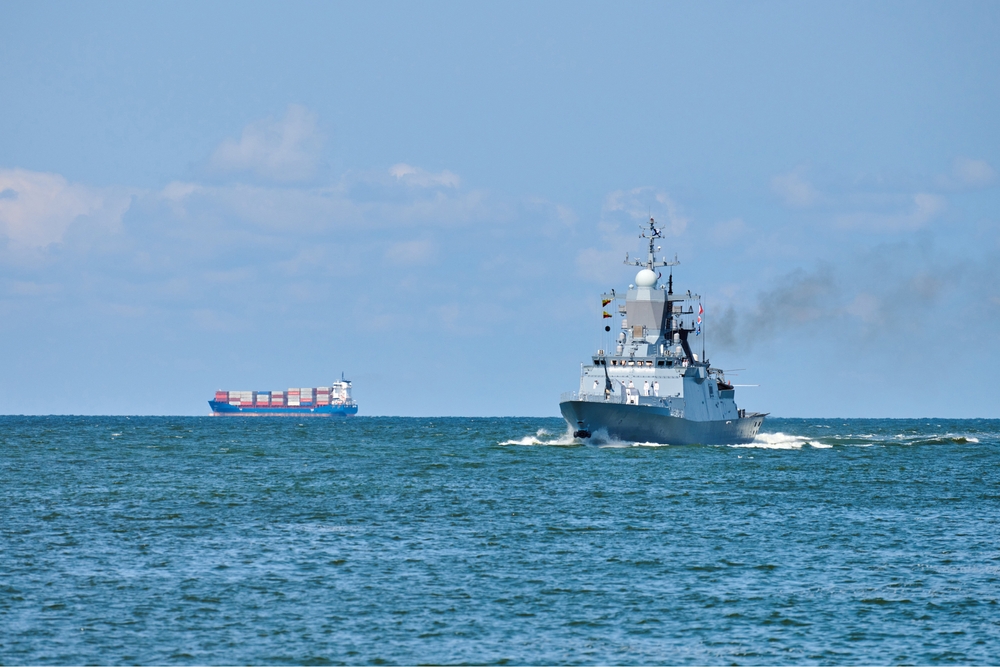
Running underneath the Hormuz dispute is a separate, equally combustible issue. Washington imposed a naval blockade on Iranian-linked shipping earlier in the month after talks collapsed. Trump has said the blockade will remain in full force until the transaction with Iran is complete, framing it as part of a pressure strategy to move negotiations forward.
He has also signalled that the alternative to continued economic pressure is a return to military action. “Maybe I won’t extend it, but the blockade (on Iranian ports) is going to remain. So you have a blockade, and unfortunately, we have to start dropping bombs again,” he said in earlier remarks.
Tehran’s counter-warning is the mirror image. If the blockade continues, the Strait will not remain open. Each side has framed its position as a response to the other’s intransigence, which leaves little daylight for a compromise that either can sell domestically.
Why Hormuz Matters So Much
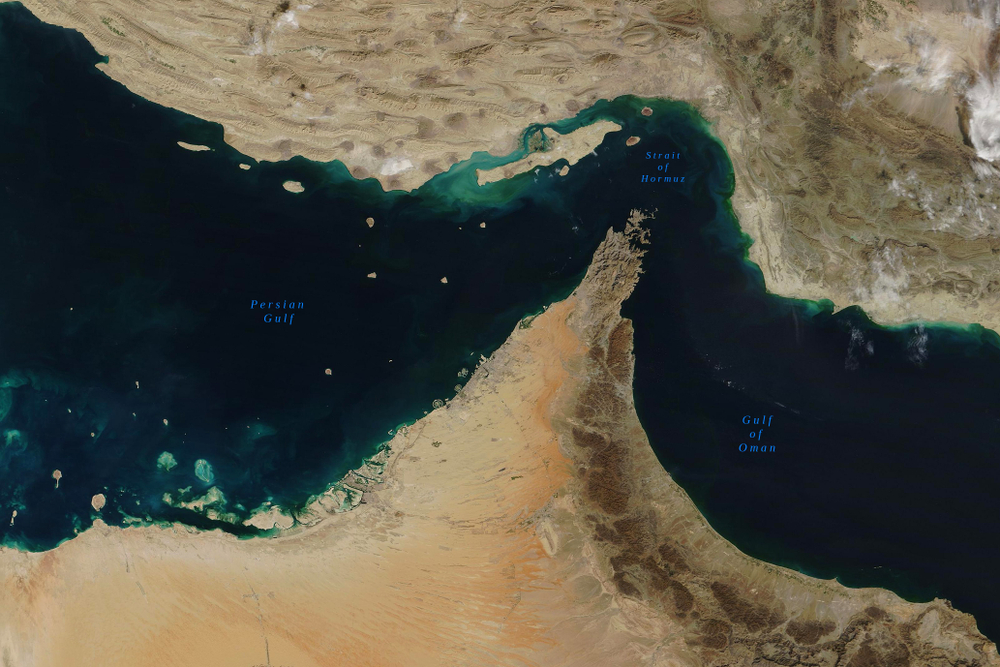
The waterway separates the Persian Gulf from the Gulf of Oman and carries crude from Saudi Arabia, the United Arab Emirates, Iraq, Kuwait, Qatar, and Iran itself. At its narrowest point, it is roughly 21 nautical miles wide, with shipping lanes squeezed into an even tighter corridor.
Close it, and global energy markets convulse. Restrict it, and insurance premiums climb, supply chains reroute, and prices climb with them. The previous closure during the war offered a preview, and that preview is why markets moved so sharply on the reopening announcement even before details were confirmed.
What makes the current moment different is the layering of disputes. The Strait is open, but conditionally. The blockade is in place, but with an uncertain end date. A ceasefire governs the broader conflict, but only for a few more days. Each element depends on the others, and each side reads the interlocking pieces differently.
The Clock Runs Down on the Ceasefire
The two-week US-Iran ceasefire is entering its final days, and the diplomatic calendar is tight. Talks are expected to continue, but the gap between Trump’s Truth Social narrative and Ghalibaf’s rebuttal suggests the two sides are not yet working from a shared set of facts, let alone a shared text.
The nuclear question looms largest. Washington has spoken of taking American-created nuclear “dust” out of the region. Tehran has said no such transfer is on the table and never has been. Without movement on that point, the wider transaction Trump describes appears more aspirational than imminent.
Regional security adds another layer. Lebanon, Hezbollah, Israel, and the question of who bombs whom and under what authority are all in motion. Trump’s statement that Israel is prohibited from bombing Lebanon was itself contested terrain, the kind of claim that requires quiet confirmation from multiple capitals before it can be treated as settled.
For now, what the public sees is a contest of narratives. One side posts claims of victory and transactional progress. The other side posts numbered rebuttals and warnings about what will happen if pressure does not ease. Between them sit the ships at anchor, the oil markets watching every headline, and a ceasefire clock ticking toward its expiry.
Tehran’s message, stripped of its formality, was that facts on the water will outrank posts on a screen. Whether Washington agrees, and whether the two sides can find enough common ground to turn a pause into a deal before the clock runs out, is the question the coming days will answer.
Abbas Araghchi, Brent crude, Donald Trump, enriched uranium, geopolitics, global shipping, Hormuz shipping, Iran, Iran foreign ministry, Iran nuclear programme, Iran Parliament, Iran US negotiations, Iran US war, Lebanon ceasefire, Middle East crisis, Middle East tensions, Mohammad Bagher Ghalibaf, naval blockade, oil markets, Strait of Hormuz, Tehran Washington standoff, Truth Social, US Foreign Policy, US Iran ceasefire, US Iran relations