
Your cart is currently empty!
Ireland Is Giving Artists Weekly Payments And The Results Are Turning Heads
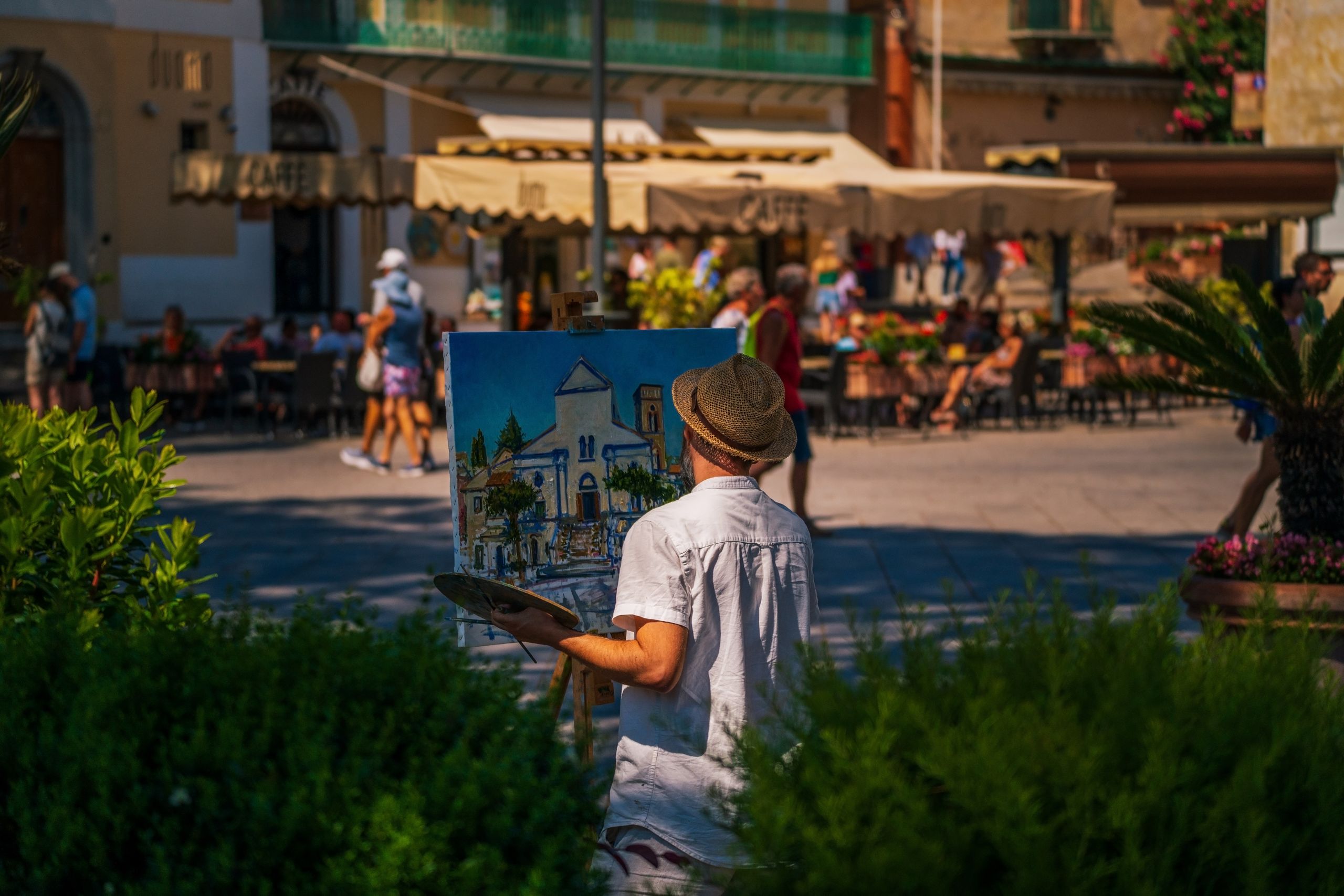
For generations, becoming an artist has often meant accepting an uncomfortable financial reality. Writers, musicians, actors and painters are expected to pursue their creative ambitions while somehow finding enough work elsewhere to pay their bills. Ireland has decided to challenge that arrangement with a government-backed scheme that pays selected artists €325 every week, regardless of how much work they produce.
Contents
show
The initiative has already delivered results that caught the government’s attention, with an independent analysis finding that every €1 invested generated €1.39 in economic and social benefits. Following a three-year trial, Ireland has made the programme permanent, potentially opening the door to a very different relationship between governments and creative workers.
Ireland Has Introduced A Different Way To Support Artists
Ireland’s Basic Income for the Arts programme began in 2022, when the country was still dealing with the economic consequences of the COVID-19 pandemic. The crisis had caused galleries, performances and other cultural activities to shut down, leaving many creative professionals without reliable income. The government introduced the pilot to help artists recover financially while giving the country’s creative industries an opportunity to rebuild.
The arrangement was relatively straightforward, but unusual compared with traditional arts funding. Selected participants received €325 per week, providing a regular source of income that was not dependent on completing a particular project, selling artwork or securing a performance contract. This allowed recipients to spend more time developing their creative careers without constantly searching for unrelated employment.
Following the pilot’s three-year period, the Irish government decided to make the programme permanent in February 2026. The new arrangement will continue supporting 2,000 artists over three years, with participants receiving the same weekly payment during their eligibility period. After the three years end, their payments will gradually decrease over a further three months.
The programme is also open to a much wider range of creative professions than some people might expect. Eligible applicants can include writers, visual artists, actors, musicians, directors and make-up designers, among other creative workers. Its broad eligibility reflects the government’s intention to recognise the different professionals who contribute to the country’s cultural industries.
The Economic Results Helped Secure The Programme’s Future

Providing thousands of people with regular government payments naturally raises questions about public spending. Critics can reasonably ask whether the investment produces enough value to justify the expense, particularly when governments face competing demands for limited resources. Ireland’s pilot was therefore an opportunity to examine whether supporting artists could generate benefits beyond the individuals receiving the money.
An independent cost-benefit analysis conducted by Alma Economics found that every €1 invested in the scheme generated an estimated €1.39 in economic and social benefits. The findings gave supporters a measurable argument for continuing the programme and demonstrated that the financial contribution could produce returns beyond the creative sector itself.
Research into the pilot also found that participating artists spent an average of four additional hours each week working on their projects. Having a predictable income allowed them to dedicate more time to creative activities rather than accepting as many unrelated jobs to cover their living expenses. That additional time could be used for research, rehearsals, experimentation, production and collaboration with other professionals.
The programme also reportedly reduced spending on certain social support schemes, including job-seeking and unemployment benefits. This provided another part of the economic argument behind the initiative, as participants had greater financial stability while remaining active in their chosen professions.
Minister Patrick O’Donovan welcomed the findings in a government statement, describing the economic return as encouraging for both the creative sector and the wider public. The results helped establish that the scheme was producing benefits beyond simply transferring public money to individual artists.
Artists Say The Weekly Payments Changed Their Lives

The economic figures explain why Ireland decided to continue the programme, but the experiences of the artists who received payments offer a more personal understanding of its impact. For many people working in creative industries, financial uncertainty influences nearly every professional decision. An actor might need to accept unrelated employment instead of attending auditions, while a musician could struggle to afford the time required to develop new material.
Aisling O’Mara, an Irish actor who benefited from the original pilot, described the experience as “life changing” when speaking to CNN. She discovered she was pregnant around the same time she was accepted into the programme, making the financial support particularly significant for her circumstances. The regular payments helped her continue pursuing acting while balancing the responsibilities of raising her daughter.
O’Mara explained that without the scheme, remaining in the industry would have been difficult. Speaking to CNN, she said, “I don’t think it would be feasible for me and my daughter to continue living the way we are, and I don’t think it would have been possible for me to still be in this industry.” Her experience illustrates how financial support can influence whether someone is able to remain in a profession that offers limited employment security.
She also explained that acting requires considerable preparation before auditions and performances. Actors need time to learn material, rehearse and prepare for opportunities that may not result in paid work. The weekly payments gave her more flexibility to invest that time in her career, which subsequently developed while she continued balancing acting with teaching.
O’Mara eventually landed the lead role in a theatrical adaptation of Katriona O’Sullivan’s bestselling memoir, Poor. However, she remains aware that professional success does not necessarily guarantee financial security in the acting industry. She told CNN that she has friends in their 40s who are hugely successful actors but still find themselves couch surfing, describing the situation as “wild.”
The Programme Has Given Artists More Creative Freedom

Another participant, multimedia artist Elinor O’Donovan from Cork, described how the payments changed the way she approached her work. Before joining the programme, she worked part-time as a receptionist to afford her rent, leaving less time for her artistic projects. The additional income allowed her to move towards working full-time as an artist.
O’Donovan told The Big Issue that creative work requires time and space to develop. She explained that the financial support gave her the flexibility to experiment with ideas she might otherwise have abandoned because of financial pressure. That freedom also allowed her to pursue projects outside her previous experience.
One particularly significant development was her decision to make a film for the first time. The additional money allowed her to pay other people to collaborate on the production, creating opportunities that would have been difficult to afford previously. Filmmaking subsequently became a major part of her creative work.
Her experience highlights an important aspect of the scheme. Artists do not always know in advance which projects will become successful or commercially valuable, and some of their most interesting work requires experimentation. By providing income without demanding a specific creative result, Ireland has allowed recipients to explore ideas that might not have been financially possible under conventional funding arrangements.
O’Donovan also described the support as validating because it recognised the value of her work. That recognition can be particularly significant in industries where creative professionals are frequently expected to accept financial insecurity as part of pursuing their ambitions.
Why Making A Living As An Artist Can Be So Difficult

The phrase “starving artist” has existed for generations, reflecting the financial difficulties associated with creative professions. Although successful musicians, actors and painters can earn substantial amounts, most people working in these industries do not enjoy the same financial security. Employment is often irregular, and income can depend on individual projects, contracts, exhibitions or performances.
The difficulties are particularly visible in the music industry, where streaming has changed how musicians earn money from recorded work. The decline of physical record sales has placed additional pressure on artists, while the closure of grassroots music venues has reduced opportunities for performers to build audiences and develop their careers.
The situation is also affected by wider funding decisions. In the United Kingdom, local government funding for culture in England reportedly fell by 48% between 2009 and 2023. Wales and Scotland experienced reductions of 40% and 29%, respectively, according to figures cited by The Big Issue.
Several challenges make it difficult for independent creative professionals to maintain stable careers:
- Irregular employment: Many artists depend on individual projects, temporary contracts and performances rather than predictable monthly salaries.
- Unpaid preparation: Auditions, rehearsals, research and creative development can consume significant time without guaranteeing payment.
- Production expenses: Equipment, materials, studio space and collaboration with other professionals can require substantial upfront spending.
- Limited opportunities: Competition for paid work can leave talented artists searching for their next opportunity for extended periods.
- Unrelated employment: Many creatives need additional jobs to cover rent and everyday expenses, reducing the time available for their chosen profession.
Ireland’s programme attempts to reduce some of these pressures by giving selected artists a dependable financial foundation. Participants can use their time to develop their careers without making every creative decision around immediate financial survival.
Norway And France Have Their Own Artist Support Systems

Ireland is not alone in recognising that creative workers can benefit from financial security. Norway and France already operate different systems designed to help artists maintain their careers, although their arrangements work differently from Ireland’s basic income model.
Norway’s Statens Kunstnerstipend programme provides selected creative professionals with financial support for periods of up to five years. Rather than attaching payments to a specific project, the scheme provides funding directly to practitioners, allowing them to use the money for their living expenses, exploration and production.
Artist Tobias Prytz, who creates large-scale installations using timber, receives approximately 330,000 Norwegian kroner (£25,600) annually through the programme. That amount represents roughly half of Norway’s average salary, according to The Big Issue. Prytz explained that the support allowed him to develop his work without constantly moving between different jobs.
France has a different approach through its intermittents du spectacle system, which provides unemployment insurance support for eligible performing artists and entertainment workers during quieter periods. Participants must complete 507 hours of work in the cultural sector over a year to qualify for the benefits.
Parisian playwright Esther Hammecker is among the creative professionals who have benefited from the French arrangement. She explained that the system allows her to work evenings and weekends at a local theatre while keeping her daytime hours available for developing her own productions.
Hammecker acknowledged that maintaining eligibility can be stressful because participants need to secure enough contracts to meet the required working hours. However, she described the arrangement as a blessing because it reduces the pressure to find unrelated employment simply to pay her bills.
These examples demonstrate that different countries are experimenting with ways to protect creative careers. Ireland’s approach stands out because it has moved from a temporary pilot to a permanent government programme supported by reported economic findings.
Could The UK Introduce A Similar Basic Income Scheme?
Ireland’s decision has attracted attention in the United Kingdom, where financial pressure on creative industries has raised concerns about who can afford to pursue an artistic career. Although the UK has produced internationally recognised musicians, actors and performers, the opportunities available to emerging artists have become increasingly difficult to access without financial support.
Neil Griffiths, chief executive of the charity Arts Emergency, has highlighted how economic inequality affects access to cultural professions. He told The Big Issue that only one in 10 people working in culture in the UK came from a working-class background. He also described the cultural sector as experiencing significant financial insecurity.
The concern is that creative careers increasingly become accessible to people who already have enough financial support to spend time developing their work. Someone who needs a full-time job to cover basic living expenses may struggle to compete with someone who can afford to spend their days attending auditions, rehearsing or producing independent projects.
Griffiths believes that an artist basic income could help address some of these barriers. However, he also acknowledged the risks, including the possibility that funding could disproportionately reach people who are already privileged enough to work in the arts.
He questioned whether supporting a limited number of artists would address the structural problems affecting the wider creative sector. His comments reflect an important challenge for any government considering a similar scheme: deciding who receives support and how public funding can reach those who need it most.
The economic pressures facing artists are also changing as generative artificial intelligence becomes increasingly prominent. Creative professionals are confronting questions about how their work is used to train AI systems and whether they receive adequate compensation when their creations contribute to commercial products.
Ireland’s programme does not solve every problem facing the creative industries, but it offers another approach to supporting the people responsible for producing cultural work.
The Programme Still Has Limitations And Critics

Despite the positive economic findings, Ireland’s basic income scheme has not been universally welcomed. One of the biggest criticisms concerns the limited number of places available compared with the number of artists seeking financial assistance.
More than 8,000 eligible artists applied for the original pilot, but only around a quarter were randomly selected to participate. That means thousands of people who met the eligibility requirements were unable to access the weekly payments.
The three-year limit also creates uncertainty for recipients who have become accustomed to having a predictable income. Once their funding period ends, they must adjust to losing the payments and cannot immediately apply for another funding cycle. They will have to wait three years before having another opportunity to apply.
There are also wider questions about the distribution of public money. Ireland is experiencing serious housing pressures, including record levels of homelessness, which has led some critics to question whether funding for artists should receive priority when other groups also require assistance.
The government has pointed towards wider investment in the cultural sector as part of its response. A spokesperson for the Department of Culture, Communications and Sport told CNN that more than €140 million had been provided for the Arts Council in 2026, representing a 75% increase since 2020.
However, the department did not confirm whether the basic income scheme would eventually expand. For now, the programme remains limited to 2,000 participants, leaving many other creative professionals without the same financial protection.
Ireland Is Putting A Financial Value On Creative Work
The debate surrounding Ireland’s programme goes beyond the question of whether artists should receive weekly payments. It raises a much larger issue about how governments measure the value of cultural work and whether creative industries deserve the same attention as other parts of the economy.
A successful concert can generate significant business for restaurants, hotels and local shops. A theatre production can bring people into cultural spaces, while independent artists contribute to the stories and experiences that help define a country’s identity. These benefits are not always easy to measure through traditional employment figures or individual sales.
Peter Power, an artist and member of the National Campaign for the Arts steering committee, described the initiative as a fundamental change in how artists can approach everyday financial security. Speaking to CNN, he explained that a regular income can influence people’s relationships with banks, landlords, savings and pensions.
Power also pointed to Ireland’s connection with its cultural heritage, arguing that storytelling and artistic expression are deeply connected to the country’s identity. The programme, in his view, represents an opportunity to recognise that contribution through a different form of public investment.
The reported economic return gives Ireland a financial reason to continue the initiative, while the experiences of its participants show what stable support can make possible. For thousands of other artists who missed out, however, the challenge of building a sustainable creative career remains unchanged. Ireland has made its decision to keep paying selected artists, and other governments now have a real-world programme to examine when considering how much support their own creative communities should receive.