
Your cart is currently empty!
Ireland Gave Artists a Guaranteed Income and It Changed Everything
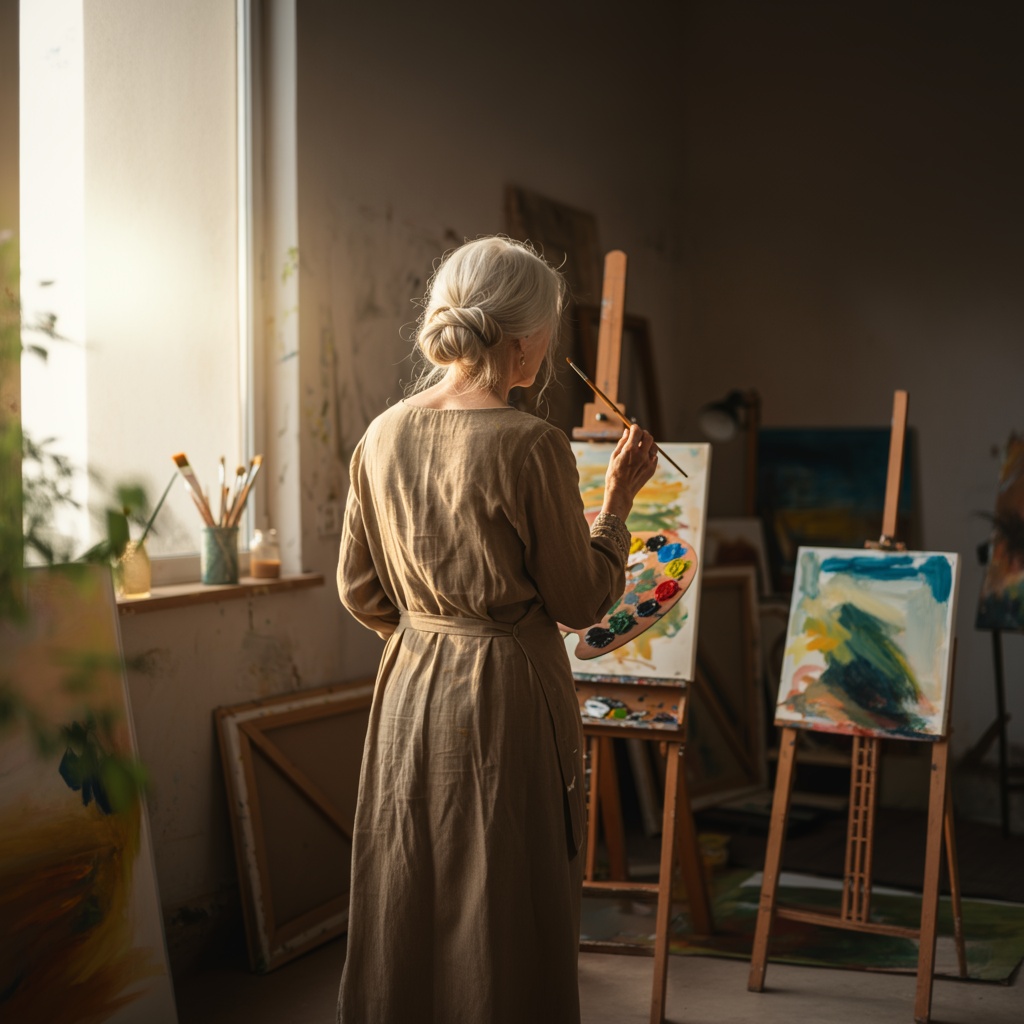
For years, critics have argued that paying people a guaranteed income would only encourage laziness and drain taxpayer money. Ireland just tested that idea on thousands of artists, and the outcome surprised even supporters of the program.
Contents
show
After investing millions into a three-year basic income experiment for creatives, the Irish government discovered the program did not weaken the economy. It strengthened it.
The country paid around 2,000 artists roughly €325 a week, or about $1,500 a month, through a government initiative called the Basic Income for the Arts scheme. The payments came with almost no conditions attached. Artists were free to paint, write, rehearse, perform, compose music, or simply focus on surviving in industries that are often financially unstable.
When the pilot ended, the numbers told a story few expected.
For every €1 invested in the program, Ireland received €1.39 back in economic and social benefits. What initially looked to some like an expensive cultural gamble turned into a measurable financial gain for the country itself.
The findings are now fueling a much larger debate about creativity, work, and whether governments should rethink how they support people in unstable industries.
Ireland’s Experiment Started After the Pandemic Crushed the Arts
The Basic Income for the Arts program officially launched in 2022, during the long economic fallout of the COVID-19 pandemic.
For artists, the pandemic was devastating. Galleries closed. Music venues shut down. Theater productions disappeared overnight. Freelance performers, writers, designers, and technicians suddenly lost income for months at a time.
Ireland’s government decided to try something unusual.
Instead of offering temporary grants tied to projects or complicated application systems, it gave selected artists direct weekly payments. The money was taxable, but recipients were not required to produce specific work or hit performance targets.
The idea was simple. If artists no longer had to spend most of their time worrying about rent, bills, and survival jobs, they could spend more time actually making art.
More than 8,000 artists applied for the scheme. Only 2,000 were selected through a lottery system.
The group included actors, musicians, writers, filmmakers, painters, dancers, makeup artists, and other creative workers from across Ireland.
For many of them, the payments changed daily life immediately.
Actor Aisling O’Mara described the program as “life-changing” in an interview with CNN. Around the same time she entered the scheme, she discovered she was pregnant.
“Without it, I don’t think it would be feasible for me and my daughter to continue living the way we are,” she said.
O’Mara explained that acting requires huge amounts of unpaid preparation. Auditions, rehearsals, travel, and script work often happen long before anyone receives a paycheck.
“The thing about acting is you need to give it time,” she said. “You need to prep for these things.”
The basic income gave her that time.
The Program Produced More Than Just Art
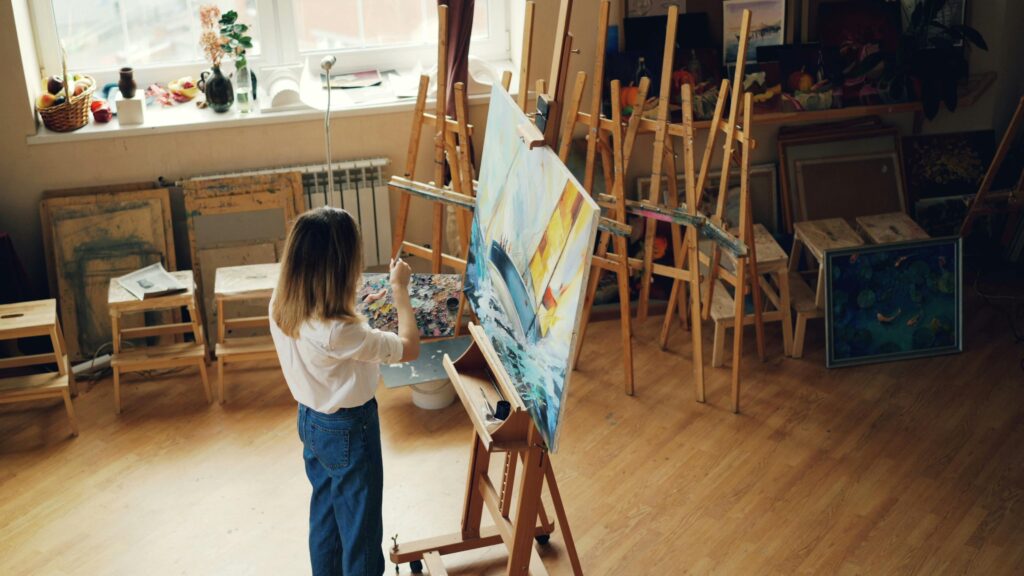
One of the biggest surprises from the pilot was how much additional work artists actually produced once financial pressure eased.
According to findings from Alma Economics, artists in the program spent an average of four more hours per week working on creative projects compared to those outside the scheme.
That increase matters more than it may sound.
Creative industries generate revenue in countless ways that are difficult to measure immediately. Films employ crews. Music events fill restaurants and hotels. Books support publishers and retailers. Art festivals attract tourism.
Ireland already has a deep cultural connection to storytelling and artistic identity. The country has produced generations of internationally known writers, musicians, actors, and poets.
Supporters of the program argued that investing in artists was not charity. It was the economic infrastructure.
Irish Culture Minister Patrick O’Donovan said the results confirmed that belief.
“The positive economic impact this report has revealed is a very encouraging outcome for the sector and the general public,” he said in a statement.
“The economic return on this investment in Ireland’s artists and creative arts workers is immediately having a positive impact for the sector and the economy overall.”
The report estimated that the pilot cost around €72 million overall, but generated close to €80 million in economic and social value.
Some of those savings came from unexpected areas.
Participants relied less on unemployment support and job-seeking benefits. Others reported improved mental well-being and greater long-term financial stability.
For artists who often move between freelance gigs and unstable contracts, predictable income changed how they planned their lives.
Peter Power, an artist and member of Ireland’s National Campaign for the Arts, said stable income affects far more than monthly budgeting.
“It changes your relationship with banks, landlords, savings, pensions,” he told CNN.
“The fundamental architecture of being a secure citizen becomes available to you.”
The “Starving Artist” Problem Has Existed for Centuries
The phrase “starving artist” exists for a reason.
Throughout history, creative work has often been admired publicly while remaining financially unstable privately. Many successful artists spent years balancing part-time jobs, debt, and unpredictable paychecks before gaining recognition.
Even today, actors, musicians, and visual artists frequently depend on second jobs to survive.
Brían Ó Súilleabháin, another Irish actor selected for the pilot program, said the payments allowed him to quit his retail job and focus fully on acting.
“It was life-changing,” he told the BBC.
“Without the Basic Income, I would have had to go back to the day job.”
That safety cushion helped him continue auditioning and taking creative risks that may not have been possible otherwise.
Supporters argue that this instability pushes many talented people out of the arts entirely, especially those from lower-income backgrounds.
People with family wealth or financial support often have more freedom to remain in creative industries long enough to succeed. Others eventually leave because survival becomes impossible.
That concern now sits at the center of a growing debate in countries beyond Ireland.
Scottish artists and cultural leaders have started pushing for similar programs, warning that many young creatives may simply abandon artistic careers if financial conditions continue worsening.
Poet Peter MacKay warned that losing support for artists could slowly damage a country’s culture itself.
“We’ll lose new voices and new ways of thinking,” he said.
“Our entire culture will just wither.”
Critics Still Worry About Dependency and Cost
Despite the positive economic findings, not everyone supports programs like Ireland’s.
Universal basic income has remained one of the most controversial economic ideas in modern politics.
Supporters argue that direct payments reduce poverty, ease stress, and help people pursue education, caregiving, entrepreneurship, or creative work without constant financial panic.
Critics argue the opposite. They believe guaranteed payments may reduce motivation to work while creating enormous long-term costs for governments.
A 2020 Pew Research survey found that 54% of Americans opposed the federal government providing a universal basic income to all adults.
Many respondents feared such programs could increase dependence on the state or discourage employment.
Ireland’s arts program avoided some of those criticisms because it focused on a relatively small group and remained connected to professional creative work.
Still, questions remain about scalability.
The pilot included only 2,000 participants out of more than 8,000 applicants. Not every artist received support, and even those selected knew the payments would eventually expire.
The Irish government later announced plans to make the program permanent, though expansion may happen slowly depending on budgets.
O’Donovan defended the gradual approach while speaking to the BBC.
“Rome wasn’t built in a day,” he said.
Some economists also caution that measuring long-term cultural and social benefits can be difficult. Economic returns may fluctuate depending on how programs are structured and how large they become.
Yet Ireland’s results are now difficult to dismiss entirely because the country produced measurable data instead of theoretical arguments.
The pilot did not collapse under abuse. It did not lead to mass inactivity. The artists involved generally worked more, not less.
Other Countries Are Watching Closely

Ireland’s experiment has attracted international attention because few governments have attempted anything similar on a national scale.
In the United States, several smaller guaranteed-income programs have appeared in recent years, though most rely on private funding or limited city-level initiatives.
Organizations like Springboard for the Arts in Minnesota and Creatives Rebuild New York have offered direct payments to artists facing financial hardship.
San Francisco’s Yerba Buena Center for the Arts also launched a guaranteed-income initiative for local artists using public funds.
Outside the arts world, broader universal basic income pilots are currently being studied in multiple American states.
Stanford University’s Basic Income Lab has monitored experiments involving direct cash payments for families and low-income individuals. Supporters say recipients often spend the money on necessities such as rent, transportation, childcare, and education rather than on luxury spending.
The conversation around guaranteed income has shifted noticeably over the past decade.
What once sounded politically impossible is now being tested in multiple forms around the world.
The reasons vary depending on the country. Some governments worry about automation replacing jobs. Others focus on poverty, housing insecurity, or unstable gig-economy work.
Ireland’s version stood out for its focus on creativity and culture.
The country essentially treated artistic work as something socially valuable enough to protect directly.
That idea still divides opinion sharply.
To some people, funding artists sounds frivolous during periods of economic pressure and rising living costs. To others, the results reveal a larger truth about how creative work contributes to society.
Movies, books, music, theater, design, and entertainment constantly shape culture, even as the people creating them often struggle financially behind the scenes.
Ireland’s experiment forced that contradiction into public view.
The Results Changed How Many People Viewed the Arts
One of the more surprising outcomes from the pilot involved public opinion.
Surveys showed that many Irish citizens supported the scheme, including people who did not work in creative industries themselves.
Part of that support likely came from the economic results. The program did not become the financial disaster critics predicted.
But another reason may be simpler.
People often understand the emotional value of art more than political debates suggest.
Music, film, books, comedy, television, and live performances became lifelines for many people during the isolation of the pandemic years. Entire industries kept audiences connected, distracted, comforted, and entertained during long lockdowns.
That experience may have changed how some people think about creative work.
For decades, artistic careers were often treated as unrealistic or financially irresponsible pursuits. Ireland’s pilot challenged that assumption by treating artists less like hobbyists and more like workers contributing to the national economy.
Donald Shaw, creative director of Scotland’s Celtic Connections festival, warned that failing to support artists could eventually create a “very dry desert” culturally.
His concern reflects a growing fear inside creative industries worldwide.
As housing costs rise and freelance work becomes less stable, fewer people may be able to afford pursuing creative careers at all.
That could eventually shape the kinds of stories, films, music, and art society produces in the future.
Ireland’s experiment did not solve every problem facing artists. Thousands of applicants were still left out. Financial insecurity remains common throughout the industry.
But the pilot offered rare evidence that supporting creativity can produce measurable returns beyond emotional or cultural value alone.
For years, paying artists directly sounded like the kind of idea critics would immediately dismiss as unrealistic.
Ireland tried it anyway.
Three years later, the country ended up with more art, more economic activity, and stronger public support than many expected.