
Your cart is currently empty!
Japanese Scientist Wins Nobel Prize After Discovering How the Body Recycles Itself During Starvation
When news broke that a Japanese biologist had won the Nobel Prize for discovering how the body eats its own damaged cells when it does not receive food, it sounded almost unbelievable. The phrase alone captured public imagination because it suggested something dramatic happening inside us without our awareness. In reality, the discovery was not about something frightening but about a highly organized and life sustaining process called autophagy, a mechanism cells use to degrade and recycle their own components when nutrients are scarce or when internal damage builds up. What began as quiet laboratory work on yeast ultimately reshaped modern medicine and deepened scientific understanding of how the human body survives stress.
Contents
show
This year’s Nobel Prize in Physiology or Medicine was awarded to Yoshinori Ohsumi, a cell biologist at the Tokyo Institute of Technology’s Frontier Research Center, for uncovering the genetic and molecular mechanisms behind autophagy. In its official statement, the Nobel Assembly at the Karolinska Institute said, “Ohsumi’s discoveries led to a new paradigm in our understanding of how the cell recycles its content.” The statement further explained, “His discoveries opened the path to understanding the fundamental importance of autophagy in many physiological processes, such as in the adaptation to starvation or response to infection. Mutations in autophagy genes can cause disease, and the autophagic process is involved in several conditions including cancer and neurological disease.” Those words signaled that this was not just a laboratory milestone but a turning point for global health research.
"Japanese cell biologist Yoshinori Ohsumi won the Nobel Prize in Medicine for his research on how cells recycle and renew their content, a process called autophagy. Fasting activates autophagy, which helps slow down the aging process and has a positive impact on cell renewal." pic.twitter.com/dnGSu9WRI9
— Student of knowledge (@djdegaf) April 1, 2022
The Mystery of Cellular Self Eating
Scientists had known since the 1950s and 1960s that cells sometimes broke down their own proteins and internal machinery. Researchers observed that this activity increased when nutrients were in short supply or when the body was fighting infection. However, the process remained poorly understood. No one knew exactly how it worked, which genes controlled it, or how widespread and essential it truly was across different organisms.
Autophagy, which literally means self eating, was initially viewed as a secondary or background process. It appeared to be a cleanup system that activated during stress, but it was not considered central to life itself. Because researchers lacked the genetic tools to map it properly, the field remained fragmented and speculative for decades.
That changed when Ohsumi decided to look at the problem from a different angle. Instead of focusing on complex human or animal cells, he turned to yeast, a single celled organism that shares many biochemical similarities with human cells. At a press conference after the Nobel announcement, Ohsumi explained his reasoning clearly, saying, “I thought of trying something others weren’t working on, so I started research into yeast.” That decision would prove to be revolutionary.
#DidYouKnow our body ‘eats’ itself to stay healthy? Our cells break down and recycle their own contents in a process called autophagy. In the 90s, Yoshinori Ohsumi discovered how autophagy worked, helping us understand how it protects our body against disease. pic.twitter.com/e02dOilKj1
— The Nobel Prize (@NobelPrize) February 9, 2026
Starving Yeast and a Breakthrough Moment
Ohsumi and his colleagues engineered strains of yeast that lacked key enzymes suspected to play a role in autophagy. Their goal was simple but bold. They wanted to observe what would happen when the recycling system failed. To trigger the process, they starved the yeast cells and monitored their internal structures under a microscope.
The results were striking. When deprived of nutrients, the mutant yeast cells developed unusually large vacuoles, which are cellular compartments that function as garbage dumps where materials are collected for recycling. Normally, yeast vacuoles are too small to see under a light microscope. In these altered strains, however, the vacuoles expanded dramatically, making autophagy visible in a way it never had been before.
Ohsumi then introduced additional mutations using chemicals to identify yeast cells that failed to form visible vacuoles even under starvation. He reasoned that these cells must lack genes essential for autophagy. This systematic and patient approach allowed his team to isolate the genetic foundation of the process. It transformed autophagy from an observed phenomenon into a defined molecular pathway.
The 15 Genes That Changed Everything
In 1993, Ohsumi and his team published a landmark paper in FEBS Letters identifying 15 essential genes required for autophagy. This discovery provided the first clear genetic roadmap of how cells manage their internal recycling systems. It was a turning point that allowed researchers worldwide to replicate and expand upon his findings.
Subsequent studies revealed that very similar genes control autophagy in animal and human cells. These genes were highly conserved through evolution, demonstrating that the process was not unique to yeast but fundamental to life. Researchers were able to piece together how these genes interact to keep the cell’s recycling centers functioning properly.
The scientific community quickly recognized the magnitude of the breakthrough. Volker Haucke of the Leibniz Institute for Molecular Pharmacology described the award as overdue, stating, “This is an excellent decision. With Ohsumi, they have awarded the prize to a scientist who investigated a phenomenon in yeast that was seen as a side phenomenon, but that turned out to be central to molecular medicine.” He added, “It’s very well deserved. … He is a prime example of someone who did basic research and discovered a process that otherwise might have stayed hidden for decades.” His remarks captured how foundational this work had become.
Why Autophagy Matters for Human Health
As research expanded, scientists discovered that autophagy plays a crucial role in embryo development, cell differentiation, and the immune system. It helps cells remove damaged proteins and malfunctioning components, preventing toxic buildup. When functioning properly, it supports cellular balance and resilience during stress.
When autophagy breaks down, however, the consequences can be severe. Mutations in autophagy genes are linked to diseases including cancer, diabetes, and Huntington disease. Faulty cellular recycling accelerates aging symptoms, while a healthy autophagy system has been correlated with longevity. These connections moved autophagy from theoretical biology into mainstream medical research.
Peter Michael Kloetzel, head of the Laboratory for Proteolytic Systems at the Charité university medical center in Berlin, emphasized that autophagy is not random degradation. He explained that scientists came to understand it as “a highly regulated process, not just some automatic breakdown.” Daniel Klionsky of the University of Michigan described it vividly, saying, “the cell carries out a dance of spring cleaning 365 days a year.” Those descriptions helped both scientists and the public grasp the elegance of the system.
Recognition, Humility, and Scientific Legacy
When Ohsumi received the Nobel Prize, he responded with characteristic modesty. “Of course for a researcher, there is no higher honor,” he said at a hastily called press conference. Despite being widely considered the father of the field, he emphasized that science is collaborative and credited the students and researchers who worked in his laboratory for nearly three decades.
David Rubinsztein, who studies autophagy in neurodegenerative diseases at the University of Cambridge Institute for Medical Research, supported the decision wholeheartedly. He stated, “I think Ohsumi is the right person” to win the Nobel, adding, “While there are many other people who have made important contributions to the field, he is justifiably considered the father of the field.” Rubinsztein also highlighted Ohsumi’s mentorship, noting, “One thing that Ohsumi should get credit for is being a very good mentor.” These tributes reflected both scientific respect and personal admiration.
Ohsumi himself looked toward the future rather than dwelling on accolades. “I couldn’t be happier,” he said about seeing others build on his foundational work, and he added, “I’m looking forward to seeing more and more light shed on this phenomenon.” His words underscored a lifetime commitment to curiosity driven research rather than personal recognition.
A Discovery That Changed How We See Survival
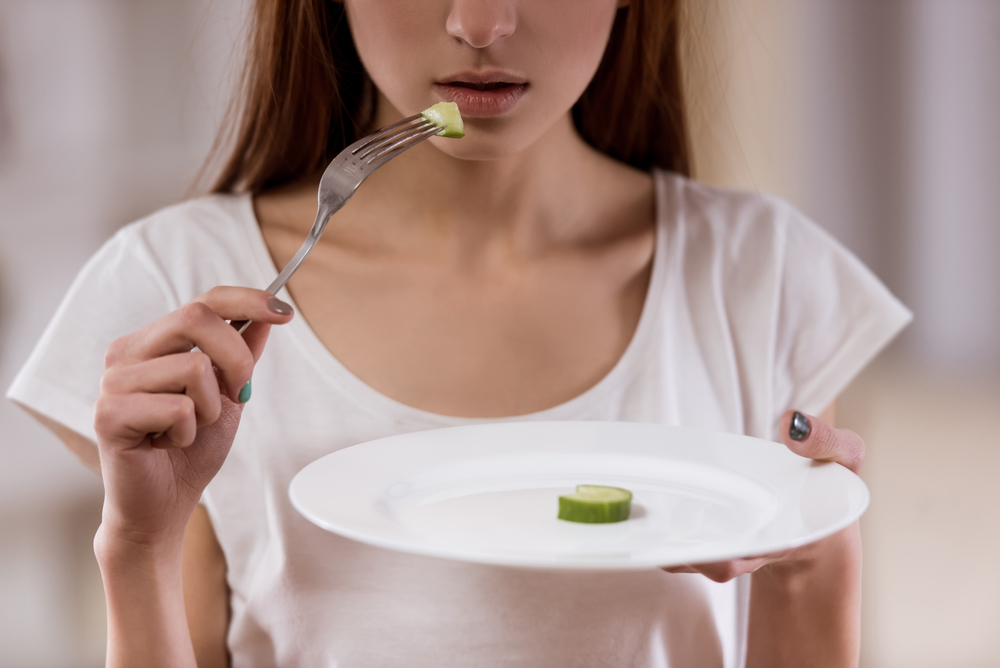
The story of autophagy is not just about cells consuming their own damaged parts during starvation. It is about adaptation, efficiency, and survival at the most microscopic level. Cells do not simply wait for external rescue. They actively reorganize, recycle, and protect themselves using mechanisms refined through millions of years of evolution.
Ohsumi’s decision to study yeast, an organism many might overlook, demonstrates the power of basic research. What once seemed like a minor side phenomenon turned out to be central to molecular medicine. The Nobel Assembly described it as a new paradigm, and the ripple effects continue to shape cancer research, neurodegenerative disease studies, and investigations into aging.
In the end, the discovery reminds us that survival is not always about accumulation. Sometimes it is about intelligent renewal. Inside every human body, cells are constantly clearing damage and recycling what they can to maintain balance. That quiet, invisible process is now understood because one scientist chose to explore a question others ignored, and in doing so, he revealed one of biology’s most profound survival strategies.